|   | Shou el akhbar. Beirut's streets empty at night, France is pushing hard for Lebanon-Israel talks that nobody seems to want, and a sharp new essay is asking whether Lebanese society is already brutalizing itself from within. It's a heavy Friday—but you should know what's happening. |
|
| | The War Inside: Lebanon's Political Rhetoric Is Sliding Toward Violence
- A striking essay in Daraj argues that Lebanese society is undergoing what historian George Mosse called "brutalization"—a process where political discourse normalizes violence, erases moderate voices, and prepares the ground for internal conflict, drawing a direct parallel to interwar Europe.
- The author points to a collapse of the collective memory that once served as a brake on civil war: the generations who lived through 1975–1990 are leaving political life, taking with them an embodied horror of sectarian killing that younger actors simply don't share.
- Social media, revenge-driven political speech, and the trauma of the port explosion, COVID-19, and the current war have combined to desensitize the public to loss and hardship—a pattern the essay warns is already shaping Lebanon's political landscape, not just threatening it.
- The essay also indicts the Lebanese liberal current, arguing it has become a theoretical veneer for violent politics, just as the left once was—justifying each new round of force as "the last battle before state-building."
The bigger picture: When a society stops flinching at its own violence, the absence of war is no longer the same thing as peace—and Lebanon's political class seems to be counting on exactly that numbness. Macron Pushes Lebanon-Israel Talks, But Nobody's at the Table
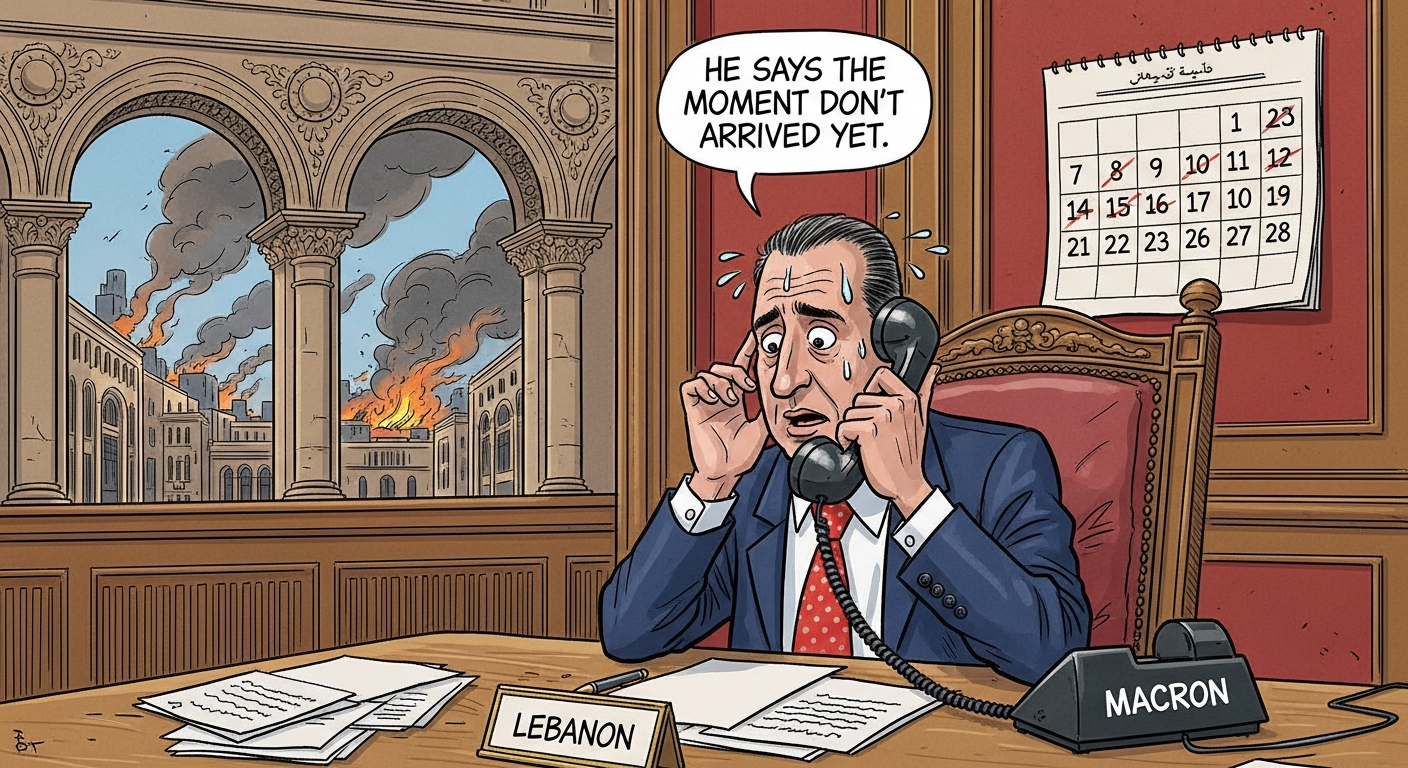
- French President Emmanuel Macron has been pressing Israel to open negotiations with Lebanon's government, telling Israeli President Herzog directly: "don't destroy if you want to negotiate"—but the Netanyahu government says the moment for talks hasn't arrived, according to An-Nahar.
- French diplomatic sources outline four conditions for de-escalation: Hezbollah stops rocket fire, Israel halts bombardment and ground incursions, international aid strengthens the Lebanese army, and the party's influence inside state institutions is rolled back.
- Paris is losing leverage fast: sources admit France lacks the cards to move Washington, which supports Israel's military operations and is interested in Lebanon only as a path to a peace deal on Israeli terms.
- On the economic front, Lebanon's finance minister, economy minister, and central bank governor met IMF officials in Paris, but French economic sources warn a staff-level agreement is impossible under current conditions—GDP growth projections have collapsed from a forecast of +2% to +5% down to -3% to -4%, with Banque du Liban's foreign reserves dropping $400 million between February 15 and March 15.
The backstory: Lebanon and Israel have no direct diplomatic relations, and any negotiations would be indirect. A ceasefire agreement reached in late 2024 obligated the Lebanese army to disarm Hezbollah south of the Litani River—something French sources confirm the army has not done, giving Israel its stated justification for continued operations.
What to watch: Whether Washington signals any shift toward pressuring Israel on withdrawal—without that, Macron's four-step plan is diplomatic theater with no stage. "We Are Living in a Story of Announced Death"
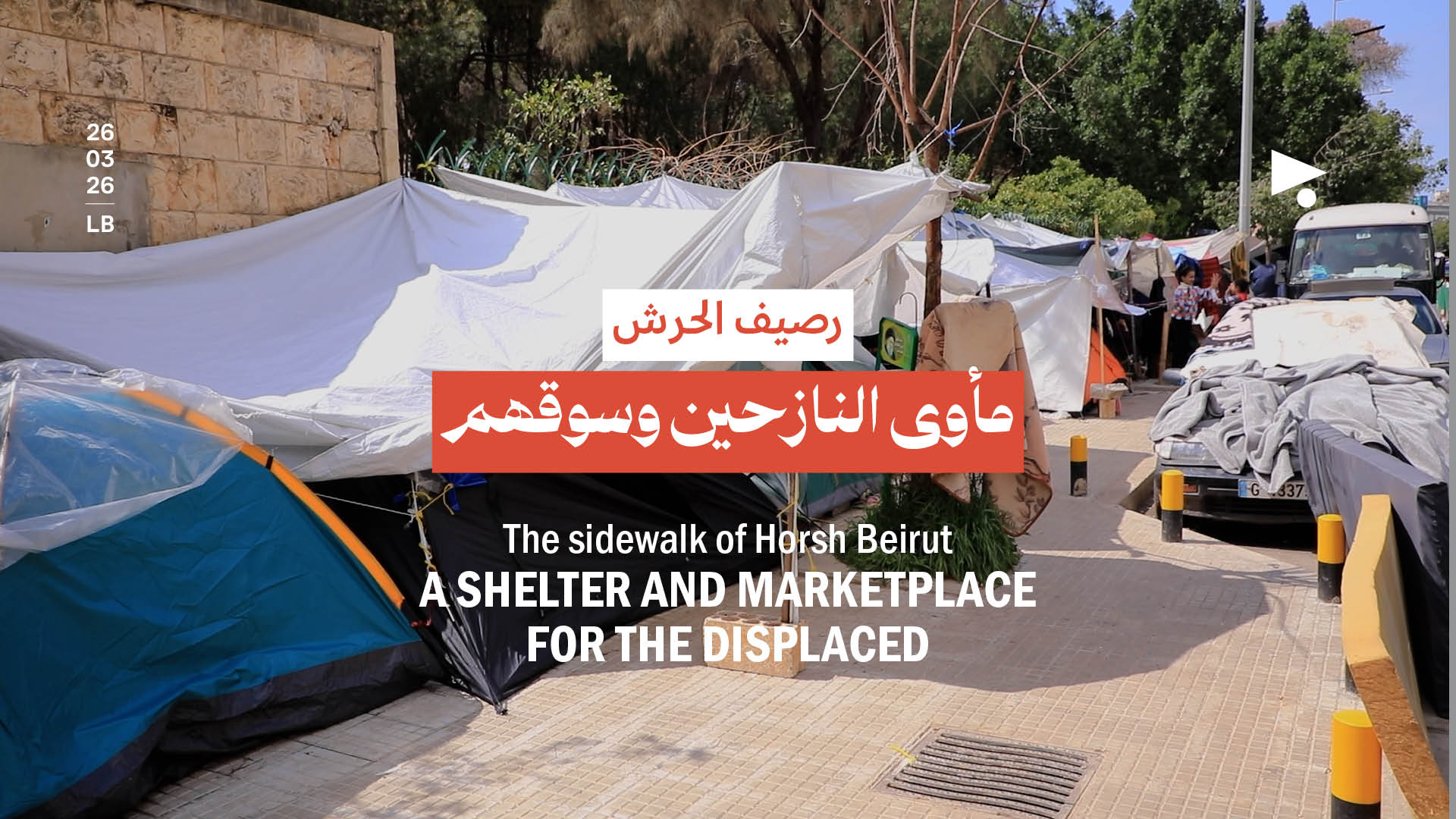
- A first-person account published this week captures the psychological reality of civilians still in Beirut: streets emptying at night, neighbors taking informal shifts staying awake, the constant WhatsApp question—"was that shelling or thunder?"—becoming the rhythm of daily life.
- The writer describes her son, a survivor of the port explosion and the first Israeli war, now telling her for the first time that he understands why she encourages him to study abroad—not because of the war, but because he can see that "this small space we call a country won't be one anymore."
- Meanwhile, South Korea's embassy announced a $2 million emergency humanitarian contribution for Lebanon's internally displaced: $1 million through UNICEF and $600,000 through UNHCR, with the remainder channeled via Korea's rapid-response disaster program.
Why it matters: The psychological toll of sustained displacement and chronic insecurity is a crisis running parallel to the military one—and $2 million in aid, however welcome, lands against a backdrop of people who have stopped believing the country has a future. |
|
| - AP calls it what it is: The Associated Press officially declared Israel's military actions in southern Lebanon an invasion—noting thousands of troops have crossed the border, Israeli officials want control of all territory south of the Litani River, and displaced residents won't be allowed back until Israel deems its border safe.
- Sajd, you're next: The Israeli army issued an urgent evacuation warning to residents of Sajd village in southern Lebanon early Friday, citing Hezbollah activity and ordering civilians to move north of the Zahrani River immediately.
- Egypt shows up, literally: Egyptian Foreign Minister Badr Abdelatty arrived in Beirut personally accompanying nearly 1,000 tons of humanitarian aid, met with Presidents Aoun and Salam and Speaker Berri, and confirmed Cairo is running diplomatic back-channels with Israel, the US, France, Turkey, and Pakistan to halt the escalation.
- Aid groups, on their knees: UNHCR—which already cut 30% of its staff after USAID was dismantled—says it needs an additional $61 million just to support 600,000 people in Lebanon over the next three months, as the Pentagon simultaneously seeks $200 billion more for the war.
- Bassil's three-point plan: FPM leader Gebran Bassil met President Aoun at Baabda proposing a national dialogue initiative built on a code of political conduct, rejecting all foreign interference, and calling for weapons to be exclusively held by the Lebanese army—framing it as protection, not opposition.
|
|
| ─ | Parallel Rate | 89,700 LBP | 0.00% | | ─ | Official Rate | 89,500 LBP | 0.00% | | ▲ | Gold | $4,455.1 | +1.82% | | ▼ | Bitcoin | $68,709 | -1.83% | | ▼ | S&P 500 | 6,477.16 | -1.21% |
as of 6:43 AM GMT · Source: lirarate, BDL, Yahoo Finance, CoinGecko |
| | Iran's Hormuz Toll Booth Is Now Open for Business
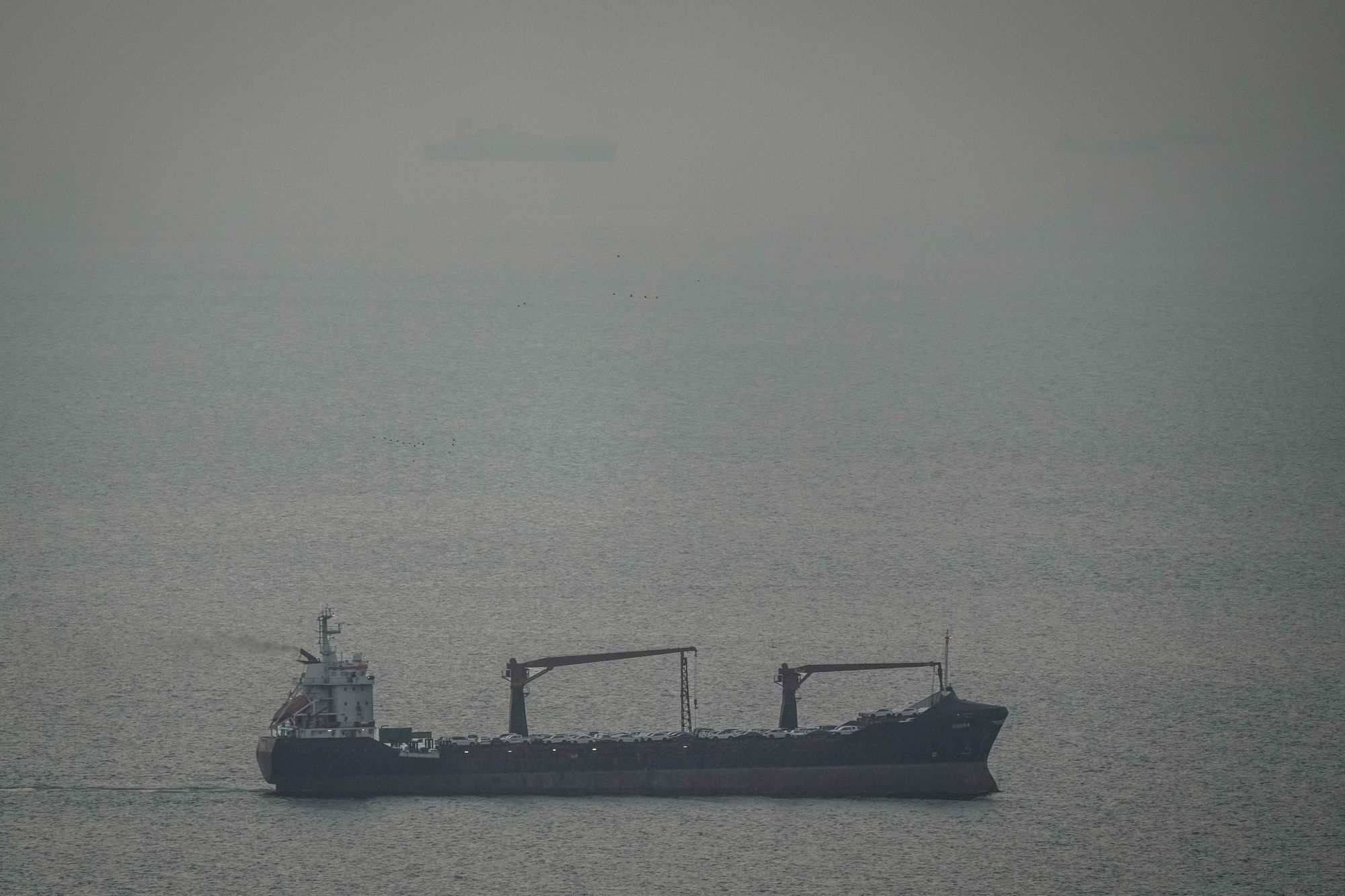
- Iran's Islamic Revolutionary Guard Corps has been operating a de facto checkpoint in the Strait of Hormuz since at least March 15, requiring ships to submit ownership chains, cargo manifests, full crew lists, and destination details before receiving a clearance code and IRGC-escorted passage, according to Lloyd's List.
- Since March 15, there have been zero transits via the normal commercial route; on one recent Tuesday, only four ships crossed the strait, while ten large vessels waited north of Larak Island for controlled passage.
- At least two vessels paid direct tolls—settled in yuan—and Iran's parliament is now pursuing legislation to formally codify fees, though legal experts warn any payment to the IRGC, a designated Foreign Terrorist Organisation under US law, risks criminal prosecution under US anti-terrorism statutes.
- Iranian Foreign Minister Araghchi said "friendly nations" including Pakistan, India, Iraq, China, and Russia may use the strait; a fifth of global oil supply normally transits this chokepoint.
What to watch: Whether Gulf Arab states and Western allies mount a legal or military challenge to the fee regime—and whether shipping companies quietly pay up rather than reroute around Africa at enormous cost. Trump vs. NATO: This Time It Feels Different
- President Trump posted at 6:16 AM Thursday that "THE U.S.A. NEEDS NOTHING FROM NATO," then told a Cabinet meeting that European allies had failed a "test" by refusing to join the Iran war—warning it would "cost them dearly" and questioning why the US should defend Europe from Russia, according to The New Yorker.
- Trump simultaneously signaled he may divert European-funded weapons from Ukraine to the Middle East, while the administration has already lifted some Russian oil sanctions to ease the supply crunch—a move the Kyiv School of Economics estimates could hand Moscow an $84 billion export windfall if the war ends by April.
- Former Defense Secretary Jim Mattis publicly called Trump's demands for Iranian regime change "delusional nonsense" this week, warning that "you can't bring allies on board if they don't trust you."
The bigger picture: Europe is now simultaneously contending with a US partner threatening to abandon NATO, a war driving energy prices through the roof, and a Russia directly benefiting from the chaos—a convergence of crises the continent's leaders have spent years dreading. Britain Boards Russia's Shadow Fleet—And Means It This Time
- UK Prime Minister Keir Starmer authorized the British military to board and detain Russian shadow fleet vessels, including ships that refuse to surrender or use surveillance to evade capture, citing the oil price spike from the Iran war as directly funding Putin's Ukraine campaign.
- The UK has sanctioned more than 500 suspected shadow fleet vessels; analytics firm Kpler estimates the fleet moves 3.7 million barrels per day—roughly 65% of Russia's seaborne trade—worth up to $100 billion per year.
- Since the Iran war disrupted Hormuz and pushed oil past $100 per barrel, Russia has benefited from an extra $150 million a day in revenues, according to the Financial Times, while the US has separately relaxed sanctions on some Russian oil to ease the global supply crunch.
Zooming out: The Iran war has created a perverse dynamic where Western military spending is inadvertently enriching the same Russian war machine that Europe is trying to contain in Ukraine. |
|
| - Lebanon goes to Venice: Lebanese artist Nabil Nahas will represent Lebanon at the 61st Venice Biennale from May 9 to November 22, 2026, with a monumental installation titled "Multiplicity Without Limits"—26 large-scale acrylic panels spanning 45 meters wide and 3 meters tall, drawing on Persian miniatures, Baalbek temple friezes, and Lebanese cedar, olive, and palm motifs.
- "Ounadikom" forever: Lebanese musician Ahmad Kaabour, whose protest anthem "Ounadikom"—set to lyrics by Palestinian poet Tawfiq Ziad—became a generational rallying cry sung across the Arab world, passed away Thursday at 71; born in Beirut's Basta neighborhood, his father was one of Lebanon's pioneering violinists, and a single thread ran through his entire life's work: to speak, connect, and transmit.
- Pope Leo XIV texts the Patriarch: On the Feast of the Annunciation and the 15th anniversary of his election as the 77th Maronite Patriarch, Bechara Rai received personal congratulations from Pope Leo XIV XIV, who wrote that he was assured of his "spiritual closeness and accompaniment in prayer."
- BTS is finally back: Seven years after their debut album and six years since their last full-length, BTS dropped ARIRANG—featuring 14 tracks—and their Netflix documentary BTS: The Return premieres today, offering behind-the-scenes access to the band's comeback recording sessions in Los Angeles ahead of a global tour in April.
|
|
Thanks for reading—have a gentle Friday, and we'll see you tomorrow. |
 | | Illustrated by AI |
|
Lebanon news for the diaspora — delivered every weekday morning. Free, sharp, ~5 minutes. |
|
|
|
|