|   | Shou el akhbar. A Lebanese-French artist just took Israel to a Paris war crimes court over the bombing that killed his parents—hours before a ceasefire. Meanwhile, Lebanon's cabinet finally met with its Shia ministers present, and a mystery drone fell out of the sky over Batroun. Let's get into it. |
|
| | A Lebanese Artist Takes Israel to a French War Crimes Court
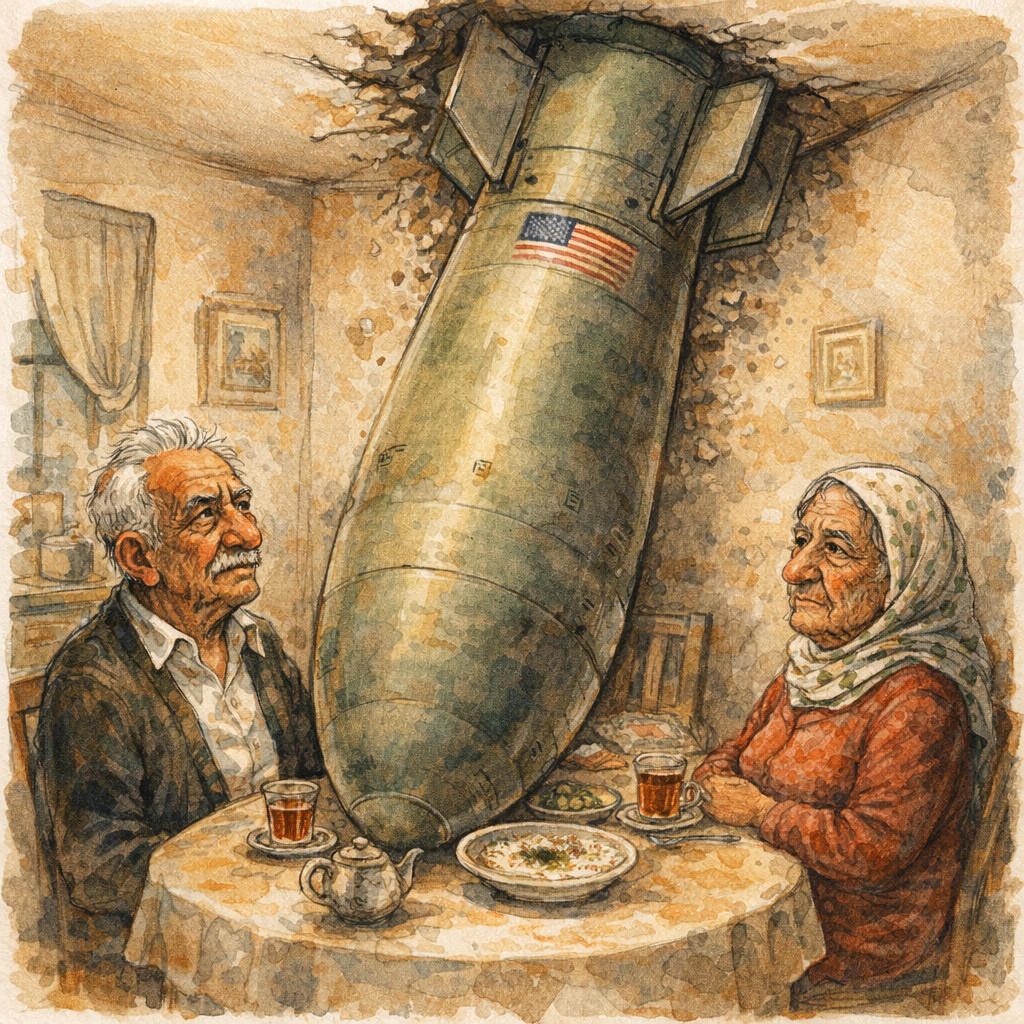
- Franco-Lebanese artist Ali Cherri filed a civil complaint Tuesday with France's War Crimes Unit after an Israeli airstrike killed his parents—Mahmoud Naim Cherri, 86, and Nadira Hayek, 76—and a domestic worker in their Beirut apartment on November 26, 2024, just hours before a ceasefire took effect.
- The complaint, co-filed with the International Federation for Human Rights (FIDH), is the first time a French court has taken a case over Israel's bombing of Lebanon, and the first individual legal pursuit of war crimes charges for an Israeli strike in the country.
- Forensic Architecture built a 3D model of the targeted building and identified the munition as a US-made GBU-39 guided bomb, while Amnesty International concluded in February that there was no evidence of a military target at the site.
- The strike destroyed three floors of the building and killed seven civilians total; on March 11, 2026, a Forensic Architecture photographer who helped document the Cherri building was also killed in an Israeli strike on his home, along with his three-year-old daughter.
Why it matters: With more than 4,300 Lebanese killed since October 2023 and zero prosecutions anywhere in the world, this Paris filing—backed by Forensic Architecture and Amnesty International—is the first crack in a wall of impunity that has held firm for over two years. Lebanon's Cabinet Meets—With Shia Ministers in the Room
- Prime Minister Nawaf Salam chaired a full cabinet session at the Grand Serail on Friday, attended by Finance Minister Yassine Jaber, Defense Minister Michel Mounsy, Foreign Minister Youssef Raji, and more than 20 other ministers.
- The session is notable for the attendance of Shia ministers, whose participation has been a recurring political flashpoint during the current government's tenure amid tensions over Hezbollah disarmament and Lebanon's relationship with Iran.
- Labor Minister Mohammad Haydar said the day's goal was simply to "run the country's affairs," while Information Minister Paul Morcos said the question of guardianship over Lebanon may come up, but was not formally on the agenda.
The backstory: Lebanon's cabinet has repeatedly struggled to convene full sessions amid sectarian political fault lines, particularly over Hezbollah's arms and Iran's influence. Shia ministers affiliated with Amal and Hezbollah's political wing have at times boycotted or conditioned their attendance, making a full quorum politically significant.
What to watch: Whether the Iranian ambassador question—floated by ministers before the session—makes it onto a future agenda will signal how boldly Salam's government is willing to move on sovereignty issues while war still rages in the south. A Mystery Drone Falls Over Batroun—and Experts Point to Iran
- Debris from an unidentified drone crashed in a wooded open field near Assia in the Batroun district of North Lebanon on April 2, causing no casualties, according to L'Orient Today's regional correspondent.
- Retired military expert Khaled Hamadé told L'Orient-Le Jour there is "no doubt" the drone is an Iranian Shahed-type model, and noted that Iran has two stated objectives in Lebanon: the Lebanese Army's Hamat airbase—which hosts U.S. troops and is located roughly 10 km from Assia—and the U.S. Embassy.
- Batroun MP Ghayath Yazbeck (Lebanese Forces) called it an "Iranian-made drone" and said Hezbollah has "lost its bearings both politically and in the air," urging the state to warn Iran's Revolutionary Guards against endangering northern residents hosting hundreds of thousands of displaced people.
Zooming out: North Lebanon has so far been spared from Israeli strikes during the current conflict, making this drone crash—whatever its intended target—a jarring reminder that the war's geography may not stay contained to the south and Bekaa for much longer. |
|
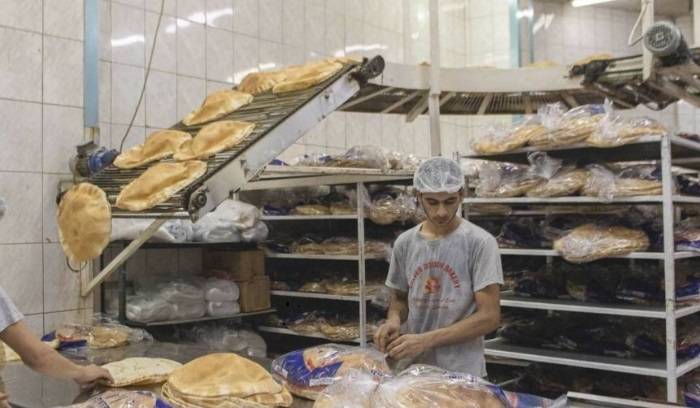
| | - Four months of bread, guaranteed: Lebanon's Union of Bakeries confirmed wheat stocks are sufficient for four months—before counting upcoming imports—with government-regulated Arabic bread prices holding at 65,000 pounds per loaf in bakeries, even as bakeries in the south, Bekaa, and Beirut suburbs keep operating under fire.
- €13.5M from the Dutch: The Netherlands unlocked a 13.5 million euro aid package for Lebanon following a call between President Aoun and Dutch PM Rob Jetten—6.5 million euros in humanitarian aid and 7 million euros directly to the Lebanese Armed Forces to extend state authority across Lebanese territory.
- 73 sites, one legal shield: UNESCO granted enhanced protection to 39 additional Lebanese heritage sites on April 1—including the National Library and Barsbay Tower in Tripoli—bringing the total protected to 73, with violations now constituting potential criminal responsibility under the 1954 Hague Convention.
- Staying put in the south: A devastating Drop Site News investigation documents how roughly 1,700 residents remain in Debel despite Israeli demolitions, a withdrawn Lebanese army, and Israeli displacement orders covering 15% of Lebanese territory—leaving villages cut off, with some residents reporting just one to two weeks of supplies remaining.
- Rmeich's farewell to the army: Daraj published a sweeping essay on the Lebanese army's withdrawal from border villages like Rmeish—framing it not as a battlefield decision but as the latest chapter in a decades-long story of a state that was never given the tools to monopolize force on its own soil.
|
|
| ─ | Parallel Rate | 89,700 LBP | 0.00% | | ─ | Official Rate | 89,500 LBP | 0.00% | | ▼ | Gold | $4,702.7 | -1.68% | | ▲ | Bitcoin | $66,579 | +0.37% | | ▲ | S&P 500 | 6,582.69 | +0.83% |
as of 4:46 AM GMT · Source: lirarate, BDL, Yahoo Finance, CoinGecko |
| | Iran's Hormuz Tollbooth: Crypto, Secret Codes, and a Grading System for Nations
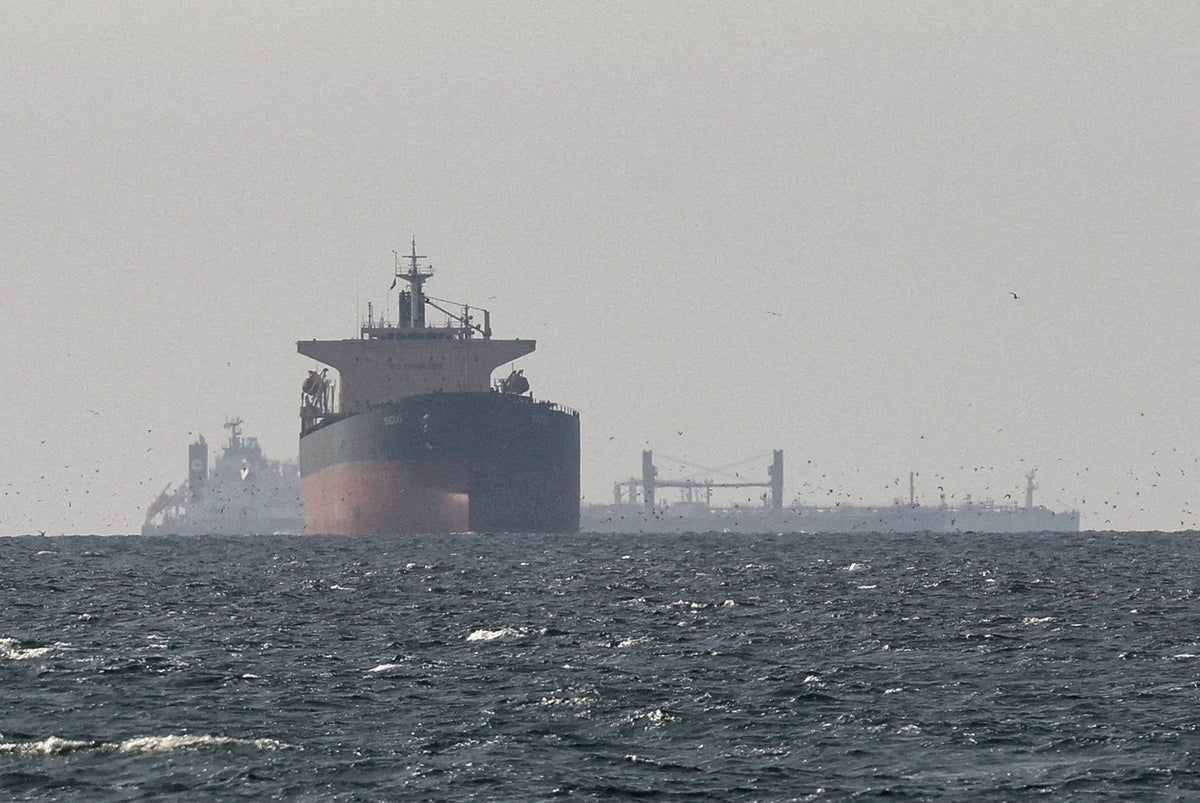
- Iran's navy has established what amounts to a formal toll system in the Strait of Hormuz, charging foreign tankers fees paid in Chinese yuan or stablecoins for safe passage, with one Iranian lawmaker citing a rate of $2 million per journey, according to The Independent.
- Ships undergo a vetting process—vessels with links to the US or Israel are excluded—and receive a secret passcode to broadcast on approach, summoning an Iranian patrol boat escort through the channel, with Iran reportedly using a grading system from 1 to 5 for nations based on friendliness.
- More than a third (36%) of transits recorded on March 31 were on US-sanctioned vessels, while shipping intelligence firm Windward reported ships queuing north of Larak Island awaiting clearance, with some turned back in recent days.
- Britain convened a virtual meeting of about 35 countries—excluding the United States—to explore ways to restore freedom of navigation in the Strait, which ordinarily carries around a fifth of global oil and gas.
What to watch: Iran's parliament reportedly approved a plan to formalize the toll system this week—a move experts say constitutes a breach of international law—making the coming weeks a critical test of whether the coalition Britain is assembling can translate into any coordinated pressure. Greek Ships Secretly Supplied Israel With Oil and Military Cargo, Investigation Finds
- At least 57 covert crude oil shipments—totalling approximately 47 million barrels—were delivered to Israeli ports between May 2024 and December 2025 by Greek-managed vessels that disabled tracking signals and listed false destinations, according to a new report by the No Harbour for Genocide campaign seen by Middle East Eye.
- The vast majority of shipments were managed by Kyklades Maritime Corporation and Thenamaris Ships Management, controlled by the Alafouzos and Martinos families respectively; after Turkey's May 2024 trade embargo on Israel, the two firms' share of oil shipments from Turkey to Israel jumped from 21.82% to 91.23%.
- In 2025 alone, at least 13 cargo runs by Greek-managed vessels carried ammunition, machine gun components, and other military materials to Israel for Elbit Systems, the country's largest arms manufacturer, while 8 covert coal deliveries totalling 751,000 tonnes were shipped from South Africa to Israeli ports.
The bigger picture: The investigation illustrates how shadow fleet tactics—the same methods used to circumvent Russia sanctions—have been repurposed to sustain military supply chains amid international legal and activist pressure, raising questions about accountability in global shipping law. Syria Eyes a $45–95 Billion Transport Corridor to Link the Gulf to the Mediterranean
- Syria has announced 4 major strategic infrastructure projects to connect the Gulf to the Mediterranean, including a high-speed Gulf-Mediterranean railway, the revival of the historic Hejaz railway line, a Qatar-to-Europe gas pipeline running through Syria and Turkey, and the rehabilitation of the Kirkuk–Baniyas oil pipeline, according to An-Nahar.
- The high-speed railway project alone is estimated to cost between $9.5 billion and $14 billion, while the gas pipeline would require $10–15 billion in investment to span more than 1,500 km; the Kirkuk–Baniyas pipeline rehabilitation is considered the most immediately feasible at $1–2 billion.
- If all five projects were executed together, economists consulted by An-Nahar estimate the total investment required at approximately $45 to $95 billion, with experts noting Lebanon's ports of Tripoli and Beirut could serve as natural extensions of the corridor.
Zooming out: Analysts link these proposals to US envoy Tom Barrack's vision of Syria as a re-emerging geoeconomic hub—but economists caution that financing, security along the routes, and unresolved disputes between Baghdad and Iraqi Kurdistan over oil revenues remain formidable obstacles to any timeline. |
|
| | - Lebanon's memory, on screen: Lebanese director Lana Daher is screening her documentary "Do You Love Me" at Metropolis Cinema in Beirut—a film built entirely from archival footage drawn from more than 22,000 sources, tracing Lebanon's collective memory through cinema, songs, TV, and personal recordings. Screenings continue April 7, 8, and 9 at 7 PM.
- Qabbour, the voice we carried: Al Modon published a warm memoir by musician Jamil Daher about his years performing alongside the beloved Ahmed Kaabour, whose anthem "Unadikom" became so embedded in the Arab soul that audiences raised their fists and sang along at every show—a reminder that some songs don't just travel with us, they become us.
- 63,000 fans, one debut: Women's football just broke its own record—again. Denver Summit drew 63,004 fans to their very first home NWSL game at Mile High Stadium, smashing the previous attendance record by roughly 23,000 and selling out their full season-ticket allotment of 8,500 before the season even began.
- Said meets Sharif, finally: Al Modon published a beautifully written essay on the intellectual collision between Edward Said and Omar Sharif—two Arabs who emerged from the same Cairo school and became the world's most recognizable Arab faces, in completely opposite ways, and who, in old age, quietly seemed to swap places.
|
|
Thanks for reading—go make it a good one. |
 | | Illustrated by AI |
|
The khan was a historic trading center. |
Lebanon news for the diaspora — delivered every weekday morning. Free, sharp, ~5 minutes. |
|
|
|
|