|   | Shou el akhbar. Lebanon and Israel are inching toward something—not quite a ceasefire, not quite peace, but a US-brokered framework that could reshape the south for good. Plus, a century-old history lesson that hits different when you realize Lebanon's shape was never inevitable. |
|
| | Lebanon and Israel Edge Toward US-Brokered Talks—But It's Not a Ceasefire Yet
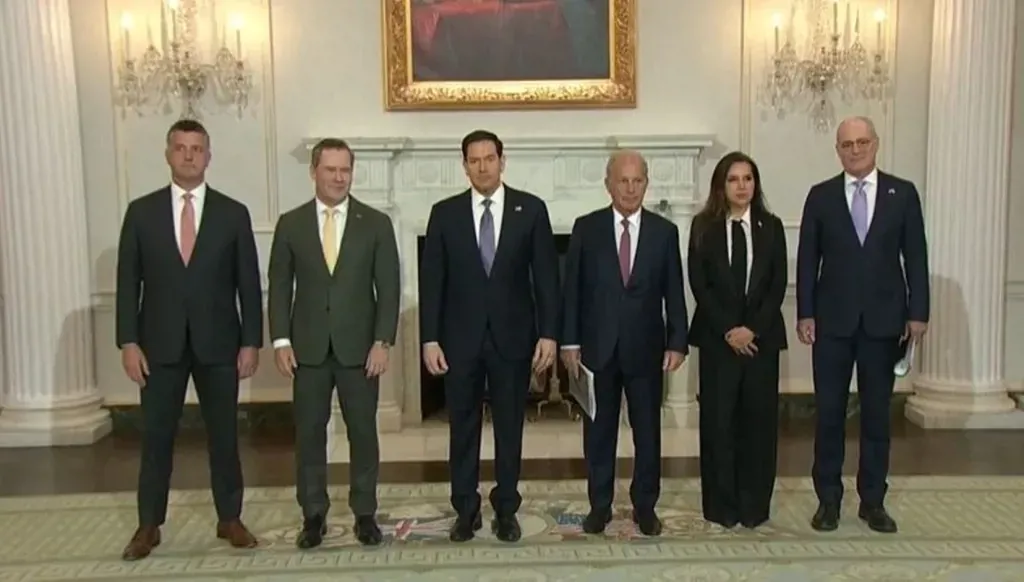
- Lebanese and Israeli representatives, under US sponsorship, have agreed on a formula that falls short of a full ceasefire but opens the door to negotiations on disarming Hezbollah and, eventually, bilateral peace.
- The framework attempts to fix the flaws of the November 2024 ceasefire agreement, which failed on its central goal: disarmament—with the Lebanese army avoiding confrontation and political leadership applying insufficient pressure.
- Israel has continued military operations and refused to withdraw from occupied Lebanese territory, while Lebanon is calling for a cessation of hostilities to ease the humanitarian crisis before any weapons talks can begin.
- Sources suggest disarmament could begin from the north toward the south, with an expanded US monitoring system including field personnel to assess performance on the ground.
The backstory: The November 2024 ceasefire brokered by the Biden administration was supposed to end fighting and set a timeline for Hezbollah's disarmament. It did neither—Israel kept striking, the Lebanese army stayed cautious, and Hezbollah remained armed. This new round of talks is attempt number two.
What to watch: Whether Lebanon can extract a suspension of Israeli military operations in exchange for credible movement on disarmament—and whether Netanyahu and Aoun can each sell that compromise to their own constituencies. Ceasefire Tonight? Reports Say Washington Is Pressing Hard
- Information Minister Paul Morcos told Al-Hadath on Wednesday that the collaborative efforts of President Joseph Aoun and Prime Minister Nawaf Salam have materialized into active diplomatic momentum toward a cessation of hostilities.
- The US is reportedly pushing Israel to agree to a temporary ceasefire as a goodwill gesture toward the Lebanese government, with Washington framing it explicitly as a move to strengthen Beirut's hand.
- Israel's security cabinet was scheduled to meet Wednesday evening to discuss the proposal; Israeli army sources said preparations are underway for a possible one-week ceasefire beginning as early as Thursday.
- A senior Iranian source told Al-Mayadeen that a ceasefire would be declared following "Iranian diplomatic pressure," while Hezbollah MP Ibrahim al-Moussawi confirmed that regional efforts could soon lead to an announcement.
Why it matters: A temporary ceasefire, even one measured in days, would give the Lebanese government crucial breathing room to demonstrate authority and push the disarmament talks forward before the window closes. The Lebanon That Almost Never Was: A Lost Federalism Proposal From 1919
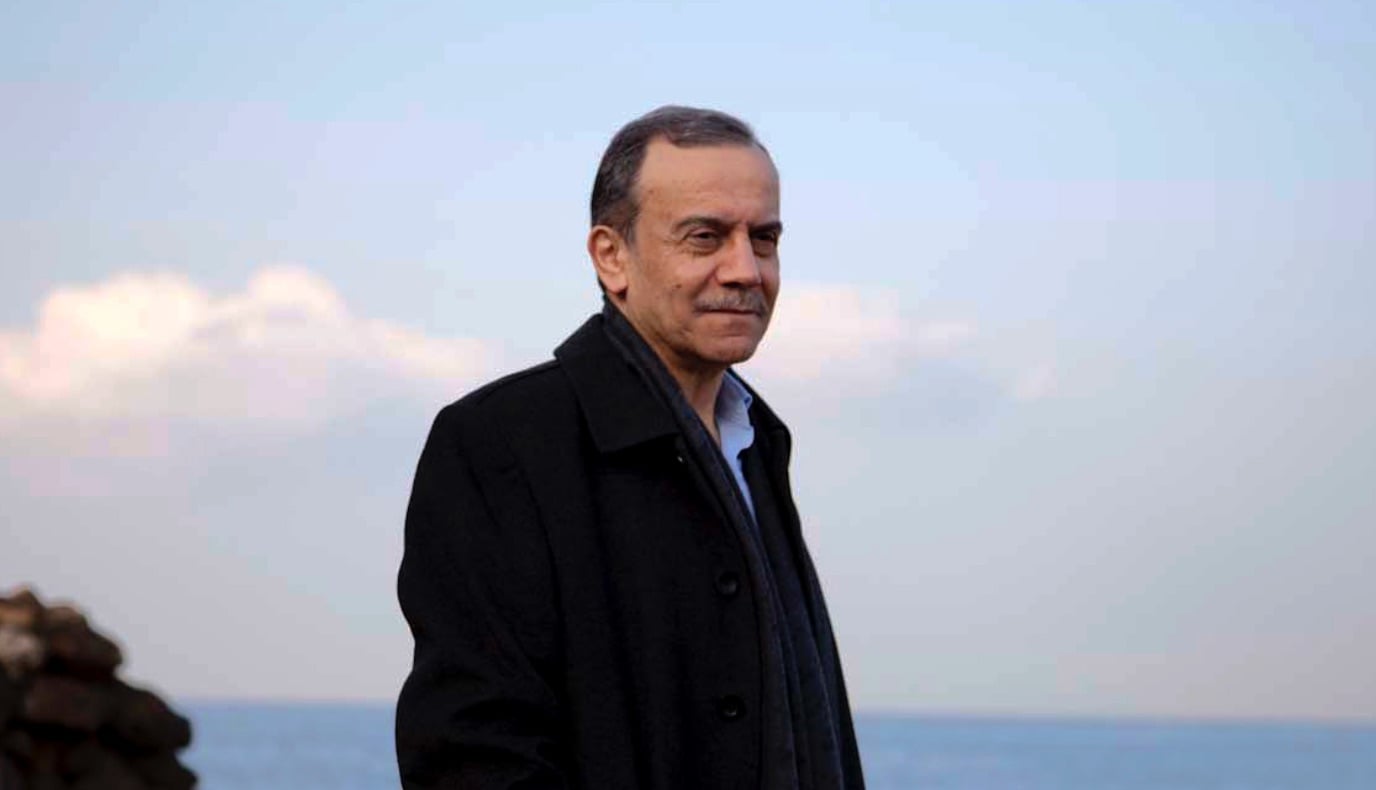
- A new study by scholar Carla Eddé, reviewed by Al Modon, reveals that in spring 1919, French-sponsored negotiations in Beirut seriously explored a "Greater Lebanon with autonomy inside a Syrian federation"—a formula that nearly rewrote Middle Eastern history.
- Participants included figures from both camps: on the Lebanese side, Habib Pasha al-Saad and Alfred Sursock; on the Syrian unionist side, Prince Amin Arslan, Riad al-Solh, and Father Youssef Istfan—a genuinely mixed table trying to find common ground.
- The King-Crane Commission recorded 49 petitions supporting Lebanese autonomy within a unified Syria, and 33 Lebanese delegations—Muslim and Christian—requested self-rule within Syria out of fear of the economic future of a separate Lebanese state.
The bigger picture: Lebanon's current borders weren't inevitable—they were the product of French strategic calculations after the Battle of Maysaloun in July 1920, when Paris no longer needed a compromise and rewarded its local allies with a bigger state instead. |
|
How many times has Lebanon appeared in the Bible? Scroll to the bottom for the answer — or play all 10 at sobhiye.news/games/trivia |
| | - $308M for a country on fire: The UN High Commissioner for Refugees Barham Salih visited Beirut Wednesday and launched an urgent appeal for $308 million in aid, plus an additional $61 million request, as Israel's renewed offensive has displaced more than 1.2 million people since March 2.
- 19 experts, one verdict: A group of 19 UN special rapporteurs condemned Israel's April 8 bombardment of Lebanon—which killed more than 350 people including 30 children—as "a blatant violation of the UN Charter" and urged all member states to suspend arms transfers to Israel immediately.
- Apple Maps didn't erase the south: A viral post claiming Israel was scrubbing southern Lebanese villages from Apple Maps racked up 12 million views on X—but France 24 fact-checkers found Lebanon has never been a supported region in Apple Maps, a gap that predates the current war by at least six years.
- Jounieh road, lost funding: Lebanon's Public Works Ministry clarified that the cancelled loan for the Jounieh highway expansion was terminated at the lender's request—not Beirut's—and that the Council for Development and Reconstruction, not the ministry, holds responsibility for the project's technical and financial file.
- Iran's arms network, mapped: A Carnegie Endowment analysis by Michael Young warns that Lebanon's bid to escape Iranian hegemony through Washington talks risks pulling it into Israeli hegemony instead—and that forcibly disarming Hezbollah could trigger a community-wide Shia backlash the Lebanese army simply cannot contain.
|
|
| ─ | Parallel Rate | 89,550 LBP | 0.00% | | ─ | Official Rate | 89,500 LBP | 0.00% | | ▲ | Gold | $4,857 | +1.19% | | ▲ | Bitcoin | $75,038 | +1.21% | | ▲ | S&P 500 | 7,022.95 | +1.99% |
as of 5:24 AM GMT · Source: lbprate, BDL, Yahoo Finance, CoinGecko |
| | Jordan and UAE Break Ground on a $2.3 Billion Railway to the Desert
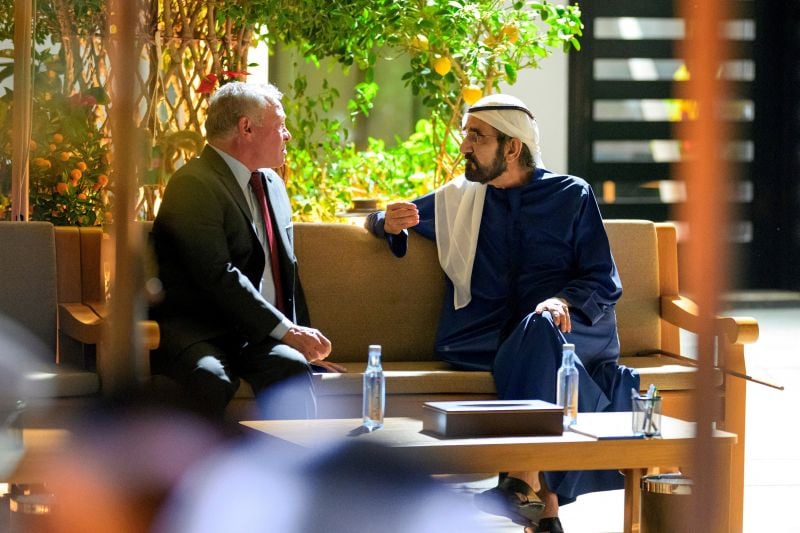
- Jordan and the UAE signed an agreement Wednesday in Abu Dhabi to build a 360-kilometer railway network linking phosphate and potash mines in southern Jordan's Maan and Karak provinces to the port of Aqaba via two main routes, tunnels, and bridges.
- The railway, valued at $2.3 billion, aims to transport 16 million tonnes of phosphate and potash annually and will be operational five years after construction begins, though no start date has been specified.
- The project falls within a broader $5.5 billion investment package signed by the two countries at the end of 2023, with a new joint venture established between Abu Dhabi's L'IMAD Holding Company and Jordanian stakeholders.
- Jordan ranks fifth globally in phosphate production and seventh in potash, and the venture is part of wider regional plans linking Aqaba to the Mediterranean via Syria and Turkey.
The bigger picture: As Gulf states accelerate infrastructure investment across the Levant, this railway signals a new phase of UAE-Jordan economic integration that could reshape regional trade corridors for decades. Jordan Under the Missiles: How a Country Learned to Laugh at the Sirens
- A Daraj investigation documents how Jordanians have responded to repeated missile sirens and rocket debris with dark humor, social media spectacle, and philosophical resignation—one café in Irbid offered a shisha deal under the banner "watching the end of the world with a smoke."
- Jordan's Public Security Directorate recorded 585 incidents of rocket debris and shrapnel falling across the kingdom, resulting in 28 injuries—most described as minor—with damage to 59 homes, 31 vehicles, and 16 public properties.
- Psychologists interviewed for the piece say the apparent calm reflects accumulated trauma and adaptive coping, not recklessness—residents describe faith, trust in the armed forces, and the numbing effect of repeated crises as key factors in their behavior.
Zooming out: The Jordanian public's darkly comedic relationship with regional warfare is a striking portrait of psychological adaptation in a country that has spent decades living at the crossroads of the Middle East's most volatile conflicts. The World Bank Wants Clean Water for One Billion More People by 2030
- The World Bank launched "Water Forward" on Wednesday in Washington DC, a landmark initiative targeting sustainable access to safe water for an additional one billion people by 2030, with roughly 400 million to be reached directly through World Bank programs.
- Partners include WaterAid, the Children's Investment Fund Foundation, the Netherlands, and the UAE; a further 600 million people are expected to benefit from development bank investment, private finance, and philanthropy.
- The initiative comes as WaterAid data shows that women in sub-Saharan Africa who develop maternal sepsis are nearly 150 times more likely to die than mothers in Europe or North America, with 78% of maternity wards studied lacking a functioning toilet.
Why it matters: Launched against a backdrop of sweeping cuts to international aid from the US, UK, and Europe, Water Forward represents a direct attempt to fill a growing financing gap before the UN Water Conference at year's end. |
|
| | - Kaabour's voice, now a street: The West Bank city of Jenin named a street after legendary Lebanese singer Ahmad Kaabour following his passing in Beirut on March 26, 2026—his song "Ounadikum," based on a poem by Palestinian poet Tawfiq Ziad, became an anthem across the Arab world. Ramallah's Municipal Council voted to honor him too.
- Fresh off an Oscar, Crown arrives: Michael B. Jordan brought his directorial remake of "The Thomas Crown Affair" to CinemaCon, where the trailer stole the room—Jordan plays a billionaire reclaiming artifacts stolen from their rightful creators, fresh off his best actor win for "Sinners." Amazon MGM Studios is distributing.
- Greece vs. Turkey, over soup: A Thessaloniki restaurant owner is pushing to register "patsa"—a cow stomach broth said to cure hangovers—with UNESCO as a uniquely Greek dish tracing back to Homer's "Odyssey." Turkey, which calls it "iskembe," is not pleased. The Mediterranean's tastiest feud continues.
- Kbeh, fraké, and belonging: A Syrian writer raised near Jenin discovered southern Lebanon through its people—colleagues who arrived at the Beirut office carrying kibbeh nayeh, olive oil, fresh radishes, and mishta7 bread from Nabatieh, turning food into the most fluent language of home.
|
|
Thanks for reading—see you tomorrow. |
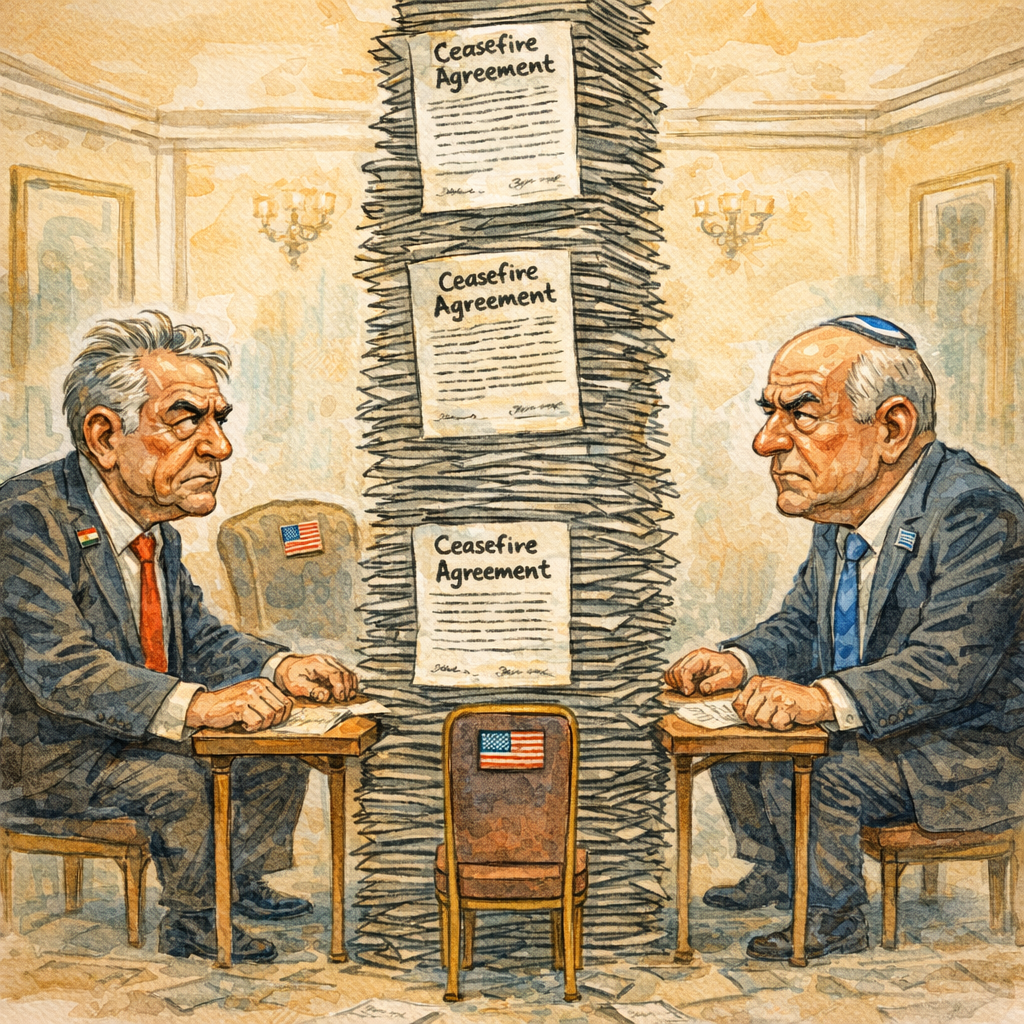 | | Illustrated by AI |
|
Lebanon is mentioned frequently in the Bible. |
Lebanon news for the diaspora — delivered every weekday morning. Free, sharp, ~5 minutes. |
|
|
|
|