|   | Shou el akhbar—Lebanon's in the middle of three very different chess games this Saturday: who fills southern Lebanon's security vacuum when UNIFIL walks out, whether Tehran can keep blocking Beirut's diplomatic momentum, and—plot twist—why Lebanese companies are somehow outpacing most of Europe on AI. Pour the coffee, this one's worth reading slowly. |
|
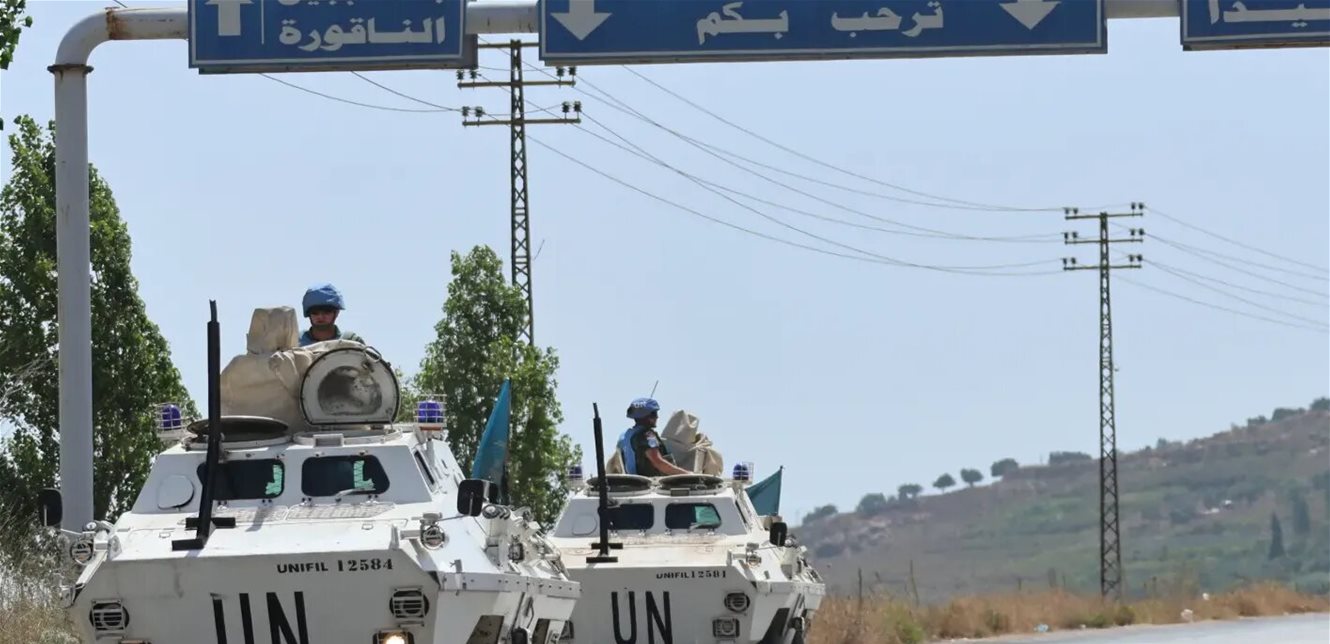
| | The Clock Is Ticking on UNIFIL—And a US-Led Replacement Is Already in the Works
- The UN Security Council's Resolution 2790 mandates UNIFIL's withdrawal within one year of its mandate ending in December 2026, prompting active discussions about what replaces it in southern Lebanon.
- Western sources say Washington and Jerusalem favor a US-led mechanism with limited, coordinated international participation—arguing UNIFIL's coordination role has already been effectively replaced by a US-led ceasefire mechanism in place since November 2024.
- China's UN ambassador Fu Cong, whose country holds the Security Council presidency for May, pushed back Friday, saying the Security Council should "revisit" the withdrawal decision and calling on Israel to stop its bombardment of Lebanon, where more than 2,500 people have been killed since March 2.
- Proposed alternatives include a model inspired by the Multinational Force and Observers in Sinai—US-led, UN-free—with a pilot program to train elite Lebanese units in disarmament, counter-terrorism, and border control.
What to watch: The UN secretariat is expected to present options in June for implementing Resolution 1701, and whether China can build Security Council consensus to pause or reverse the withdrawal timeline will define southern Lebanon's security architecture for years. Iran's Diminishing Hand: Berri's Bloc Breaks a Tripartite Deal—and Tehran's Fingerprints Are All Over It
- An attempt to revive a tripartite presidential meeting—bringing together President Joseph Aoun, Prime Minister Nawaf Salam, and Speaker Nabih Berri—collapsed before it began, as Berri moved to open confrontation with Aoun rather than endorse a consensual negotiation strategy toward Israel talks.
- The breakdown is being read in Arab and Western diplomatic circles as evidence that Tehran and Hezbollah are actively working to block any internal Lebanese consensus that would accelerate direct negotiations with Israel and strip the armed group of its justification for remaining armed.
- Analysts note the irony: pro-resistance media had just been celebrating what they framed as Saudi Arabia's elevation of Berri's standing following a recent Saudi envoy visit to Beirut, portraying it as a brake on the Aoun-Salam momentum toward talks.
The backstory: Since the November 2024 ceasefire, Lebanon's new government under President Aoun and PM Salam has moved toward US-backed negotiations with Israel. Hezbollah and its allies, weakened militarily but still politically entrenched, have resisted any framework that would formalize disarmament or normalize relations with Israel.
Zooming out: The collapse of the tripartite initiative illustrates how Iran's political leverage in Lebanon—even through a weakened Berri—can still disrupt diplomatic momentum that most Lebanese parties and international backers are trying to build. Lebanon's AI Surprise: 37% of Companies Are Already On Board
- Despite its economic crisis, Lebanon ranks within the top 20 globally for AI adoption, with 37% of Lebanese companies using AI technologies—compared to 55%–65% in the US and 25%–35% in Europe, according to senior AI advisor and Berkeley lecturer Cyrille Najjar.
- Over 150 AI startups are currently active in Lebanon, roughly 12% of the workforce is engaged in AI-related jobs, and the Ministry of State for Technology has issued up to 200,000 free training certificates in partnership with Microsoft and Google Cloud Platform.
- Najjar projects a 20%–35% increase in workforce productivity from AI adoption, with GDP potentially rising by 150% if the trend holds—though cybersecurity advisor Roland Abi Najm warns the technology is already eliminating roles in content creation, design, and programming faster than new ones appear.
The bigger picture: Lebanon's multilingual, tech-savvy youth and deep software engineering culture have made it an unlikely AI leader—a rare structural advantage that private investment and state institutions are now racing to translate into durable economic growth. |
|
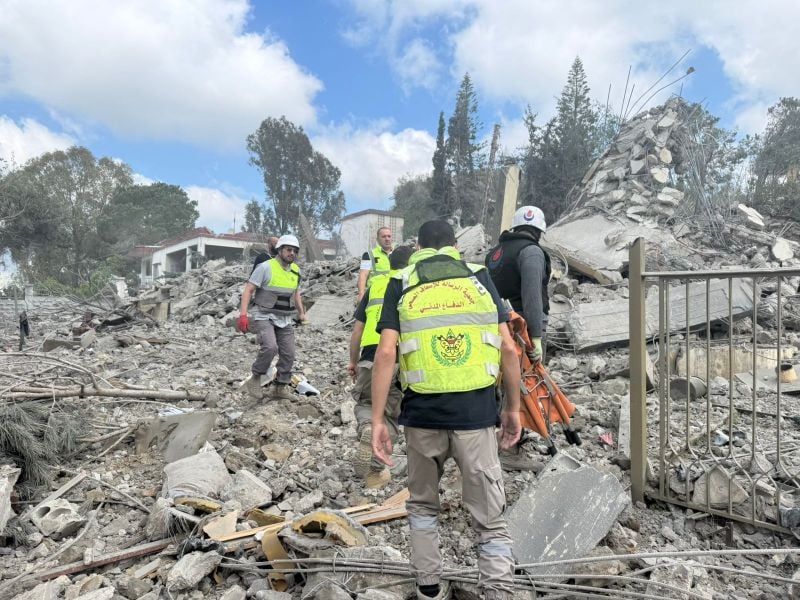
| | - Ceasefire in name only: Israeli strikes on Habboush near Nabatieh killed at least six people Friday as rescue teams were forced to withdraw after drones targeted them—this on a day when the Israeli army also demolished a convent and school in Yaroun.
- 1.24 million and counting: A new IPC report finds roughly 1.24 million people in Lebanon face acute food insecurity between April and August 2026, with Israeli attacks having damaged 22% of Lebanon's agricultural land and displaced the majority of farmers.
- Kafala, in a war zone: An estimated 164,000 migrant workers in Lebanon—most employed through the kafala sponsorship system—were left largely without shelter or support as conflict erupted, with community leaders like Kenyan migrant Mercy cooking 100 meals daily for the displaced out of pooled donations.
- Media law in limbo: Information Minister Morcos told MTV he fears Lebanon's long-awaited media law may never pass, saying his ministry finalized the draft through years of work only to be blindsided when parliament referred it to joint committees—raising doubts about political will to reform the sector.
- Fields, funds, and Ankara: Agriculture Minister Nizar Hani met with Turkey's TIKA development agency this week and agreed to launch a comprehensive cooperation agreement covering technical training, nursery development, and rural empowerment—part of broader efforts to rebuild a sector that sustained significant damages from Israeli strikes.
|
|
| ─ | Parallel Rate | 89,550 LBP | 0.00% | | ─ | Official Rate | 89,500 LBP | 0.00% | | ▲ | Gold | $4,644.5 | +0.65% | | ▲ | Bitcoin | $78,049 | +1.27% | | ▲ | S&P 500 | 7,230.12 | +1.32% |
as of 5:27 AM GMT · Source: lbprate, BDL, Yahoo Finance, CoinGecko |
| | Iran Rejects a Deal—and the Strait of Hormuz Stays Shut
- Iran offered to reopen the Strait of Hormuz in exchange for lifting the US blockade while nuclear negotiations continued; Trump rejected the offer Wednesday, vowing to keep the blockade in place until Iran agrees to American terms on the nuclear issue.
- US talks in Islamabad, led by JD Vance, found Iran unresponsive to demands on its nuclear program; the Trump administration is now reportedly weighing a "short and powerful" wave of targeted strikes, with military options already briefed to the president.
- The World Bank estimates the current oil supply shock may already be the largest ever, with refined products such as fertilizer and petrochemicals expected to fall into short supply as stockpiles drawn down before the strait closed begin to run out.
- Iran has resisted full uranium enrichment curbs for years and went to war twice rather than concede those points, leading analysts cited in The Atlantic to argue both sides currently believe they have won the war.
What to watch: Whether Trump moves on the reported strike options before his mid-May China visit—or holds off—will likely determine whether the strait reopens through negotiation or escalates into another military exchange with global economic consequences. Saudi Arabia's Sports Empire Hits a Budget Wall
- Saudi Arabia's Public Investment Fund confirmed this week it is pulling out of LIV Golf, citing investments that are "no longer consistent with the current phase" of its strategy—the highest-profile casualty of a broader pullback driven by a $73 billion budget deficit last year.
- The retreat extends beyond golf: the 2029 Asian Winter Games were postponed indefinitely, the WTA Finals hosting deal was not renewed, the Saudi Snooker Masters was cancelled two years into a 10-year agreement, and plans to bid for the 2035 Rugby World Cup were reportedly abandoned.
- PIF sold Saudi Pro League club Al-Hilal and is now pivoting toward sports with existing domestic fan bases—combat sports, esports, Formula 1—while directing more capital toward infrastructure ahead of the 2034 FIFA World Cup, which carries enormous construction costs.
The bigger picture: The US-Israel war with Iran has disrupted Saudi oil exports and increased defence spending pressures, accelerating a strategic rethink at PIF that was already underway before the Gulf's geopolitical landscape shifted so sharply. US Appeals Court Blocks Abortion Pill by Mail Nationwide
- A three-judge panel of the 5th US Circuit Court of Appeals ruled Friday that mifepristone—approved by the FDA in 2000—can no longer be distributed by mail and must be dispensed in person at clinics only, a decision that diverges sharply from longstanding judicial deference to FDA drug-safety determinations.
- The ruling was requested by Louisiana's attorney general and effectively extends the state's medical abortion ban by removing telemedicine access, which has become a primary route for abortion care since the Supreme Court overturned Roe v. Wade in 2022.
- The ACLU warned the ruling "will affect patients' access to abortion and miscarriage care in every state," with rural communities, low-income patients, people with disabilities, and survivors of domestic violence expected to bear the sharpest impact.
Zooming out: Friday's ruling sets up a near-certain appeal to a Supreme Court that unanimously preserved mifepristone access in 2024 on standing grounds—meaning the core legal questions about the pill's distribution were deliberately left unanswered and are now back in play. |
|
| | - Under two hours, officially: Kenyan runner Sabastian Sawe returned home a hero after clocking 1h 59m 30s at the London Marathon—breaking the world record by 65 seconds—and was welcomed at Eldoret airport by his tearful wife and a president who handed him two cheques totalling 8 million Kenyan shillings.
- Amor after a decade: Dominican-American singer Leslie Grace released her first full album in over 10 years, the 14-track bilingual Amor, Quién Eres?—a bachata-R&B blend drawing on personal journals and love stories—and every song comes with its own music video, together forming an immersive short film that doubles as a career reinvention at 31.
- Kiwi come home: New Zealand's Capital Kiwi Project released its 250th bird into Wellington's hills this week, a century after kiwi vanished from the capital—the project now covers 24,000 hectares, has more than 5,000 predator traps, and boasts a remarkable 90% chick survival rate.
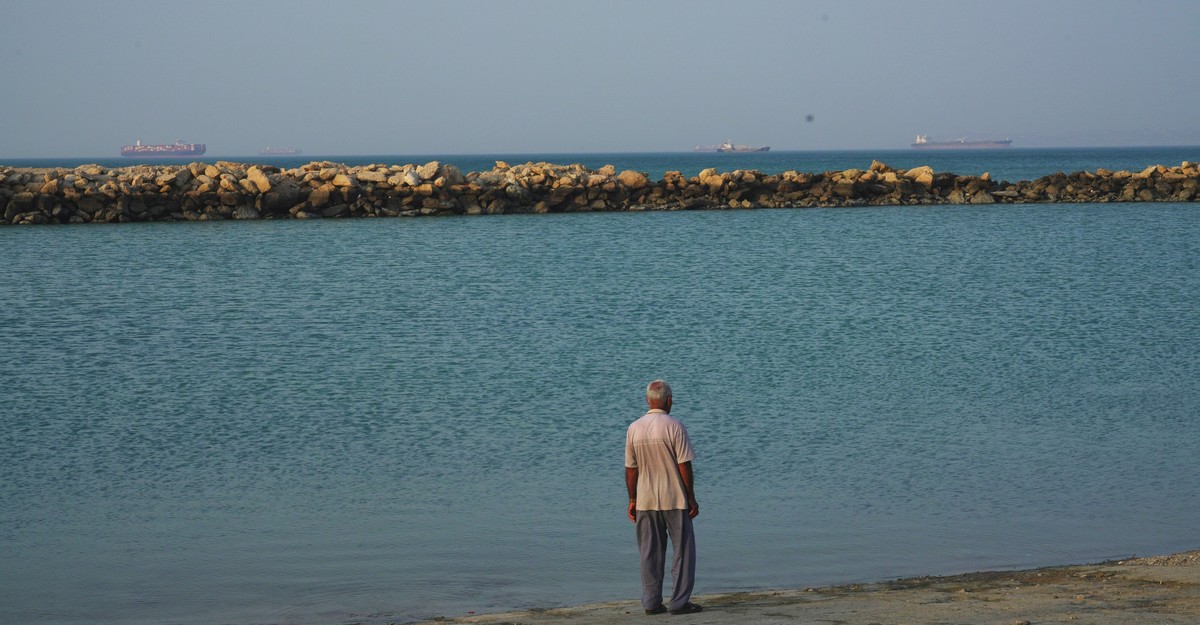
- $150 and a satellite view: Southern Lebanese diaspora scattered across the globe are purchasing high-resolution satellite images for over $150 each to check on their border villages from afar—a quiet, heartbreaking ritual of hope as families try to determine whether their homes are still standing before planning a return.
|
|
Yalla, go make it a good one—see you tomorrow. |
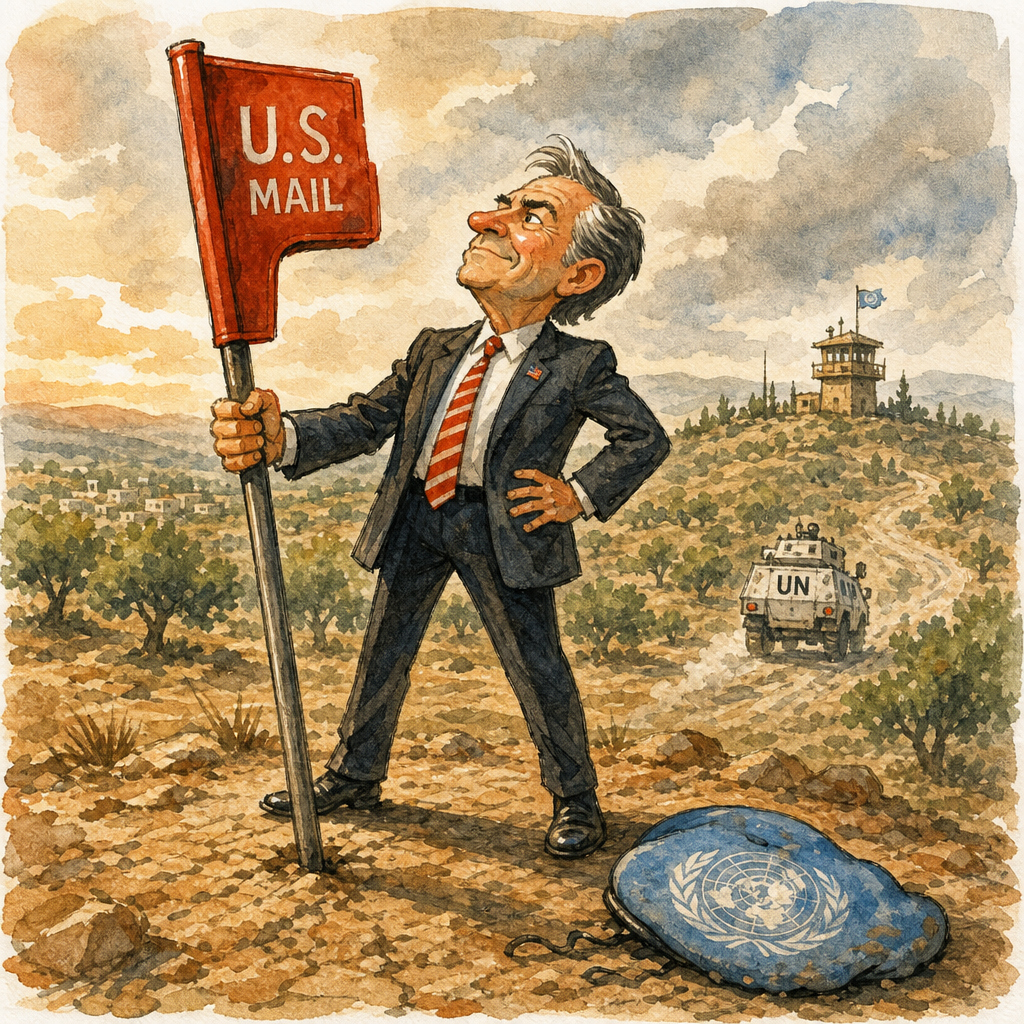 | | Illustrated by AI |
|
When you say something is very important. |
Lebanon news for the diaspora — delivered every weekday morning. Free, sharp, ~5 minutes. |
|
|
|
|