|   | Shou el akhbar — today we sit with a story that starts with a phone call, a 30-second countdown, and a question no one should ever have to answer. We also have Lebanon building a legal case for the history books, and a long-overdue reckoning with exactly who let things get this bad in the first place. Heavy morning, habibi — but you need to know this. |
|
| | "Do You Want to Die Alone?" — How Israel's AI Targeting Worked in South Lebanon
- Ahmad Tarmas, 62, a resident of the southern border town of Tlousa, received a phone call from someone identifying himself as an Israeli army officer, who asked: "Do you want to die with those around you or alone?" — Tarmas replied "alone," left his house, started his car, and was killed by a missile less than 30 seconds later, according to the Los Angeles Times.
- The Israeli army accused Tarmas of acting as a liaison between Hezbollah and local residents; family members said he had been coordinating with civil defense and maintenance teams to help restart the town after the ceasefire — two of his sons were also casualties of the war.
- According to Euronews, AI targeting systems integrated data from mobile phones, surveillance cameras, Wi-Fi signals, drones, civil records, and social media to build a detailed "behavioral profile" for each individual. Israeli media outlets, including the "Jerusalem Post" newspaper, indicated that these systems have become capable of reducing target analysis time from weeks to seconds, by automating sorting, evaluation, and data linking processes.
- Experts in AI and data analysis warned that systems relying on behavioral similarity and family or geographic ties risk including individuals with no direct military role, especially in environments where civilian and organizational life are deeply intertwined.
The bigger picture: The Tarmas case has become a reference point in a growing legal and academic debate about whether AI-driven targeting systems can reliably distinguish combatants from civilians in complex conflict environments. Lebanon Builds Its Legal Case: Aoun Convenes War Damage Coordination Meeting
- President Joseph Aoun chaired a coordination meeting at Baabda Palace bringing together ministers of Interior, Health, Social Affairs, Public Works, Economy, Education, and Agriculture, alongside the Lebanese Red Cross, Civil Defense, and the Council for Development and Reconstruction, to document the full humanitarian, economic, and infrastructure toll of the Israeli war.
- The stated goal is to produce a comprehensive, data-backed file that can support Lebanon's official and diplomatic positions, and potentially serve as evidence in regional and international legal proceedings.
- Aoun stressed the meeting was not meant to duplicate existing efforts but to unify and organize data across institutions, with dedicated contact points designated in each body to streamline information-sharing.
What to watch: Whether Lebanon's documentation effort translates into actionable international legal claims — or remains a diplomatic tool — will depend heavily on the quality and independence of the data compiled across ministries. Four Decades of Complicity: Who Enabled Hezbollah's Parallel State?
- A widely circulated analysis in Daraj argues that Hezbollah's entrenchment across Lebanon's state institutions — from Beirut airport to official schools in its areas of influence — was made possible not only by its own sectarian base but by the active complicity of Lebanon's entire political class across three decades.
- The piece names figures across sectarian lines — from Rafik Hariri and Saad Hariri to Michel Aoun and Émile Lahoud — as having accepted political and financial benefits in exchange for ceding state functions, border control, and judicial independence to Hezbollah's parallel structure.
- It points to specific examples: the Ministry of Education losing authority over schools in Hezbollah-controlled areas, and the 2024 revelation that Beirut airport had been used for the transit of equipment, funds, and fighters for years without ministerial objection.
The backstory: Since the 1990 Taif Agreement ended the civil war, Lebanon's confessional power-sharing system distributed state positions across sects, creating incentives for political leaders to protect their communities' interests through negotiation with powerful actors rather than through state institutions — a dynamic Hezbollah exploited over successive governments.
Zooming out: As Lebanese political factions position themselves ahead of a post-war reckoning, the question of who bears responsibility for Hezbollah's institutional reach is becoming one of the defining fault lines of Lebanon's next political chapter. |
|
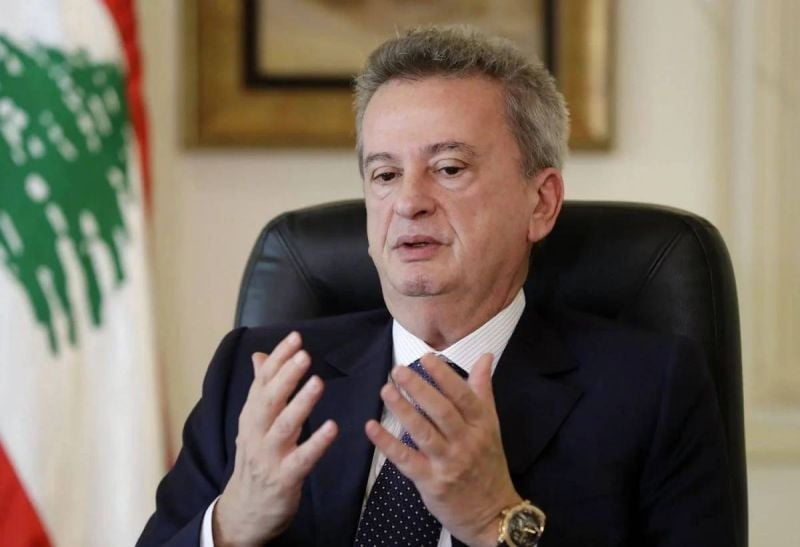
| | - Salameh's tab keeps growing: Lebanon's central bank filed a new complaint against former BDL governor Riad Salameh, accusing him of allegedly routing tens of millions of dollars through a transportation company called V-Invest to conceal transfers to his brother Raja and others close to him, according to L'Orient Today. Investigation is ongoing.
- Over 100 tons and counting: France's fourth medical aid shipment since March landed at Beirut airport, bringing total French aid to over 100 tons — including medications for 80,000 chronic disease patients, vaccines, mental health supplies, and two mobile health units each capable of treating 500 cases.
- Six bodies, one question: Rescuers recovered six bodies from the site of last week's Israeli strike on Haret Hreik, but DNA results are still pending on whether Radwan Force commander Ahmad Ghaleb Ballout — the target of the first Israeli strike on Beirut's southern suburbs since the ceasefire — is among them.
- $6.1B paid, millions waiting: The Banque du Liban says 578,770 depositors have benefited from Circulars 158 and 166 since 2021, with total payouts reaching $6.109 billion through March 2026 — but 610,624 requests have been submitted, meaning tens of thousands are still waiting their turn.
- Third school, same struggle: Horizons International is launching its third school for refugee children in Lebanon, serving some of the nearly 390,000 displaced children in the country — one staff member discovered that siblings in the same community were trading a single foam mattress each night on a concrete floor.
|
|
| ─ | Parallel Rate | 89,500 LBP | 0.00% | | ─ | Official Rate | 89,500 LBP | 0.00% | | ▼ | Gold | $4,716.4 | -0.05% | | ▲ | Bitcoin | $81,224 | +0.39% | | ▲ | S&P 500 | 7,412.84 | +1.03% |
as of 6:11 AM GMT · Source: lbprate, BDL, Yahoo Finance, CoinGecko |
| | Iran Rejects U.S. Peace Proposal as Trump Calls It "Garbage" and Ceasefire Hangs by a Thread
- President Trump said the Iran ceasefire is "on life support" after Tehran rejected a U.S. proposal to end the conflict and submitted a counter-list of demands — including an end to the U.S. naval blockade, compensation for war damage, and recognition of Iranian sovereignty over the Strait of Hormuz — that Trump said he could not finish reading.
- Brent crude climbed above $104.50 a barrel following the deadlock, with the Strait of Hormuz — which before the war carried one-fifth of the world's oil and LNG shipments — remaining largely closed, and OPEC output dropping to its lowest level in more than two decades, according to a Reuters survey.
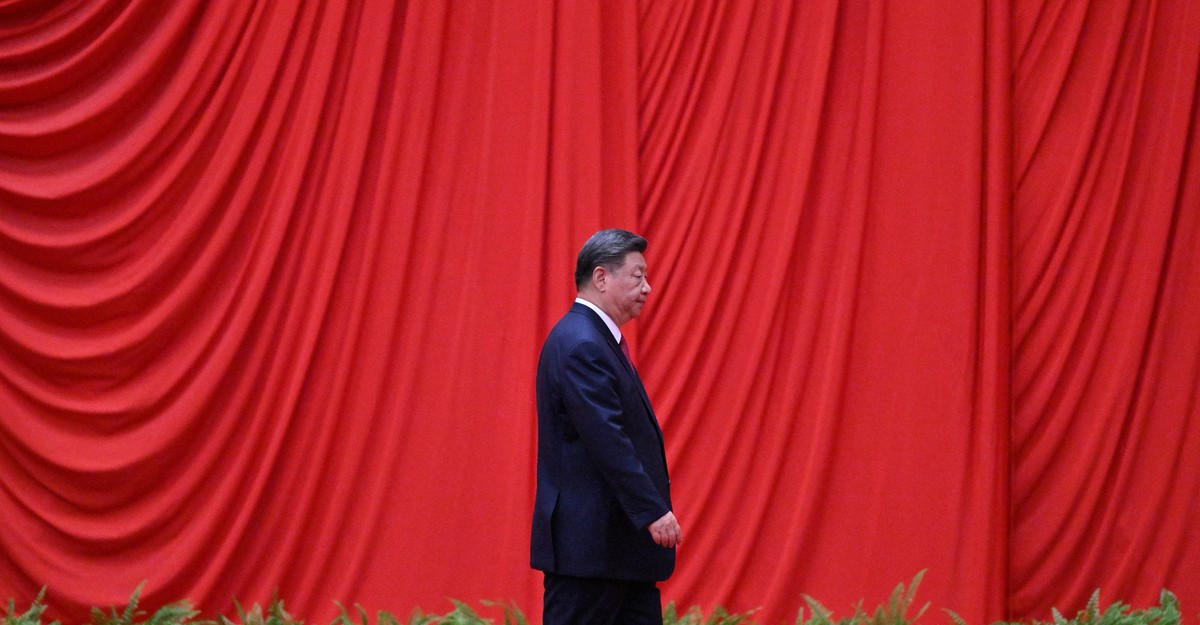
- The U.S. imposed new sanctions on individuals and companies allegedly helping Iran ship oil to China, while Trump was expected to arrive in Beijing, where Iran was set to be among topics discussed with President Xi Jinping.
What to watch: Whether Trump's Beijing visit produces any shift in Chinese pressure on Tehran — or signals a broader realignment of how the Iran conflict intersects with U.S.-China relations — will shape how the next phase of negotiations unfolds. China's Long Game: Beijing Is Betting on American Decline Rather Than Forcing a Confrontation
- A new analysis in The Atlantic argues that China's leaders — including Politburo Standing Committee member Wang Huning, who as early as the 1990s wrote about American social fragmentation after traveling through the U.S. — have built a strategic doctrine around waiting for Washington to exhaust itself militarily, fiscally, and politically rather than directly challenging U.S. power.
- Beijing's approach includes reducing dependence on foreign technology, dominating clean energy and electric vehicle supply chains, and positioning Chinese AI and infrastructure as defaults for the developing world, with the aim of making Chinese economic weight the new center of global gravity.
- The strategy carries risks: foreign governments from the EU to India and Indonesia are raising trade barriers against Chinese exports, and China faces mounting domestic pressures including record-high youth unemployment, deflation in manufacturing, and a looming demographic crisis.
The bigger picture: Beijing's patience strategy depends on the assumption that America's current turbulence is structural rather than cyclical — a bet that history suggests is harder to make than it looks, given the U.S. has rebounded from comparably dire periods before. Saudi-Backed Salafi Commanders Now Lead Yemen's Military in Nearly All Government-Held Territory
- On April 30, Yemen's Presidential Leadership Council head Rashad al-Alimi appointed Salafi Brigadier General Hamdi Shukri as Commander of the Fourth Military Region — a strategic zone covering Aden, Lahj, Taiz, Abyan, and parts of al-Dhale — marking the most significant milestone yet in Salafi commanders' rise to the top of Yemen's military structure.
- Saudi Arabia established the National Shield Forces in 2023 under exclusively Salafi leadership after Riyadh concluded it lacked reliable ground allies, with STC forces backed by the UAE and the Islah party no longer seen as loyal to Riyadh.
- Political analyst Mohammed Sultan warned that while Salafi fighters have proven effective against both Houthis and the STC, the consolidation of military positions based on factional loyalty rather than proficiency could make building a civil state extremely difficult if and when the conflict ends.
Zooming out: Yemen's military restructuring under Saudi-backed Salafi leadership reflects how the country's internal power map has been quietly redrawn — with consequences for any future peace settlement that will need to account for a very different set of actors than those at the table in earlier rounds of talks. |
|
| | - Nearly fifty years, one stage: The Holy Spirit University of Kaslik revived Lebanese theater legend Raymond Jabara's play Charbel — first performed in Rome in 1977 — with students, graduates, and professors performing a new version at Casino du Liban, while Jabbara's full archive was preserved at the university's Phoenix Center for Lebanese Studies.
- Lebanon on film, daily: Lana Daher's debut docufilm Do You Love Me, which premiered at the 2025 Venice Film Festival, is now screening three times daily at Metropolis Cinema in Mar Mikhael — a 75-minute journey through 70 years of Lebanese audiovisual memory, built entirely from archival footage, home videos, and music.
- Darwish delivers again: Lebanese striker Karim Darwish scored in the 82nd minute to seal a 2-1 win for Duhok Club over Al-Qasim in the Iraqi Stars League — his 6th goal of the season and 3rd in his last 5 matches, cementing his place as one of the most consistent Lebanese players competing abroad.
- Doctor at 72, finally: Dawn Zuidgeest-Craft, a mother of four and neonatal nurse practitioner who was denied medical school at 35, is set to graduate from medical school this May and begin a three-year family medicine residency in Michigan — becoming her school's oldest-ever graduate, funded by her own retirement savings.
|
|
Yalla, go make it a good one — see you tomorrow. |
The nay is a traditional reed flute. |
Lebanon news for the diaspora — delivered every weekday morning. Free, sharp, ~5 minutes. |
|
|
|
|