|   | Shou el akhbar. A new study drops a number that should change how everyone talks about Hezbollah's weapons—and it's not the one you'd expect—while Lebanon's classrooms are emptying out in ways that will outlast the bombs. Plus, a long-awaited amnesty bill just died the most Lebanese death possible: everyone wanted it, nobody could agree on who deserved it. |
|
| | Nearly Half of Lebanese Oppose Hezbollah Disarmament—Even Those Who Don't Support It
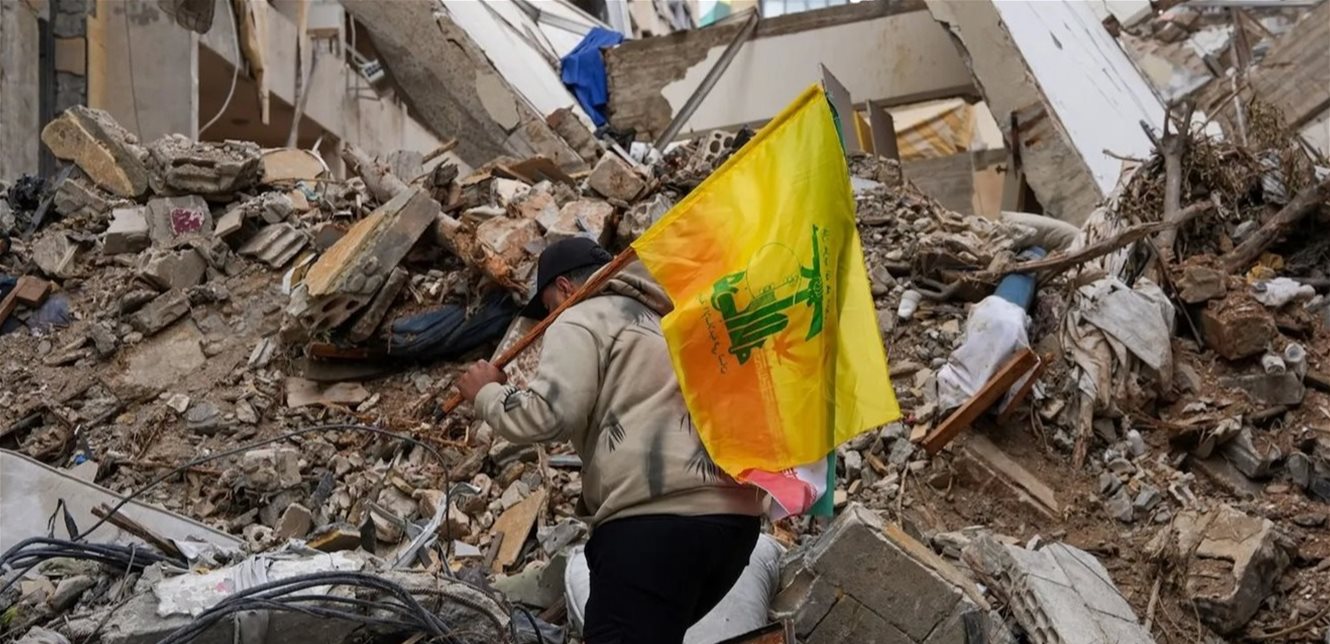
- A King's College London study surveyed more than 2,000 Lebanese citizens and found that while only 18% express political support for Hezbollah, nearly 45% oppose its disarmament—a gap that Foreign Policy says reveals a fundamentally flawed approach by Washington and Tel Aviv.
- The survey found the strongest driver of opposition to disarmament isn't sectarian loyalty or dependency on Hezbollah's services—it's deep moral grievance against the Lebanese state itself, cutting across sects and income levels.
- Security fears also play a role: more than half of participants reported feeling an existential threat from Israel, and those most exposed to conflict were more likely to want Hezbollah to keep its weapons.
- Foreign Policy concludes that external pressure—sanctions, conditional aid, military escalation—targets the wrong variable, and that repeated cycles of Israeli destruction reinforce the very mistrust of the state that sustains opposition to disarmament.
The backstory: Hezbollah has maintained an armed force outside Lebanon's state institutions since the 1980s, justified as resistance against Israeli occupation. After the recent conflict, international and domestic pressure to disarm the group has intensified, but successive Lebanese governments have struggled to translate political will into action on the ground.
The bigger picture: The findings complicate a debate often framed as Hezbollah vs. the state—suggesting that for millions of Lebanese, the two aren't yet separable enough to make disarmament feel safe. Israel's War Has Created a 'Lost Generation' of Lebanese Students, Experts Warn
- Since March, Israeli attacks have displaced more than 1.2 million people in Lebanon, including 500,000 school-aged children, according to UNESCO figures cited by Al Jazeera.
- Some 339 schools are located in active warzones, hundreds more have been converted into displacement shelters, and another 100 are in high-risk zones—affecting access to education for an additional 250,000 children.
- Lebanon's Gini coefficient, a measure of income inequality, rose from 0.32 in 2011 to 0.61 in 2023—and that was before the latest offensive—making the war's educational impact fall hardest on already-vulnerable families.
- Roughly 30% of Lebanon's public school teachers have left the country or changed professions since 2019, with the economic crisis cutting their already-low salaries by approximately 80%.
Why it matters: Experts warn that widening educational inequality—where geography and family income now determine whether a child learns at all—risks entrenching social divisions that Lebanon will spend decades trying to reverse. Lebanon's General Amnesty Law Collapses Under Sectarian Weight
- A general amnesty bill, revived in 2024 partly in response to prison overcrowding and a backlogged judiciary, collapsed after becoming a proxy for each sect's politically sensitive demands: Sunni leaders pushed for Islamist detainees, Christian factions sought amnesty for Lebanese who fled to Israel after 2000, and Hezbollah pushed for drug-related cases.
- The army, the Minister of Defense, and ultimately the President rejected the proposal's terms for Islamist detainees—effectively blocking the bill—even as Hezbollah, which had historically demonized those same detainees, did not oppose their inclusion this time.
- One of the MPs behind the bill acknowledged the judiciary cannot keep pace with its caseload, framing the amnesty as a workaround for a judicial system too broken to reform, a candid admission that Megaphone notes is also a confession of institutional paralysis.
The backstory: A similar amnesty bill was attempted in 2019 during the October protests but failed when demonstrators blocked MPs from reaching parliament. The bill has resurfaced periodically since, each time reflecting whatever political realignment is underway—this version follows the significant weakening of Hezbollah's grip on Lebanese institutions.
Zooming out: The bill's failure—with thousands of detainees still waiting—illustrates how Lebanon's sectarian bargaining system can acknowledge an injustice publicly while remaining structurally unable to fix it. |
|
| | - War's toll, in one dashboard: Lebanon's Health Ministry launched a live data platform tracking the ongoing conflict—380 deaths and 1,122 injuries since the April 16 "ceasefire," with a total of 2,882 dead and 8,768 wounded since March 2, plus 108 medical workers killed.
- Four kids a day: Save the Children reported that Israeli attacks killed or injured more than 4 children per day on average in the first 25 days of the ceasefire, with at least 22 killed and 89 injured since April 16—bringing the total child toll since March 2 to nearly 200.
- French bac, cancelled: France's Ministry of Education scrapped written and oral Baccalaureate and Brevet exams for students in Lebanon and several other Middle Eastern countries, citing "special circumstances"—affected students will instead receive their annual subject averages, with a make-up exam option available in September 2026.
- Minds matter too: Lebanon's Ministry of Social Affairs expanded mental health services across more than 410 displacement and shelter centers, with 35 dedicated support centers for women and children, and a free hotline (1564) that received 3,182 calls during the war period.
- Think before you share: Lebanon's Ministry of Information, UNESCO, and Tele Liban launched a UNIFIL-funded national media campaign called "Share Responsibly," featuring 10 short episodes set in everyday Lebanese locations—taxis, shops, elevators—to combat the spread of misinformation on digital platforms.
|
|
| ─ | Parallel Rate | 89,250 LBP | 0.00% | | ─ | Official Rate | 89,500 LBP | 0.00% | | ▲ | Gold | $4,718.1 | +0.87% | | ▼ | Bitcoin | $81,078 | -0.23% | | ▲ | S&P 500 | 7,400.96 | +0.03% |
as of 6:19 AM GMT · Source: lbprate, BDL, Yahoo Finance, CoinGecko |
| | Microsoft's Israel Chief Steps Down After Inquiry Into Military Surveillance Deal
- Alon Haimovich, general manager of Microsoft Israel, will leave the company following an internal inquiry commissioned after a Guardian investigation revealed that Israel's elite spy unit, Unit 8200, used Microsoft's Azure cloud platform to store mass intercepts of Palestinian civilian phone calls from Gaza and the West Bank.
- The inquiry, conducted by lawyers at US firm Covington & Burling, found Unit 8200 had violated Microsoft's terms of service, which prohibit use of its technology for mass civilian surveillance; the company terminated the unit's access to relevant cloud and AI products.
- Israeli business newspaper Globes reported that Haimovich's departure followed a major ethics controversy at the subsidiary, and that several other managers had also left their positions.
- Microsoft's vice-chair Brad Smith had previously stated: "We do not provide technology to facilitate mass surveillance of civilians"; senior executives including CEO Satya Nadella said they were unaware of the unit's use of Azure for stored intercepts.
What to watch: Whether the inquiry's findings are made public, and whether other tech companies operating in active conflict zones face similar scrutiny over how their platforms are used by military intelligence units. Kuwait's Mass Denaturalization Campaign Falls Hardest on Women
- Human rights organizations unofficially estimate that approximately 300,000 Kuwaiti men and women have been affected directly or by dependency by a sweeping denaturalization campaign over the past two years—representing at least 3% of Kuwait's citizen population of roughly 1.5 million.
- The campaign accelerated after Emir Mishal Al-Ahmad Al-Jaber Al-Sabah dissolved the National Assembly in late 2023 and suspended constitutional articles, with the government framing the revocations as corrections to citizenship files involving forgery or illegal dual nationality.
- Women who obtained citizenship through marriage to Kuwaiti men have emerged as the primary target, with authorities invoking a 1987 decree; affected individuals face loss of jobs, pensions, bank account access, and valid passports, with some deported without due process.
- Activist Lulwa Al-Hussainan, now living in London, received a five-year prison sentence in absentia on charges of "insulting the Emir" after publicly opposing the campaign; the Financial Times reported that Kuwaiti banks restricted account access for those stripped of citizenship.
The bigger picture: Kuwait's campaign is the largest denaturalization drive in the Arab region, and the near-total silence of civil society inside the country reflects how significantly public space has narrowed since the Emir assumed near-absolute powers. Qatar Steps Up Mediation Between Washington and Tehran as LNG Tankers Test Hormuz
- Qatar's Prime Minister and Foreign Affairs Minister Sheikh Mohammed bin Abdulrahman Al Thani held a series of calls with officials in Iran, Saudi Arabia, Pakistan, Turkey, and Kuwait, and met US Vice President JD Vance, Secretary of State Marco Rubio, and White House envoy Steve Witkoff as part of efforts to end the US-Iran war, according to reporting by Axios cited by Deutsche Welle.
- Qatar has been among the countries most affected by the conflict: Iranian strikes hit its main gas facility at Ras Laffan in March, forcing a suspension of production, while closure of the Strait of Hormuz has halted nearly all of its LNG exports.
- A first sign of potential easing emerged when, for the first time since the war began on February 28, a tanker carrying Qatari LNG bound for Pakistan passed through the Strait of Hormuz, according to commodities analytics firm Kpler; Reuters reported Iran approved the transfer to build confidence with mediators Qatar and Pakistan.
Zooming out: Analysts at Chatham House and the Arab Gulf States Institute note that while Qatar is an effective back-channel, the structural constraints of a conflict dominated militarily and economically by the US and Iran limit what any regional mediator can ultimately achieve. |
|
| | - Nancy packs New Jersey: Lebanese pop icon Nancy Ajram sold out Newark Symphony Hall for the first stop of her world tour, with fans traveling from across the northeast U.S.—Billie Eilish, who recently name-checked Ajram in ELLE as one of her "favorite singers," would not have been surprised by the three-block line outside.
- Courage from the front line: Lebanese journalist Edmond Sassine of Al-Araby TV has been nominated for Reporters Without Borders' Press Courage Award in its 34th session—one of 19 journalists on the global shortlist—with the ceremony set for June 1st at the Palais du Pharo in Marseille.
- Elia Abu Madi, still fighting: A deep-dive into the Lebanese-American poet Elia Abu Madi (1889–1957)—pillar of the Pen League alongside Gibran—reveals a sharp-tongued literary brawler whose verses Fairuz and Abdel Halim Hafez both set to music, and whose feuds with Taha Hussein were as legendary as his poems.
- Wizards win the lottery: In a nail-biting NBA draft lottery at Chicago's Navy Pier, the Washington Wizards landed the coveted No. 1 pick after the first three balls drawn matched their combination exactly—while the Utah Jazz defied the odds twice in a row to claim both the No. 2 and No. 3 picks.
|
|
Thanks for reading—see you tomorrow. |
| ✓A. Mountain summer resort |
Aley was a mountain resort. |
Lebanon news for the diaspora — delivered every weekday morning. Free, sharp, ~5 minutes. |
|
|
|
|