|   | Shou el akhbar—Lebanon just sent a letter to the UN calling out Iran's Revolutionary Guards by name, the south is still bleeding, and somehow the Agriculture Ministry is out here building a ten-year national strategy. It's a lot to hold at once: Beirut going formal and public with Tehran in a way that would've been unthinkable two years ago, while a ceasefire that doesn't quite feel like a ceasefire grinds on in the south. Pour the coffee—we've got a full briefing. |
|
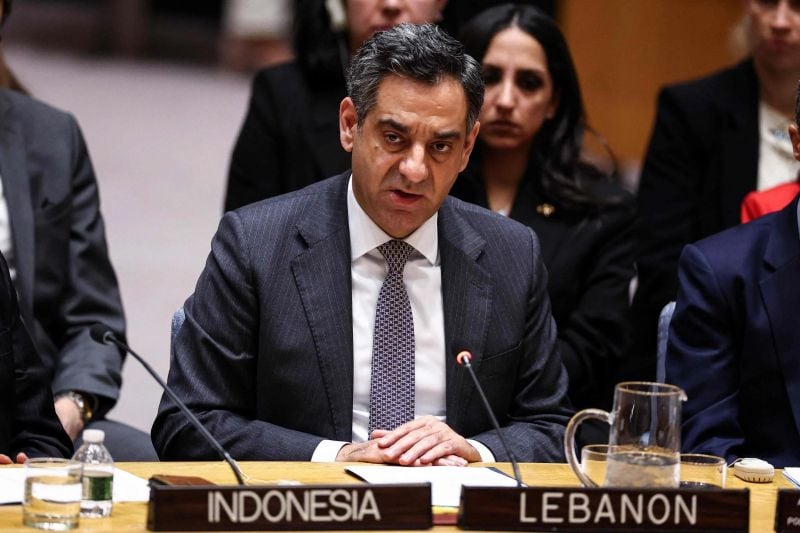
| | Lebanon Takes Iran to the UN—Officially Calling Out the Revolutionary GuardsThe backstory: Iran's influence in Lebanon has operated largely through Hezbollah for decades. After the latest war, Beirut's new government has been trying to reassert sovereignty and distance itself from Tehran—a shift that's now gone formal and very public.
- Lebanon submitted a letter to the UN Security Council, dated April 21 and registered as S/2026/343, accusing Iran's Revolutionary Guards of "illegal acts committed in open defiance of decisions by the Lebanese government" and of dragging Lebanon into a devastating war.
- The letter challenges Iran's account of the Ramada Hotel strike, with Beirut stating the Iranian embassy never coordinated the diplomats' transfer—and that some of those killed were not even officially registered as diplomats under the Vienna Convention.
- Two of the six dead, Ahmad Rasouli and Amir Moradi, were never formally notified to Lebanon as required by Article 10 of the Vienna Convention; Iranian media later reported they were members of the Revolutionary Guards.
- Lebanon also documents Iran's refusal to comply with the expulsion of its ambassador, declared persona non grata by March 29—a move Beirut calls a "clear violation" of diplomatic law.
Why it matters: A formal UN letter accusing Iran of dragging Lebanon into war—signed by the Lebanese government's own envoy—marks a level of public confrontation with Tehran that would have been unthinkable just two years ago. South Lebanon: The War That Won't Stop, and the Support That Won't Quit
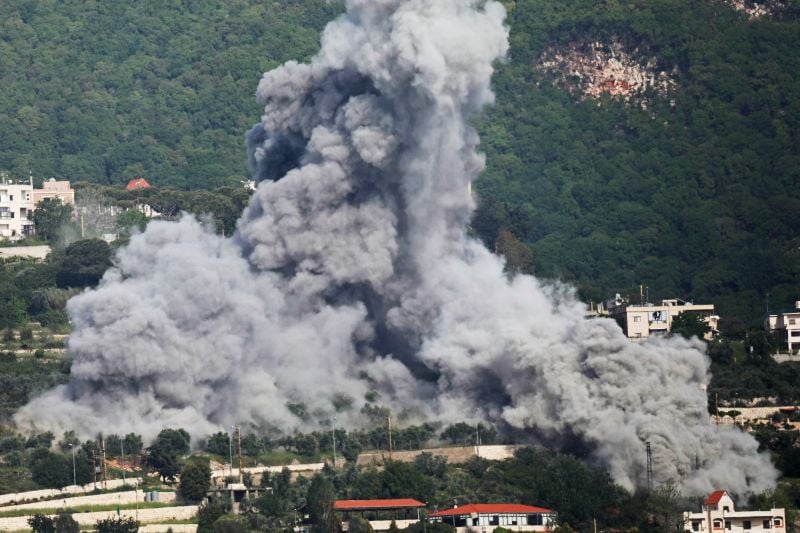
- An Israeli airstrike in Saksakiyeh last Saturday killed nine members of one displaced family sheltering in a building, including four grandchildren and a two-year-old great-granddaughter, relatives said.
- Since the April 16 ceasefire announced by President Trump, at least 400 people have been killed in Lebanon according to the Health Ministry, which does not distinguish combatants from civilians; Israeli authorities report 18 soldiers and 4 civilians killed.
- Israel currently occupies roughly 5% of Lebanese territory in a strip extending up to 10km from the border, where officials say the goal is a Hezbollah-free security buffer zone.
- BBC reporting from southern villages finds that despite exhaustion and displacement of more than 1 million people, many Shia residents still view Hezbollah as their only protection against continued Israeli strikes and occupation.
Zooming out: The gap between Beirut's push to disarm Hezbollah and the lived reality on the ground in the south—where communities see the group as their last line of defense—is the central tension Lebanon will have to navigate to make any peace framework stick. Lebanon's Agriculture Ministry Launches Its First-Ever National Reform Retreat
- Agriculture Minister Dr. Nizar Hani convened the ministry's first-ever national retreat, gathering directors, department heads, and officials from agricultural centers across all Lebanese territories to launch an executive roadmap for the National Agricultural Strategy 2026–2035.
- The strategy is built around four axes: building national agricultural databases including a farmers' registry, expanding scientific research, modernizing agricultural extension services, and strengthening field oversight across production and food sectors.
- Hani framed agriculture as a "sovereign sector" directly tied to food security and national resilience, calling for a shift away from the perception of farming as a marginal trade and toward data-driven, technology-enabled governance.
The bigger picture: With significant farmland already damaged by the conflict in the south, a ten-year national agricultural strategy isn't just bureaucratic housekeeping—it's a signal that Lebanon's institutions are trying to plan for a future beyond the crisis. |
|
"Darabni w baka, saba2ni w shtaka" refers to: Scroll to the bottom for the answer — or play all 10 at sobhiye.news/games/trivia |
| | - 10,000 homes—after the truce: Lebanon's National Council for Scientific Research says 5,386 homes have been completely destroyed and 5,246 damaged since the April 16 ceasefire took effect, with 3,318 truce violations recorded through May 11, according to CNRS director Chadi Abdallah at a press conference.
- Closed doors in Washington: Lebanese delegation chief Ambassador Simon Karam has asked U.S. officials to keep Thursday and Friday's Israel talks away from cameras—no press, no statements, no post-meeting conferences—and has reportedly told Lebanon's Washington ambassador to sit back and observe.
- $400 beats $4 million: An Israeli security institute report reveals Hezbollah has launched more than 80 fiber-optic drones at Israeli forces since the March 2026 campaign began, with roughly 15 hitting targets and killing soldiers—each drone costing as little as $300–$400, defying multimillion-dollar Israeli defense systems.
- Settling south Lebanon—seriously: A far-right Israeli settler movement called Uri Tzafon, co-founded in 2024 and backed by a WhatsApp channel of 600+ members, openly envisions Israeli civilian settlements in southern Lebanon up to the Litani River—the Israeli government has given no public support to the group.
- Taif's unfinished homework: A new analysis argues the 1989 Taif Agreement—while ending Lebanon's civil war—embedded political paralysis by stripping presidential power without creating any mechanism to resolve institutional deadlocks, leaving Lebanon dependent on external mediation every time its leaders stop talking to each other.
|
|
| ─ | Parallel Rate | 89,600 LBP | 0.00% | | ─ | Official Rate | 89,500 LBP | 0.00% | | ▼ | Gold | $4,695.2 | -0.05% | | ▼ | Bitcoin | $79,803 | -1.52% | | ▲ | S&P 500 | 7,444.25 | +0.42% |
as of 6:29 AM GMT · Source: lbprate, BDL, Yahoo Finance, CoinGecko |
| | Saudi and Kuwaiti Strikes Hit Iran-Backed Militias Inside Iraq During the War
- Saudi air force fighter jets bombed Iran-linked militia targets near the kingdom's northern border with Iraq during the Iran war, with some strikes taking place around the time of the April 7 US-Iran ceasefire, according to three Iraqi security officials, a Western official, and two people briefed on the matter.
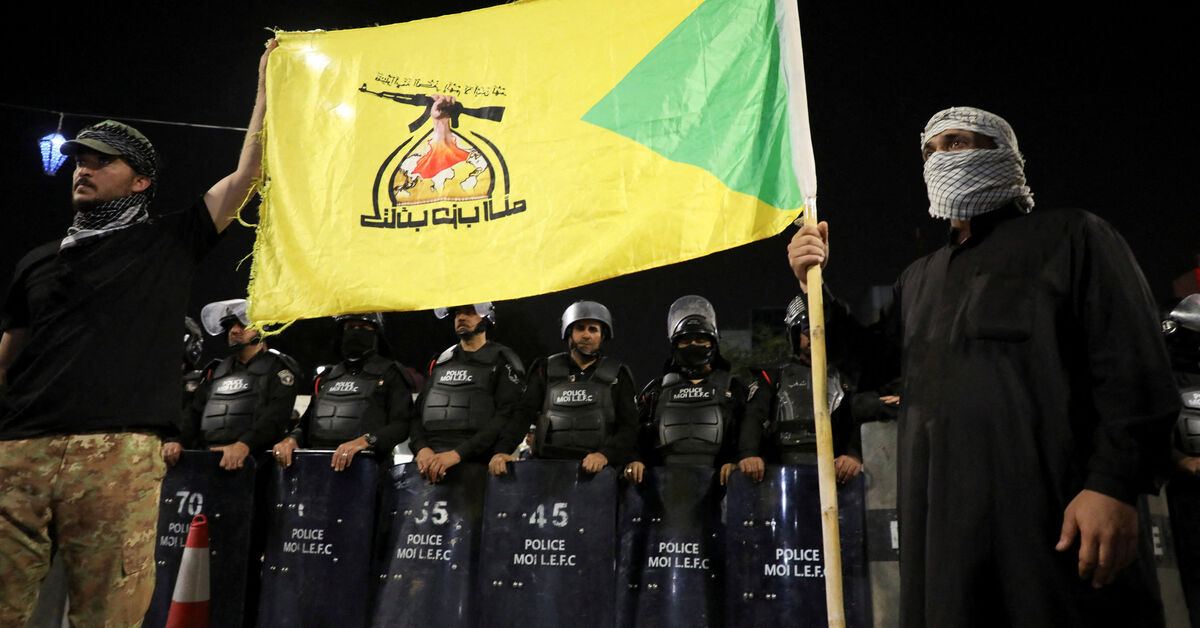
- Rocket attacks were launched from Kuwaiti territory on at least two occasions, hitting militia positions in southern Iraq in April, killing several fighters and destroying a Kataib Hezbollah facility used for communications and drone operations.
- Kuwait summoned Iraq's representative three times during the war to protest cross-border attacks, while Saudi Arabia summoned Iraq's ambassador on April 12; hundreds of drones targeting Gulf states had emanated from Iraqi territory, all sources said.
- Iran-backed militias continue to fly surveillance drones along Iraq's borders with Kuwait and Saudi Arabia conducting reconnaissance, according to four Iraqi security sources.
The bigger picture: The revelation that Gulf states conducted cross-border strikes on militia targets inside Iraq marks a significant escalation in how the Iran war has reshaped security dynamics across the wider Middle East. Chinese Ships Transit Hormuz as Trump Lands in Beijing for Iran Talks
- Multiple Chinese-linked vessels transited the Strait of Hormuz in a 24-hour window coinciding with US President Donald Trump's arrival in Beijing, including a supertanker carrying two million barrels of Iraqi crude that turned off its transponder in the Gulf of Oman, according to ship tracking data cited by Middle East Eye.
- The day before, six additional Chinese-linked vessels crossed the strait—five oil tankers and one LPG carrier—as Iran continues to assert authority over the waterway by imposing transit tolls, while the US maintains its own blockade on Iran-linked ships.
- Trump told reporters before departing that he plans to discuss the Iran war with Xi Jinping, even as he said he did not need Beijing's help to reach a deal with Tehran; China's top diplomat separately urged Pakistan to step up mediation to reopen the strait.
What to watch: Whether the Trump-Xi Beijing meeting produces any concrete alignment on Iran and the Strait of Hormuz—whose closure has disrupted significant global energy flows—will shape the next phase of the conflict's economic fallout. Iraq's New PM-Designate Caught Between Washington's Demands and Tehran's Red Lines
- Iraqi Prime Minister-designate Ali al-Zaidi, a businessman-turned-political candidate described as a "compulsory compromise," faces a direct US demand to reduce the influence of armed factions as the price of Washington's support, while Iran's Quds Force commander Esmail Qaani traveled to Baghdad to signal Tehran's opposition to any government formed to American specifications.
- A leaked committee involving al-Zaidi, outgoing PM Al-Sudani, and Badr Organization leader Hadi Al-Amiri is reportedly preparing a roadmap for restructuring the Popular Mobilization Forces—a proposal that factions like Kataib Hezbollah and Harakat Al-Nujaba have flatly rejected, warning against any weapons surrender "whatever the cost."
- al-Zaidi's position is complicated by the fact that Al-Janoub Islamic Bank, in which he holds a share, was sanctioned by the US Treasury for alleged links to an Iran-backed militia commander; the bank's management denies the accusations.
Zooming out: Iraq's government formation crisis reflects the same Washington-Tehran fault line reshaping politics from Baghdad to Beirut, as both powers compete to define who governs the states sitting between them. |
|
| | - Succession star, Beirut set: Hiam Abbas — yes, the one from HBO's Succession — is starring in a new Lebanese social comedy called Your Turn, 203, alongside Tunisian-Egyptian star Hend Sabry, directed by Cynthia Sawma in her feature debut; filming is planned for Beirut this October.
- Lebanese actress on a roll: Lebanese actress Nawal Kamel reflects on the breakout success of Ramadan 2026 series Bi Khams Arwah, which earned high viewership across the Arab world with its blend of suspense, family drama, and light comedy — a reminder that Lebanese talent keeps delivering even under pressure.
- NBA's king-maker goes to Dallas: Masai Ujiri — the first African to run a major US sports franchise and the architect of the Toronto Raptors' 2019 championship — was named president of basketball operations for the Dallas Mavericks, tasked with building around Rookie of the Year Cooper Flagg after the team holds the 9th, 30th, and 48th picks in this year's draft.
- World Cup bonds, waived: The Trump administration is suspending a bond requirement of up to $15,000 for fans from 5 World Cup-qualified African nations — Algeria, Cabo Verde, Côte d'Ivoire, Senegal, and Tunisia — clearing the way for more fans to make it to the tournament, which kicks off June 11.
|
|
That's your Thursday briefing — go make it a good one, and we'll see you tomorrow. |
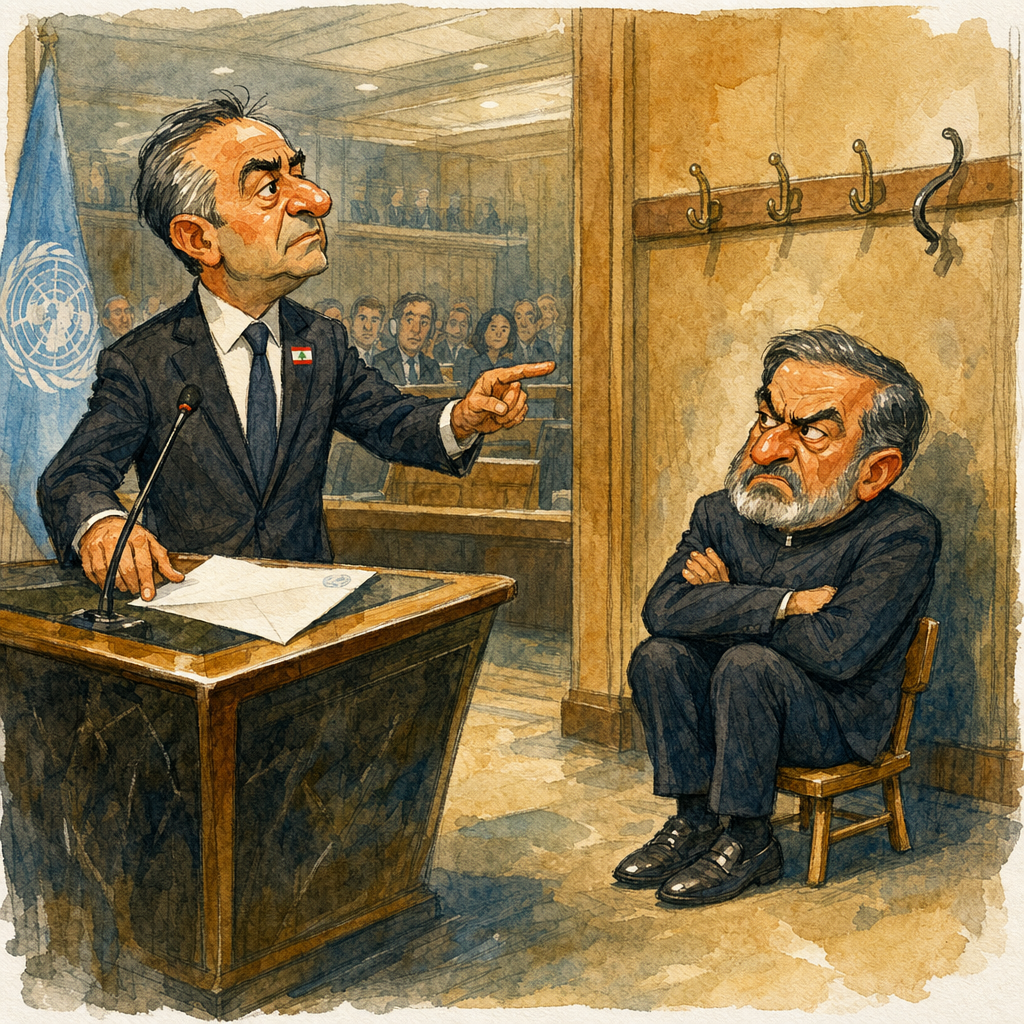 | | Illustrated by AI |
|
Light rhyme, sharp accusation: harm first, complaint second. |
Lebanon news for the diaspora — delivered every weekday morning. Free, sharp, ~5 minutes. |
|
|
|
|