|   | Sabah el kheir. Lebanon's military delegation flew to Washington for historic Pentagon talks — even as Israeli strikes killed at least 14 people across the south and a Beirut suburb the day before — and back in Beirut, tents on the waterfront are telling a story about this war that no ceasefire framework has addressed yet. It's a heavy Friday, habibi — let's get into it. |
|
| | Israel Strikes Beirut Suburb and Kills at Least 14 Across South — Hours Before Washington TalksIsrael hit a Beirut suburb and killed at least 14 people across southern Lebanon on Thursday, the day before Lebanese and Israeli military delegations were set to meet at the Pentagon for their first security talks.
- An Israeli airstrike hit an apartment building in Choueifat — the first strike near Beirut since May 6 — as Israeli forces also pounded Tyre, killing five women and children and a Lebanese soldier, with dozens wounded, per Lebanon's Health Ministry.
- In Sidon, a drone struck a building housing displaced families, killing five and wounding 21, including five children; in Adloun, a separate strike killed six people — four of them two children and their parents — fleeing in a car.
- Prime Minister Nawaf Salam condemned the attacks on Tyre and Nabatiyeh as "collective punishment" and renewed calls for an immediate ceasefire and full Israeli withdrawal.
- At least 3,269 people have been killed in Israeli strikes since the war began, according to Lebanon's Health Ministry, with more than 9,800 wounded.
What to watch: Whether Thursday's escalation hardens or softens each delegation's position at the Pentagon security meeting — and whether Washington can hold the ceasefire framework together while the shooting continues. Lebanese and Israeli Militaries Meet at the Pentagon — With a "Model Zone" Plan on the TableLebanese and Israeli military delegations held security talks at the Pentagon on Friday, ahead of a fourth round of direct political negotiations on June 2–3, with Washington pressing for concrete proof that the Lebanese Army can actually enforce a weapons-free zone.
- "Test" proposals on the table include the army's full security takeover of Beirut's Southern Dahiyeh — eliminating armed manifestations and raiding suspected weapons depots — as well as a "model zone" (zone pilote) in the South where villages would be completely cleared of weapons and tunnels.
- Under the model-zone plan, a US team would verify the army's work before the process expanded zone by zone, running parallel to a gradual Israeli withdrawal.
- Washington pushed back against Israeli attempts to delay the security meeting, confirming the date after Beirut signaled its delegation had departed and was ready to proceed despite the preceding days' escalation.
- The Lebanese Army delegation, led by Director of Operations Brigadier General Georges Rizkallah, is presenting its existing deployment plan — not accepting shared command or instructions from any outside party.
Zooming out: Military talks can consolidate a truce and draw deployment lines, but the deeper questions — what happens to Hezbollah's weapons, the shape of any peace, Lebanon's place in the regional balance — all wait for the political table on June 2. Tents in Central Beirut: How the War Broke the Unspoken Rules of Lebanese DisplacementLebanese displaced by the war are living in tents on Beirut's waterfront — something that never happened in any previous wave of displacement, from 1978 to 2006 — and the reason isn't just a shortage of money or shelter.
- In past wars, displaced people were absorbed within days into schools, monasteries, rented apartments, and neighbors' homes across Lebanon; this time, municipalities, property owners, and entire neighborhoods have refused to house the displaced at all.
- A widespread belief that Israel is targeting only Hezbollah's Shia constituency — reinforced by Israeli propaganda that deliberately distinguishes between Lebanese and "Hezbollah's environment" — has hardened a social and political rupture between Shia and other communities.
- The result is a visible split in central Beirut: displaced families in tents along the waterfront, luxury high-rise residents across the street, with the divide reflecting a deliberate political stance rather than mere economic inequality.
The bigger picture: The isolation unfolding in Beirut's streets echoes a pattern Lebanese politicians spent decades trying to prevent — and analysts warn its social fractures may outlast the war itself. |
|
as of 8:40 AM GMT · Source: Polymarket |
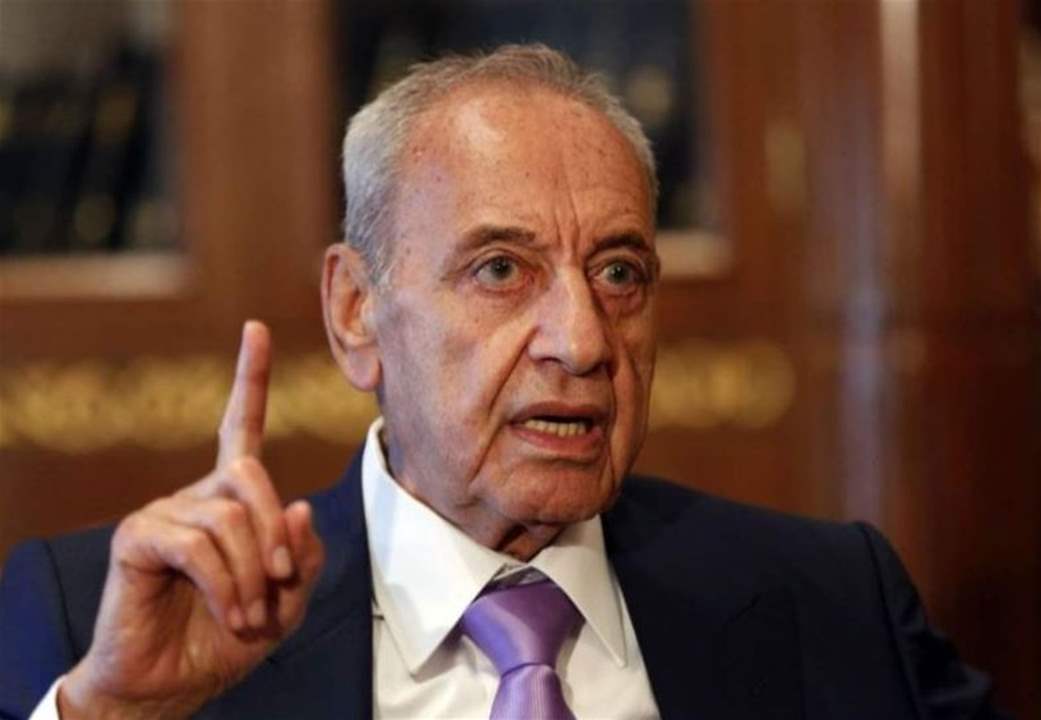
| | - Berri's empty hands: Speaker Nabih Berri says the Pentagon security track "does not concern" him and that Lebanon has "nothing to negotiate with" — no cards, no leverage — insisting indirect talks are the only viable path, while distancing himself from Hezbollah chief Naim Qassem's threat to topple the Salam government.
- A mother and her newborn: The Choueifat strike was an apparent assassination attempt targeting a Hezbollah missile unit commander; instead, it killed Fatima Wehbe and her newborn daughter, with a third woman wounded in the same apartment building.
- Rashaya bids farewell: The town of Al-Muhaiditha in the Rashaya district held full military honors for conscript Saleh Souni, martyred in an Israeli drone strike near the Qaraoun Lake Dam in Western Bekaa — awarded the War, Wounded, and Bronze Military Appreciation medals at his funeral.
- Kataeb stands firm: Kataeb leader Samy Gemayel met PM Nawaf Salam at the Grand Serail Thursday and declared that "no one can stop" the push to restore state sovereignty, offering his party's backing against Hezbollah's threats to bring down the government.
- Mecca diplomacy: Interior Minister Ahmad Hajjar used the Eid al-Adha pilgrimage to lobby his Saudi counterpart in Mecca, calling for intensified joint efforts and continued Saudi support for Lebanon as Israeli strikes and regional tensions mount.
|
|
| ─ | Parallel Rate | 89,500 LBP | 0.00% | | ─ | Official Rate | 89,500 LBP | 0.00% | | ▲ | Gold | $4,544.4 | +1.00% | | ▲ | Bitcoin | $73,701 | +0.77% | | ▲ | S&P 500 | 7,563.63 | +0.59% |
as of 8:29 AM GMT · Source: lbprate, BDL, Yahoo Finance, CoinGecko |
| | Iran Strikes Kuwait With Missiles and Drones as Gulf States Condemn 'Flagrant Aggression'Iran launched missile and drone attacks on Kuwaiti territory on Thursday, drawing condemnation from every Gulf state and the GCC — a significant escalation at a moment when diplomatic efforts aimed at preserving regional security and stability are already under pressure.
- Kuwait's Foreign Ministry condemned what it called "criminal Iranian attacks" targeting its territory, saying the strikes were a "flagrant violation" of its sovereignty and a direct threat to civilians and vital facilities.
- Kuwait's army announced its air defenses had intercepted the missile and drone attacks, telling the public that explosion sounds heard were the result of interception systems, not hits on the ground.
- Saudi Arabia, Qatar, the UAE, Bahrain, and the GCC secretary-general all condemned the strikes in the strongest terms, affirming full solidarity with Kuwait and its right to self-defense under the UN Charter.
- The GCC's secretary-general described the attacks as "treacherous aggression" and a violation of international law, the UN Charter, and UN Security Council Resolution 2817 of 2026.
What to watch: How Kuwait responds — and whether the strikes affect the trajectory of US-Iran talks, which have used Gulf diplomatic channels as part of the broader regional negotiation framework. Former Yemeni President Hadi Dies at 81 in RiyadhAbdrabbuh Mansur Hadi, the consensus president who led Yemen's internationally recognized government through the Houthi takeover and a decade of war, died Thursday in Riyadh at 81 — closing one of the most contested chapters in modern Yemeni history.
- Hadi served as Yemen's vice president for nearly 18 years under Ali Abdullah Saleh before being elected consensus president in February 2012, following the Arab Spring protests that ended Saleh's rule, according to Asharq Al-Awsat.
- In September 2014, the Houthis swept into Sanaa and placed Hadi under house arrest; he fled to Aden, then to Riyadh, from where he led the internationally recognized government throughout the years of war.
- In April 2022, Hadi transferred all his powers to the Presidential Leadership Council headed by Rashad al-Alimi, then withdrew almost entirely from public life in his final years.
The bigger picture: Hadi's death removes the last president to have led a unified Yemen under full international recognition, leaving his contested legacy — consensus builder to some, too slow to act to others — to be debated as the war continues. China Eyes Syria's Reconstruction Despite Uyghur Militant DilemmaChinese companies are quietly positioning themselves inside Syria's post-war reconstruction economy — even as Beijing views Syria's new leadership with deep suspicion over its historic ties to Uyghur militant groups that fought to topple Assad.
- Thousands of Uyghur fighters, organized under the Turkestan Islamic Party, played a significant role in Assad's collapse, with their leaders meeting Syrian President Ahmed al-Sharaa before the offensive that captured Aleppo and advanced toward Damascus, according to Al-Monitor.
- Syria's rebuilding needs are enormous: the World Bank estimates reconstruction costs at roughly $216 billion, while Syria's economy minister said in May 2025 that full reconstruction could ultimately require more than $1 trillion.
- Chinese telecom giant Huawei is among the most active foreign players in Syria's communications sector; a Chinese-linked firm also signed a 20-year memorandum of understanding to develop more than one million square meters across two Syrian free zones.
Zooming out: With US and European firms still sidelined by sanctions and compliance concerns, China's cautious, state-backed approach is filling the investment vacuum in Syria — security anxieties and all. |
|
| | - Ink, chainsaw, and soul: Lebanese artist Hady Beydoun — tattoo legend, sculptor, painter, and poet — is taking his 900-piece catalog to galleries in New York, Tokyo, LA, and Seoul, plus a public art installation potentially 30 meters wide and 8 meters high in reinforced concrete and metal. A one-man creative force doing it entirely on his own terms.
- Lebanon's knockout machine: Abdallah Ondash, the 24-year-old Lebanese Muay Thai fighter with a 23-2 professional record, steps into Lumpinee Stadium in Bangkok on Friday — dreaming of becoming the first Lebanese athlete to capture a ONE World Title. From $50 weeks as a motorcycle mechanic to a six-figure ONE Championship contract.
- Beirut's quiet gallery revolt: Artist Mohammad El Rawas is showing installation works at Saleh Barakat Gallery on Clemenceau Street through June 26, mixing oil painting, dolls, anime figures, and giclée prints into multi-sensory pieces that challenge how we look at Lebanese culture, war memory, and the gap between art and life.
- Arsenal's Budapest dream: Kai Havertz, who scored the winner in Chelsea's 2021 Champions League final, is in line to start for Arsenal against PSG in Budapest on Saturday — arriving as Premier League champions for the first time since 2004 and hungry for a second European crown.
|
|
Thanks for reading — see you tomorrow, inshallah. |
Balila is seasoned chickpeas. |
Lebanon news, every weekday morning. Free, sharp, ~5 minutes. |
|
|
|
|