|   | Sabah el kheir. Lebanon's turning 100 in constitutional years, Israel is redrawing maps nobody agreed to, and the UN peacekeepers who've been watching all of it since 1978 might be heading for the exit—all before your morning coffee gets cold. Big morning. Let's get into it. |
|
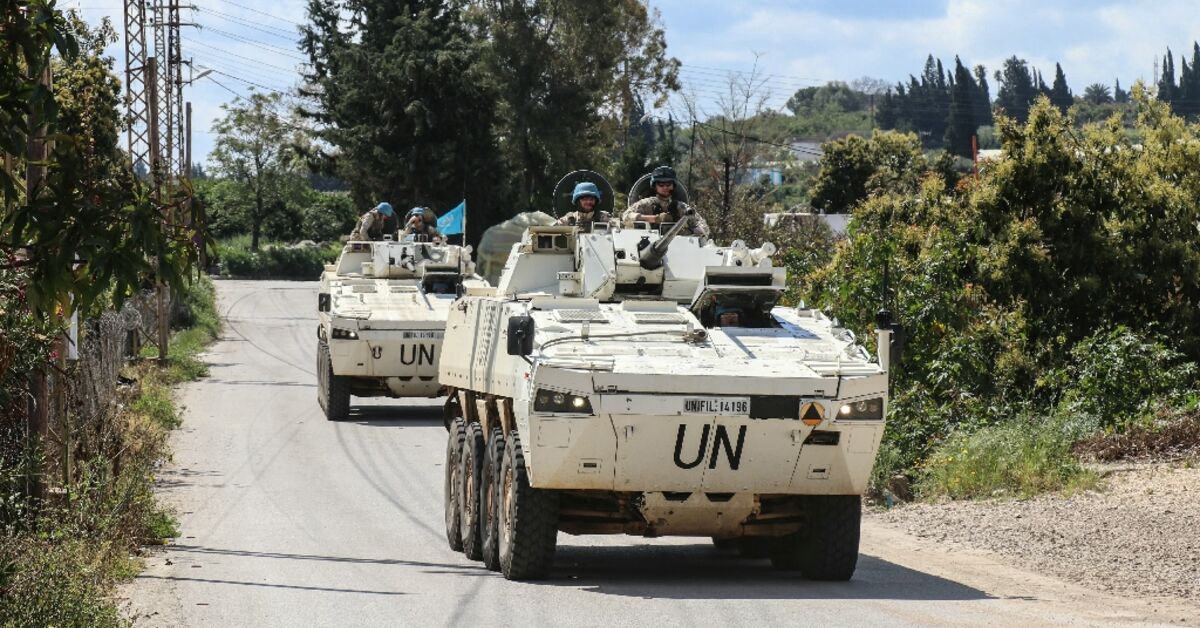
| | After 48 Years, UNIFIL May Leave Lebanon With Nothing to Replace ItThe UN peacekeeping force that has stood between Lebanon and Israel since 1978 is running out of mandate—and possibly out of time. With its December 31 expiry approaching and the US and Israel pushing for an exit, Lebanon is scrambling for alternatives that may never arrive.
- UNIFIL currently fields roughly 7,500 peacekeepers from nearly 50 countries along the 120-kilometre Blue Line; two Lebanese officials told AFP that Beirut's preference is to preserve some form of UN presence after December 31, even a downsized one.
- Options under discussion include a slimmed-down UN mission or an expanded mandate for UNTSO, the regional peacekeeping body established in 1948, though a US veto could block any new Security Council proposal.
- If no UN arrangement is reached, Italy, France, and Spain—all with major UNIFIL contingents—have expressed willingness to remain under bilateral or EU frameworks, though diplomats warn that patchwork accords would be unwieldy.
- A worst-case gap would leave no impartial monitor on the ground: "There wouldn't be any international witness," a Western diplomatic source said, warning of dangerous competition over the narrative.
What to watch: The UN secretary-general's report to the Security Council, due by June 1, will signal whether a viable multilateral formula exists—or whether Lebanon faces a full peacekeeping vacuum at year's end. Israel's "Gaza Model" Moves North of the LitaniIsraeli forces have pushed beyond their declared "Yellow Line" buffer zone along the Litani River, advancing toward Nabatieh and expanding into the Western Beqaa—in what analysts describe as a deliberate strategy of incremental occupation mirroring what happened in Gaza.
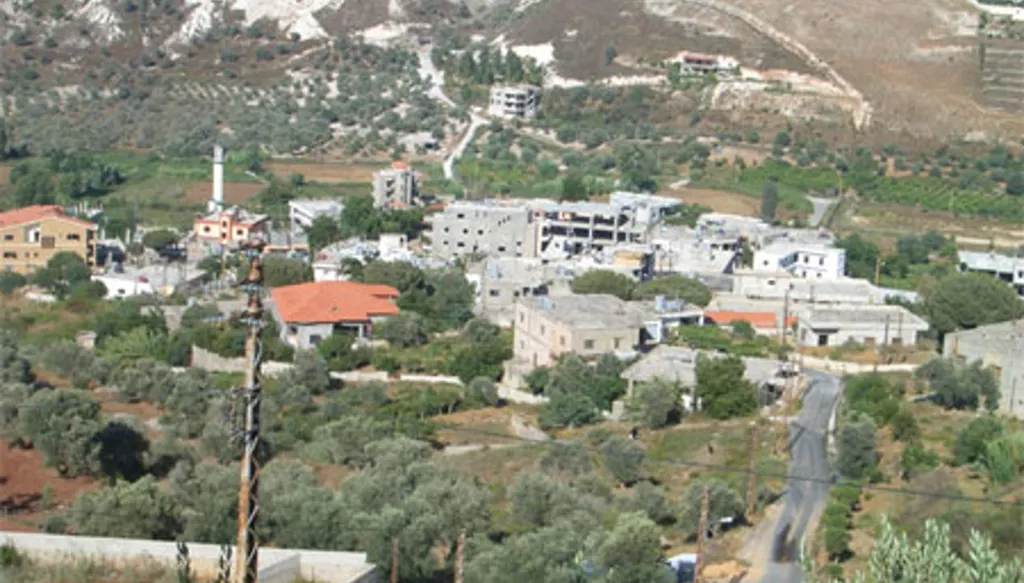
- Occupation forces have reached the outskirts of Meifdoun, a town that geographically overlooks Nabatieh city, after earlier tightening control over Zawtar al-Sharqiyah and surrounding hills including Kfar Tebnit, Shoukin, and Harouf, according to Daraj.
- In Gaza, a similar incremental approach saw Israeli control expand from a declared 53% of territory to an estimated 63%, with a new "Orange Line" drawn and no Israeli withdrawal signaled—a pattern now being applied in the South.
- Israeli military experts publicly describe Hezbollah's booby-trapped drones as a "catastrophe," which analysts argue serves as media cover to justify deeper territorial advances while diverting attention from the scale of urban destruction.
Zooming out: The Israeli negotiating delegation in Washington is simultaneously pressing to end UNIFIL and demanding "freedom of movement" beyond Resolution 1701, which would effectively require redrawing Lebanon's geographical borders. One Hundred Years of the 1926 Constitution—And Lebanon Has the ReceiptsLebanon's constitution turned 100 on May 23rd. A century in, the document drafted to anchor a new republic has become, in the words of one analysis, a "contract of coercive cohabitation"—renewed not by consensus but by spoils, crisis, and exhaustion.
- The Taif Agreement's transfer of presidential powers to a sectarian Council of Ministers eliminated individual accountability: "No one was responsible for failure because everyone was a partner in it," according to Al Modon's analysis.
- The constitution's preamble phrase—"no legitimacy for any authority that contradicts the charter of common living"—has functioned in practice as a veto instrument, enabling any major sect to freeze elections, block governments, or paralyze appointments.
- Proposed reforms include a semi-presidential system with strong constitutional minority guarantees, a Senate-style body for fateful issues, administrative decentralization, a civil personal status law, and full state monopoly on weapons.
The bigger picture: The centenary lands as Lebanese institutions remain frozen across multiple fronts, making the constitutional debate less academic exercise and more an urgent question of whether the current framework can survive another decade, let alone another century. |
|
as of 6:29 AM GMT · Source: Polymarket |
What is tannour bread? | | | | Traditional clay oven bread |
|
Scroll to the bottom for the answer — or play all 10 at sobhiye.news/games/trivia |
| | - Dibbine in the crosshairs: Israeli forces are advancing on the town of Dibbine in the Marjeyoun district from the Khiam axis under heavy aerial and artillery cover; its capture would break the eastern defensive line connecting south Lebanon to the Lebanese interior and expose supply routes to Khiam, Hasbaya, and Marjeyoun.
- Sour's SOS: Residents of Sour have issued a formal plea to the Lebanese president, parliament speaker, and prime minister demanding the city be declared an open zone free of armed presence, with full Lebanese Army deployment and guaranteed humanitarian corridors — calling its protection a national, not local, cause.
- Hezbollah says khalas to talks: Hezbollah's parliamentary bloc rejected direct Lebanon-Israel negotiations again, insisting Beirut lacks the leverage to stop the war, while Israel simultaneously announced it would "deepen" operations in Lebanon and keep Washington talks focused on disarming the group.
- AI, fake photos, real badges: An Iraqi detainee identified as Tariq Al-Husseini fabricated photos of himself with senior officials using AI tools to bluff his way into Lebanese security circles and attempt to reach Hezbollah, while maintaining near-daily contact with an army intelligence brigadier general now under investigation.
- Workers' right, finally in writing: The International Court of Justice ruled by 10 votes to 4 that the right to strike is fully protected under International Convention No. 87 of 1948 — a decision Lebanon's National Federation of Workers' and Employees' Unions called historic.
|
|
| ─ | Parallel Rate | 89,600 LBP | 0.00% | | ─ | Official Rate | 89,500 LBP | 0.00% | | ▲ | Gold | $4,593 | +2.08% | | ▼ | Bitcoin | $73,459 | -0.41% | | ▲ | S&P 500 | 7,580.06 | +0.79% |
as of 6:20 AM GMT · Source: lbprate, BDL, Yahoo Finance, CoinGecko |
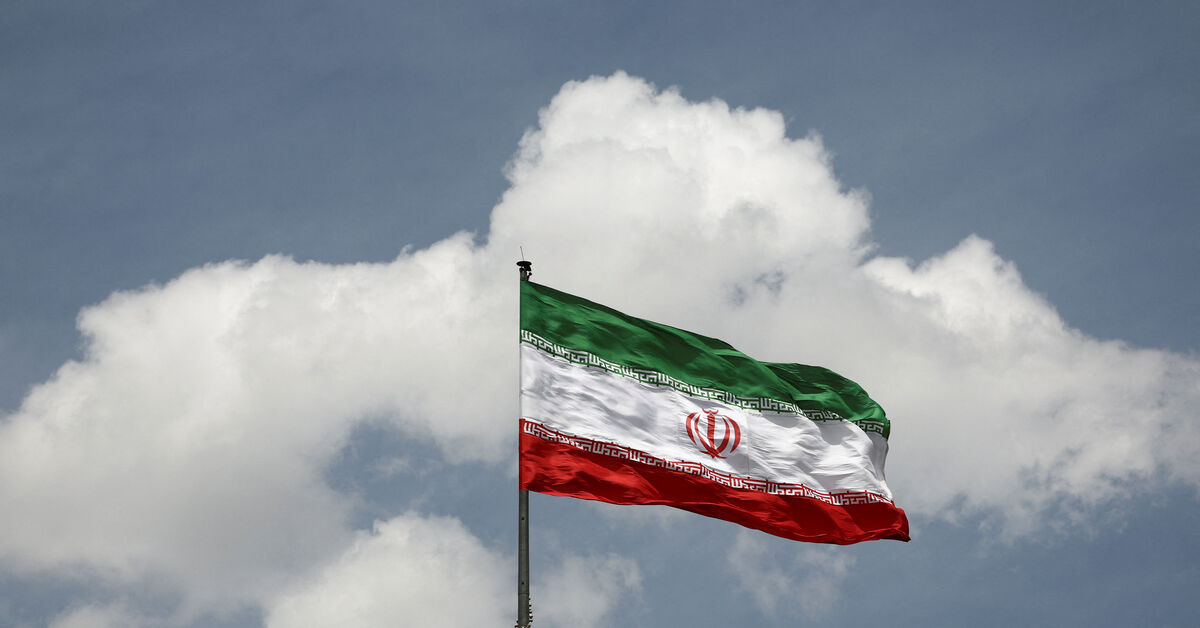
| | Iran's Enriched Uranium Stockpile Is the Real Nuclear Talks WildcardUS-Iran nuclear negotiations are circling one central problem: a large portion of Iran's highly enriched uranium survived the June bombing campaign, and nobody fully knows where it is or how much remains.
- When Israel and the US struck Iran's nuclear sites in June, Iran had 440.9 kg of uranium enriched to 60% purity — enough, if enriched further, for 10 nuclear weapons, according to IAEA estimates cited by Reuters.
- The IAEA believes "a bit more than 200 kg" of the 60% stock sits in a tunnel complex in Isfahan that appears largely unharmed by the June strikes; Iran has not allowed inspectors back to verify.
- Trump posted Friday that the buried enriched uranium must be "unearthed" and destroyed in coordination with Iran and the IAEA — while Iranian sources say Tehran might agree to ship half abroad and dilute the rest inside Iran.
- Iran's supreme leader has reportedly directed that the 60% material not be sent abroad, complicating any deal framework before ceasefire extension talks conclude.
What to watch: Whether Iran allows IAEA inspectors back into its surviving enrichment sites will likely determine whether a broader nuclear agreement is achievable or whether talks stall on verification alone. Oil Dips on Ceasefire Hope, But the Strait of Hormuz Stays ShutA tentative US-Iran ceasefire extension deal sent oil prices lower on Friday — but markets are tempering their optimism, because the Strait of Hormuz remains largely closed and any supply recovery is expected to be slow.
- Brent crude slipped 0.8% to $91.97 a barrel on Friday morning, still well above the roughly $70 per barrel it traded at in late February before the war began.
- US and Iranian negotiators reached a tentative ceasefire extension deal Thursday; Iran had not yet publicly confirmed it, and the agreement was still awaiting President Trump's final sign-off as of Friday morning.
- The tentative accord includes a clause that Iran would not impose tolls on ships transiting the Strait of Hormuz, while the US would gradually lift its sea blockade on Iranian ports.
- Asian markets responded positively: Tokyo's Nikkei 225 jumped 1.8% and South Korea's Kospi gained 2.3%, both trading near record highs.
Zooming out: Even if a ceasefire holds, analysts warn that shipowners may hesitate to re-enter the Persian Gulf and that oil and gas production recovery will be gradual rather than immediate, keeping energy markets volatile. UN Blacklists Israel for Warzone Sexual Violence — a FirstFor the first time in the UN's annual conflict-related sexual violence report, Israel has been added to its blacklist — alongside Russia — after the secretary general's office verified 31 cases of sexual violence by Israeli forces against Palestinians.
- The UN verified 31 cases carried out against 14 men, 7 women, 9 boys, and 1 girl, including rape, gang rape, forced nudity, and violence to genitals, committed by Israeli military, police, and prison service personnel.
- 13 of the verified cases occurred in 2025, with the remaining 18 in the two prior years; the UN noted its investigations had been obstructed by the Israeli government.
- Israel's ambassador to the UN accused Secretary General Guterres of spreading antisemitic lies and announced Israel would refuse contact with his office for the duration of his tenure.
The bigger picture: Russia was simultaneously added to the blacklist for the first time, with 310 verified instances of conflict-related sexual violence in Ukraine — making this report's expansion of the list one of its most significant in scope. |
|
| | - Kitchen as a lifeline: Lebanese diaspora members around the world have been turning to their kitchens — rolling grape leaves, making tabbouleh — as a way to stay connected to home, with food writer Andrée Maalouf, who left Lebanon in 1976, capturing the phenomenon across three books on Lebanese gastronomy published with Albin Michel.
- Baalbek through a Nobel pen: In May 1907, future Nobel laureate Ivan Bunin took the train from Beirut to Baalbek with his wife Vera and pianist David Schor, writing his immortal poem "The Temple of the Sun" the very next morning — a literary pilgrimage that called Baalbek "stronger, and more beautiful" than even the Pyramids.
- Eid selfies, worldwide: Muslims across many parts of the globe marked Eid al-Adha on May 27, with some regions celebrating on May 28, gathering at mosques and open-air grounds for morning prayers, sharing sacrificial meat in three equal parts — family, friends, and the poor — with a girl photographed holding a balloon outside Beirut's Mohammad Al-Amin Mosque among the celebrations.
- Rafa, finally unfiltered: Netflix's new four-part documentary on Rafael Nadal goes deeper than any camera has before — coaches, opponents, family, and Nadal himself all on record — tracing the Mallorcan prodigy from a ranked-51 Davis Cup upset in 2004 to his quiet retirement announcement to his family.
|
|
Yalla, go enjoy your Saturday — see you tomorrow. |
| ✓D. Traditional clay oven bread |
Tannour bread is from clay ovens and served in Lebanese restaurants. |
Lebanon news, every weekday morning. Free, sharp, ~5 minutes. |
|
|
|
|