|   | Sabah el kheir. While Lebanon's diplomatic delegation lands in Washington with a ceasefire demand, Israeli forces have crossed the Litani and planted a flag on Beaufort Castle — and back home in the south, ordinary people in Tyre and Nabatieh are doing something that may matter just as much: publicly telling Hezbollah they've had enough. It's a heavy Monday, habibi — let's break it all down. |
|
| | "Free of Weapons": Southern Lebanese Residents Challenge Hezbollah's Role in the WarResidents of Tyre and Nabatieh have done something politically explosive: issued public appeals calling for their cities to be declared weapon-free zones under Lebanese state authority, a direct challenge from within Hezbollah's own southern base.
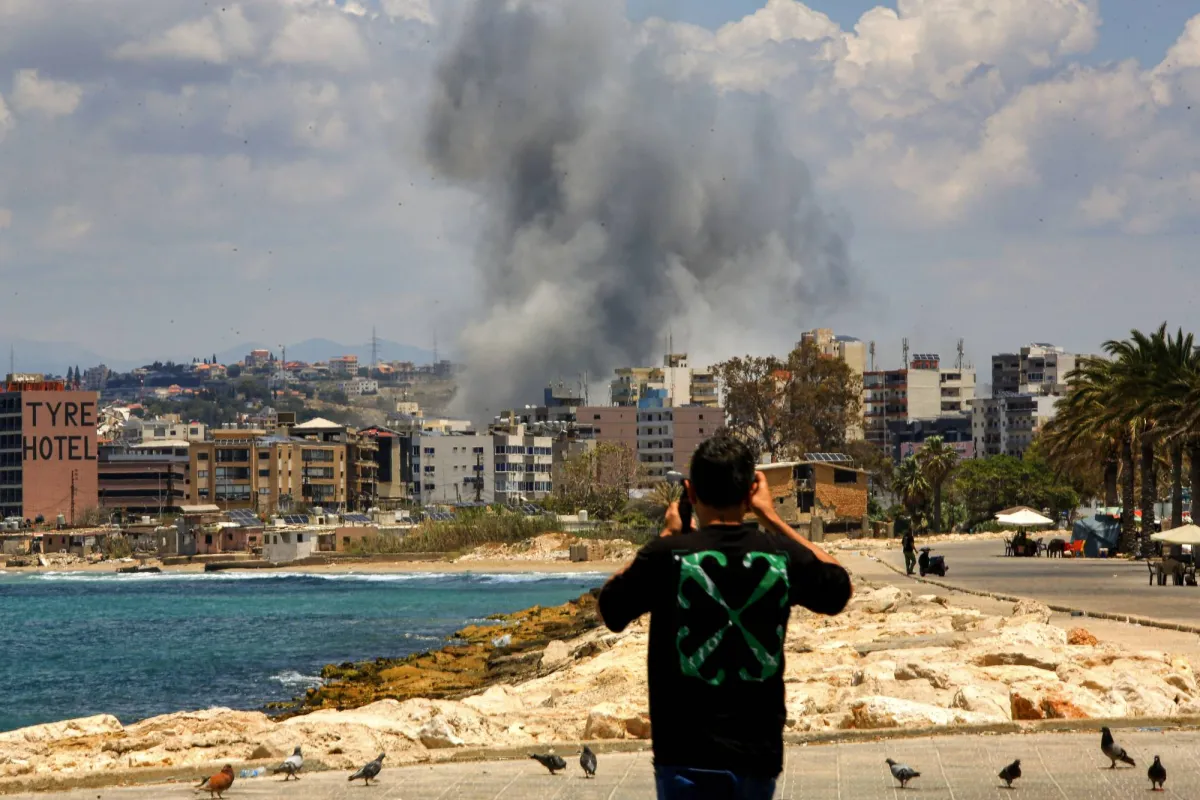
- The Tyre appeal called for declaring the city an "open city" free of weapons, strengthening Lebanese army deployment, and launching urgent Arab and international diplomatic moves to protect it from Israeli strikes, citing humanitarian catastrophe and the destruction of more than half the city.
- Hours later, roughly 220 signatories in Nabatieh — activists, academics, cultural and economic figures — issued a similar appeal calling for state protection and a safe zone free of anything that could expose residents to danger.
- Academic researcher Dr. Harith Suleiman told Asharq Al-Awsat the appeals reflect a "popular collapse" of confidence in Hezbollah's military role and a growing conviction that the state is the only viable refuge.
- Signatories were careful to frame the weapon-free demand as humanitarian, not political — arguing the goal is to remove the pretext for Israeli airstrikes, not to take a factional side.
What to watch: Whether these grassroots appeals build into an organized political force, or remain symbolic pressure in a region still under active bombardment. Israel Crosses the Litani and Raises Its Flag Over Beaufort CastleIsraeli forces crossed the Litani River and seized Beaufort Castle — known as al-Shaqif — marking their deepest ground incursion into Lebanon since the 2000 withdrawal and fundamentally shifting the battlefield reality ahead of Washington negotiations.
- The Golani Brigade, 7th Armored Brigade, Givati Brigade, and Fire Brigade expanded the ground assault, while Israeli Security Minister Israel Katz announced Shaqif's inclusion in a formal "security zone" and "yellow line."
- Control of Beaufort grants Israel fire and intelligence oversight over Nabatieh, Iqlim al-Tuffah, Marjayoun, and cuts communication arteries between the Eastern Sector and Western Bekaa, according to Al Modon.
- Hezbollah responded with 25 military operations, including rocket barrages toward Kiryat Shmona, Nahariya, Liman, and Safed — signaling it would expand its fire range in response to Israeli territorial gains.
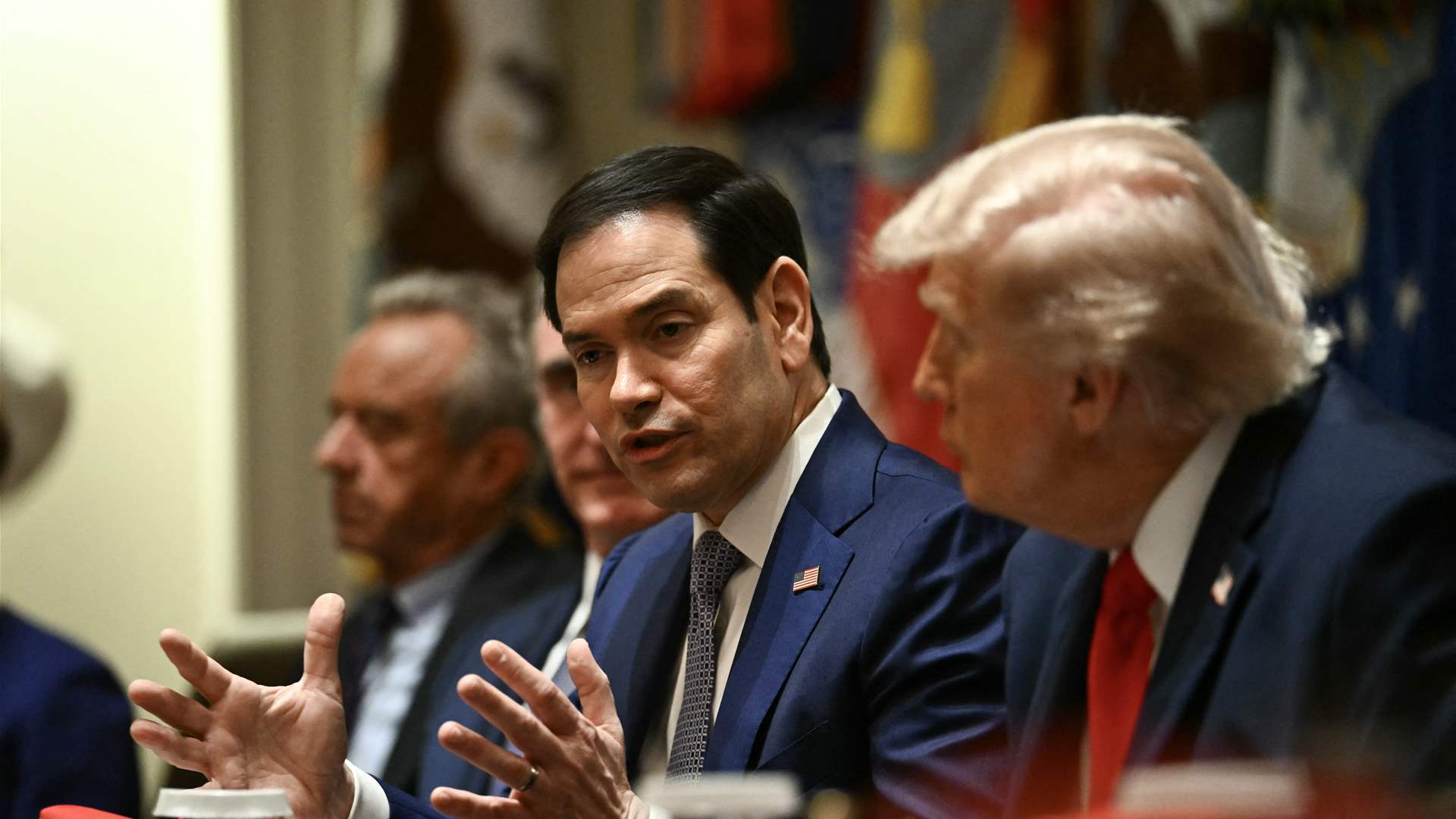
- Prime Minister Nawaf Salam described the escalation as "dangerous and unprecedented," while Lebanese diplomatic efforts through contacts with US Secretary of State Marco Rubio have so far produced, per Al Modon, only "general promises."
Zooming out: With the Lebanese delegation heading to the US State Department while Israel advances on the ground, the gap between Lebanon's demand for a ceasefire-first framework and Israel's conditions-first posture has never looked wider. A Regional Consensus Takes Shape: Iran Won't Hold Lebanon's Negotiating CardDiplomats abroad are increasingly aligned on one principle: Lebanon's ceasefire track must be separated from Iran's nuclear negotiations with the United States — a position that would strip Tehran of a key regional lever.
- Diplomatic assessments cited by An-Nahar indicate a foreign consensus that linking the Lebanon track to Iran-US talks is unacceptable, partly because it would preserve Iran's influence over Gulf states through Hezbollah.
- The Gulf Cooperation Council's latest statement reinforced this separation, with regional actors also pointing to ongoing debates in Iraq over Shiite factions surrendering weapons to state authority as a parallel pressure point.
- The "Call of Tyre" and "Call of Nabatieh" are seen by diplomats as potentially valuable — aligning closely with the president and the prime minister's positions and offering what An-Nahar describes as a foundation for "a dignified Lebanese solution."
The bigger picture: Hezbollah's exposure in this war, and the collapse of its "unity of fronts" narrative, has quietly eroded the international tolerance that once gave its weapons political cover. |
|
as of 7:31 AM GMT · Source: Polymarket |
What sea did Phoenicians explore beyond the Mediterranean? Scroll to the bottom for the answer — or play all 10 at sobhiye.news/games/trivia |
| | - Rubio on the line: US Secretary of State Marco Rubio is personally leading diplomatic efforts to consolidate the ceasefire in Lebanon; if the push succeeds, an official announcement is expected following the political negotiating session scheduled for Tuesday, June 2.
- Pentagon round: no deal: The Lebanese military delegation in Washington refused to discuss any direct political items, rejecting proposals to form a military coordination committee with Israel or establish a buffer zone south of the Litani River, with sources confirming no agreement was reached on any point discussed.
- Washington's ceasefire math: US officials believe Hezbollah initiated the current round of confrontation on March 2 and also opened the 2023 front — an assessment Washington is using to justify its refusal to call on Israel to halt fire first, according to sources cited by MTV Lebanon.
- France pulls the alarm cord: French Foreign Minister Jean-Noël Barrot informed his Lebanese counterpart Youssef Rajji that Paris will request an emergency session of the UN Security Council in response to Israel's expanded military operations and sweeping evacuation orders across southern Lebanon.
- 13 years later, still pending: Three brigadier generals from South Lebanon Intelligence testified that singer Fadel Chaker had no military involvement with Ahmad al-Assir and played no role in financing his armed group during the Abra clashes; the case was postponed until June 23 pending a final verdict.
|
|
| ─ | Parallel Rate | 89,600 LBP | 0.00% | | ─ | Official Rate | 89,500 LBP | 0.00% | | ▼ | Gold | $4,538.3 | -1.19% | | ▼ | Bitcoin | $72,952 | -1.16% | | ▲ | S&P 500 | 7,580.06 | +0.79% |
as of 7:24 AM GMT · Source: lbprate, BDL, Yahoo Finance, CoinGecko |
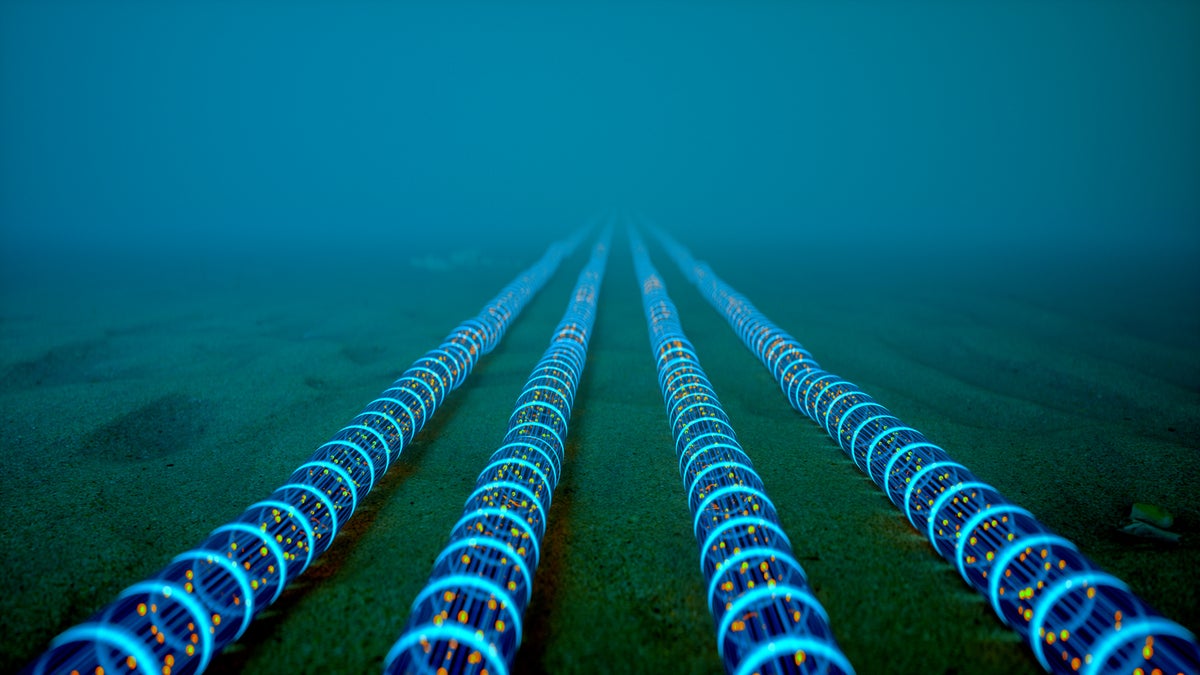
| | Iran's Threat to Undersea Cables Puts the Global Internet at RiskTehran has floated plans to impose tariffs on submarine cables running through the Strait of Hormuz — a chokepoint carrying a critical share of global internet traffic — turning a regional conflict into a potential digital crisis for the rest of the world.
- Undersea cables carry more than 99 percent of all international digital data traffic; the Strait of Hormuz and the Red Sea are among the narrowest and most vulnerable corridors in the entire global network, according to The Independent.
- In 2024, four Red Sea cables were cut after a Houthi missile strike caused a commercial ship to drag its anchor through a cable-dense area, affecting 25 percent of data traffic flowing between Asia and Europe.
- Experts say satellites — including low-Earth-orbit networks like Starlink — cannot replace undersea cables at scale, and warn the real solution is diversifying routes across geopolitical regions rather than adding more cables in the same corridors.
The bigger picture: The convergence of military conflict and digital infrastructure in the Middle East is exposing how few redundant routes exist for the internet traffic that underpins global banking, healthcare, and communications. SoftBank Pledges €75 Billion for Europe's Largest AI Data Center — in FranceJapan's SoftBank just made its biggest AI infrastructure bet outside the United States, committing up to €75 billion to build a network of computing clusters in France that would dwarf anything Europe has seen before.
- The initial commitment covers €45 billion to build 3.1 gigawatts of capacity in the northern Hauts-de-France region by 2031, with a further 2 gigawatts planned — a full 5-gigawatt complex equivalent to the output of five nuclear power stations, according to the Financial Times.
- The deal came together after French President Emmanuel Macron and SoftBank's Masayoshi Son dined in Tokyo in early April, with Macron pitching France's nuclear power supply and fast-tracked approvals for AI facilities.
- SoftBank is also part of a consortium planning 5 gigawatts of AI infrastructure in Abu Dhabi with G42, OpenAI, Oracle, Nvidia, and Cisco, and has committed more than $60 billion into OpenAI.
Zooming out: The race to build AI infrastructure is reshaping where global capital flows, with Europe, the Gulf, and the US all competing to anchor the next generation of computing capacity on their soil. Ethiopia Heads to the Polls — Amid Conflict and Rights ConcernsMore than 57 million Ethiopians voted on June 1 in the country's seventh national election since its 1995 constitution — a significant democratic moment for Africa's second most populous nation, taking place against a backdrop of active internal conflict.
- 47 political parties and more than 10,000 candidates competed for seats at federal and regional levels; the ruling Prosperity Party refrained from fielding candidates in a portion of available seats to create space for opposition representation.
- Ethiopia recorded average annual GDP growth of around 7.5 percent during the past electoral cycle, with projections for this year exceeding 10 percent, according to Al Jazeera.
- Rights groups and 41 countries issued a March statement flagging serious human rights concerns, citing ongoing conflicts in Tigray, Amhara, and Oromia regions, a stalled transitional justice process, and the targeting of journalists and opposition figures.
What to watch: Whether the post-election landscape produces the more inclusive political arrangement the ruling party has signaled, or whether those unresolved conflicts overshadow whatever mandate emerges. |
|
| | - Paris sings for the South: A benefit concert titled "Melodies for Lebanon" was held in Canada, with 100% of proceeds going to children in South Lebanon through CNEWA — piano, soprano, and organ performing works by classical composers alongside original compositions by Canadian musician P.O. Gagnon.
- PSG make history in Budapest: Paris Saint-Germain retained the Champions League title, beating Arsenal 4-3 on penalties after a 1-1 draw, becoming only the second club after Real Madrid to retain the trophy since the competition was rebranded in 1992.
- Tripoli deserves a second look: A walking tour of Tripoli's ancient Mamluk souks, Crusader-era citadel, Khan al-Saboun, and the recently restored Mina waterfront reveals a city of extraordinary heritage — and a seafood meal that cost less than half what you'd pay anywhere else in Lebanon.
- Carmen, but make it electric: French animated film Viva Carmen, a bold riff on Bizet's 1875 opera rendered in blazing color and bold brushstroke animation, premiered at Cannes and Annecy.
|
|
Thanks for reading — see you tomorrow, habibi. |
Phoenicians sailed into the Atlantic. |
Lebanon news, every weekday morning. Free, sharp, ~5 minutes. |
|
|
|
|