|   | Shou el akhbar — on a Friday where the news refuses to slow down. A ceasefire framework exists on paper while the strikes continued the same day it was announced, civil registry workers are in Beirut keeping southern Lebanon's civil records alive in black folders, and the government quietly filled 140 leadership posts and called it state-building. It's a lot — let's get into it. |
|
| | Update: Lebanon-Israel Talks Yield Framework — But Fighting Continues and Hezbollah Rejects ItThe fourth US-mediated trilateral meeting produced a ceasefire framework this week, with pilot zones and army deployment terms agreed on paper — but Israeli strikes resumed within hours of the statement, and Hezbollah's secretary general called the talks "absurd, humiliating and disgraceful."
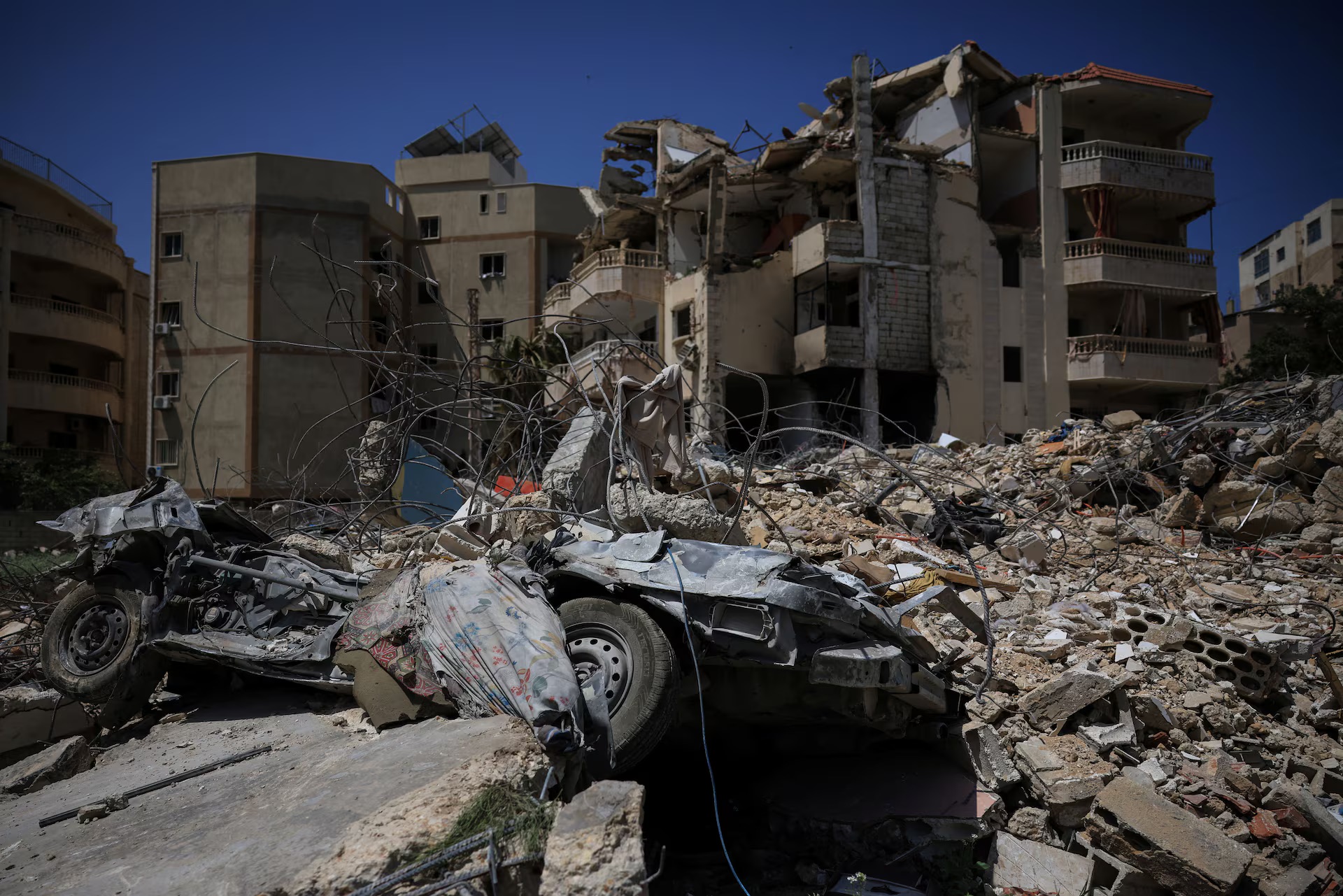
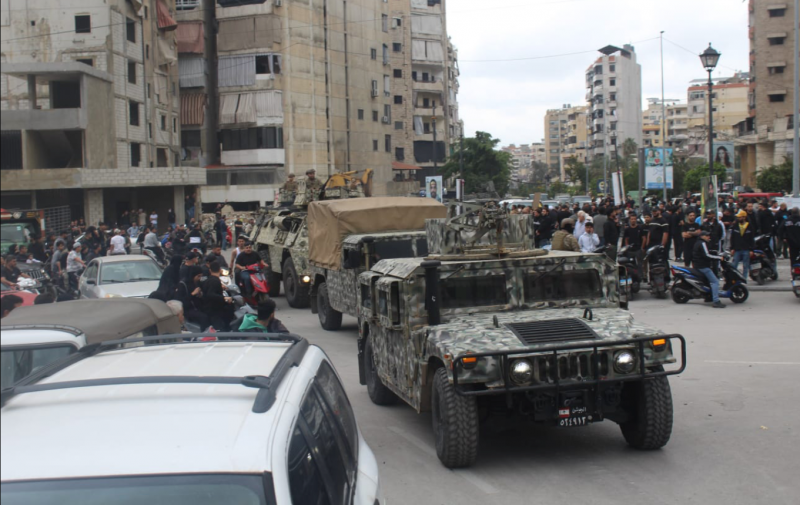
- The June 2–3 meeting produced agreement on "pilot zones" — beginning with Western and Eastern Zawtar and Beaufort (Ash-Shaqif) Castle — where the Lebanese Army would exercise exclusive control without any non-state armed presence.
- Key conditions include dismantling non-state armed groups and condemning Iran's regional attacks; 32 Israeli strikes were reported on the same day, resulting in multiple casualties.
- President Aoun called the agreement "the last chance," while Hezbollah's Naim Qassem said the group made no commitments to anyone "not to resist aggression."
- Both parties are set to reconvene on the political and security tracks during the week of June 22 to work toward a comprehensive agreement.
What to watch: Whether the pilot zone framework survives its first field test — and whether domestic actors in Lebanon reach enough alignment before the June 22 reconvening — will define if this round ends differently than the last. "We Were Displaced Like These Documents": How Lebanon Rescued Millions of Civil Records from the WarWhen Israeli strikes threatened to destroy the handwritten birth certificates, marriage records, and death certificates of entire southern communities, Lebanon's Interior Ministry made an unglamorous but consequential call: move the documents — and the people who read them — to Beirut.
- About 20 employees from southern Lebanon's governorate offices now work out of the fifth floor of an Interior Ministry building in Beirut's Sanayeh district, surrounded by large black folders — many of them in tatters.
- The relocation was driven by Lebanon's chronic failure to digitize public records, which left millions of identity documents — births, marriages, divorces, deaths — physically vulnerable to airstrikes.
- "We were displaced just like these documents," one employee told L'Orient Today — a line that captures what the war has done to southern Lebanese civilian life beyond the visible destruction.
The bigger picture: Lebanon's paper-based bureaucracy, long a symbol of state dysfunction, has now become a front line in the war — and the race to digitize isn't just a reform story anymore. Lebanon Launches National Governance Program to Rebuild the Public SectorMinister of State for Administrative Development Fadi Makki, under the patronage of Prime Minister Nawaf Salam, launched a national program this week to train newly appointed public sector leaders in governance, anti-corruption, and public finance — a quiet but substantive state-building move.
- The government says it has filled more than 140 leadership positions — including board members, regulatory body heads, and executive leaders — over the past year and a half, many drawn from the private sector and academia.
- Makki also launched a platform linking public institutions with universities, experts, and researchers, funded by the UNDP, the EU, and the Government of Denmark.
- The initiative is framed as part of a broader "reconstitution of state administrations 2030" program, alongside a new national anti-corruption strategy currently in development.
Why it matters: Filling those leadership posts is one thing; the harder test is whether a structured training program can turn those appointments into functioning institutions that Lebanese citizens actually experience. |
|
as of 4:43 AM GMT · Source: Polymarket |
What continent did Phoenicians possibly reach? Scroll to the bottom for the answer — or play all 10 at sobhiye.news/games/trivia |
| | - €100M for the Lebanese Army: The EU Council approved 100 million euros in aid to the Lebanese Army Thursday — bringing total recent EU assistance to 182 million euros — explicitly to help the state assert its monopoly over arms and disarm non-state actors like Hezbollah.
- Blue helmet, black day: A UNIFIL peacekeeper died Thursday after mortar shells struck his position near Marjayoun in southeastern Lebanon overnight; two other peacekeepers were injured and are being treated at a UNIFIL medical facility. UNIFIL has launched an investigation and called on all actors to ensure UN personnel safety.
- Lira? Still here, apparently: Finance Minister Yassine Jaber says there is zero risk of a currency collapse, pointing to strict management of the LL57 trillion (equivalent to $637 million) in circulation — a "liquidity austerity" strategy designed to starve speculators of the dollars they'd need to crater the lira.
- Drones over the cedars: Lebanon's Ministry of Agriculture, with Chinese support, launched a drone program deploying seven advanced JT20 aircraft to protect forests and agricultural crops — each covering 9 to 11 hectares per hour, part of the ministry's 2026–2035 digital agriculture strategy.
- Paris sends its envoy: French presidential envoy Jean-Yves Le Drian met Lebanese Forces chief Samir Geagea in Maarab for over an hour, reaffirming France's commitment to Lebanese sovereignty and discussing an upcoming French-organized conference in support of the Lebanese Army.
|
|
| ─ | Parallel Rate | 89,250 LBP | 0.00% | | ─ | Official Rate | 89,500 LBP | 0.00% | | ▼ | Gold | $4,466.2 | -0.21% | | ▼ | Bitcoin | $63,008 | -1.96% | | ▼ | S&P 500 | 7,584.31 | -0.33% |
as of 4:33 AM GMT · Source: lbprate, BDL, Yahoo Finance, CoinGecko |
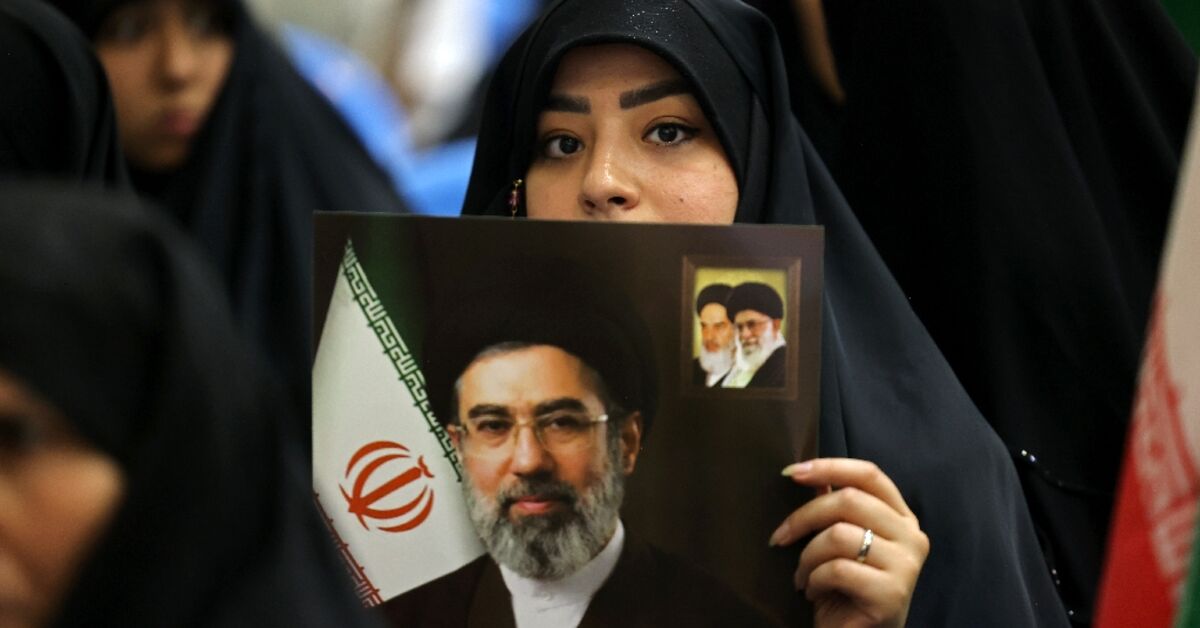
| | Iran's New Supreme Leader Steps Out of the Shadows — BarelyMojtaba Khamenei was barely known to Iranians when he was named supreme leader after his father Ali Khamenei was killed in a US-Israeli airstrike — and he's remained largely invisible since, communicating only through written statements.
- Mojtaba has issued a dozen written messages as leader, reprising his father's confrontational ideology, including a statement Thursday warning that "the malicious enemy" sought to "plant the seeds of doubt, despair, fear, mistrust and division," according to Al-Monitor.
- Unlike his father — who served as president from 1981 to 1989 before becoming supreme leader — Mojtaba held no government position prior to his appointment, though US Treasury sanctions in 2019 described him as having represented Ali Khamenei in an official capacity.
- He is seen as close to the Revolutionary Guards leadership — a connection analysts believe proved crucial in his selection by the Assembly of Experts clerical body.
- According to Bloomberg, citing anonymous sources and Western intelligence reports, Mojtaba has amassed wealth estimated at more than $100 million, including investments in British real estate and European hotels through shell companies.
What to watch: Whether a supreme leader with no public track record, no clerical seniority — he was elevated to ayatollah rank only upon appointment — and no independent political base can consolidate authority over Iran's competing power centers remains the central open question. Zelenskyy Writes Directly to Putin, Calls for Face-to-Face TalksFor the first time since Russia's full-scale invasion in 2022, Ukrainian President Volodymyr Zelenskyy published an open letter addressed directly to Vladimir Putin, proposing a personal meeting and a full ceasefire for the duration of any negotiations.
- Zelenskyy proposed Switzerland, Turkey, or Arab states as possible neutral venues for talks, ruled out Moscow and Kyiv, and called for an all-for-all prisoner exchange as a first step, according to The Guardian.
- Trump called a potential Zelenskyy-Putin meeting "great," saying both sides would need to make compromises; the US House separately passed legislation providing more than $1 billion in security and reconstruction aid to Ukraine in a 226-195 vote.
- Putin, speaking at the St. Petersburg International Economic Forum, acknowledged Ukrainian drone strikes had caused damage inside Russia and said Moscow would strengthen its air defences in response.
Zooming out: Zelenskyy's letter lands as Ukraine has gained some battlefield leverage through improved long-range strike capabilities, while Kremlin spokesperson Peskov said Putin had not yet seen the letter and that Zelenskyy could simply come to Moscow. From Revolutionary State to Security State: What the War Did to IranThe US-Israeli war on Iran didn't topple the regime — it may have hardened it, shifting real power from clerics to generals and turning the nuclear program from a strategic card into a survival line.
- A 2024 Gamaan survey found only about 20 percent of Iranians support continuation of the Islamic Republic, while a broad majority favors a different political system, according to An-Nahar.
- Post-war polling by the University of Maryland and CISSM found 7 out of 10 respondents believe Iran should increase its military capabilities, while only about a quarter concluded Iran must make significant concessions.
- Analysts outline four scenarios for Iran over the next two years: retreat and extremism (estimated 40% probability), pragmatic security accommodation (30%), mass uprising (20%), and partial disintegration (10%).
The bigger picture: The analysis describes a state that may continue to survive precisely by pushing the burden of its choices downward — onto a society growing poorer and more exhausted while the security apparatus grows stronger. |
|
| | - Cedars on the Eiffel Tower: Lebanese artist Rouba El Ghoul spent a full month designing, sewing, and using AI to create a dreamlike tribute placing Fairuz and Édith Piaf side by side in Paris — the cedar tree in white on Fairuz's cape, a revolution of peace stitched into every detail.
- One win from Asia: The Lebanese national football team needs just a draw against Yemen tonight in Doha to qualify for their fourth AFC Asian Cup — and their third in a row — under new Algerian coach Madjid Bougherra, who takes charge for the very first time with this match.
- Lebanon's archive week: From June 8 to 16, Beirut's cultural institutions open their doors for International Archive Week — including the Sursock Museum presenting the recovered archive of the legendary Middle East Airlines Folk Dance Troupe, alongside exhibitions on the Lebanese Constitution's centenary and rare Bekaa Valley photographs from the French Mandate era.
- Youngest finalist in Paris: Russia's Mirra Andreeva, just 19 years old, reached her first Grand Slam final at the French Open after a 6-1, 6-3 win — making her the fourth-youngest French Open finalist in the past 30 years, behind only Hingis, Clijsters, and Gauff.
|
|
That's your Friday — go enjoy the weekend, and we'll see you Monday. |
Phoenicians may have sailed around Africa. |
Lebanon news, every weekday morning. Free, sharp, ~5 minutes. |
|
|
|
|