|   | Shou el akhbar — lawyers are reading the fine print on Lebanon's Israel talks and finding a 1948 war declaration nobody formally ended, the Vatican walked the streets of Tyre to say the Pope is watching, and the UN is already sketching what southern Lebanon looks like after UNIFIL packs up at year's end. Heavy Monday, habibi. Let's get into it. |
|
| | Lebanese Lawyers Say the Israel Agreement Skipped the Constitution — and the Law AgreesPresident Aoun is negotiating directly with Israel under Article 52 of the Constitution, but Lebanese legal experts say a presidential statement cannot cancel a 1948 parliamentary declaration of war — and no legal text has come close to doing so.
- Lebanon's parliament declared war on Israel in a May 15, 1948 session, unanimously approving military participation in the defense of Palestine — a declaration reinforced by the 1950 Boycott of Israel Law and never legally repealed by any subsequent government.
- The Washington "Agreement of Principles" contains a clause affirming "the absence of any hostile intentions" between Lebanon and Israel — language legal experts say carries transformative consequences without passing through the Council of Ministers or parliament.
- Article 52 of the Vienna Convention on the Law of Treaties, which Lebanon is party to, holds that treaties concluded under threat or use of force are void — a direct challenge to any deal reached while Israeli strikes continue.
- The Lebanese Penal Code, Articles 274 and 278, still criminalizes contact with an enemy state, meaning the political path and the legal reality are running in opposite directions.
What to watch: Whether the government moves to formally repeal or amend the 1948 war declaration and related laws through parliament — or continues to rely on political consensus as a substitute for legal process. Pope's Envoy Visits Tyre's Christian Quarter: "You Are Not Alone"After Israeli evacuation warnings shook Tyre's ancient Christian quarter, the Vatican sent its top envoy in Lebanon to walk its streets, pray in its cathedral, and deliver a message directly from Pope Leo XIV to a community holding on by faith and stubbornness.
- Papal Nuncio Monsignor Paolo Borgia toured the old Christian quarter of Tyre alongside the Melkite Greek Catholic Archbishop Georges Iskandar, Tyre's Mayor Hassan Dbouk, and UNIFIL's French contingent Chief of Staff Major General Paul Sanzey.
- Borgia conveyed a message from Pope Leo XIV: "You are not alone. He thinks of you constantly, prays for you, and follows your situation with paternal concern through the work of the Church and the diplomacy of the Holy See."
- Archbishop Iskandar called on residents not to let fear become division: "The safety of any neighborhood is the safety of the entire city — we do not want to fear each other, but to fear for each other."
Why it matters: The Vatican's physical presence in Tyre — coordinated with UNIFIL officers — signals that the fate of Lebanon's southern Christian communities is now a matter of active international concern, not just diplomatic statements. After UNIFIL: The UN Quietly Outlines What Comes Next in South LebanonUNIFIL's mandate expires December 31, 2026, and the UN isn't waiting to figure out what replaces it — Secretary-General Guterres has already sent the Security Council a letter outlining options, and the man who runs UN peace operations says Beirut shaped every one of them.
- UN Under-Secretary-General Jean-Pierre Lacroix confirmed that Guterres's June 1 letter to the Security Council presents several options for a post-UNIFIL presence, all developed in close consultation with Lebanese authorities.
- Every option under consideration moves toward a lighter structure — military observers supported by drones, radars, helicopters, and satellite imagery — focused on monitoring, liaison, and incident prevention rather than the current UNIFIL footprint.
- Lacroix said Lebanese authorities communicated two clear priorities: full implementation of Resolution 1701, including exclusive state control over weapons, and maintaining a human international presence in the south.
- The annual budget for all 10 UN peacekeeping operations stands at roughly $5.4 billion — "what the world spends on military expenditures in just sixteen hours," Lacroix noted, defending peacekeeping amid budget pressure from member states.
The bigger picture: The emerging framework envisions the Lebanese Army gradually assuming the primary security role south of the Litani, with a reconfigured international presence providing oversight — a significant shift in how the UN thinks about its role in Lebanon. |
|
as of 4:58 AM GMT · Source: Polymarket |
What is '"tarab"' in the context of Arabic music? Scroll to the bottom for the answer — or play all 10 at sobhiye.news/games/trivia |
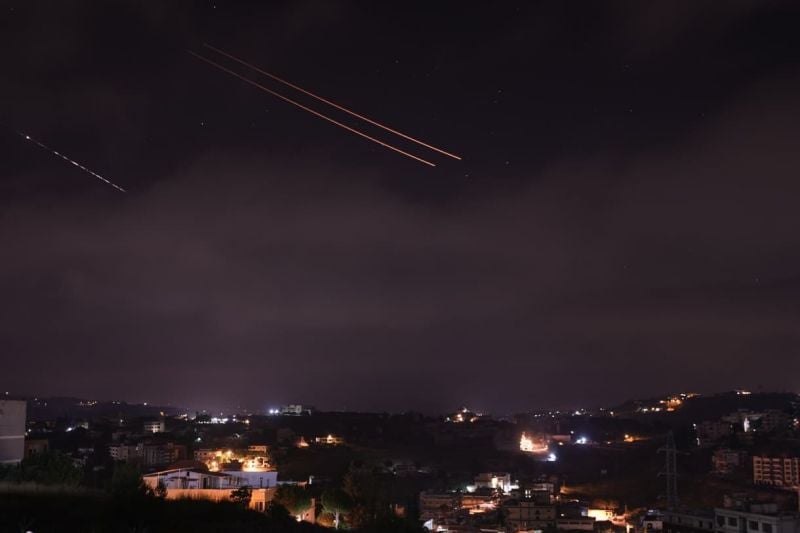
| | - Iran breaks the truce: Iran fired waves of missiles at Israel on Sunday — the first such attack since the April ceasefire — after Israel struck a command center in Beirut's southern suburbs, killing 2 and wounding 20, according to Lebanon's Health Ministry. The Middle East war had just reached its 100th day.
- Saida's suburbs on notice: Israeli forces threatened to bomb Maghdoucheh, roughly 40 kilometers from the Israeli border, if Hezbollah members entered — while drones circled over Saida from 2 a.m., and strikes across the south killed at least 3 people including two on a motorcycle in Zifta.
- Tyre's street-by-street warnings: Israel called the head of Tyre's Civil Defense Center directly, demanding evacuation of specific locations by name — Senegal Street, the Southern Corniche near Starbucks, Al-Alam Roundabout, the Islamic University, and Al-Jaafariya High School.
- Lebanon's biggest amnesty in 35 years: A draft law awaiting parliamentary approval would free over 3,000 of nearly 8,600 detainees — including those held without trial for at least 14 years — while excluding rape, corruption, and premeditated murder. Families of fallen soldiers are protesting outside parliament.
- The south's silent majority speaks: A Daraj analysis argues that displaced southerners' silence on the ceasefire rejection is being misread as consent by Hezbollah's leadership — and that Naim Qassem's statement echoed the Quds Force commander's rejection rather than reflecting the war-weary public he claims to represent.
|
|
| ─ | Parallel Rate | 89,550 LBP | 0.00% | | ─ | Official Rate | 89,500 LBP | 0.00% | | ▼ | Gold | $4,337 | -0.65% | | ▲ | Bitcoin | $62,666 | +1.45% | | ▼ | S&P 500 | 7,383.74 | -2.25% |
as of 4:45 AM GMT · Source: lbprate, BDL, Yahoo Finance, CoinGecko |
| | One Iraqi Operative, 18 Attacks: The Iran-Linked Network Behind Europe's Jewish Community Terror CampaignA 32-year-old Iraqi man who pleaded not guilty in a Manhattan courtroom Monday appears to have run a coordinated wave of anti-Jewish attacks across Europe from a Baghdad office — recruiting teenagers on social media for as little as €300 a task.
- Mohammad Baqer Saad Dawood al-Saadi directed 18 attacks between early March and late April, targeting Jewish schools, synagogues, and community institutions across Belgium, the Netherlands, and the UK, with no fatalities but widespread fear.
- The campaign was launched via a Telegram message to "Shadow Soldiers" sent 52 hours before a bomb exploded outside a synagogue in Liège, Belgium; responsibility was claimed within minutes by a group called HAYI — which investigators say was al-Saadi alone.
- al-Saadi, who was mentored by IRGC Quds Force commander Qasem Soleimani and reportedly cradled his body after a 2020 US drone strike, was detained in Istanbul before being extradited to the US.
- Many recruits were minors with histories of petty crime, some unaware their targets were Jewish community sites; one lawyer said her 17-year-old client thought the job was drug-related.
The bigger picture: The case illustrates a documented Iranian tactic of using disposable proxies — often minors recruited online — to conduct deniable overseas operations, a model security services across Europe and the US are still working to counter. OPEC+ Turns the Tap: Seven Countries Agree to Pump 188,000 More Barrels a DaySeven OPEC+ members agreed Sunday to raise collective oil output by 188,000 barrels per day starting in July — continuing a gradual unwinding of cuts that have shaped global energy prices since 2023, with the next review already scheduled for early July.
- Saudi Arabia and Russia each account for 62,000 barrels per day of the increase; Iraq adds 26,000, Kuwait 16,000, Kazakhstan 10,000, Algeria 6,000, and Oman 5,000.
- The alliance retained full flexibility to pause, increase, or reverse the production adjustments depending on market conditions, and required member states to accelerate compensation for excess output recorded since January 2024.
- The decision builds on voluntary cuts first announced in April 2023; the next scheduled monitoring meeting is set for July 5, 2026.
What to watch: Whether the incremental output increase is enough to cool energy prices without triggering a compliance dispute among members — particularly non-compliant members that have exceeded their allocated quotas. UK and Allies Ready Sanctions Over West Bank Settlement That Would Split Palestinian Territory in TwoThe UK Foreign Office and a group of western countries are set to announce sanctions this week against companies involved in the E1 settlement development — a project that, if built, would divide the West Bank between north and south and render a contiguous Palestinian state effectively impossible.
- Tenders were opened this month for more than 3,000 homes in the E1 zone between Jerusalem and Ma'ale Adumim; nine countries, including France, the UK, and Australia, had already warned companies against bidding, citing legal and reputational risks.
- 137 Labour MPs — including former health secretary Wes Streeting and chairs of every Labour-led select committee — wrote to Foreign Secretary Yvette Cooper urging an end to trade with illegal Israeli settlements.
- Spain has begun enforcing a ban on settlement products; Ireland, the Netherlands, and Belgium are legislating similar measures, while the EU held back from broader sanctions last month due to internal disagreement.
Zooming out: The E1 development has become a flashpoint for a broader western reckoning over how far economic pressure can go in shaping Israeli settlement policy, with the UK package expected to test that boundary more explicitly than before. |
|
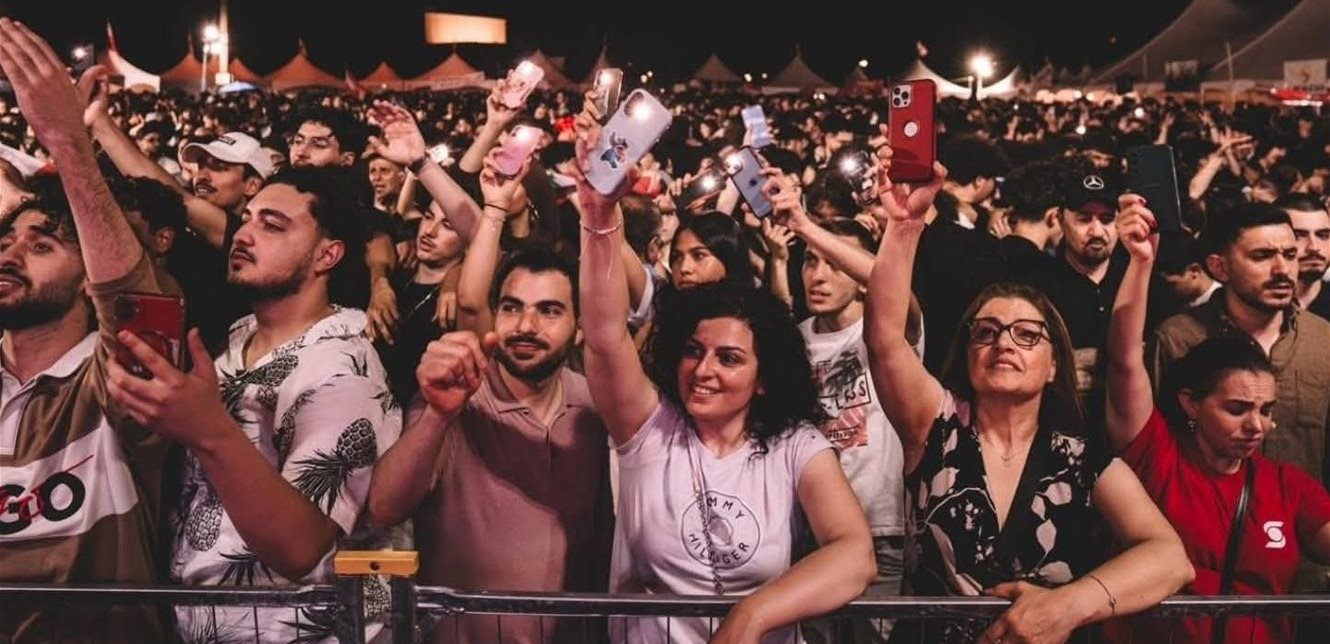
| | - 24 years of dabke in Canada: The Lebanese Festival at Centre Laval in Canada opened its 24th edition under the theme "Eternal Lebanon... Peacemaker," drawing crowds of Lebanese diaspora who grew up to the rhythms of dabke and the scent of manakish on these very stages — proof that Lebanon travels well.
- Ragheb ends the rumours: After 29 years of tabloid speculation, Lebanese superstar Ragheb Alama finally settled it on live TV: a DNA test confirmed he has no daughter named Sara Luna, and he added that if he did have one, he'd "fight the whole world" for her — very on-brand.
- Zverev's long-awaited moment: German tennis star Alexander Zverev — who was carried off the same court in a wheelchair in 2022 with seven torn ligaments — won his first Grand Slam title at Roland Garros, beating Italy's Flavio Cobolli in a five-set final. Worth the wait doesn't begin to cover it.
- Ariana's eternal opening night: Ariana Grande kicked off her "Eternal Sunshine Tour" in Oakland with a 105-minute, 23-song set built almost entirely around her 2024 album — and yes, she floated into the rafters via hidden harness at the end. Iconic, as expected.
|
|
Yalla, go make it a good Monday — see you tomorrow. |
"Tarab" is the state of musical enchantment or ecstasy experienced when a performer and audience reach deep emotional connection through music. |
Lebanon news, every weekday morning. Free, sharp, ~5 minutes. |
|
|
|
|