|   | Shou el akhbar — Lebanon's week ended with a drug lord walking free, Israel quietly drawing new lines into Lebanese waters, and gas prices actually going down for once. The captagon king is out, the offshore gas blocks are in dispute, and the pump is slightly more forgiving than it was yesterday. We have things to discuss. |
|
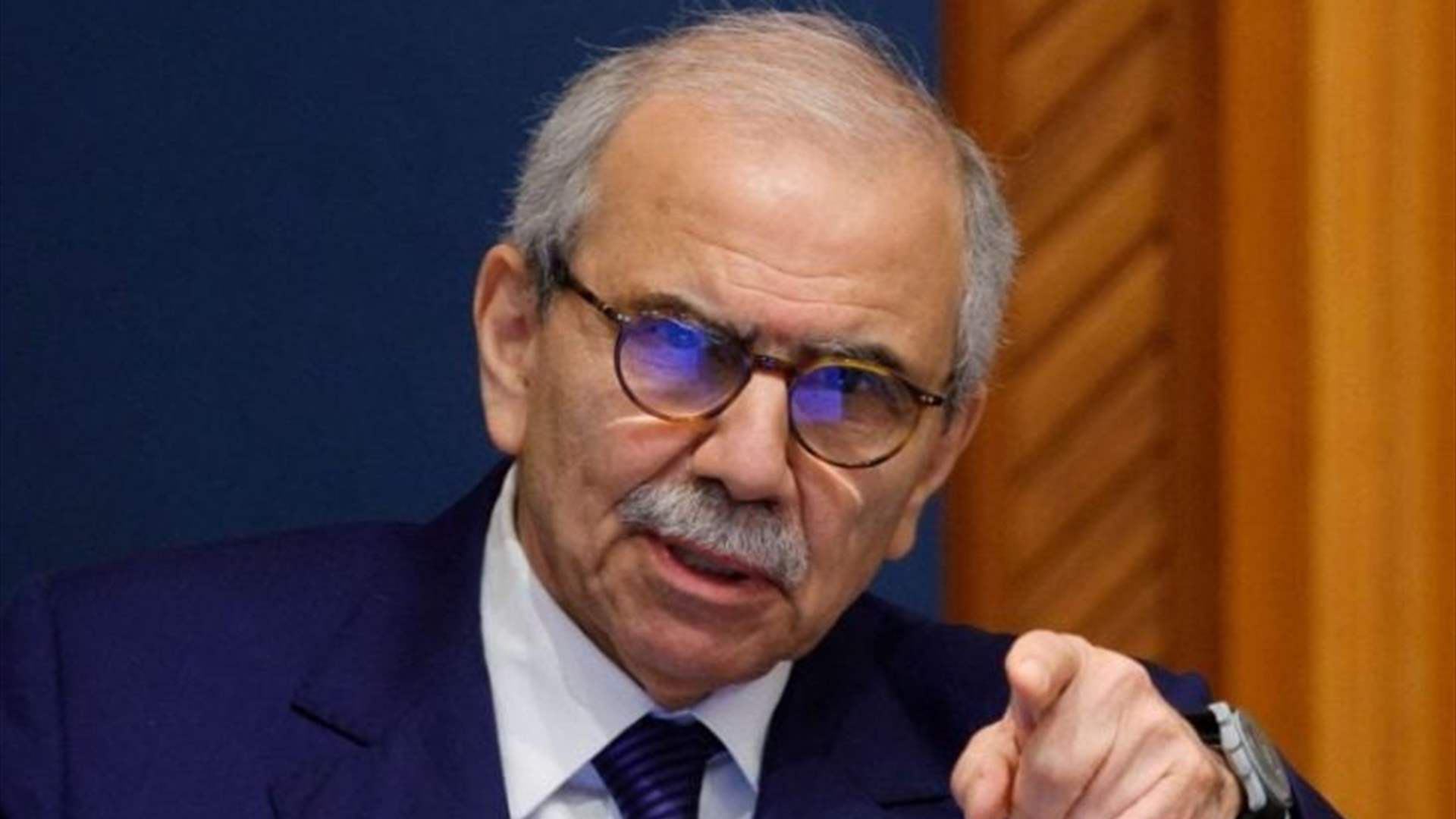
| | Lebanon Frees the "King of Captagon" — Despite US, UK, and EU SanctionsHassan Daqqou, the sanctioned Syrian-Lebanese drug lord who allegedly ran a captagon empire from a comfortable prison cell, walked free from a Beirut jail this week after serving seven years — his release landing, almost impossibly, the same week Saudi Arabia reopened its borders to Lebanese exports.
- Daqqou was arrested in 2021 in connection with a shipment of roughly 94 million captagon pills seized in Malaysia while bound for Saudi Arabia; a Beirut criminal court sentenced him to seven years of hard labor in August 2022, reduced from life imprisonment.
- In his interrogation transcripts — 651 pages handwritten and obtained by OCCRP — Daqqou described himself as having "four faces": businessman, Syrian army intelligence asset linked to Maher al-Assad's Fourth Division, Hezbollah collaborator in Syria, and partner in Syrian "anti-drug" operations.
- He was blacklisted by the United States, Britain, and the European Union in 2023; reports indicate that Hezbollah's political pressure secured him a cell with internet access throughout his sentence, from which he allegedly continued managing his network.
- A video of family and friends celebrating his homecoming circulated widely after his release, drawing sharp public reaction given the timing with Riyadh's reopening to Lebanese goods.
What to watch: Whether Lebanon's new government acts on the international sanctions obligations that technically still bind Daqqou — or whether his freedom quietly stands — will be an early signal of how seriously Beirut is taking its commitments to Gulf partners and Western allies. Israel's "Buffer Zone" Absorbs Lebanon's Offshore Gas BlocksIsrael's self-declared security buffer zone doesn't just cut into Lebanese land — it extends into the Mediterranean and envelops two offshore blocks from Lebanon's only active gas exploration contract, according to Al Jazeera, raising questions about whether the ceasefire is being used to claim resources, not just security.
- The "Yellow Line" buffer zone, announced by Israeli military spokesperson Avichay Adraee on April 19, stretches roughly 10 km north of the Lebanon-Israel border, covering about 6 percent of Lebanese territory, and pushes into Lebanese territorial sea and exclusive economic zone.
- The zone absorbs Block 9 and Block 8 — the latter having received an offshore exploration permit in January from France's TotalEnergies, Italy's Eni, and QatarEnergy under Lebanon's only current hydrocarbon contract.
- Maritime lawyer Aref Fakhry called the maritime extension an "outright land grab," noting it violates both the 1982 UN Convention on the Law of the Sea and the US-brokered 2022 Lebanon-Israel maritime boundary agreement.
- Lebanese Energy Minister Joe Saddi stated the Israeli map "doesn't change anything" about the existing maritime border agreement; Israeli opposition leader Yair Lapid dismissed the area's gas value entirely, while Energy Minister Eli Cohen called the 2022 deal a "surrender agreement."
Zooming out: With no proven reserves yet confirmed in either block, Lebanon's leverage is legal rather than commercial — but how it deploys that leverage, and whether the US as the original deal's mediator steps in, will define the next phase of the standoff. Fuel Prices Dip as Global Oil Falls Below $90A rare piece of relief at the pump: fuel prices in Lebanon dropped noticeably this week, tracking a global slide in crude as US-Iran tensions ease and a deal between the two sides appears closer.
- Brent crude fell 2.19 percent to $88.42 per barrel globally, pulling Lebanese pump prices down with it — the official fuel price table recorded a drop of 67,000 Lebanese pounds on both 95 and 98 octane gasoline canisters.
- Diesel dropped 47,000 Lebanese pounds per 20-liter canister; the price of a gas cylinder held steady, with the dollar exchange rate at stations remaining fixed at 89,700 Lebanese pounds.
- The new official prices: a 20-liter canister of 95 octane now sits at 2,382,000 Lebanese pounds, 98 octane at 2,400,000, and diesel at 2,034,000 Lebanese pounds.
Why it matters: Fuel costs ripple through everything from generator bills to food transport in Lebanon, so even a modest global dip translates directly into household budgets still recovering from years of economic crisis. |
|
as of 4:17 AM GMT · Source: Polymarket |
| | - PM Salam names Tehran: Prime Minister Nawaf Salam told The Times that Iran rejected a ceasefire deal specifically to signal it still controls Lebanon's fate — and that Tehran now exerts more direct influence over Hezbollah's decisions than it did under Hassan Nasrallah.
- €100 million for the army: The EU adopted a new European Peace Facility package worth €100 million for the Lebanese Armed Forces, bringing total EPF support since 2022 to €182 million; the funding targets land border control, maritime security, and disarming non-state actors.
- $365 million in rubble: A UNDP damage assessment found Israeli strikes destroyed 146 buildings and partially damaged 264 others across Beirut and Mount Lebanon between February 1 and April 14, 2026, with total losses estimated at $365 million, concentrated mainly in the southern suburbs.
- Saudi comeback, by the numbers: Lebanese exports to Saudi Arabia were worth $250–300 million annually before the 2021 ban; a political economy professor says the agricultural, food, and pharmaceutical sectors stand to benefit most from Riyadh's reopening — if Lebanon can keep smuggling in check.
- Insurance sector's 9-year gap, closed: Economy Minister Amer Bisat announced the reactivation of Lebanon's National Social Security Council after a 9-year hiatus and unveiled a new national insurance reform strategy, calling the sector the last functioning financial channel in the Lebanese economy.
|
|
| ─ | Parallel Rate | 89,600 LBP | 0.00% | | ─ | Official Rate | 89,500 LBP | 0.00% | | ▲ | Gold | $4,239.9 | +3.66% | | ▲ | Bitcoin | $63,495 | +0.15% | | ▲ | S&P 500 | 7,431.46 | +2.26% |
as of 4:08 AM GMT · Source: lbprate, BDL, Yahoo Finance, CoinGecko |
| | UAE Agrees to Unlock Billions for Iran as US-Iran Deal NearsThe UAE has quietly agreed to release billions of dollars to Iran — a striking pivot after months of Iranian missile and drone attacks on Gulf soil — as broader US-Iran negotiations enter what diplomats describe as their final stages, according to Reuters.
- Two regional sources told Reuters the UAE agreed to release a total of $10 billion, with more than $3 billion already delivered; two other sources put the total figure at $20 billion, agreed in return for a halt to Iranian attacks on the UAE.
- The last known direct Iranian strike on the UAE was a May 4 attack on Fujairah port; Iranian Revolutionary Guard officials visited Abu Dhabi last week to meet Sheikh Tahnoun bin Zayed al Nahyan, the UAE's national security adviser, before UAE officials traveled to Tehran to finalize details.
- A UAE official said the country's foreign policy is "guided by promoting de-escalation," while Vice President JD Vance stated that economic benefits would flow to Iran only if it meets its obligations under any deal — not simply for signing one.
What to watch: Whether similar arrangements are reached with other Gulf states — the source said Iran had approached at least two others — will signal how broadly Tehran is rebuilding its regional financial footing ahead of any formal deal with Washington. German Court Rules Google Liable for Its AI's False ClaimsA Munich court handed down a ruling that could reshape how AI-generated summaries are regulated across Europe: Google is directly liable for false and defamatory claims its AI overview feature invented about two publishing companies.
- The Munich Regional Court I found that Google's AI overview — which summarizes search results in its own words — constitutes "a self-contained statement" that goes beyond linking to third-party content, making Google the author and therefore liable for its errors.
- The AI had erroneously linked two Munich-based publishers to dubious business practices, subscription traps, and fraudulent schemes by inventing connections to genuinely shady companies that did not exist.
- The court ordered Google to stop spreading the false claims and to bear 80 percent of legal costs; Google said it would appeal the ruling, which is not yet final.
The bigger picture: The ruling sets a potential precedent distinguishing AI-generated summaries from conventional search results under liability law. Global HIV Response Faces Worst Funding Crisis on RecordDecades of hard-won progress against HIV are unraveling fast: a new UN report warns that unprecedented aid cuts have created the "biggest storm the HIV response has ever seen," with infections rising and the 2025 death toll more than double the targets set to end the pandemic.
- Global development assistance for health fell by 23 percent last year — the sharpest drop on record — after the US cancelled 80 percent of its foreign aid projects, decimating PEPFAR, one of the most successful health initiatives in history.
- At least 570,000 AIDS-related deaths were registered in 2025, more than double the global target; PrEP uptake dropped by nearly 40 percent across 62 reporting countries between 2024 and 2025, and HIV testing fell by nearly a quarter in high-burden settings.
- HIV infections among women and girls in sub-Saharan Africa remain on the rise, with 3,000 new infections a week in the region; condom funding has been cut by more than 90 percent in some countries.
Zooming out: UNAIDS head Winnie Byanyima described a rare and ironic window of opportunity — a new long-acting injectable prevention therapy exists that could bend the curve — but the funding collapse means its rollout target has been cut from 20 million people to 2 million. |
|
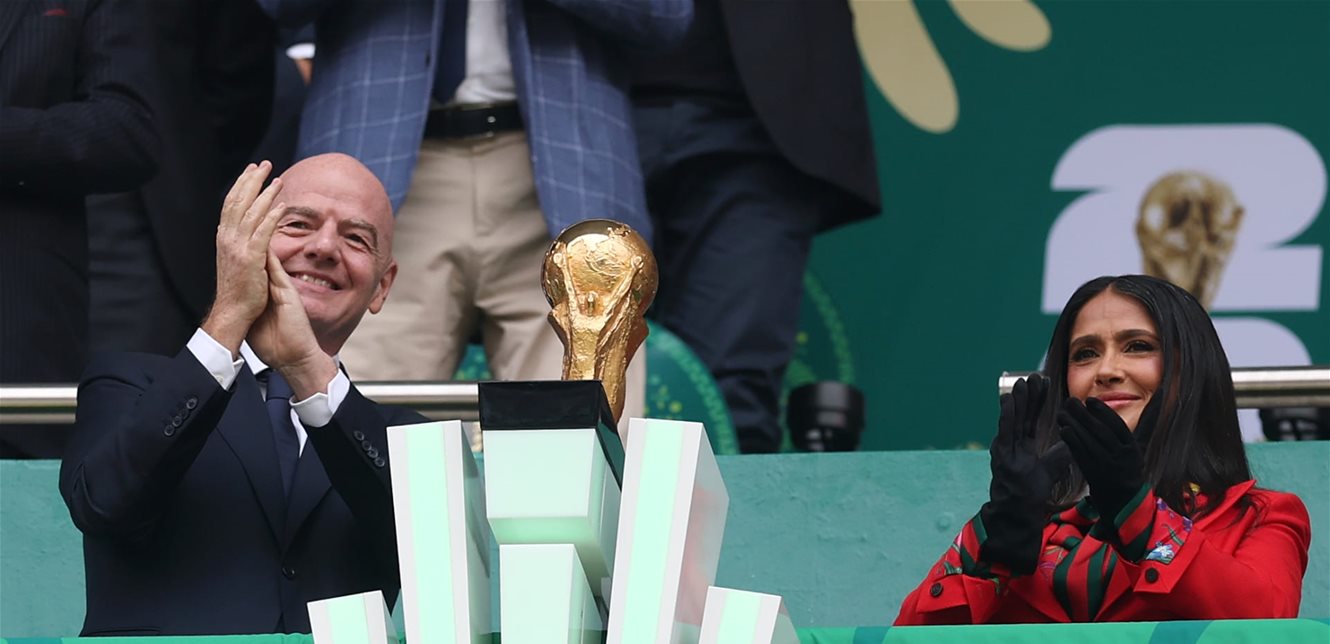
| | - Lebanon's World Cup moment: Three figures with Lebanese roots headlined the 2026 World Cup opening ceremony watched by hundreds of millions: Shakira (Lebanese father), Salma Hayek (Lebanese father), and FIFA President Gianni Infantino, who holds Lebanese citizenship — proving Lebanon shows up even when it's not on the pitch.
- Chouf: displaced to devoted: Ahmad, 25, first fled to the Chouf mountains as a displaced southerner — then returned voluntarily more than six times as a tourist; Deir al-Qamar's restaurants and guesthouses are now reporting revenues more than 50 percent above the same period last year.
- Riyadi rolls on: Defending champions Al Riyadi Beirut are cruising in the Lebanese Basketball First Division quarter-finals, beating Beirut First 107-83 to go up 2-0 in the series — Wael Arakji dropped 19 points and 10 assists in another commanding performance at the Chiyah Sports Complex.
- Wimbledon pays up: The All England Club announced a £64.2 million prize pool for the 2026 Championships — a 20 percent increase and the largest single-year uplift in the tournament's history — enough to bring top players back onside after months of escalating disputes over revenue sharing.
|
|
Yalla, go make it a good weekend. |
Rabih Alameddine is an acclaimed author. |
Lebanon news, every weekday morning. Free, sharp, ~5 minutes. |
|
|
|
|