|   | Shou el akhbar — and today, that question actually has an answer worth sitting down for. Israel and Hezbollah struck a ceasefire after Lebanon's deadliest day since the US-Iran deal, a three-phase blueprint for Hezbollah's weapons is quietly circulating the region, and — in news your doctor will be happy about — the National Social Security Fund just expanded coverage to nearly 3,000 medical procedures. Big morning. Let's get into it. |
|
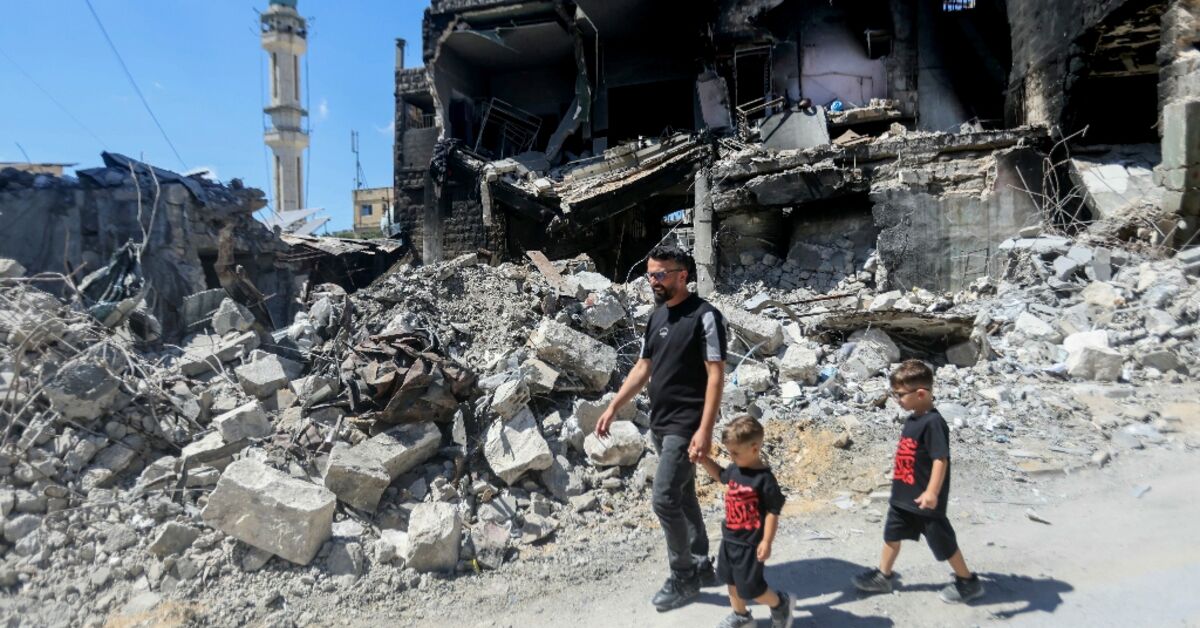
| | Israel and Hezbollah Broker Ceasefire — Hours After Lebanon's Deadliest Day Since the US-Iran DealLess than two days after Washington and Tehran signed their deal, Israeli strikes killed 47 people in Lebanon and claimed four Israeli soldiers — the highest combined toll since the accord. A US- and Qatari-brokered truce was then announced, though strikes were reported even after it took effect.
- Lebanese authorities reported 47 killed in Israeli airstrikes Friday; Israel said it struck more than 80 Hezbollah targets and killed dozens of the group's members.
- US Secretary of State Rubio and President Aoun spoke by phone — Aoun urged a comprehensive ceasefire, while Rubio pressed Lebanon to move on Hezbollah disarmament.
- US-Iran follow-on talks in Switzerland were postponed with no new date for that venue announced; a separate negotiating round is scheduled for June 23–25 in Washington.
- Iran's foreign ministry said there was "no urgency" to reschedule the Swiss talks, while Israel's ambassador insisted all offensive operations halted by 11:30 AM Friday.
What to watch: Whether the new truce holds through the Washington talks will signal whether the US-Iran framework can actually constrain the Lebanon front — or whether that pressure falls entirely on Beirut. A Carnegie Report Maps a Three-Phase Plan to Resolve Hezbollah's Arms — But Iran Holds the KeyAs US-Iran negotiations inch toward Hezbollah's future, a circulating framework document — backed by Egypt and Saudi Arabia — proposes phasing out the group's weapons over time rather than forcing a military disarmament that most regional players consider unthinkable.
- The Carnegie Endowment's report, translated by Lebanon24, says Lebanon is unlikely to disarm Hezbollah without Iranian consent and supportive regional cover.
- Phase one freezes heavy missile development and halts cross-border activity; phase two integrates select Hezbollah fighters into the Lebanese army; phase three transfers full defense responsibility to the state.
- The document has reportedly been sent to both Hezbollah and Israel for observations and is still in its final stages of preparation.
- Skeptics note that Iran may double down on Hezbollah support after what it views as a successful confrontation — and continued Israeli occupation of border areas gives the group political cover to resist disarmament.
Zooming out: Iran's decision to link the Lebanese ceasefire to its deal with Washington has, for the first time, opened a potential diplomatic channel for the Hezbollah weapons file — territory Tehran had previously declared entirely off-limits. Lebanon's National Social Security Fund Expands Coverage to Nearly 3,000 ProceduresIn a country where public healthcare has spent years in managed collapse, the National Social Security Fund just announced its most significant expansion of medical coverage in recent memory — adding procedures, new radiation therapies, and Lebanon's first-ever public reimbursement for cochlear implant surgery.
- The fund's updated schedule now covers approximately 2,860 medical procedures, up from the previous list.
- Radiation therapy types reimbursed increased from 3 to 6, with reimbursements ranging between $1,000 and $4,400.
- Cochlear implant surgery is included for the first time, with coverage reaching nearly $20,000; peritoneal dialysis supplies were also added to the medical supplies schedule.
Why it matters: For hundreds of thousands of insured Lebanese — many still reeling from the economic crisis — the expanded schedule could mean the difference between accessing specialist care and going without it entirely. |
|
as of 4:24 AM GMT · Source: Polymarket |
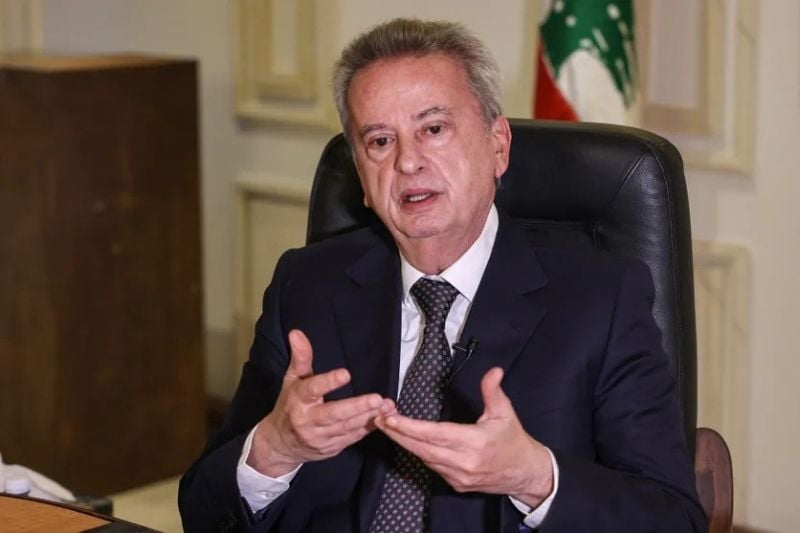
| | - $266M and counting: Riad Salameh's lawyer fired back after the former central bank governor was questioned at his Safra home on June 17, insisting the $266 million figure cited in media leaks was inaccurate and that the amounts were loans — not commissions — that ultimately netted the BDL a $33 million profit.
- Minds still in the rubble: Even Lebanese who never physically left their homes have lost their sense of belonging, according to psychologist Dr. Carole Saade, who describes a collective state of "chronic alert" — a brain stuck in survival mode — that's causing widespread insomnia, chronic fatigue, and an inability to plan for the future.
- The displaced, still waiting: A raw first-person essay in Daraj captures what political speeches don't: displaced southerners approaching three years away from home, with no return date promised by any party or state, their voices suppressed in organized meetings while "orators of displacement" frame total loss as revolutionary triumph.
- War's tab on investors: One Lebanese tech founder spent $80,000 over two years building an AI-powered real estate platform — then watched the war kill his March launch. Tourism activity dropped as much as 80–90% in some sectors; major weddings quietly relocated to Rome, Athens, and French cities.
- Beirut–Damascus, cleared for takeoff: Lebanon's public works minister met a Syrian civil aviation delegation to discuss strengthening bilateral cooperation on air navigation, border crossings, and a proposed railway link between Tripoli Port and the Abboudieh border crossing into Syria.
|
|
| ─ | Parallel Rate | 89,500 LBP | 0.00% | | ─ | Official Rate | 89,500 LBP | 0.00% | | ▼ | Gold | $4,172.9 | -4.27% | | ▲ | Bitcoin | $63,357 | +0.87% | | ▼ | S&P 500 | 7,500.58 | -0.14% |
as of 4:13 AM GMT · Source: lbprate, BDL, Yahoo Finance, CoinGecko |
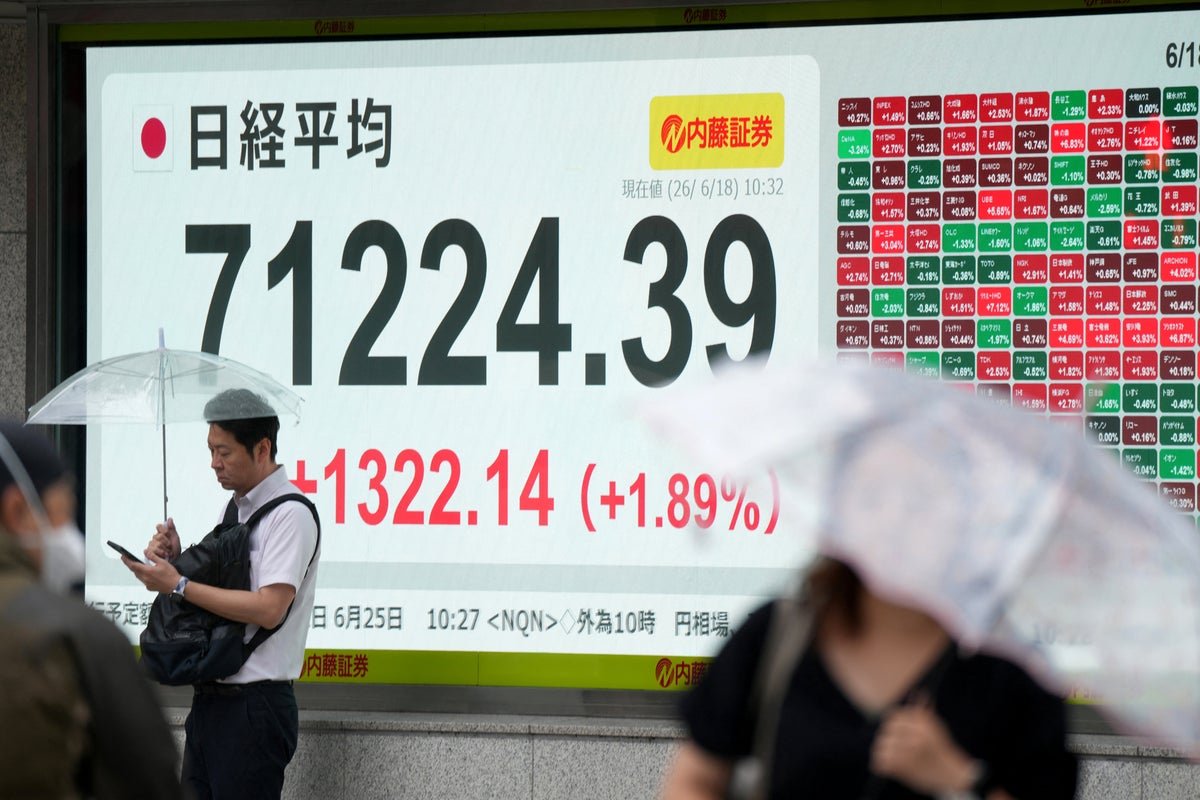
| | Strait of Hormuz Reopens, Oil Drops, Asian Markets SurgeThe reopening of the Strait of Hormuz — following the US lifting its naval blockade on Iran as part of their interim peace deal — sent oil prices tumbling and pushed Asian stock markets to multi-month highs on Friday.
- Brent crude futures dropped 1% to $79.03 a barrel, capping a significant 9.5% weekly decline as tankers resumed passage through the strait.
- Japan's Nikkei index rose 0.8% to a new record for the fifth consecutive session, extending its weekly gain to 8.5%; South Korea's benchmark surged 3.1%, contributing to a 15.3% weekly rise.
- One analyst warned that Iran's future governance of the strait creates scope for a "maritime service" fee, with current toll-free transit guaranteed for only 60 days.
- The US dollar index rose 1% weekly to 100.78, near a 13-month high, while gold slipped 0.5% to $4,188 per ounce.
What to watch: Whether Iran exercises its ability to impose transit fees after the 60-day toll-free window expires will be the next test of how durable the Hormuz reopening actually is. Australia Detects First Suspected Mainland H5N1 Bird Flu CaseAustralia — the last continent without a confirmed mainland case of the deadly H5N1 bird flu strain — has detected its first suspected case in a remote corner of Western Australia, potentially ending a years-long streak that the country had worked hard to maintain.
- A brown skua migratory seabird found in Cape Le Grand National Park tested positive for avian influenza; further testing was underway to confirm the specific strain.
- A second sick bird — a giant petrel — was found in the same area and was also being tested for influenza, raising concerns about a localized cluster.
- Australia's environment minister noted the country had spent years preparing for this possibility by tightening biosecurity at farms, testing shorebirds, and vaccinating vulnerable species.
The bigger picture: The H5N1 strain has spread through wild bird and mammal populations globally since 2021, infecting poultry and dairy farms across multiple continents — Australia's detection, if confirmed, completes its geographic sweep of the entire planet. The EU Just Banned BPA From Your Food PackagingStarting July 2026, the European Union is enforcing the world's strictest ban on Bisphenol A — the chemical found in food cans, plastic bottles, and lunch boxes — after decades of evidence linking it to hormone disruption, cardiovascular disease, and certain cancers.
- BPA was detected in the urine of 92% of adult participants across 11 European countries in European Environment Agency studies; a US study similarly found traces in 93% of over 2,500 individuals examined.
- The ban covers single-use food packaging, plastic water bottles, lunch boxes, and kitchenware; roughly 410,000 metric tons of BPA-containing products are sold in Germany alone annually.
- Transition periods run until 2028 for cases where no suitable BPA alternatives yet exist, such as can linings for acidic foods; existing stock may still be sold until depleted.
Zooming out: The US has no nationwide ban on BPA in food packaging — only removing it from baby bottles in 2012 and infant formula packaging in 2013 — making the EU's move the most sweeping regulatory action on the chemical to date. |
|
| | - Beirut's body language: Lebanese artist Elio Sadek is showing approximately 35 mixed-media works at LT Gallery in Mar Mikhael in his first solo exhibition, "BEARING" — where semi-distorted figures, birds in flight, and embracing gestures turn physical interactions into a visual language of affection, protection, and vulnerability.
- Home always wins: Every summer, thousands of Lebanese from Canada, the US, Australia, Europe, and the Gulf pack their bags and return — not just for a holiday, but for the old alleys, the family table, and the cedar mountains that no other place on earth quite replaces.
- Brooklyn's World Cup star: Folarin Balogun — born in Brooklyn to Nigerian parents who missed their flight home from New York — scored two goals in the USA's opening World Cup win over Paraguay, becoming the tournament's most exciting new striker at just 24 years old.
- England's keeper is back: Former England goalkeeper Mary Earps, 33, has signed a two-year deal with London City Lionesses, returning to the Women's Super League after two seasons at Paris Saint-Germain — unveiled in a photoshoot on the Thames that she said "poured petrol on the excitement fire."
|
|
Yalla, go make it a good one — we'll see you Monday. |
The "lawweeh" leads the "dabke" line. |
Lebanon news, every weekday morning. Free, sharp, ~5 minutes. |
|
|
|
|