|   | Shou el akhbar — it's a Sunday of whiplash: Lebanon's farmers are finally shipping goods to Saudi Arabia again after five years in the cold, which is genuinely good news, and then Israeli strikes killed at least 29 people the day after a ceasefire was signed, which is the kind of sentence that shouldn't have to exist. Meanwhile, Washington just sanctioned Sleiman Frangieh — a move that says a lot about what the US thinks Lebanon's power structure actually looks like ahead of next week's talks. |
|
| | Lebanon Ships to Saudi Arabia for the First Time in Five YearsThe first containers of Lebanese goods left Beirut Port for Jeddah on Saturday, ending a five-year Saudi ban tied to large-scale Captagon smuggling — and signaling a rare, concrete economic win for the Salam government.
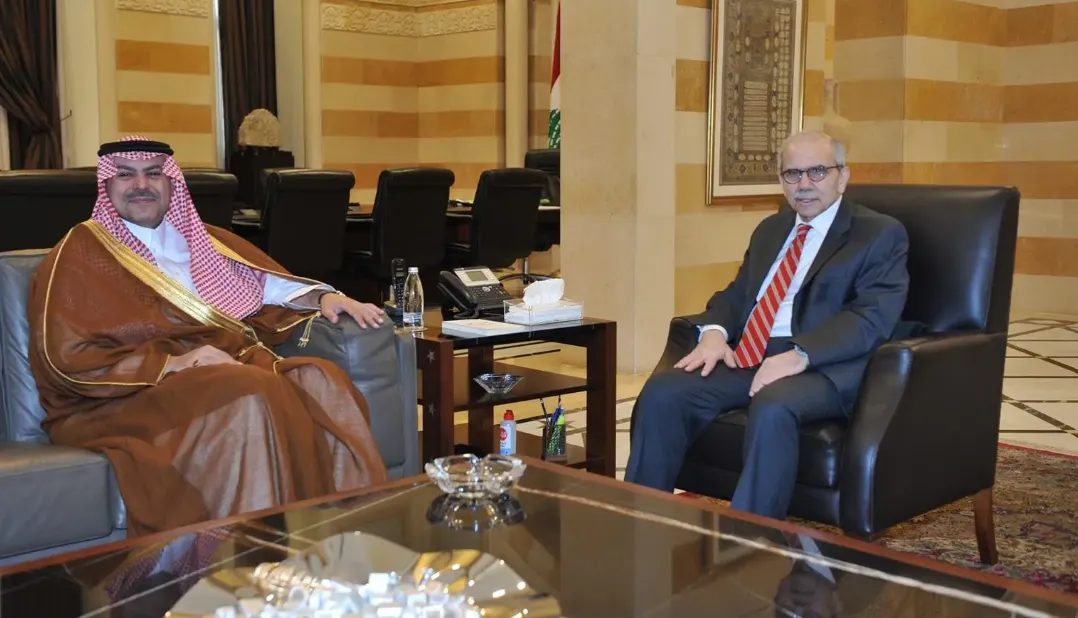
- Saudi Crown Prince Mohammed bin Salman directed the resumption of Lebanese exports on June 10, citing positive steps by Beirut on port security; the first container bound for Jeddah Islamic Port departed Saturday in a ceremony attended by PM Salam and Saudi Ambassador Fahd Al-Dosari.
- Lebanese exports to Saudi Arabia totaled approximately $240 million in 2020, the year before the ban; Salam said he hopes to surpass that figure, calling the reopening "the return of hope to thousands of farmers in the Bekaa, the South, and the North."
- Beirut is preparing a new mechanism that will directly link scanning devices at Lebanese ports, airports, and border crossings to their counterparts at Saudi entry points, letting Saudi customs monitor incoming shipments in real time.
- The ban began in 2021 on agricultural imports before expanding to all goods; its lifting comes as Lebanon needs hard currency inflows and Salam pledged Lebanon "will never again allow itself to become a launching point for any harm against our Arab brothers."
Why it matters: The reopening activates an entire export chain — agricultural, industrial, and logistical — at a moment when Lebanon is scraping for every source of hard currency it can find. Ceasefire Signed Friday — Then Israel Killed at Least 29 in Lebanon on SaturdayA Qatar-and-US-mediated ceasefire between Israel and Hezbollah was signed Friday afternoon. Less than 24 hours later, Israeli strikes killed at least 29 people across southern Lebanon and the Bekaa, with Israeli officials publicly stating the US-Iran deal does not bind them.
- Lebanon's Civil Defence said Israeli attacks on the Nabatieh district alone killed 16 people and wounded 12 others; a separate strike on the village of Barish in Tyre killed four members of the same family, which the NNA described as a "massacre."
- At least seven people were killed and 13 injured in an attack near Sidon; a Lebanese army officer was also killed in an Israeli airstrike on the Kfar Reman-Nabatieh road.
- Israeli Finance Minister Bezalel Smotrich called the US-Iran deal "bad for Israel," and National Security Minister Itamar Ben-Gvir wrote: "Trump's agreement does not bind us." Hezbollah said its fighters confronted Israeli forces attempting to infiltrate strategic hills overlooking Nabatieh overnight.
What to watch: Whether the ceasefire holds — or collapses entirely — now hinges on whether US pressure can translate into an actual Israeli pullback. US Sanctions Frangieh — A Message to Hezbollah's Political Allies Before Washington TalksWashington sanctioned Marada Movement chief Sleiman Frangieh just days before Lebanon-related talks in Washington scheduled for June 23–25, marking the first time US measures have targeted a political figure of his stature over alleged links to Hezbollah's network.
- Previous US sanctions targeted figures directly linked to Hezbollah or its financial networks; Frangieh's inclusion signals Washington is now raising the cost of political alliance with the group, reaching into Lebanon's Christian community and the broader power equation.
- The timing sits between the signing of the US-Iran Memorandum of Understanding and the upcoming Washington negotiations, suggesting the measures are designed as political preparation rather than a standalone financial action.
- Frangieh said the sanctions do not concern him; analysts note such measures rarely produce immediate realignments but gradually narrow room for maneuver and force allies to weigh new calculations.
Zooming out: The sanctions suggest Washington's Lebanon strategy is shifting from targeting Hezbollah's weapons directly to dismantling the political architecture that sustains its presence inside Lebanese institutions. |
|
as of 4:57 AM GMT · Source: Polymarket |
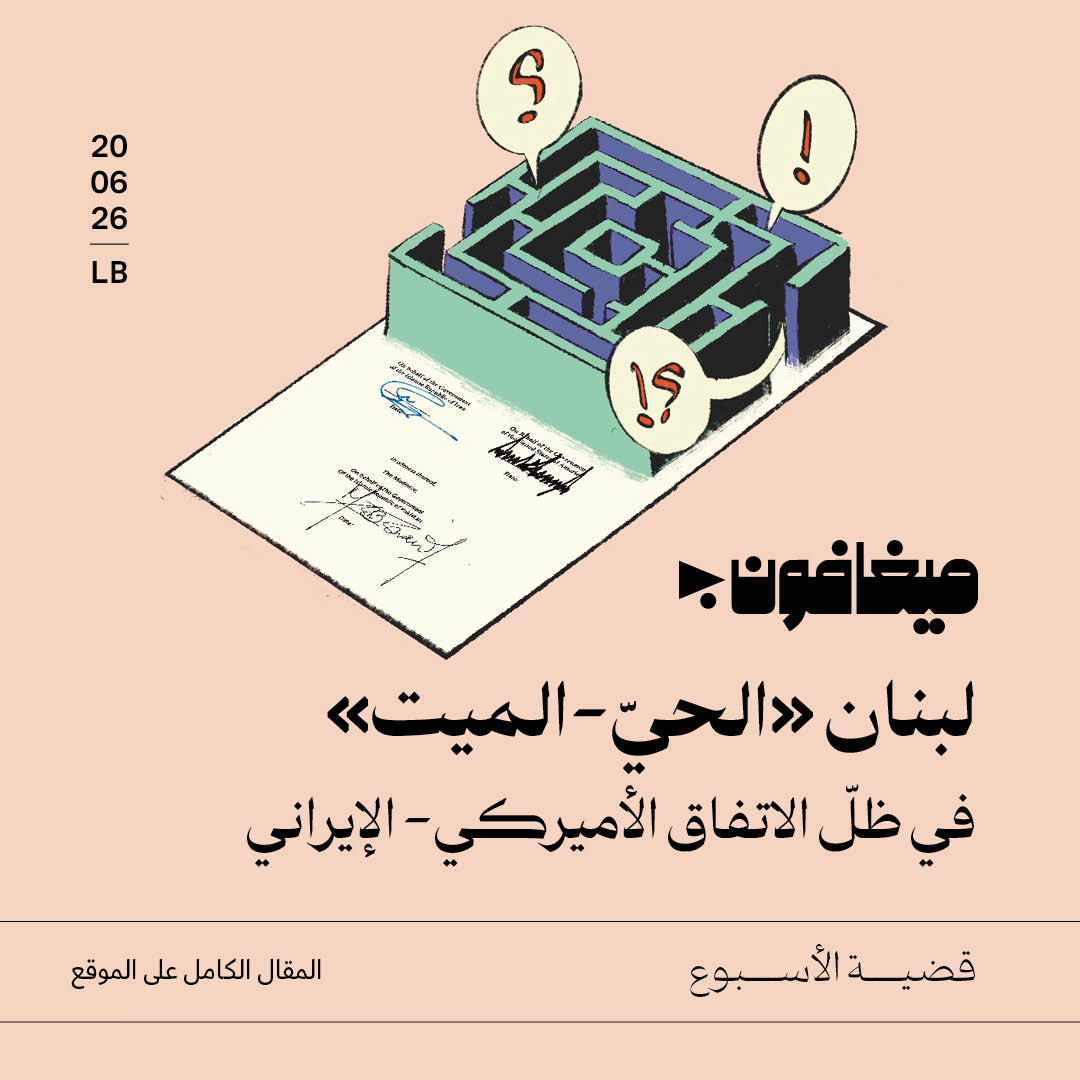
| | - Lebanon's living-dead politics: Megaphone's sharp new analysis argues the US-Iran memorandum has turned Lebanon's key political tracks — from Lebanese-Israeli negotiations to Hezbollah's weapons file — into "living-dead" processes that continue only for their own sake, trapped between Israeli occupation threatening 20% of Lebanese territory and Iranian tutelage treating the country as a bargaining chip.
- Nabatieh: death trap: MSF described conditions in Nabatieh as a "death trap" after Israeli attacks intensified, with medics treating severe head injuries, heavy bleeding, and shrapnel wounds — and rescue teams unable to safely reach people caught under heavy shelling because of the ongoing fire risk.
- Hormuz closes again: Iran's joint military command closed the Strait of Hormuz again on Saturday, citing Israeli attacks in Lebanon and what it called a US breach of ceasefire commitments — a move that threatens the interim US-Iran deal and the global energy supplies the strait reopening had briefly restored.
- Lebanon's turtle guardian, gone: Marine ecologist Mona Khalil, 77, who spent over two decades protecting endangered loggerhead and green sea turtle nesting sites on Lebanon's southern coast near Tyre, died Friday from wounds sustained when an Israeli strike hit her home — a loss Live Love Tyre called "a loss for all of Lebanon."
- Disagree with love: Lebanon's Ministry of Information, UNDP, and the Dawāʾir organization launched an awareness campaign under the slogan "Disagree... with love," with Information Minister Paul Morcos also announcing a push to approve a new media law that would criminalize hate speech and abolish pre-trial detention for journalists.
|
|
| ─ | Parallel Rate | 89,550 LBP | 0.00% | | ─ | Official Rate | 89,500 LBP | 0.00% | | ▼ | Gold | $4,172.9 | -1.21% | | ▲ | Bitcoin | $64,451 | +1.53% | | ▼ | S&P 500 | 7,500.58 | -0.14% |
as of 4:42 AM GMT · Source: lbprate, BDL, Yahoo Finance, CoinGecko |
| | Iran's Revolutionary Guards Poised to Win Big From Any Sanctions Relief DealThe US-Iran interim deal carries an awkward fine print: the sanctions relief meant to bring Tehran to the table could hand Iran's Revolutionary Guards — designated a terrorist organization by the US — a windfall across Iran's economy.
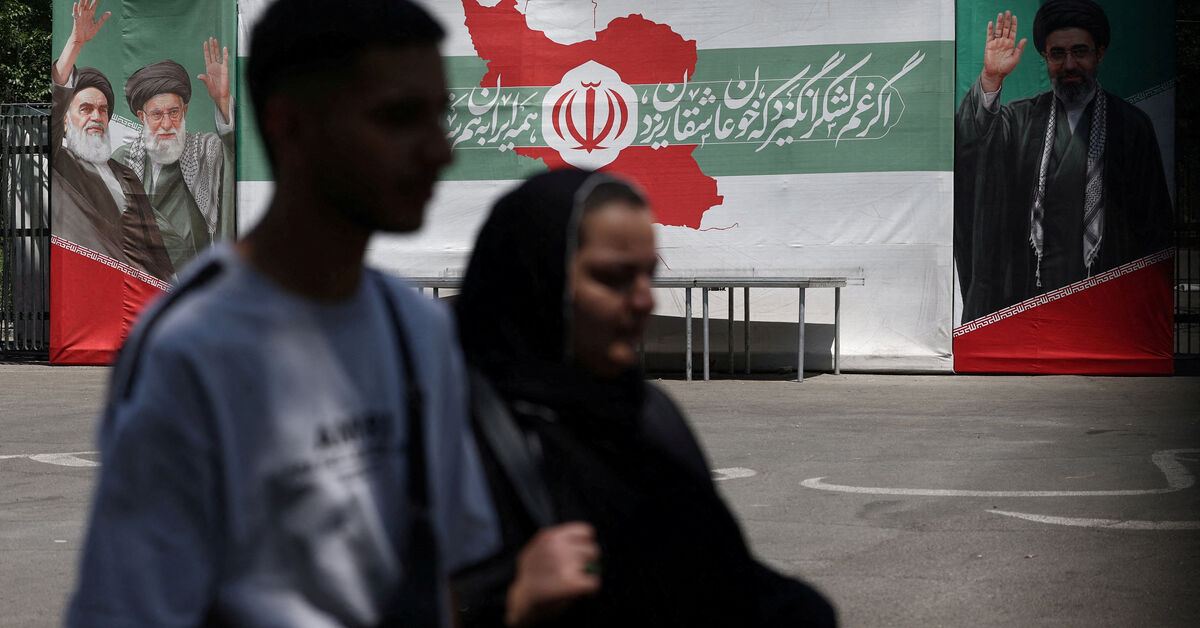
- Four senior Iranian sources told Reuters the IRGC is uniquely positioned to capture a large share of any financial rewards from sanctions relief, renewed oil exports, and foreign investment, given its sprawling commercial empire across oil, construction, shipping, and telecommunications.
- The IRGC's engineering arm, Khatam al-Anbia, oversees hundreds of affiliated companies spanning major infrastructure, energy, car manufacturing, tourism, and logistics, according to official statements and public records.
- Iranian investment law requires foreign firms to partner with local entities — meaning Western companies re-entering Iran's market could find themselves operating alongside IRGC-linked firms, exposing them to legal risk under continued US sanctions targeting the Guards specifically.
- The interim deal allows waivers on sanctioned oil sales; a wider agreement could lift all sanctions and give Iran access to a $300 billion reconstruction fund.
The bigger picture: Whether negotiators can structure a broader deal that separates Iran's civilian economy from the IRGC's grip is shaping up as one of the hardest technical questions of the coming talks. Gaza Women Build a Parallel Economy — From Cooking Oil and Old Sewing MachinesWith more than 57,000 women in Gaza suddenly the sole breadwinners for their families due to the killing, injury, arrest, or loss of employment of men, a grassroots survival economy has taken shape inside displacement camps — built from chemistry degrees, manual sewing machines, and necessity.
- Marwa, a chemistry graduate, collects discarded cooking oil from neighboring tents and converts it into soap using sodium hydroxide, distributing bars to families to combat the spread of scabies and skin infections among children in the camps.
- Huda, who ran a bridal workshop before it was bombed, recovered her late mother's manual sewing machine from the rubble and now cuts surplus blankets into padded winter jackets for children — entirely by hand, without electricity.
- Amal Khreishe, a researcher at the Palestinian Working Women Society for Development, told Independent Arabia that thousands of families now have no source of income other than what women produce or manage.
Zooming out: UN Women's executive director described the work of Gaza's women as "the highest form of civic resistance," turning what remains of a destroyed economy into the last barrier against full-scale famine. India Eyes $8 Billion German Submarine Deal as Indo-Pacific Arms Race DeepensIndia is expected to sign a roughly $8 billion deal this summer for German-designed Type 214 submarines — a move driven by China's naval expansion and Pakistan's deepening military ties with Beijing, which have reshaped the strategic calculus in the Indian Ocean.
- The German-designed Type 214 submarines use air-independent propulsion technology, allowing them to remain submerged for weeks without surfacing — giving them stealth characteristics closer to nuclear-powered vessels than conventional diesel-electric submarines.
- China now has the world's largest navy by number of ships, with around 400 vessels; Pakistan signed a roughly $5 billion deal in 2015 for eight Chinese submarines, four built in China and four in Pakistan using Chinese technology.
- The submarines would be built in Mumbai under a technology transfer arrangement, with Indian engineers trained by German specialists — though exactly which technologies Germany will share remains under negotiation.
What to watch: How much sensitive submarine technology Germany ultimately transfers to India will determine whether this deal becomes a genuine strategic partnership or a commercially significant but strategically limited transaction. |
|
| | - 107 weeks and counting: Alex Warren's ballad "Ordinary" has broken the Billboard record for most weeks at No. 1 across all airplay charts combined — 107 weeks — surpassing Miley Cyrus' "Flowers," which held the record at 106 weeks. It's the only song to top three different airplay charts for six months or more.
- Curaçao stops the world: The smallest-population nation ever to reach a World Cup finals held Ecuador to a 0-0 draw, with goalkeeper Eloy Room, 37, making 15 saves — one short of the all-time single-game record — as an estimated 5% of Curaçao's 160,000 population traveled to the United States to cheer them on.
- Gorillaz goes stadium: Damon Albarn brought more than 40 performers from 15 countries together for Gorillaz' first-ever stadium show, a career-spanning two-and-a-half hour set that filled Tottenham Hotspur Stadium with 70,000 fans — a multicultural musical celebration the BBC called "the conductor of an entire musical ecosystem."
- Muharram finds new ground: Communities across Lebanon marked Muharram this year in new locations and amid rubble, with residents placing Hussein's name on the ruins of their homes — a quiet act of continuity that showed Lebanon's cultural and spiritual traditions endure even when familiar gathering places are gone.
|
|
That's your Sunday — go enjoy the rest of it, you've earned it. |
Lebanon news, every weekday morning. Free, sharp, ~5 minutes. |
|
|
|
|