|   | Sabah el kheir. Lebanon woke up Monday with fiber internet contracts signed, a border ceasefire holding (for now), and the Lebanon file literally at the top of the US-Iran agenda in Switzerland — not bad for a country that's been running on generator schedules and expired political promises. Grab your coffee; today's news actually has some momentum to it. |
|
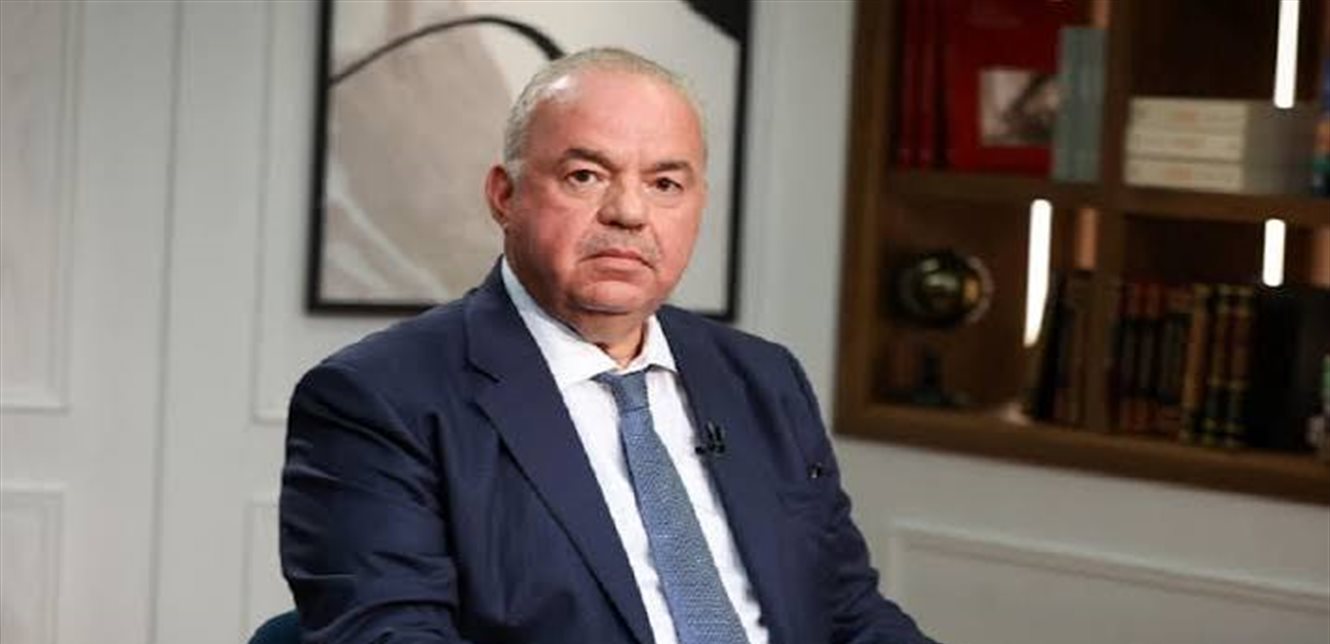
| | Ogero Signs Contracts for Lebanon's Biggest-Ever Fiber Internet RolloutLebanon's internet is famously terrible — and now, for the first time, there's a funded plan to actually fix it. Ogero signed contracts this week to bring fiber-to-the-home to more than 325,000 homes and businesses across the country.
- The FTTH project covers 25 central offices and is funded entirely from 2025 budget savings — meaning no new debt and no waiting on foreign donors, according to Telecom Minister Charles Hajj, who announced the contracts on X.
- Hajj framed it bluntly: "For years the question was: What is the alternative? Today we have started to build this alternative" — signaling a break from years of stalled digital infrastructure promises.
- The ministry says faster internet will drive greater economic opportunity and strengthen Lebanon's digital economy — a pitch aimed squarely at the tech-diaspora crowd watching from abroad.
Why it matters: With Lebanon still patching generator schedules and rationing electricity, a nationally funded fiber rollout is the kind of concrete infrastructure move that could actually shift how the country is talked about in investment circles. Israel Lifts All War Restrictions on Northern Border — A Day After the Latest Ceasefire HoldsIsrael declared a full lifting of war-related restrictions on its northern border communities effective Monday morning, June 22 — the clearest signal yet that the latest Lebanon ceasefire is holding, at least for now.
- The Israeli military announced that starting at 6:00 a.m. Monday, June 22, the Confrontation Line area moves to "full activity level, with no restrictions" — up from the partial activity level that had been in place during the conflict.
- The move comes after a weekend of intense back-and-forth: fighting had flared up before winding down, and Trump warned Iran on Truth Social to rein in Hezbollah or face harder strikes.
- Border communities on the Israeli side had been evacuated or operating under restrictions for an extended period, making this announcement politically significant ahead of Israel's October elections.
What to watch: Whether residents on the Lebanese side can return to the same border villages — and under whose authority — remains the central, unresolved question. Lebanon Is the First Item on the Table as US-Iran Talks Resume in SwitzerlandThe Lebanon file just got elevated: an emergency session on the Israel-Hezbollah conflict was added as the opening item of the US-Iran negotiations at Burgenstock, pushing even the nuclear program to second place on day one.
- A diplomat participating in the talks told CBS that the Israel-Hezbollah session would come before nuclear and technical matters — a shift from Washington's previous insistence on keeping regional issues separate from the nuclear file, per An-Nahar, which reported the agenda change.
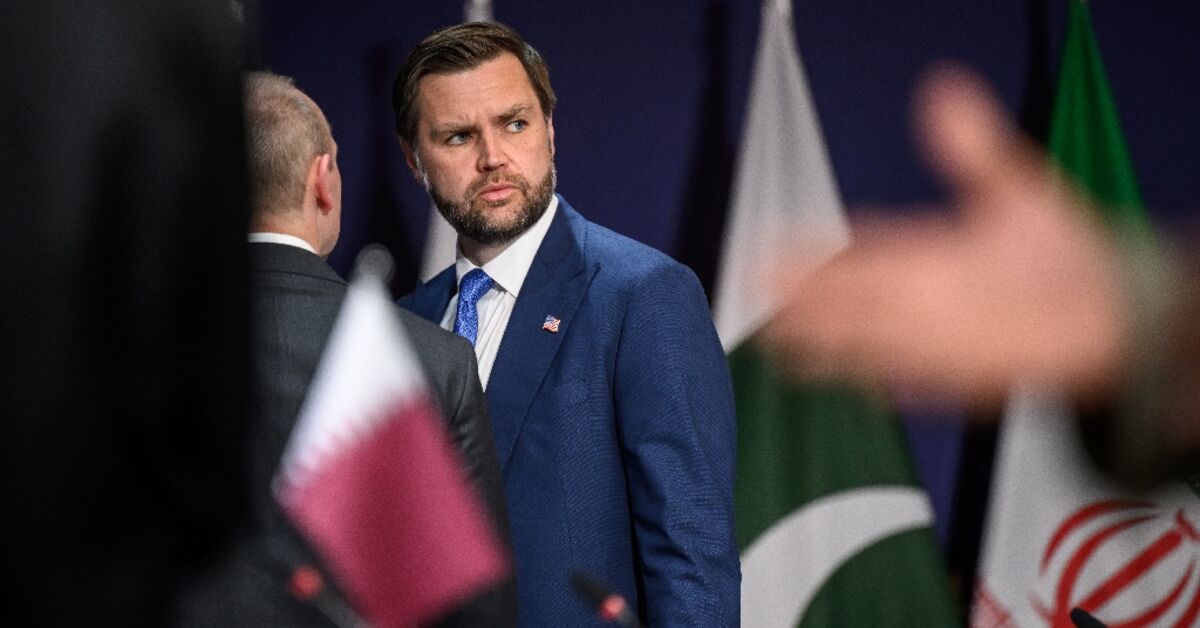
- The US delegation includes Vice President JD Vance, envoys Steve Witkoff and Jared Kushner; Iran's side is led by Mohammad Bagher Ghalibaf alongside Foreign Minister Abbas Araghchi, with Qatar and Pakistan mediating.
- The Telegraph, embedded with IDF troops in southern Lebanon, reported that the fate of villages like Majdal Zoun — where an 170-meter Hezbollah tunnel sits 20 meters underground — is precisely the kind of ground reality threatening to derail any deal.
- Nearly 4,000 people have been killed on the Lebanese side since March 2 this year alone, according to The Telegraph, with more than 1 million displaced and roughly 6 percent of Lebanese territory under Israeli control.
Zooming out: Carnegie Middle East analyst Michael Young notes that linking Lebanon to the US-Iran framework may have inadvertently put Hezbollah's disarmament on the formal negotiating table for the first time — something Iran has historically refused to allow. |
|
as of 4:55 AM GMT · Source: Polymarket |
What does "Khalle el 3asal b kuaro, la teje as3aro" truly imply? | | Protect value until the right time |
| | Marriage should be delayed |
| |
Scroll to the bottom for the answer — or play all 10 at sobhiye.news/games/trivia |
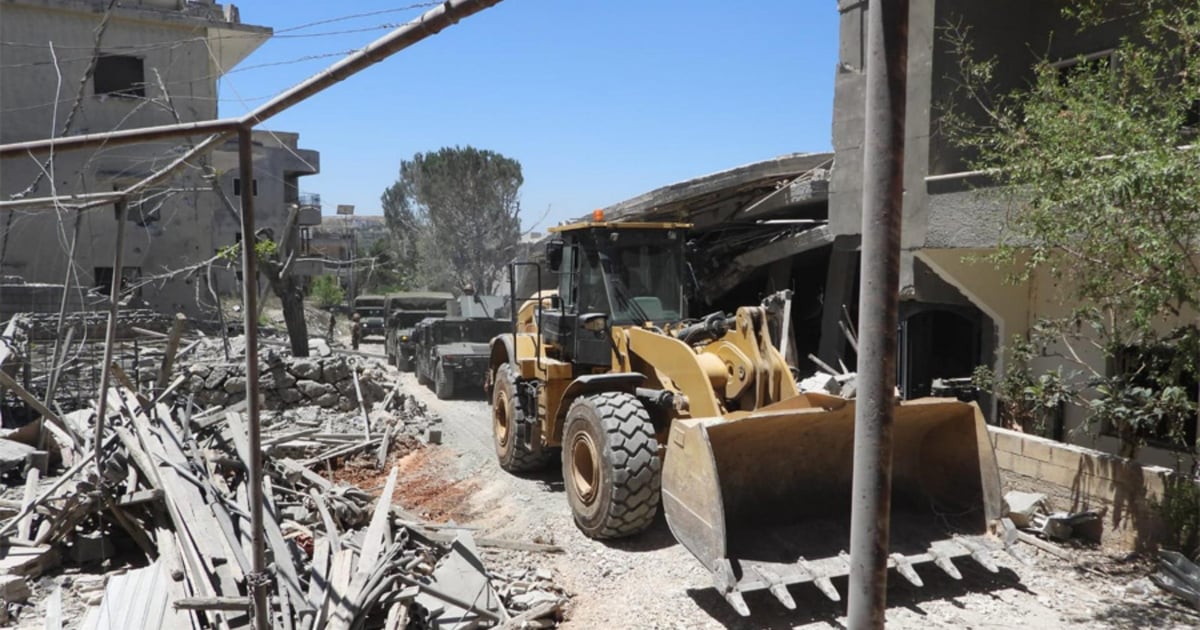
| | - Bombs in the backyard: Lebanese Army specialized units defused 1,000 and 2,000-pound unexploded Israeli aerial bombs across five towns in the Bint Jbeil and Marjayoun districts, while simultaneously reopening main and secondary roads — and reminding residents not to return to border villages without military clearance.
- Seven dead, ceasefire or not: Israeli airstrikes on Sohmor in the Western Bekaa killed five people — including a child, a woman, and two elderly individuals — while a separate strike on Rashidieh in the Tyre district killed two more of Palestinian nationality, according to Lebanon's Ministry of Public Health.
- Hormuz holds Lebanon hostage: Iran's Tasnim news agency, citing a source close to the negotiating team, reported that the Strait of Hormuz will remain closed unless the Lebanon ceasefire holds and waivers allowing the sale of Iranian oil are issued — linking global energy flows directly to what happens in the south.
- $150M digital bet: A World Bank project worth $150 million is targeting Lebanon's digital infrastructure in 2026, even as only 23 percent of Lebanese adults held a formal financial account in 2024 — the trust problem, it turns out, is harder to fix than the technology.
- Security meets academia: The Lebanese University and the Internal Security Forces launched Lebanon's first-ever joint Master's in Security Sciences, covering cybercrime, crisis management, and strategic leadership — with applications opening July 15 and welcoming both security personnel and civilian graduates.
|
|
| ─ | Parallel Rate | 89,550 LBP | 0.00% | | ─ | Official Rate | 89,500 LBP | 0.00% | | ▼ | Gold | $4,194.6 | -1.21% | | ▼ | Bitcoin | $63,917 | -0.80% | | ▼ | S&P 500 | 7,500.58 | -0.14% |
as of 4:43 AM GMT · Source: lbprate, BDL, Yahoo Finance, CoinGecko |
| | Iran-US Talks Produce a Roadmap — and a Lebanon De-Confliction CellThe first round of Iran-US talks in Switzerland wrapped Monday with more structure than expected: a 60-day roadmap to a final deal, a new mechanism specifically for Lebanon, and Iran's foreign minister calling it "major progress."
- A joint Qatar-Pakistan statement confirmed that the High Level Committee overseeing the talks agreed on a roadmap toward a final deal within 60 days, with technical talks continuing through the week at Burgenstock.
- The US and Iran agreed to create a "de-confliction cell" involving both parties and the Lebanese Republic, facilitated by mediators, to ensure the termination of military operations in Lebanon holds — Iran's Foreign Minister Araghchi called it the "1st real test."
- Tehran and Washington also set up a "communication line" on the Strait of Hormuz to prevent incidents and ensure safe passage for commercial vessels during the 60-day MOU period.
- Araghchi posted on X that oil and petrochemical exports are now waived, the blockade lifted, and some frozen assets released — though the Qatar-Pakistan joint statement did not specifically mention asset unfreezing.
What to watch: With 22 South Korean-operated ships still stranded in the Strait of Hormuz — two having passed through after the MOU — how quickly commercial shipping normalizes will be an early indicator of whether the framework is holding. A US Airstrike Killed 12 Civilians in Somalia — and Washington Said NothingAt least 12 civilians, including 8 children, were killed in a US airstrike on the Somali town of Jamaame last November — making it the deadliest US strike for civilians in Somalia during either Trump administration — and the US government has yet to offer any account of what happened.
- The Guardian's investigation, built from clan elder contacts, survivor testimony, photographs, X-rays of children's shrapnel injuries, and drone specialist interviews, reconstructed the strike after US authorities declined to respond to roughly 30 detailed questions.
- The airstrike targeted a densely populated family neighborhood; no official explanation has been given for who the intended target was or who authorized the strike.
- The US has not killed so many civilians in a single incident in Somalia for 18 years, according to the Guardian's reporting, and the campaign against al-Shabaab has grown increasingly aggressive under the current administration.
The bigger picture: The Somalia case illustrates a pattern identified by journalists covering covert US military campaigns — the combination of physical access restrictions, press freedom limits, and official silence that allows civilian casualties to go unexamined for months or years. Colombia Votes With Paramilitaries in the RoomColombia held its presidential runoff Sunday between two candidates whose lives have been shaped, in opposite ways, by the paramilitary violence that claimed nearly half a million lives over decades — a contest that amounts to a referendum on how the country deals with its armed groups.
- Far-right candidate Abelardo de la Espriella, 47, built his legal career defending paramilitary leaders; leftwing senator Iván Cepeda, 63, lost his father to a paramilitary-linked army assassination and spent years representing the groups' victims.
- de la Espriella favors full-scale military confrontation and has proposed building private "mega-prisons" in the Amazon; Cepeda advocates a modified version of outgoing President Petro's "total peace" negotiation strategy, which security experts say has broadly failed.
- The past year has been Colombia's most violent since the landmark 2016 peace agreement, with surges in armed group attacks, homicides, kidnappings, and forced displacement.
Zooming out: Whoever wins takes office August 7 inheriting a country where the Gulf Clan — founded by former members of the now-dissolved AUC paramilitary — remains Colombia's largest and most powerful illegal armed group. |
|
| | - Forty years of Assi: Lebanon marks 40 years since the passing of Assi Rahbani — the poet-composer who wrote for Fairuz and whom Al Modon compares to Prometheus, who stole fire from the gods to gift it to humanity — with tributes celebrating a man whose melodies remain the compass of a generation still humming his words.
- Salah does it first: Mohamed Salah scored his 68th international goal in the 67th minute as Egypt came back from a 1-0 half-time deficit to beat New Zealand 3-1 in Vancouver — delivering the Pharaohs their first-ever World Cup victory, to a standing ovation that followed Salah all the way off the pitch.
- Lebanon's heritage, doubled: Since the war began, the Ministry of Culture worked through UNESCO to increase the number of Lebanese sites covered by enhanced protection from 39 to 79 — and Culture Minister Ghassan Salamé dedicated this year's National Heritage Day to the South, also announcing a plan to rehabilitate 57 public libraries into local cultural centers.
- Papa Burrows, forever: Jennifer Aniston led Hollywood tributes to Friends and Cheers director James Burrows, who died at 85, calling him "a father figure" who "spoiled us rotten" — a man credited with shaping the modern sitcom across decades of television that your whole family has definitely watched on repeat.
|
|
Thanks for reading — see you tomorrow. |
| ✓B. Protect value until the right time |
The metaphor is about preserving value, not gender or marriage alone. |
Lebanon news, every weekday morning. Free, sharp, ~5 minutes. |
|
|
|
|