|   | Shou el akhbar — Europe is quietly drawing up a Lebanon Plan B while Washington eyes the exit, a court just slammed the door on the government's sneakiest depositor move, and an analyst is out here explaining that Lebanon's deep state doesn't wear a mask: it gives press conferences. Pour the coffee. It's a big morning. |
|
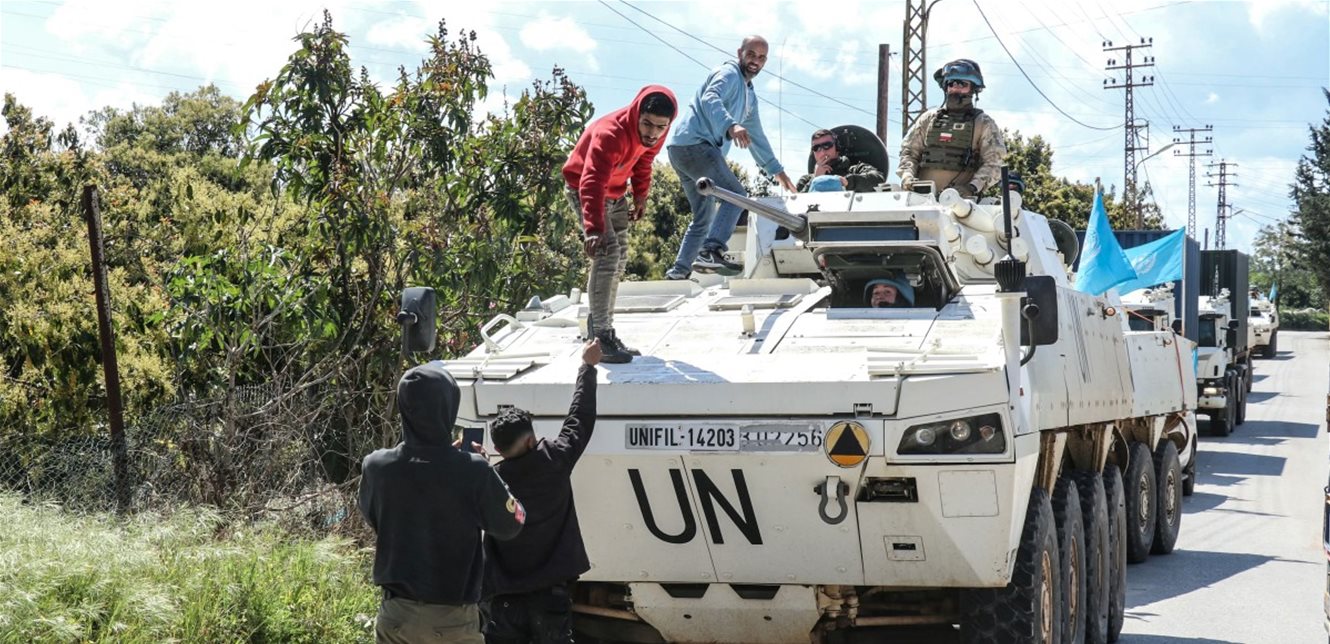
| | UNIFIL's Clock Is Running Out — and Europe Is Already Planning What Comes NextWith UNIFIL's mandate expiring at year's end and Washington widely expected to veto any renewal, European military chiefs have quietly drafted a plan to keep boots on the ground in Lebanon — with or without the UN's blessing.
- The EU Military Committee, which includes the chiefs of staff of European armies, submitted a recommendation to EU foreign policy chief Kaja Kallas calling for a joint European force of roughly 5,000 soldiers to replace UNIFIL through direct cooperation agreements with the Lebanese Army.
- European diplomats describe their assessment of the US position as "highly pessimistic," with Washington seen as likely to use its Security Council veto — part of a broader Trump administration push to reduce UN funding and restrict its officials.
- Israel is also pushing hard to end the mission, and has directly targeted UNIFIL positions since March 2, killing six UN military personnel and striking dozens of international force sites.
- Lebanon, meanwhile, sits in a "receiving position" — 80 MPs signed a petition asking the Security Council to keep UNIFIL, while UNIFIL Commander General Diodato Abagnara has briefed President Aoun, Speaker Berri, and the Foreign Affairs Committee on UN Secretary-General Guterres's alternative observer-force proposals.
What to watch: Whether Beirut can coalesce around a unified official position — and get it to New York — before the Security Council's calendar forces the issue. Lebanon's Deep State Doesn't Hide — It Gives Press ConferencesThe idea of a shadowy "deep state" pulling Lebanon's strings is a popular explanation for why nothing gets fixed — but a sharp new analysis argues the truth is stranger and more brazen than that.
- Rather than a hidden apparatus working against the state, the piece in Al Modon argues Lebanon's "deep state" is an open alliance of politicians, businesspeople, media figures, and patronage networks who collectively need the state to remain weak enough to keep dividing its spoils.
- The political conflict in Lebanon, it argues, is not over economic visions or public policy but over who gets to appoint, employ, sign, and distribute — "a competition to own the state" rather than govern it.
- The uncomfortable conclusion: those who promise to confront the deep state often absorb it upon entering office, inheriting its balances, networks, and calculations rather than dismantling them.
The bigger picture: The analysis lands as a broader warning that those who promise to confront the deep state risk gradually integrating into the very system they claimed to change. Court Rules: Depositors' Savings Cannot Be Erased by Cabinet DecreeLebanon's State Shura Council has delivered a ruling with real teeth — definitively closing off the government's attempt to quietly write off what it owes depositors through an executive order rather than a proper law.
- The council on May 21, 2026, rejected the Lebanese state's request for a retrial, upholding its February 2024 ruling that annulled Cabinet Decision No. 3 of May 2022 — which had sought to cancel part of the Banque du Liban's foreign-currency obligations to commercial banks.
- The ruling establishes three binding principles: the administrative judiciary can override the executive on property rights; any loss restructuring requires explicit parliamentary legislation; and the decision sets a judicial precedent against future deposit confiscation schemes.
- The Association of Banks' lawyer, Dr. Akram Azoury, said the ruling "contributes to rebuilding confidence in the banking system," while Secretary-General Fadi Khalaf called for a clear recovery plan that "defines responsibilities and holds each party accountable."
Why it matters: The ruling forecloses one contested path for distributing financial-crisis losses, pushing any future restructuring plan back to parliament — where it always constitutionally belonged. |
|
as of 4:22 AM GMT · Source: Polymarket |
Lahm b'ajeen is a thin meat flatbread most strongly associated with which culinary traditions? Scroll to the bottom for the answer — or play all 10 at sobhiye.news/games/trivia |
| | - Half a million, welcome home: Lebanon's Finance and Budget Committee has proposed a "Golden Residency" program offering special status to non-residents who invest at least $500,000 in one of three sectors, with family members eligible for an annual fee of at least $50,000 each.
- Iran moves into the room: The US-Iran talks in Switzerland produced a "deconfliction cell" on Lebanon — with Iran officially entering Lebanon's security equations for the first time, even as President Aoun stressed that "no one negotiates on our behalf." A fifth round of Lebanese-Israeli talks in Washington began Tuesday.
- Tyre's 5,000-year wait: AP reports Tyre's ancient city remains largely at a standstill despite the latest ceasefire — parking lots packed with displaced families' tents, Roman columns damaged, the UNESCO World Heritage shoreline at Mansouri inaccessible, and over 4,000 people killed across Lebanon since March.
- Riyadh sends a new face: Saudi Arabia's new ambassador Fahd al-Dosari — the first ambassador change in over a decade — arrived in Beirut days after the US-Iran agreement, signaling Riyadh's intention to play a bigger role in Lebanon's next chapter.
- Beirut gets an air check: Environment Minister Tamara Elzein signed an MOU to install an air quality measurement network across Beirut — funded by the Global Environment Facility and implemented with UNOPS — targeting PM2.5 fine particles and gases, with diesel generators cited as the main pollution source.
|
|
| ─ | Parallel Rate | 89,500 LBP | 0.00% | | ─ | Official Rate | 89,500 LBP | 0.00% | | ▼ | Gold | $4,162.9 | -0.45% | | ▲ | Bitcoin | $63,992 | +0.11% | | ▲ | S&P 500 | 7,472.79 | +0.71% |
as of 4:11 AM GMT · Source: lbprate, BDL, Yahoo Finance, CoinGecko |
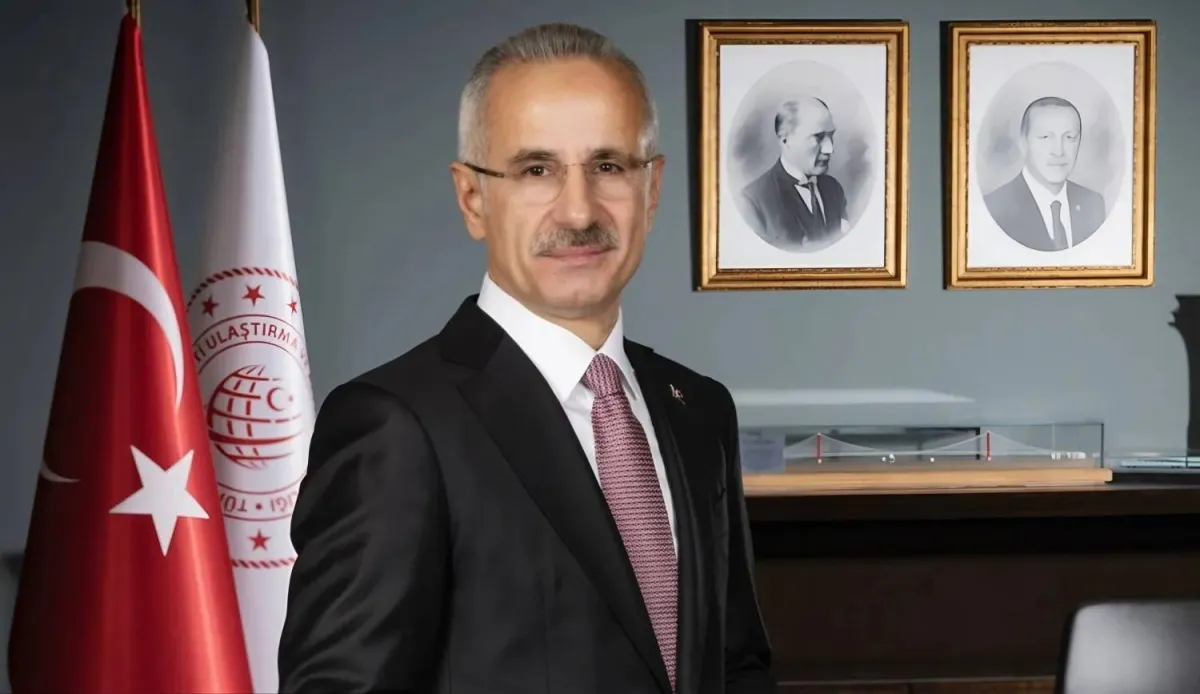
| | Türkiye and Saudi Arabia Race to Build the Gulf-to-Europe Rail CorridorWith Hormuz tensions exposing how fragile global supply chains can be, Türkiye and Saudi Arabia are pushing to finalize costs, investment needs and financing arrangements for a strategic rail corridor linking Saudi Arabia and Türkiye by the end of 2026.
- Turkish Transport Minister Abdulkadir Uraloğlu told Asharq Al-Awsat that technical teams are completing detailed studies and a concrete financial framework — covering costs, investment needs, and financing — is expected to emerge by year-end.
- The project requires rehabilitation of roughly 400 km of damaged rail infrastructure across Syria and Jordan, with some sections needing full reconstruction; Saudi Arabia and Türkiye signed railway and logistics memorandums of understanding earlier this month.
- Future phases could extend the corridor to Qatar, the UAE, Kuwait, and Oman, connecting Gulf energy exporters directly into Europe's unified railway network via Türkiye's existing Asia-Europe rail links.
The bigger picture: The corridor is explicitly framed as a strategic alternative to Hormuz-dependent shipping routes, placing infrastructure competition at the center of the region's shifting geopolitical alignments. Cities Are Losing the Race Against Extreme Heat — and Reinventing Themselves to Catch UpNearly 500,000 people die from heat-related causes every year, according to UN figures, and urban areas — which trap heat up to 15 degrees Celsius warmer than surrounding countryside — are where the crisis lands hardest.
- Cities from Antalya, Turkey to Teresina, Brazil and Kilifi County, Kenya are deploying green roofs, urban forest corridors, real-time weather station networks, and decentralized solar grids to reduce heat exposure for vulnerable populations, according to Deutsche Welle.
- Fortaleza, Brazil has launched a network of 10 weather stations providing real-time temperature and UV data, and plans to install air conditioning powered by solar energy across all public schools by 2028.
- The WHO's regional director for Europe noted: "Heat is a silent killer, but it is not an inevitable one — we have the tools, now we must use them," as cities share adaptation strategies at preparatory UN climate talks.
Zooming out: As more than half the world's population now lives in cities, the pace and equity of urban heat adaptation — particularly in middle-income countries where not all families have air conditioning — will shape public health outcomes for decades. A Lost Ocean Giant Is Found Again Off California — and Its Return Could Rescue Kelp ForestsScientists feared the sunflower sea star was functionally gone after a disease killed an estimated six billion of them between 2013 and 2017 — the largest marine epidemic ever recorded. Eighteen have just been found alive off Northern California.
- Researchers located the stars — one of the largest sea star species on Earth, spanning over three feet — in the Greater Farallones National Marine Sanctuary, collecting genetic tissue and water samples to aid potential repopulation efforts.
- Their collapse triggered a cascade: with no sunflower stars to eat purple sea urchins, urchin populations exploded and destroyed kelp forests, causing a 90 percent loss of habitat in the Farallones and threatening nearly 800 keystone species that depend on kelp.
- Researchers have identified the bacterium Vibrio pectenicida as responsible for the die-off, though what drives its spread is still under study; cross-breeding and pairing stars with beneficial bacteria are among proposed recovery strategies.
What to watch: Whether the Trump administration's National Marine Fisheries Service — which has reportedly not yet completed a proposal to list the sunflower sea star under the Endangered Species Act — moves to offer the species formal legal protection. |
|
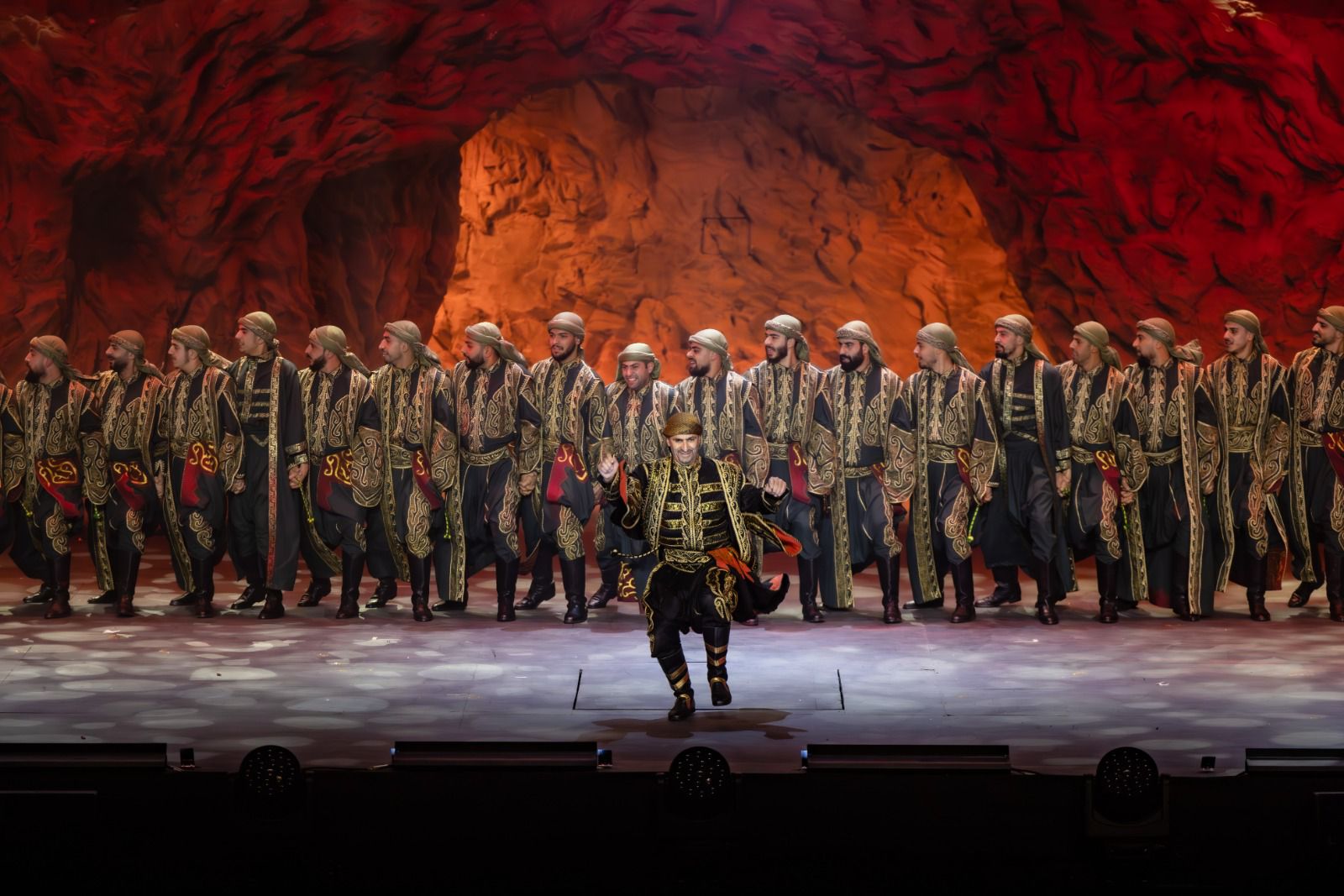
| | - Dabke is in the blood: Hayakel Baalbek, founded in the 1990s to preserve Lebanon's dabke traditions, recently performed at the celebrations welcoming Pope Leo XIV to Lebanon and later collaborated with the Mayyas — carrying five distinct dabke styles, from Baddawiya to Tayrawiya, to international audiences.
- Fashion that actually listens: Beirut's "Athar" project held its first-ever fashion show at the Beirut Art Center on June 19, transforming real people's personal stories into garments — and allocating part of the proceeds to fund psychological therapy sessions, typically seven or eight per storyteller, in partnership with mental health organizations.
- Lebanon's libraries get a glow-up: The Ministry of Culture, partnering with UNESCO and the Royal Norwegian Embassy, has launched a $650,000 project to rehabilitate all 57 public libraries across Lebanon, with a goal of doubling annual visitors outside Beirut from 125,000 to 250,000 within two years.
- Serena's Wimbledon comeback: At 44, Serena Williams — a 23-time Grand Slam singles champion and 7-time Wimbledon title holder — is returning to singles competition at the All England Club after a four-year absence, making her the oldest player in the women's singles draw by six years.
|
|
Yalla, go make it a good one — see you tomorrow. |
| ✓B. Levantine and Armenian |
Lahm b'ajeen ('meat with dough') is a shared specialty of Levantine and Armenian cuisines. |
Lebanon news, every weekday morning. Free, sharp, ~5 minutes. |
|
|
|
|