|   | Shou el akhbar. Lebanon is filing legal briefs, burying its dead, and pitching tunnels to global CEOs — sometimes all at once. This morning we have a case for dragging Israel before the ICC, a heartbreaking story from Kfar Sir that numbers alone can't tell, and a prime minister selling the Bekaa to international business leaders like it's the next great investment frontier. |
|
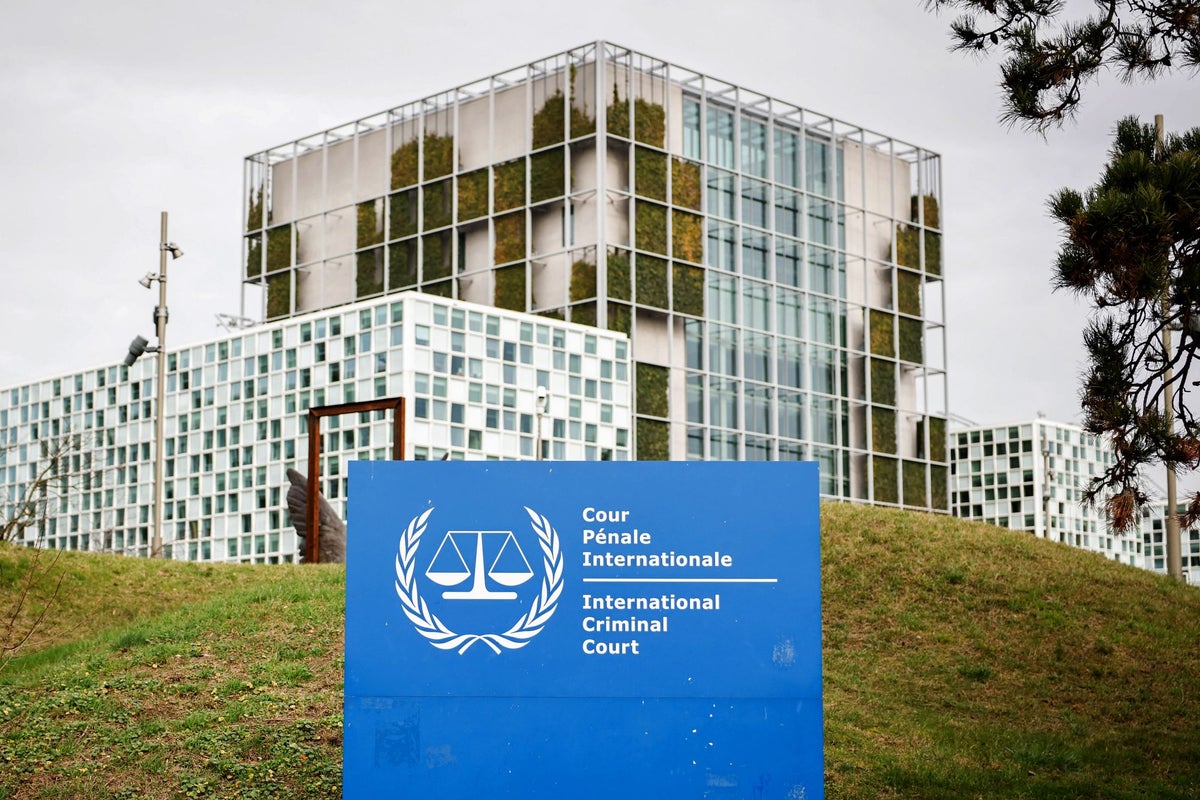
| | The Case for Bringing Israel Before the International Criminal CourtLebanon has a legal tool it hasn't fully used yet: Article 12 of the Rome Statute lets a non-member state hand the International Criminal Court jurisdiction over crimes committed on its territory — no full ICC membership required.
- UN Human Rights Office reports and independent organizations documented a pattern of Israeli strikes that directly or disproportionately targeted civilians — including children, journalists, and medical workers — constituting grave breaches under Article 8 of the Rome Statute.
- Available data indicates more than 1 million Lebanese civilians were displaced from South Lebanon and the southern suburbs, with over 11,000 buildings destroyed, including residential and civilian facilities.
- Al Modon reports that official Israeli government statements — describing unrestricted force and collective punishment — could serve as circumstantial evidence of specific intent, raising questions about whether elements of the crime of genocide are present.
- The proposed Article 12 declaration would let Lebanon define a precise time period and scope of jurisdiction, allowing prosecution of alleged violations without committing to full ICC membership.
What to watch: Whether the Lebanese government formally files an Article 12 declaration will signal how seriously Beirut intends to pursue international legal accountability for documented crimes since 2024. Fatima Dahawi's Last Message: A Night Kfar Sir Will Never ForgetTwo minutes separated a young woman's final prayer from the Israeli strikes that killed her. The Public Source published a firsthand account of the night missiles hit the village of Kfar Sir in South Lebanon, killing Fatima Dahawi and her mother, Samira Mantash.
- At 3:01 a.m., Fatima — known as Fattouma — sent a du'a to a group chat wishing God's protection for the resistance; two minutes later, three missiles struck the village, two hitting her home.
- Intense artillery fire and repeated airstrikes then pinned survivors inside Kfar Sir for more than two hours, as women and children ran wounded toward medical centers in neighboring towns.
- A third strike severed the main road through the town center, trapping additional residents and cutting off escape routes before survivors eventually fled.
Why it matters: Fatima's story — documented by a friend who lived it beside her — puts a human face on the civilian toll that legal arguments and casualty figures alone cannot carry. Salam Pitches Tunnels, Airports, and a Bekaa Dry Port to Global CEOsPrime Minister Nawaf Salam used a meeting with international business leaders to unveil a pipeline of infrastructure projects — some already in motion, some on the drawing board — signaling Beirut's pitch to private capital is getting more specific.
- Salam announced the expected completion of the Qlayaat Airport partnership project with "Sky Lounge" and "Mada Airways" soon, with more than 25 entities already expressing interest in a second investment phase.
- A feasibility study for a Beirut-Bekaa tunnel under a BOT system has been launched, with the tender expected to begin early next year and a planned dry port in Bekaa linked to the India-Europe economic corridor route.
- The government also submitted a draft law to Parliament to address the financial gap in the banking sector crisis, with Salam expressing openness to amendments in cooperation with parliamentary committees.
- The Young Presidents' Organization delegation, comprising businessmen and CEOs, affirmed the business sector's support for public-private partnership as a path to restoring investor confidence.
Zooming out: The simultaneous push on airports, tunnels, a dry port, and banking reform shows the Salam government framing Lebanon's reconstruction not as aid-dependent charity but as an investable opportunity — a narrative shift worth watching. |
|
as of 4:18 AM GMT · Source: Polymarket |
What does "Alf marra jaben w wala marra allah yer7amo" justify? | Strategic avoidance of danger |
| | | |
Scroll to the bottom for the answer — or play all 10 at sobhiye.news/games/trivia |
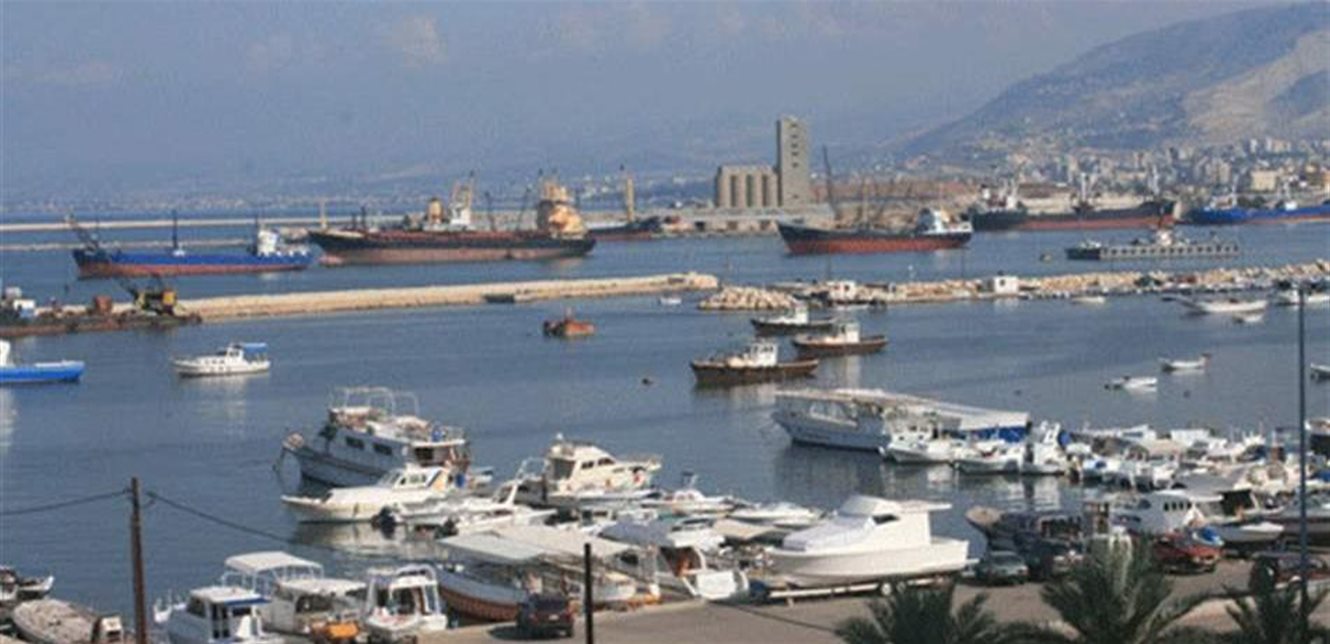
| | - Tripoli's third giant in days: The 366-meter CMA CGM D'ARTAGNAN — carrying roughly 15,000 standard containers — docked at Tripoli Port, the third vessel of this size to call there within a matter of days, cementing the port's emerging role as a hub in the Eastern Mediterranean.
- AMAN gets a trim: Lebanon's national cash assistance program relaunched as "AMAN 2.0," cutting beneficiary lists from 163,000 to 128,474 families after a targeting reassessment — while the government allocated $50 million directly from the 2026 budget, a first for state financing of the program.
- Life sentence: A military tribunal sentenced army soldier Salim Fahd to life in prison for the 2022 murder of Elie Jasser, a dentist in Ablah, Zahle — a case that shocked Lebanon and drew immediate condemnation from the Order of Dentists at the time.
- Golden residency, not a passport: MP Ibrahim Kanaan clarified that Lebanon's proposed golden residency bill is strictly about tax residency — covering income and inheritance tax law amendments only — and is optional, with no link to citizenship or property ownership, aimed purely at attracting investors.
- Deposits: courts hold the line: Lebanon's State Council ruled that depositors' savings cannot be written off or reduced through government or regulatory decisions alone — any loss restructuring must go through Parliament with defined compensation mechanisms, a landmark precedent in the ongoing banking crisis.
|
|
| ─ | Parallel Rate | 89,550 LBP | 0.00% | | ─ | Official Rate | 89,500 LBP | 0.00% | | ▼ | Gold | $4,079.8 | -1.21% | | ▼ | Bitcoin | $62,589 | -2.19% | | ▼ | S&P 500 | 7,365.46 | -1.80% |
as of 4:08 AM GMT · Source: lbprate, BDL, Yahoo Finance, CoinGecko |
| | Niger Quits the ICC — and the Timing Is No AccidentNiger formally withdrew from the International Criminal Court this week, becoming only the third country to leave the Rome Statute — after the Philippines and Burundi — and doing so while its military junta deepens ties with Russia.
- Niger submitted a withdrawal letter to the United Nations Monday, citing what it called "selective justice" — a move that follows a 2023 military coup that ousted its democratically elected government and triggered a broader pivot away from Western institutions.
- The departure will become effective 12 months after the UN received the letter, though crimes committed before the official exit date remain subject to the court's jurisdiction.
- The withdrawal follows a prior announcement by Niger, Mali, and Burkina Faso of their collective intent to leave the ICC — all three countries have undergone military takeovers and forged closer ties with Russia, whose President Vladimir Putin faces an ICC arrest warrant over Ukraine.
- Earlier this month, gunmen killed more than 30 people in an attack on the main airport in Niger's capital, Niamey — the second such attack this year on the hub housing the air force base and regional alliance headquarters.
Zooming out: Niger's exit adds to a pattern of Sahel military governments abandoning multilateral institutions simultaneously, raising questions about the ICC's reach across a region experiencing rapid political realignment. The DRC's Ebola Outbreak Just Crossed 1,000 Cases — and Aid Cuts Are Making It WorseThe Democratic Republic of the Congo is fighting the third-largest Ebola outbreak in history, and the collapse of international aid funding is hampering the basic tools — water and handwashing stations — needed to stop it from spreading further.
- Confirmed Ebola cases in the DRC have surpassed 1,000, with 254 dead — though experts warn the real figure is thought to be far higher, and the outbreak has not yet reached its peak.
- More than 800,000 internally displaced people live in Ituri province, the outbreak's epicenter; almost half live in locations where access to water, sanitation, and hygiene is critically limited, according to the Danish Refugee Council.
- Funding for toilets and handwashing stations in the DRC more than halved between 2024 and 2025, per UN data, while a $80 million 2025 WASH appeal is only 21% funded, according to Reuters.
- Humanitarian assistance budgets in the DRC fell from a high of nearly $1.4 billion in 2024 to just $400 million in early 2026, weakening services across an already fragile health system.
The bigger picture: The DRC outbreak illustrates how simultaneous aid withdrawals by multiple donor countries can rapidly transform a containable public health crisis into a cascading emergency. London's Air Cleaned Up — Deaths Down an Estimated 40% in Five YearsA new Imperial College London study found that deaths linked to air pollution in London fell by an estimated 40% between 2019 and 2024 — a shift driven by sharp reductions in the toxic pollutants that contribute to cardiovascular disease, dementia, and diabetes.
- Nitrogen dioxide levels across London dropped 41% and fine particulate pollution fell 28% over the five-year period, according to Imperial researchers.
- The study revised the estimated premature deaths attributable to air pollution in 2019 upward to 6,400–8,000, compared with a previous estimate of 4,000 — making the subsequent drop to an estimated 3,800–5,100 deaths in 2024 all the more significant.
- About 97% of vehicles driving in London's ultra-low emission zone are now compliant with emission standards, while the number of zero-emission buses in Transport for London's fleet grew from 30 to more than 3,000 over the past decade.
What to watch: Whether other high-density cities — including Beirut — can replicate London's results through comparable regulatory action will be a key benchmark in coming years. |
|
| | - Beirut's World Cup sidewalks: From Tariq Al-Jadida to Qasqas, Beirut's neighborhoods have transformed into a festival of flags and sidewalk cafes — one community even pooled $95 together for a channel subscription so the whole street could watch for free, shisha, a bag of chips, and juice for 8 dollars.
- The Greek Freak goes South Beach: Giannis Antetokounmpo — 2-time NBA MVP, 10-time All-Star, and the man who brought Milwaukee the 2021 NBA title — is headed to the Miami Heat in a blockbuster trade that sent Tyler Herro and multiple future draft picks the other way.
- Beirut's golden age, in pictures: Business Insider published a stunning vintage photo spread of Beirut at its mid-20th-century peak — when tourism made up 20% of Lebanon's GDP, stars like Elizabeth Taylor, Marlon Brando, Brigitte Bardot, and Peter O'Toole were spotted there, and Hamra Street was genuinely compared to the Champs-Élysées.
- The man who built Whitney: Music legend Clive Davis, who died at 94, leaves behind a career that shaped Whitney Houston, Aretha Franklin, Bruce Springsteen, and Notorious B.I.G. — and he was still hosting his legendary Pre-Grammy Gala just weeks before his death.
|
|
Yalla, go make it a good one — see you tomorrow. |
| ✓A. Strategic avoidance of danger |
Survival over pride: risk assessment, not fear. |
Lebanon news, every weekday morning. Free, sharp, ~5 minutes. |
|
|
|
|