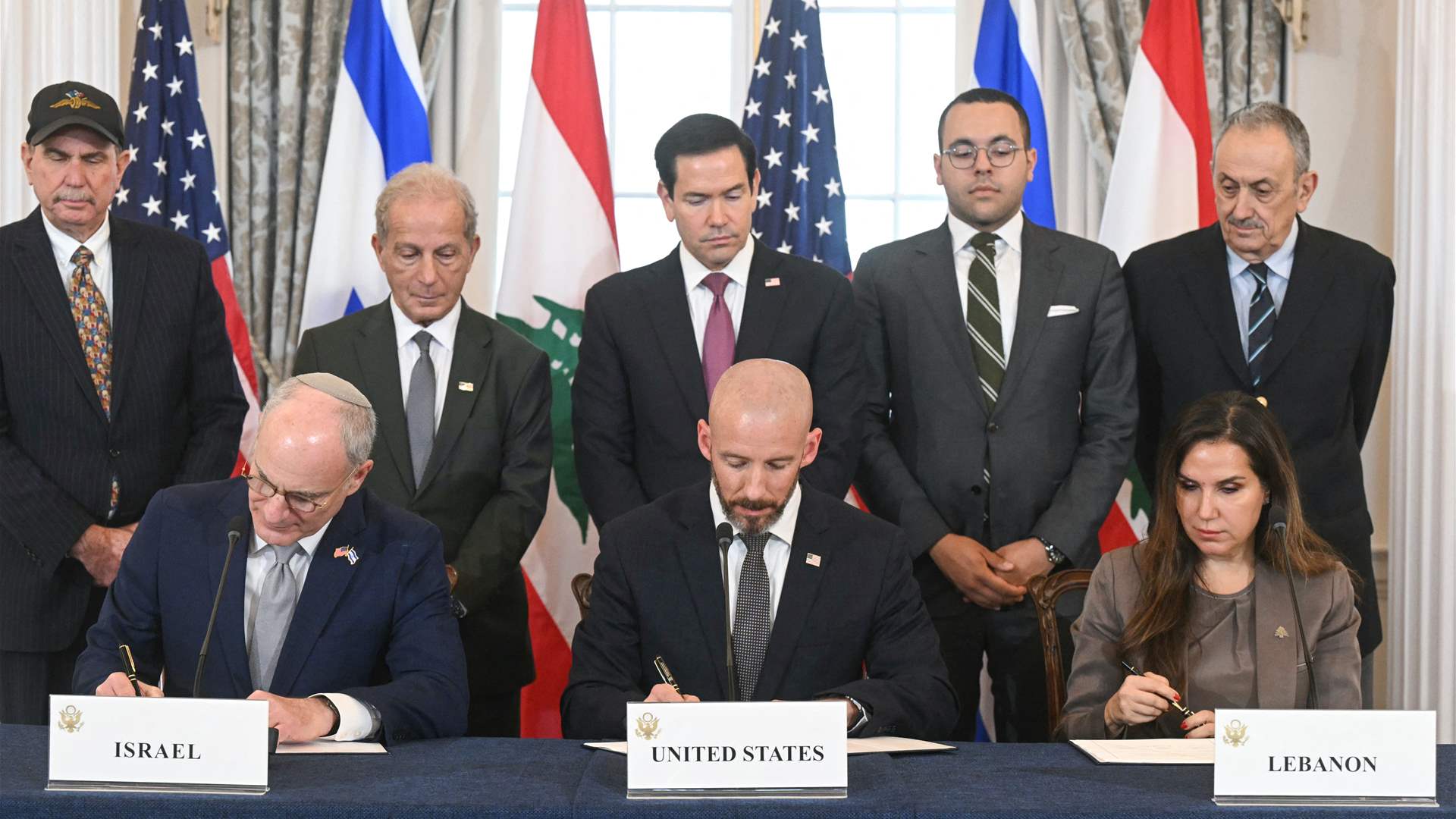
|   | Ahla w sahla — and welcome to your Sunday edition of Sobhiye, a look back at the biggest Lebanon stories from the past seven days. What a week to try to keep up with. Lebanon, Israel, and the United States signed a Trilateral Framework Agreement in Washington — a phased roadmap toward peace that dominated the headlines. Then, one day after a ceasefire was announced, at least 29 people were killed in Israeli strikes across the south and Bekaa. The deal and the violence arrived almost simultaneously. Meanwhile, Washington and Tehran quietly agreed to a joint deconfliction cell for Lebanon — sidelining Beirut in its own file. A lot happened. Let's get into it. |
|
Which three parties signed the Trilateral Framework Agreement in Washington? | Lebanon, Israel, and the UN |
| | Lebanon, Israel, and the US |
| | Lebanon, France, and the US |
| | Lebanon, Jordan, and the US |
|
Scroll to the bottom for the answer — or play all 10 at sobhiye.news/games/news-quiz |
| | - Lebanon-Israel-US Framework Signed: Lebanon, Israel, and the United States signed a Trilateral Framework Agreement in Washington, outlining a phased path toward peace. The deal envisions verified Hezbollah disarmament, a gradual IDF withdrawal from Lebanese territory, Lebanese Armed Forces deployment in pilot zones, and U.S.-led reconstruction support.
- US-Iran Deconfliction Deal: Washington and Tehran agreed Monday to establish a joint deconfliction cell to manage the ceasefire in Lebanon, effectively inserting Iran formally into Lebanon's security equations. Beirut, which had fought to keep its file separate from US-Iran talks, found itself sidelined — prompting President Aoun to insist no one negotiates on Lebanon's behalf.
- Ceasefire, Then More Strikes: At least 29 people were killed in a wave of Israeli attacks on Lebanon on Saturday, just one day after a ceasefire was announced. Strikes hit Nabatieh, Tyre, Sidon, and the western Bekaa Valley — including a Lebanese army officer — even as US-Iran talks sought to consolidate the truce.
- Blom Bank Offshore Scandal: An OCCRP-linked investigation revealed that Blom Bank transferred over $250 million in dividends to a Luxembourg family holding company, "Panorab," between 2010 and 2019. The al-Azhari and Chaker families reportedly received an estimated $80–82 million combined — months before depositors lost access to their savings in Lebanon's financial collapse.
- Baccalaureate Exams Canceled: Cabinet on Thursday canceled Lebanon's baccalaureate exams for the 2025–2026 school year, citing ongoing Israeli attacks and security conditions that made safe access to exam centers impossible across the territory. Continuous assessment grades through March 1, 2026, will be used instead — a decision Education Minister Rima Karami accepted visibly reluctantly.
- Iran Portraits Return to Airport Road: Banners bearing images of Ali and Mojtaba Khamenei, reading "Thank you, faithful Iran," reappeared along Beirut's airport highway — the same road the government had cleared of party symbols in April 2025. The timing, while southern Lebanese families still await answers on return, reconstruction, and withdrawal, raised pointed questions about the state's ability to reclaim public space.
- Iran's Guards Were on the Ground: Reporting this week confirmed a direct Revolutionary Guards role in the war in Lebanon — from operations rooms to battlefield command on specific fronts. Four IRGC officers killed in a March strike on a Beirut hotel had entered Lebanon on genuine Lebanese passports issued under different names, triggering a criminal referral to the Court of Cassation.
- Dutch Military Boost for LAF: The Netherlands announced it would expand military support for the Lebanese Armed Forces, funding a new military base and providing specialized training in counterterrorism, border security, mine clearance, and AI-enabled communications. The Dutch military chief visited Beirut this week for senior-level talks, framing a capable LAF as a prerequisite for any durable peace deal.
- Saudi Exports Resume After Five Years: The first Lebanese export containers departed Beirut Port for Jeddah on Saturday, marking the end of a five-year Saudi ban tied to Captagon smuggling. Prime Minister Nawaf Salam pledged Lebanon would never again be used to harm Arab neighbors — and as Lebanon moves toward a new cargo-scanning mechanism to enable direct cooperation with Saudi authorities to detect and prevent smuggling.
- AHM Nightclub Opens Anew: Beirut's iconic AHM nightclub officially reopened in a purpose-built venue on the waterfront, designed by architect Carl Gerges as an industrial, immersive space oriented toward the summer sunrise. First damaged in the 2020 port explosion, then repeatedly interrupted by war, the reopening was described by its creators as "an act of believing in tomorrow."
|
|
That's your week in full. Enjoy your Sunday — we'll be back in your inbox tomorrow morning. |
| ✓B. Lebanon, Israel, and the US |
Lebanon, Israel, and the United States signed the agreement in Washington. Read the full story → |
Lebanon news, every weekday morning. Free, sharp, ~5 minutes. |
|
|
|
|