|   | Shou el akhbar — Netanyahu claimed Christian villages in the south were asking to join Israel, and the villages themselves responded with a very Lebanese "absolutely not." Meanwhile, President Aoun is daring his critics to name an alternative to the framework deal, while 130,000 families finally have a number attached to the south's reconstruction promise. Big morning — let's get into it. |
|
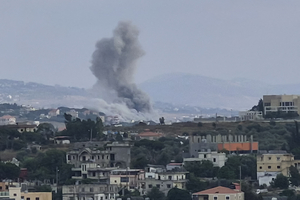
| | Netanyahu Claims Christian Villages Asked to Join Israel — Their Mayors Say Absolutely NotIsraeli Prime Minister Benjamin Netanyahu said Sunday that some Christian villages in southern Lebanon had asked to be annexed by Israel for protection from Hezbollah — a claim the villages themselves immediately and flatly denied.
- Netanyahu made the remarks in a Fox News interview, saying Israel "protects" Christian communities — without naming a single village that had made the alleged request.
- The mayor of Rmeish, Hanna al-Amil, called the claim "absolutely out of the question," and said 15 Christian villages had issued a collective statement two days prior reaffirming "loyalty to their national identity" and attachment to the Lebanese flag.
- In a separate speech, Netanyahu said Israeli forces would remain in southern Lebanon "as long as necessary" — while Israeli military chief Lt. Gen. Eyal Zamir visited troops near Beaufort Castle, vowing to "continue to operate decisively."
- The remarks came a day after Trump told Axios that Netanyahu "knows who the boss is," amid reported disagreements over the Iran deal and Lebanon escalation.
What to watch: Whether Netanyahu's annexation rhetoric — denied on the ground and unsourced in Jerusalem — hardens into a formal Israeli position, or remains a talking point that the ceasefire framework negotiations will have to absorb. 130,000 Families to Receive Aid as Ministers Tour South Lebanon's RuinsThe war in southern Lebanon displaced more than 1 million people and killed more than 4,000 — and two more ministers are now in the south with a specific assistance figure finally attached.
- Social Affairs Minister Haneen Sayed announced an exceptional cash assistance program for 130,000 families — separate from the existing Aman social program — with 29,000 families in Nabatieh's district alone set to benefit.
- Sayed also outlined a return plan including temporary housing centers where displaced residents could stay for up to one year, while identifying homes ready to receive returnees in coordination with municipalities.
- Labor Minister Mohammad Haidar toured Saida and Sour's industrial zone, presenting a damage report to international organizations in Geneva and announcing it would go before the Arab League next week.
- Both ministers conditioned full reconstruction on funding — pledging to launch efforts "as soon as the necessary funding is secured," with contacts underway internationally to accelerate financing.
Why it matters: A named figure — 130,000 families — and a parallel housing program mark the first concrete assistance commitment since the reconstruction process began, though the funding gap between pledges and delivery remains the central unanswered question. Aoun to Framework Critics: "Give Me Another Solution"President Joseph Aoun isn't backing down from the Lebanon-Israel framework agreement — and in unusually personal terms, he's explaining why he signed off on it anyway.
- Aoun told journalists that he considers what was reached a "framework, not an agreement," and pushed back at critics by describing a woman from Nabatieh who stopped him during a visit, crying as she said: "We do not want war; we want peace."
- On fears of army division over potential confrontation with Hezbollah, Aoun was direct: "No one can gamble on the division of the army" — noting that Shiite officers have played a key role in maintaining security across Beirut's institutions.
- He confirmed a visit to Washington is being planned, saying he is waiting to meet with the American ambassador to discuss all topics, including the visit to Washington.
Zooming out: Aoun's framing — "opposing without an alternative while wars continue is something I will not accept" — positions the framework debate less as a sovereignty question and more as a choice between imperfect diplomacy and continued destruction. |
|
as of 3:59 AM GMT · Source: Polymarket |
| | - Weeks, not months: Israel is expected to withdraw from two pilot areas in southern Lebanon within one to three weeks, transferring control to the Lebanese army under U.S. supervision led by Gen. Joseph Clearfield of U.S. Marine Forces Central Command, according to LBCI.
- Beaufort's ultimatum: Standing atop Beaufort Castle in occupied southern Lebanon, Israeli army chief Lt. Gen. Eyal Zamir demanded the Lebanese army "cleanse the area of Hezbollah elements" — warning of a swift military response to any ceasefire violations.
- Europe's conditional yes: The EU has welcomed the Lebanon-Israel framework agreement but with clear conditions: full Israeli withdrawal, state monopoly on arms, and adequate support for the Lebanese army — while France and Italy push for a new multinational force to replace UNIFIL.
- Patriarch's prayer for peace: Maronite Patriarch Bechara al-Rahi urged Lebanese leaders to spare the country the "specter of war," welcoming the framework agreement during his Sunday homily and warning that "Lebanon must not be the price of a regional or international agreement."
- Riyadh's man everywhere: Saudi envoy Prince Yazid bin Farhan has become the most-targeted figure in Hezbollah-aligned media — a sign, analysts say, of Saudi Arabia's deepening direct engagement in Lebanon's political and reconstruction files after years on the sidelines.
|
|
| ─ | Parallel Rate | 89,250 LBP | 0.00% | | ─ | Official Rate | 89,500 LBP | 0.00% | | ▲ | Gold | $4,177.4 | +1.57% | | ▲ | Bitcoin | $63,162 | +0.76% | | ▼ | S&P 500 | 7,483.24 | -0.21% |
as of 3:45 AM GMT · Source: lbprate, BDL, Yahoo Finance, CoinGecko |
| Iran's New Guard: Younger, Bolder, and Already Running the ShowThe US and Israel killed much of Iran's old leadership when they launched strikes in February — but the generation that replaced them is proving harder to read, and possibly harder to deal with.
- New supreme leader Mojtaba Khamenei is 56 — 30 years younger than his father — and, along with the new parliamentary speaker and Revolutionary Guard commander, represents a post-revolutionary generation with closer IRGC ties and less strategic caution, according to BBC News.
- Iran closed the Strait of Hormuz during the war — demonstrating leverage Washington had underestimated.
- The MoU signed at Versailles references a $300 billion reconstruction and development plan, though it remains unclear who will fund it; a 60-day negotiating window is now underway with sanctions relief as the incentive.
The bigger picture: Whether Iran's new pragmatists can convert a military standoff into a durable diplomatic opening — while managing domestic discontent and a shattered economy — will shape the Middle East's next decade. OPEC+ Turns the Taps Back On as Hormuz Opens UpWith the Strait of Hormuz slowly reopening after months of war-driven blockade, OPEC+ is unwinding its emergency production cuts — and oil prices are already retreating toward pre-war levels.
- Seven OPEC+ members — Saudi Arabia, Russia, Iraq, Kuwait, Kazakhstan, Algeria, and Oman — agreed to raise output by 188,000 barrels per day from August, the fifth consecutive monthly increase, according to Al Jazeera.
- Brent crude futures stood at $72 per barrel as of early Monday, below the $72.48 settlement price on February 27 — the day before US and Israeli strikes on Iran began the war — after briefly topping $126 a barrel in April.
- Saudi Arabia more than doubled its shipping volume since June 17 compared to the prior three months combined, while Iran pushed close to 50 million barrels of crude to market since the naval blockade lifted.
What to watch: Whether the backlog of unshipped barrels clearing simultaneously with OPEC+'s incremental increases tips the market into the near-term oversupply that analysts are already flagging. Venezuela Marks Independence Day Under the Shadow of 3,342 Earthquake DeathsTwo weeks after twin earthquakes killed thousands along Venezuela's northern coast, the government is holding the line on stability — while critics say mismanagement is what made this disaster so deadly.
- Venezuela's Ministry of Communication and Information announced a death toll of 3,342 from the June 24 earthquakes, with magnitudes of 7.2 and 7.5; more than 16,470 people are injured and 17,345 have been left without homes.
- Interim President Delcy Rodríguez told a military ceremony "there will be no social unrest here," while accusing critics of seeking to stir "hatred" against state institutions following widespread complaints that government aid was slow to arrive.
- Opposition leader María Corina Machado, currently outside Venezuela and unable to return, has organized volunteer relief efforts through her coalition while calling for new elections and drawing parallels to the US Independence Day in a public message.
Zooming out: The June 24 earthquakes are the deadliest in a century for Venezuela, arriving as a government already under international scrutiny faces its first major natural disaster test since taking power in January. |
|
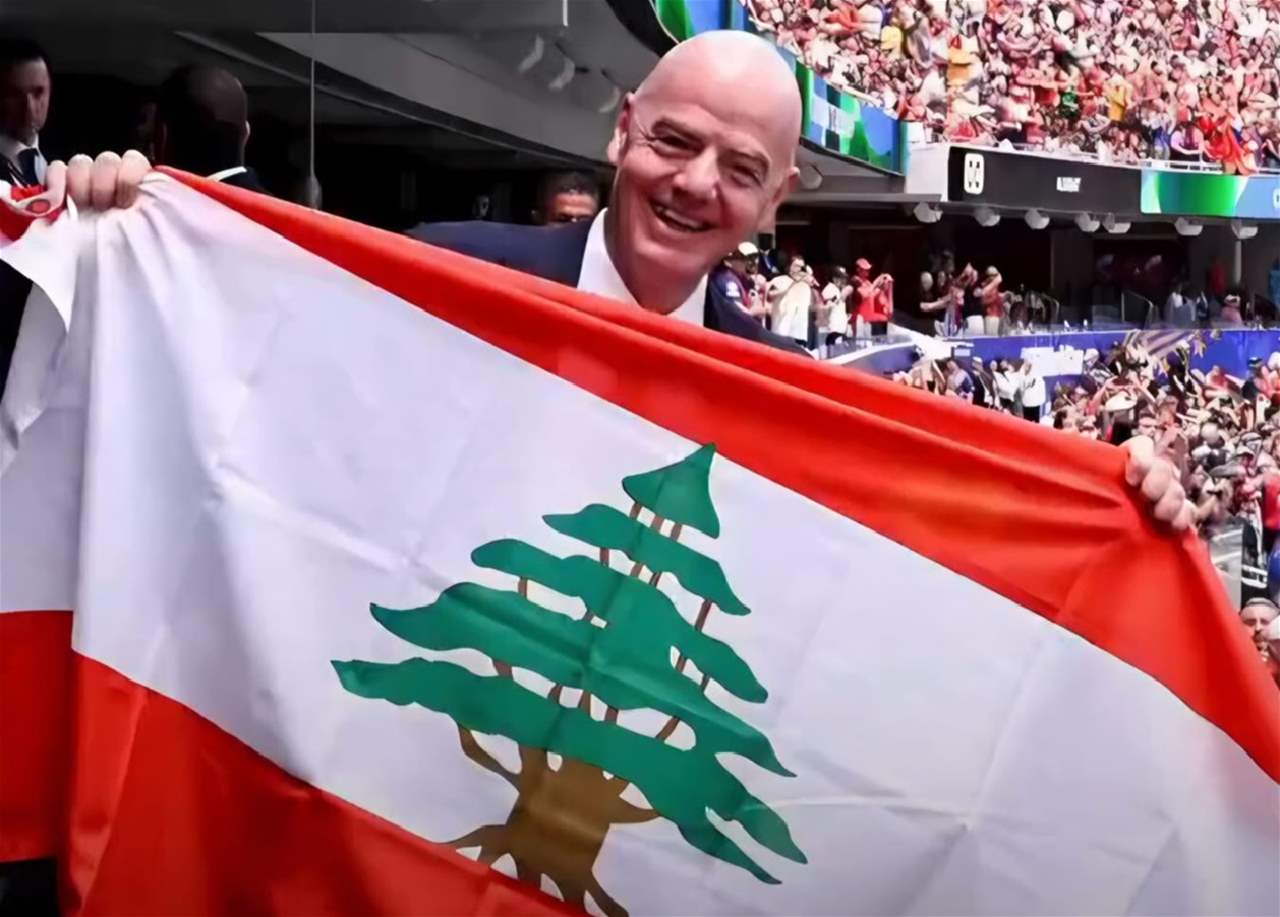
| | - FIFA boss waves our flag: FIFA President Gianni Infantino raised the Lebanese flag on the World Cup stage, writing "as a proud Lebanese citizen, it was wonderful to carry our beautiful flag on the biggest football stage in the world" — months after he received Lebanese citizenship and a passport, with his wife Leena Al Ashqar being Lebanese.
- 110 years, still singing: The Zouk Mikael Amphitheater hosted a celebration marking 110 years since the birth of Zaki Nassif, organized by the Philokalia Choir in cooperation with the Zaki Nassif Program at the American University of Beirut — a living tribute to the composer whose songs like "Lebanon Will Be Rebuilt" still unite Lebanese everywhere.
- Arabic, on Berlin's terms: The Kalemon Institute in Berlin is teaching Modern Standard Arabic to diaspora children using educational models approved by the Vrije Universiteit Brussel, which were designed by Arab academics specifically to teach Arabic as a foreign language, while offering adults colloquial dialect courses in Syrian, Palestinian, Lebanese, and Egyptian — complete with dabke workshops and a free "Sprachcafé" language café.
- Osaka stuns Centre Court: Naomi Osaka defeated world No. 1 Aryna Sabalenka 6-2, 7-6 at Wimbledon, hitting 21 winners and 8 aces in a straight-sets masterclass — Sabalenka's first such grand slam defeat since the 2020 US Open, leaving her saying she wanted to "get completely drunk and forget about tennis."
|
|
Yalla, go make it a good one — see you tomorrow. |
The khan was a historic trading center. |
Lebanon news, every weekday morning. Free, sharp, ~5 minutes. |
|
|
|
|