|   | Shou el akhbar — diplomats are headed to Rome, renters are doing math in a panic, and the energy minister showed up to a press conference with a spreadsheet. Lebanon's Tuesday delivered a full plate: peace talks inching forward on Italian soil, a rental law ruling that hinges on whether you knew to send a notarized letter before November, and a fuel pricing defense that's surprisingly hard to argue with. Grab your coffee — we've got a lot to get into. |
|
| | Israel and Lebanon Head to Rome for Round Six of Peace TalksFor the first time, Israeli and Lebanese ambassadors will meet on Italian soil — a symbolic shift in where the fragile post-war diplomacy is being written, as the two countries technically remain in a state of war.
- Italy's Foreign Minister Antonio Tajani announced that ambassador-level talks will take place on July 15 and 16 in Rome, the sixth round of negotiations since spring.
- The talks follow a framework agreement signed last month in Washington — brokered after a ceasefire that took effect March 2 — which calls for Lebanese army authority in the South and Hezbollah disarmament, beginning with "pilot zones" from which Israeli forces would withdraw.
- Israel's attacks on Lebanon have killed nearly 4,300 people, according to Lebanon's Health Ministry, a figure that hangs over every negotiating table.
- Lebanon and Israel have no diplomatic relations; each round of talks is conducted through U.S. mediation, making Rome's role as host a notable, if largely symbolic, European entry into the process.
What to watch: Whether the July 15–16 session moves beyond the framework's principles toward concrete timelines for Israeli withdrawal from the "pilot zones" will signal how serious both sides are about implementation. Lebanon's Rental Law Tangle Finally Gets a Judicial Answer — Sort OfA decade of legal back-and-forth over Lebanon's 2014 rental law just got its clearest resolution yet: courts have settled on 2017 as the start date for calculating lease extensions, meaning some tenants now have until 2029 — but only if they cleared a strict procedural hurdle most didn't know existed.
- The Civil Court of Appeal in Mount Lebanon ruled that the nine-year transitional period began on February 28, 2017 — the date of the law's amended republication — not its original 2014 issuance.
- Tenants who qualify for a three-year extension (those with limited income who met all conditions) may remain until February 27, 2029; those who missed any condition lose the right entirely.
- Two conditions must both be met: annual applications to the specialized committee submitted within a strict deadline each year, and a notarized letter to the landlord sent at least three months before the nine-year period ended — meaning before November 28, 2025.
- Tenants' groups still object, citing the aid fund's non-activation and committees that never fully functioned, leaving the law's protections largely theoretical for many low-income renters.
Why it matters: With many Lebanese in old-law rental contracts, the court's interpretation draws a hard line between those who navigated the paperwork and those who now face eviction. Lebanon's Energy Minister Defends Fuel Prices — With SpreadsheetsAs Lebanese families feel every lira of post-war fuel costs, Energy Minister Joe Saddi went public with a detailed pricing breakdown, arguing that Lebanon's pump prices rose significantly less than global benchmarks during the war — and that the formula, not politics, is driving the numbers.
- Saddi showed that at the peak of war-related price spikes, Lebanon's diesel pricing rose 87% while the global Platts index surged 111% — a difference of 24 percentage points shielded from consumers.
- For gasoline, Lebanon's canister price rose a maximum of 42% versus a global Platts increase of 71%, with the current canister priced at 2,207,000 LBP as of July 7.
- The minister noted that war-related costs — insurance, shipping, and the War Risk Premium — remain embedded in the pricing formula and will ease only as security conditions stabilize.
- Saddi highlighted that despite the Strait of Hormuz closure, Lebanon recorded no fuel shortages, no gas station queues, and no black market — which he described as a first during wartime conditions in years.
Zooming out: Saddi also flagged active talks with Iraq about reviving the Kirkuk-to-Tripoli oil pipeline through Syria, and near-complete contract negotiations to import electricity from Damascus — moves that, if realized, could reshape Lebanon's long-broken energy landscape. |
|
as of 3:09 AM GMT · Source: Polymarket |
How long is the Lebanon Mountain Trail approximately? Scroll to the bottom for the answer — or play all 10 at sobhiye.news/games/trivia |
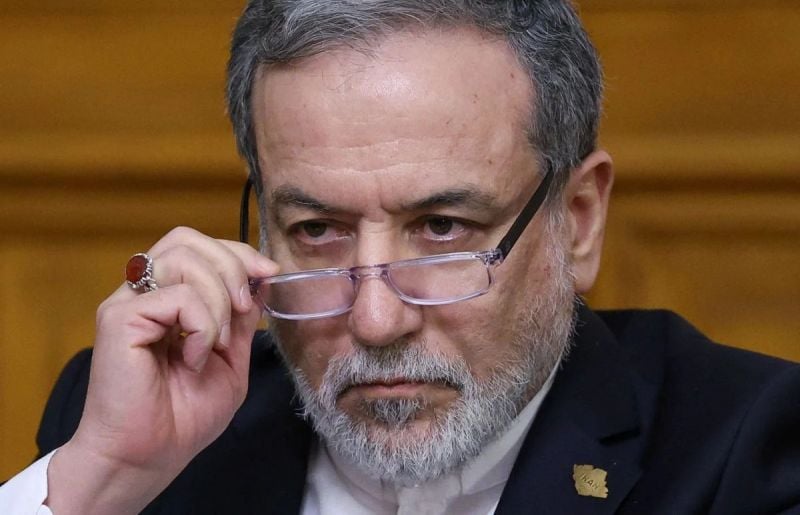
| | - Iran's red line on Lebanon: Iranian Foreign Minister Abbas Araghchi declared that Tehran will not resume negotiations with Washington until Israeli forces withdraw from Lebanon, calling it the first of five components in the protocol agreement. The statement ties any broader US-Iran deal directly to developments on Lebanese soil.
- Flag on the hill: An Israeli flag appeared on Ali Taher hill in southern Lebanon — a strategically significant ridge overlooking Nabatieh, Beaufort Castle, and southeastern Lebanon — in images obtained by L'Orient Today. It remains unclear whether troops raised it on foot or by drone.
- One in three out of work: An ILO survey of nearly 2,500 private sector workers found that 33% have lost their jobs since the war began in March, with labor income slashed by 40% overall. Job losses hit 76% in Nabatieh Governorate alone — the hardest-hit region in the country.
- 50 robberies, one fake cop: Internal Security Forces arrested a man who confessed to carrying out more than 50 armed robberies along the Marina–Dbayeh coastal corniche, impersonating a municipal or security policeman each time. Victims are asked to contact the Jdeideh Judicial Detachment or call 01-901203.
- Phone import tax dodge: Lebanon's Finance Ministry confirmed an ongoing investigation into suspected tax evasion in smartphone imports, with preliminary findings uncovering fictitious companies and customs fraud indicators. The file will be referred to the Financial Public Prosecution once administrative and customs procedures are complete.
|
|
| ─ | Parallel Rate | 89,550 LBP | 0.00% | | ─ | Official Rate | 89,500 LBP | 0.00% | | ▼ | Gold | $4,127.9 | -0.65% | | ▼ | Bitcoin | $62,902 | -0.59% | | ▲ | S&P 500 | 7,503.85 | +0.28% |
as of 2:57 AM GMT · Source: lbprate, BDL, Yahoo Finance, CoinGecko |
| | Trump Revokes Iran Oil Waiver After Tanker Attacks in the GulfThree tankers were attacked in the Strait of Hormuz in a matter of hours on Tuesday — including a Qatari LNG vessel and a Saudi-flagged crude tanker — and Washington responded by pulling the main economic incentive that had brought Iran to the negotiating table.
- The Trump administration revoked a licence that had allowed Iran to produce, sell, and deliver crude oil and related products through August 21, tying its removal directly to the Gulf attacks.
- Brent crude jumped nearly 5% on the news, as Qatar summoned Iran's deputy ambassador and demanded an explanation, while Saudi Arabia also blamed Tehran in a formal foreign ministry statement.
- Iran has not claimed responsibility for the attacks but has been in a standoff over vessels bypassing its territorial waters through a southern route via Oman's waters in recent days.
- The waiver had been a major sticking point in US-Iran negotiations; its removal erases the principal economic incentive that drew Tehran into talks over a permanent end to the war.
What to watch: Whether the revocation collapses ongoing US-Iran talks entirely — or becomes a pressure lever in the next round of negotiations — will shape the trajectory of the broader Middle East ceasefire architecture. Explosions Rock Damascus as Macron Makes First EU Leader Visit to SyriaBombs went off near the hotel where French President Emmanuel Macron was staying in Damascus on Tuesday, during his visit to meet with Syrian President Ahmed Al-Sharaa — the first visit by an EU head of state since Bashar al-Assad fell in late 2024.
- At least 18 people were wounded in the blasts, with witnesses reporting smoke rising near the hotel; the Elysée said Macron did not hear the explosions from his motorcade.
- Macron framed his visit as a commitment to "a sovereign Syria, united in its diversity and at peace with its neighbours," according to a post on X, and pledged to engage directly with diverse Syrian communities beyond the presidential palace.
- Al-Sharaa, Syria's new president, has built close ties with Western and regional powers and is expected to meet US President Donald Trump at the upcoming NATO summit in Ankara.
The bigger picture: The Damascus explosions underscore that Syria's security situation remains volatile even as its new government pursues diplomatic normalization. Germany Unveils €555 Billion Budget — With Defense Leading the WayGermany's draft 2027 budget, announced Monday, marks one of the starkest peacetime military buildups in the country's postwar history: defense spending jumps by a third in a single year, even as social programs face cuts to help foot the bill.
- Finance Minister Lars Klingbeil's plan sets total 2027 spending at €555.4 billion, with €109.7 billion earmarked for defense — a third more than in 2026 — funded partly by €119 billion in new borrowing.
- Germany's national debt stood at €2.78 trillion as of July 6, and additional debt-financed special funds — including a €500 billion infrastructure fund spread over 12 years — push the real borrowing figure toward €203 billion in 2027 alone.
- Development aid takes a €500 million cut, bringing its total to €9.5 billion, while pension and health insurance subsidies are also being reduced to free up funds for military expenditure.
Zooming out: Germany's pivot — aiming to reach 3.5% of GDP on defense by 2029 and the new NATO target of 5% by 2035 — reflects a broad European recalibration of security spending that is quietly reshaping the continent's fiscal priorities. |
|
| | - Art for childhood's sake: Twenty-two Lebanese ceramic artists came together for an exhibition marking the 50th anniversary of AFEL, the Lebanese Child Home Association — with every piece sold becoming a contribution to protecting children who have experienced abuse or neglect. The works ranged across generations and styles, united by a single message: "Childhood should never be something we have to recover from."
- Organic mornings in Mar Mikhael: Beyond Organic, a farm-to-table cafe tucked into Mar Mikhael's lower street, grows its own produce pesticide-free on a farm in Damour and delivers rotating seasonal baskets around Beirut. Drop by for a proper Lebanese breakfast spread — labneh, foul, warm saj bread — or catch the free open art studio every Thursday from 3 to 7pm.
- Syria's treasures come home: Twenty-three rare artifacts — including a Mari temple statue and Palmyrene friezes — are returning to the National Museum of Damascus after a 15-year absence at the Arab World Institute in Paris, coinciding with Macron's visit to Syria. The pieces span prehistoric times to the Islamic era and had been stranded since the Syrian war prevented their return in 2014.
- Bellingham's World Cup brace: Jude Bellingham scored twice in the first half as England beat Mexico 3-2 in a chaotic World Cup last-16 thriller, holding on with 10 men through more than 11 minutes of stoppage time. Norway awaits the Three Lions in the next round.
|
|
That's your Wednesday — see you tomorrow, inshallah. |
The LMT is approximately 470 km long. |
Lebanon news, every weekday morning. Free, sharp, ~5 minutes. |
|
|
|
|