|   | Shou el akhbar—your Saturday morning comes with offshore gas diplomacy, a stolen railway plot that reads like a thriller, and the Lebanese government telling driving schools they can no longer invent their own pricing. Nawaf Salam is in Ankara playing energy corridor chess, a lawyer is filing criminal charges over a Beirut property that allegedly cost the public more than $25 million, and somewhere a driving instructor is doing the math on their new fee caps. |
|
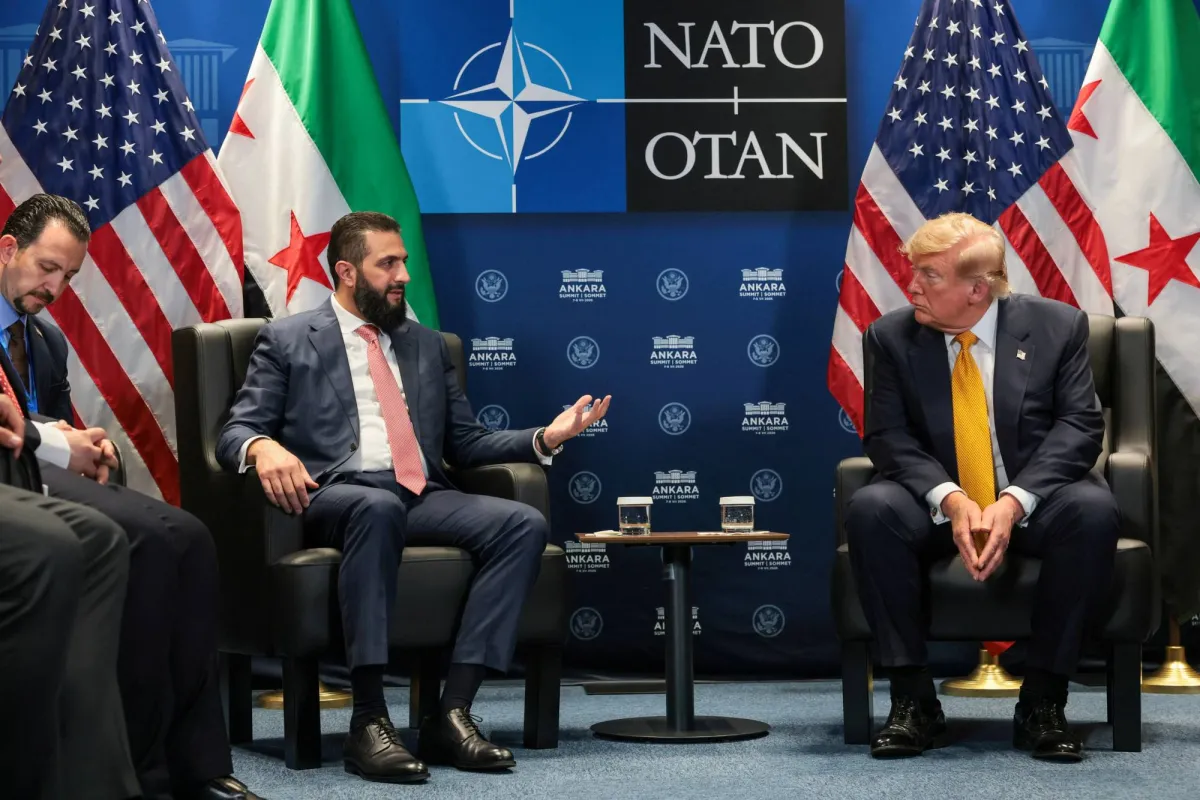
| | PM Salam's Turkey Visit: Energy Corridors and a Geopolitical Balancing ActLebanese Prime Minister Nawaf Salam traveled to Ankara as Turkey positions itself as a regional energy hub—and Lebanon, with untapped offshore gas and a maritime border deal with Cyprus already signed, finds itself at the center of competing pipeline politics.
- Turkish President Erdoğan has explicitly tied his country's strategic security to stability in both Damascus and Beirut, giving Salam's visit weight beyond a courtesy call.
- Turkey's gas storage capacity already stands at 6.3 billion cubic meters, with plans to expand to 12 billion by 2030—making Lebanon's offshore reserves a potentially significant piece of Ankara's energy corridor ambitions.
- Lebanon's September 2025 maritime border deal with Cyprus had been read in some quarters as a tilt toward a rival energy axis anchored by Israel, Cyprus, and Greece—Salam's Ankara trip is seen as an effort to rebalance that perception.
- The visit also opens discussions on Lebanon's potential logistical role in Syrian reconstruction, adding another layer to the Beirut–Ankara relationship beyond gas.
What to watch: Whether Beirut can successfully navigate between the Turkish-backed energy corridor and the Israel-Cyprus-Greece axis without locking itself into either camp—before a single offshore barrel has been extracted. Bank of Beirut and the Stolen Railway: Lawsuit Coming, PM in the LoopA Lebanese investigative series has alleged that Bank of Beirut's chairman used his influence to acquire a valuable Beirut property originally belonging to the national railway—at a price that reportedly caused public losses exceeding $25 million—and now a lawyer is bringing criminal charges and taking the file straight to the Prime Minister.
- Lawyer Wassef El Harakeh is preparing a criminal lawsuit and two separate files—one for PM Nawaf Salam and one for all Beirut MPs—demanding recovery of property number 1396 in the Medawar district, which allegedly passed from the railway to the Beirut Municipality before being sold to Bank of Beirut Chairman Salim Sfeir's interests at a mutual-consent price rather than public auction.
- El Harakeh says his research uncovered that the railway owns additional properties in Beirut whose current status is unknown, and he has submitted a formal information request to the Beirut Municipality for all property sales from 2016 to present.
- The Public Prosecutor of Cassation, Judge Ahmad Rami al-Hajj, has been publicly called on to open an investigation, with El Harakeh describing the file as one that "concerns all the properties of Beirut."
Why it matters: The case is shaping up as an early test of whether Lebanon's new judicial and executive leadership will pursue accountability for alleged wartime-era asset stripping—or let it quietly dissolve into paperwork. Lebanon Standardizes Driving School Fees—And Caps What Schools Can ChargeLebanon's Ministry of Interior has issued Decision No. 825, ending the era of arbitrary driving school pricing by introducing a nationwide standardized fee structure tied directly to each student's actual skill level.
- Under the new regulation signed by Minister Ahmad Al-Hajjar on July 8, 2026, every student must undergo a mandatory 40-minute evaluation session capped at 1,350,000 LBP, after which they're placed into one of five skill tiers—from "very good" to "very weak"—that determines their required hours and total cost.
- The lowest-tier package ("Very Good") requires just 5 total hours and is capped at 11,250,000 LBP; the most intensive tier ("Weak") requires 11 hours with a cap of 22,950,000 LBP—using the school's own vehicle.
- Optional services are also now regulated: paperwork follow-up through the Vehicle Registration Department is capped at 2,250,000 LBP, and student transport fees are scaled to distance.
- Critics note the tiered system may quietly disadvantage students who never had access to a family car before the evaluation—arriving at the assessment already behind peers who practiced on quiet roads.
The bigger picture: Small as it sounds, fee standardization in a country where "what does it actually cost?" is a genuine daily anxiety signals a government willing to regulate the informal economy one sector at a time. |
|
as of 3:14 AM GMT · Source: Polymarket |
| | - Jumblatt draws his line: Walid Jumblatt formally submitted a memorandum to his community council comparing the Lebanon-Israel framework agreement to the ill-fated May 17, 1983 accord—a significant rhetorical escalation signaling a Druze shift toward opponents of the deal.
- War crimes, on the record: Deputy PM Tarek Mitri announced Lebanon is building a permanent observatory to document violations of international humanitarian law, as a UN High Commissioner team already on the ground investigates the destruction of villages, attacks on journalists, and strikes on heritage sites.
- $1 billion in dirt: Agriculture Minister Nizar Hani revealed that Israeli aggression damaged roughly 56,000 hectares of farmland across the South and Nabatieh, pushing losses above $1 billion, with soil contaminated by Glyphosate at levels 60 times above natural rates in border areas.
- NSSF gets a deadline: Labor Minister Mohammad Haidar chaired a reform meeting at the National Social Security Fund, where NSSF Director General Mohammad Karaki committed to updated medical tariffs within three months, while the fund already covers 90% of healthcare claims on a 15-day payment cycle.
- Customs, finally reshuffled: Lebanon approved new formations in the General Directorate of Customs for the first time in 15 years, a move the previous council had blocked for years due to sectarian power-sharing gridlock among its three members.
|
|
| ─ | Parallel Rate | 89,550 LBP | 0.00% | | ─ | Official Rate | 89,500 LBP | 0.00% | | ▼ | Gold | $4,128.9 | -0.04% | | ▲ | Bitcoin | $64,115 | +0.32% | | ▲ | S&P 500 | 7,575.39 | +1.24% |
as of 3:00 AM GMT · Source: lbprate, BDL, Yahoo Finance, CoinGecko |
| | Syria Off the Terrorism List: What It Actually Means for the EconomyThe US has begun the process of removing Syria from its State Sponsors of Terrorism list—where it's sat since 1979—a move that could reopen trade, investment, and international financing for a country that badly needs all three.
- Secretary of State Marco Rubio notified Congress of President Trump's intention to rescind the designation after a required 45-day congressional notification period, calling the move "historic."
- In practical terms, the change paves the way for Syrian banks to gradually reconnect with SWIFT and global correspondent banking networks, which had been effectively severed under the terrorism designation.
- Syria's Finance Minister called it "a historic moment," but legal experts caution that numerous US sanctions laws targeting specific sectors, entities, and individuals remain in force—meaning international banks are expected to spend months conducting legal reviews before reopening accounts.
- Syria imported roughly 85% of its wheat—some 2.9 million tons for the 2025–26 season—from Russia, a dependency that underscores just how deep the structural reconstruction challenge runs beyond the sanctions question.
What to watch: Whether the remaining US sanctions architecture gets dismantled quickly enough to let foreign investment flow before Syria's transitional government loses economic momentum. Russia Plants a Commercial Flag at Tartous PortWith its military footprint in Syria under negotiation, Moscow is pivoting to economic leverage—targeting one of the port berths at Tartous to run a commercial logistics hub handling Russian grain, steel, and consumer goods bound for Syria and neighboring markets.
- According to Reuters, Russia hopes to have the hub operational by mid-July, starting with a 30,000-ton grain shipment, with an initial target of roughly 250,000 tons of cargo per month from Russia's Black Sea port of Novorossiysk.
- The project was outlined at a January 28 meeting between Syrian President Ahmed Al-Sharaa and Russian President Vladimir Putin, and will be run by Syria's General Authority for Ports and Customs from Pier No. 4 of the naval base.
- Iraq and Jordan are identified as the primary target distribution markets, with Saudi Arabia, Kuwait, Qatar, and Bahrain listed as secondary targets—giving the hub regional reach well beyond Syria's borders.
- The UAE's DP World already holds an $800 million, 30-year concession to redevelop Tartous port, setting up a direct overlap of commercial interests at the same facility.
Zooming out: Russia's logistics play at Tartous signals a wider contest between Moscow and Washington over who shapes Syria's reconstruction economy—a competition the port's competing concession holders make visible in real time. SK Hynix Raises $26.5 Billion in One of the Biggest Stock Listings EverSouth Korean chipmaker SK Hynix—Nvidia's key supplier of advanced memory chips—priced its US listing at $149 per American depositary share, raising $26.5 billion on the Nasdaq in a debut that reflects just how much money is chasing AI infrastructure right now.
- The offering was more than seven times oversubscribed, according to US media, beating Saudi Aramco's 2019 $25.6 billion debut and Alibaba's $21.8 billion New York IPO, though still well below SpaceX's record $75 billion raise last month.
- SK Hynix's market capitalization on Seoul's Kospi surpassed $1 trillion in May, putting it in a small club alongside Samsung Electronics and US chipmaker Micron—all three driven there by AI demand for high-bandwidth memory chips.
- The company plans to use proceeds to fund a new semiconductor fabrication hub in Yongin and an advanced packaging facility in Cheongju, with SK Hynix and Samsung also involved in an 800 trillion won public-private chip cluster in southwest South Korea.
The bigger picture: The listing's massive oversubscription shows that investor appetite for AI chip infrastructure remains intense even as broader tech valuations face scrutiny over when the spending will translate into returns. |
|
| | - Gemmayzeh rises again: Arthaus, the Beirut boutique hotel that opened its doors on August 4, 2020—only to watch the port explosion bring its ceilings down hours later—has fully rebuilt inside its 200-year-old stone walls in Gemmayzeh, now thriving as a creative hub where designers, writers, and artists pack the tables every lunch and dinner.
- Ziad's sister has spoken: With the first anniversary of Ziad Rahbani's death approaching on July 26, his sister Reema has declared that no tribute concerts or festivals should be held in his name—arguing that ticket prices of $60, $80, or $100 contradict everything her brother stood for, and that "it is not Ziad who needs you, it is you who need Ziad."
- World record, Monaco edition: Kenyan 800m Olympic champion Emmanuel Wanyonyi ran the men's 1,000m world record on his very first attempt at the distance, clocking 2 minutes 11.83 seconds at the Diamond League in Monaco—shaving 0.13 seconds off a record that had stood since 1999.
- Haaland vs. England, today: Erling Haaland—7 goals in 4 World Cup appearances so far, including the two that sent Norway past Brazil in the last 16—faces England in today's quarter-final in Miami, with England coach Thomas Tuchel admitting his defenders face an impossible puzzle: stay zonal and he jumps over you; go physical and he pushes you aside.
|
|
Yalla, go make it a good Saturday. |
The riqq is a frame drum. |
Lebanon news, every weekday morning. Free, sharp, ~5 minutes. |
|
|
|
|