|   | Twenty years ago this month, a 34-day war rewired the entire Middle East — and today we're asking whether that era has finally ended. Sabah el kheir. Rome talks, a colonel without a bathroom, and a war's long shadow: it's a heavy Tuesday, but we've got you covered. |
|
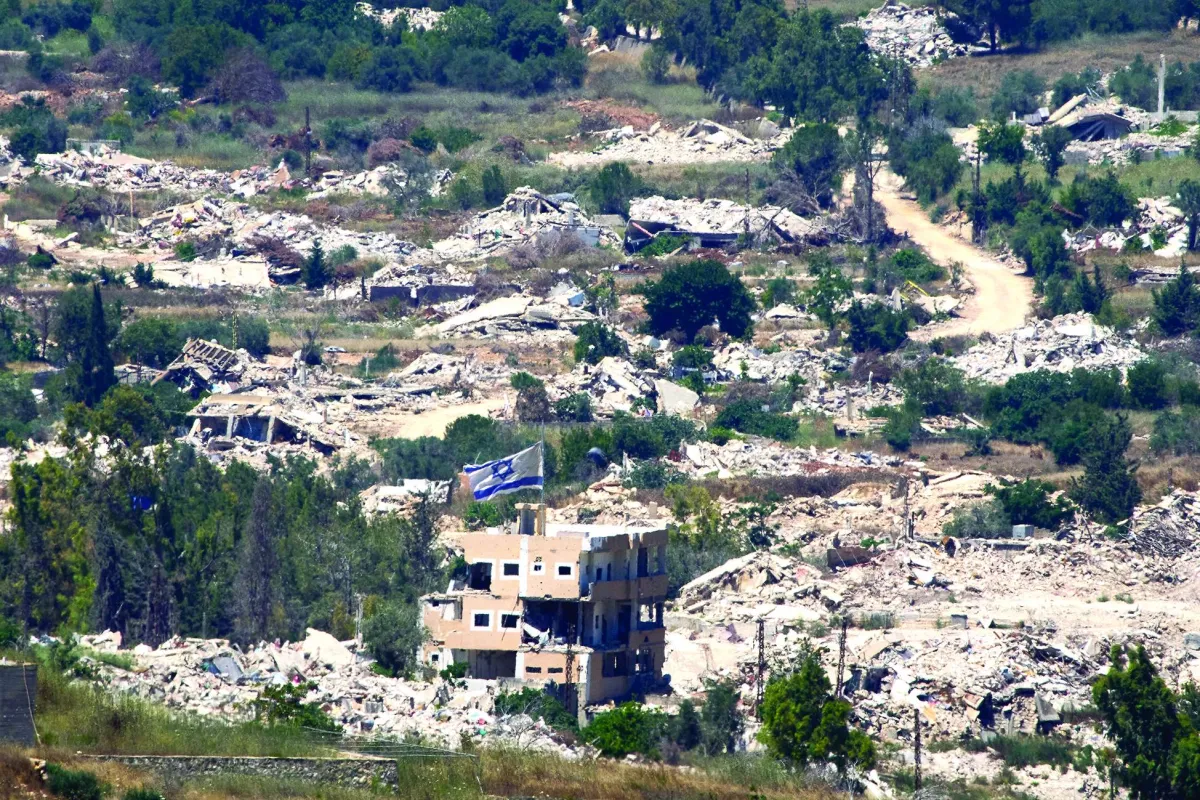
| | Netanyahu Blocks Simultaneous Lebanese Army Deployment — Rome Talks LoomLebanon-Israel negotiations over southern Lebanon have hit a concrete wall: Israeli Prime Minister Benjamin Netanyahu is refusing to let the Lebanese army deploy at the same time Israeli troops withdraw, which is the very sequence Lebanon — and now US military commanders — insist is non-negotiable.
- The sixth round of US-mediated Lebanon-Israel talks is scheduled for July 15–16 in Rome, with negotiators expected to discuss forming a joint coordination committee headed by US General Joseph Clearfield to manage field operations.
- Netanyahu's counter-position: the Lebanese army must first prove it can control towns outside occupied areas before any phased Israeli pullback begins — a sequencing Lebanon flatly rejects.
- President Joseph Aoun's insistence on simultaneity now has explicit backing from US CENTCOM Commander Admiral Brad Cooper, tightening Washington's alignment with Beirut on this point.
- US Ambassador Michel Issa reportedly views Trump's planned July 21 meeting with Aoun in Washington as the real test of whether American pressure on Netanyahu moves from words to action.
What to watch: Whether the Rome talks produce even a partial agreement on pilot zone sequencing, or whether Netanyahu's domestic election calculus keeps the standoff frozen through the summer. July 2006 at Twenty: How One War Rewired the Middle EastTwenty years ago this month, Hezbollah's capture of two Israeli soldiers on July 12, 2006 triggered a war that killed many Lebanese and reshaped the region's power map for the next two decades — and analysts are now asking whether that era has finally closed.
- A new Megaphone analysis argues the July War was the "baptism of fire" for the Axis of Resistance, converting Hezbollah from a national Lebanese force into a node in an Iran-led regional network spanning Lebanon, Palestine, Iraq, Syria, and Yemen.
- The article traces the axis's foundations through several prior shifts, including: Israel's 2000 South Lebanon withdrawal, the 2003 Iraq invasion opening a Tehran-to-Mediterranean corridor, the Second Intifada, Hamas's 2006 electoral win, the first Saada war against the Houthis, and Hariri's 2005 assassination.
- Nasrallah's own August 2006 admission — "if I had known… we would not have carried it out at all" — is weighed against the political gains the war ultimately delivered Hezbollah inside Lebanon.
- The analysis concludes that the fall of Assad's Syria, the exhaustion of Hezbollah's leadership structure in the recent confrontation in Lebanon, and Iran's forced diplomatic retreats together mark a potential end to the geopolitical era the July War inaugurated.
Zooming out: With Iran negotiating a memorandum of understanding and its regional proxies weakened across multiple fronts, the July War's twentieth anniversary arrives as a milestone — and possibly an epitaph — for the strategic architecture it built. Lebanon's Trailblazing Women in Uniform — and the Bathrooms They Still Don't HaveColonel Diala al Mohtar spent 25 years climbing to become the first female colonel in Lebanon's Internal Security Forces — a historic milestone that comes with a telling footnote: she still doesn't have her own bathroom.
- al Mohtar, who reached her rank in 2022, helped lead the ISF's first-ever gender audit and contributed to proposals strengthening protections against harassment and discrimination within the force.
- Her story captures a pattern L'Orient Today documents across Lebanon's security institutions: doors have opened to women over the past two decades, but the physical and cultural infrastructure of these institutions was built for men and largely remains so.
- Detective Sarah Aghnatios, profiled alongside al Mohtar at the Ras Beirut police station, represents a younger generation of women navigating the same tension between formal inclusion and practical obstacles on the ground.
The bigger picture: Lebanon's security sector is quietly changing — one rank, one audit, one policy proposal at a time — and the women inside it are shaping what those institutions look like for the next generation. |
|
as of 3:10 AM GMT · Source: Polymarket |
| | - Hezbollah draws its line: Hezbollah MP Hussein Hajj Hassan declared disarmament "unattainable" and insisted Lebanon's file be tied to Iran-US talks — just as President Aoun publicly vowed no one negotiates on Lebanon's behalf, putting the two tracks on a direct collision course ahead of Rome.
- Four hours and counting: Electricité du Liban says its available production capacity has fallen to roughly 500 megawatts — half the 1,000 megawatts needed — leaving most Lebanese with about 4 daily hours of state power this summer, with a general blackout described as possible at any time.
- Cement's second chance: Parliament's Environment Committee reviewed the reopening of cement companies in Chekka and Koura, with ministers confirming annual licensing, strict environmental conditions, and multimillion-dollar financial guarantees that companies forfeit if they fail to comply.
- Naameh's quiet split: Political forces on the Chouf coast are carefully managing the administrative separation of Haret en Naameh from al-Naameh into two distinct municipalities, with all sides insisting the process must not inflame sectarian tensions or upset decades of shared coexistence.
- Baghdad's reform mirror: An-Nahar argues that Iraq's anti-corruption drive under PM Al-Zaidi — dismantling deep-state financial networks for the first time since 2003 — offers a direct model for Lebanon, as Washington repositions Baghdad, Damascus, and Beirut as an integrated economic corridor in the Levant.
|
|
| ─ | Parallel Rate | 89,550 LBP | 0.00% | | ─ | Official Rate | 89,500 LBP | 0.00% | | ▲ | Gold | $4,022.5 | +0.42% | | ▼ | Bitcoin | $62,528 | -1.30% | | ▼ | S&P 500 | 7,515.34 | -0.38% |
as of 2:51 AM GMT · Source: lbprate, BDL, Yahoo Finance, CoinGecko |
| | US-Iran Strikes Spiral Into Regional FirefightWhat began as a US response to an Iranian attack on a container ship in the Strait of Hormuz has escalated into a multi-country exchange of missiles, sirens, and scrambled air defenses across the Middle East — and the UN is warning it could get much worse.
- The US launched multiple waves of strikes on Iran, and Iran's Revolutionary Guards retaliated by targeting military facilities in Bahrain, Oman, Kuwait, and Jordan — firing missiles that Jordanian air defenses intercepted and shot down.
- Missile alert sirens sounded at dawn in Bahrain, home to the US Navy's 5th Fleet; the Guards claimed they destroyed radar systems in Oman and targeted facilities in Manama's Juffair district.
- Kuwait's armed forces said they were actively intercepting "hostile aerial targets" in Kuwaiti airspace at the same time.
- UN Secretary-General António Guterres warned that "a return to full-scale hostilities would have catastrophic consequences," as the US-Iran interim deal — now at roughly its midpoint in a 60-day window — continues to unravel over the strait's future.
What to watch: Whether the remaining weeks of the interim deal's 60-day window hold, or whether continued strikes over the Strait of Hormuz collapse the framework before permanent negotiations can begin. Mossad Tried to Install Ahmadinejad as Iran's Next LeaderIsrael's foreign intelligence agency secretly courted Mahmoud Ahmadinejad — the Holocaust-denying former Iranian president who once called for Israel's erasure — to lead a post-Islamic Republic government in Tehran, according to reporting by the New York Times and Haaretz.
- The operation, codenamed "Puss in Boots," saw then-Mossad chief David Barnea travel to Budapest to meet Ahmadinejad, even skipping a war consultation with Netanyahu during the peak of fighting in Gaza to do so.
- Israeli officials reportedly paid Ahmadinejad for housing and travel, and Mossad operatives met him multiple times in Hungary.
- After US-Israeli strikes on Iran killed Supreme Leader Ali Khamenei, Mossad agents reportedly drove Ahmadinejad from his home to a Tehran safe house — but he left under "mysterious circumstances" and is now believed to be in IRGC custody, according to the New York Times citing Iranian officials.
- Israel's own IDF chief of staff ordered a halt to the operation three days before launch; Netanyahu overrode him.
Zooming out: The episode illustrates the extraordinary — and deeply contested — covert lengths Israel pursued in parallel with its military campaign, raising questions about coordination with Washington and the fate of Iran's post-Khamenei political landscape. Muslim Footballers Are Reshaping Europe's Identity Debate at the World CupAt a World Cup featuring 13 Muslim-majority nations, the most talked-about expressions of Islamic faith have come not from those nations but from players representing majority-Christian European countries — and their celebrations are forcing a continent-wide conversation about who belongs.
- Spain's teenage star Lamine Yamal performed the sujood after scoring his first World Cup goal, drawing both admiration and, in a prior match, chants of "who doesn't jump is Muslim" from sections of the Barcelona crowd.
- Sweden's Yasin Ayari, born in Sweden to a Tunisian father, was denied recognition as Swedish by far-right figures after scoring against Tunisia — his own father had pushed him to represent Sweden, not Tunisia.
- England's left-back Djed Spence became the first Muslim player to represent England at a World Cup, calling it "a blessing" and an opportunity to inspire young people worldwide.
- Cape Verde's Logan Costa, Steven Moreira, and Jamiro Monteiro — all European-raised converts to Islam — celebrated together with the sujood at the 2023 Africa Cup of Nations, with halal food provided throughout their national team camps.
The bigger picture: These players' visibility at the world's largest sporting event is putting a human face on a demographic reality — an estimated 2 billion Muslims worldwide — that European political debates have often reduced to abstraction. |
|
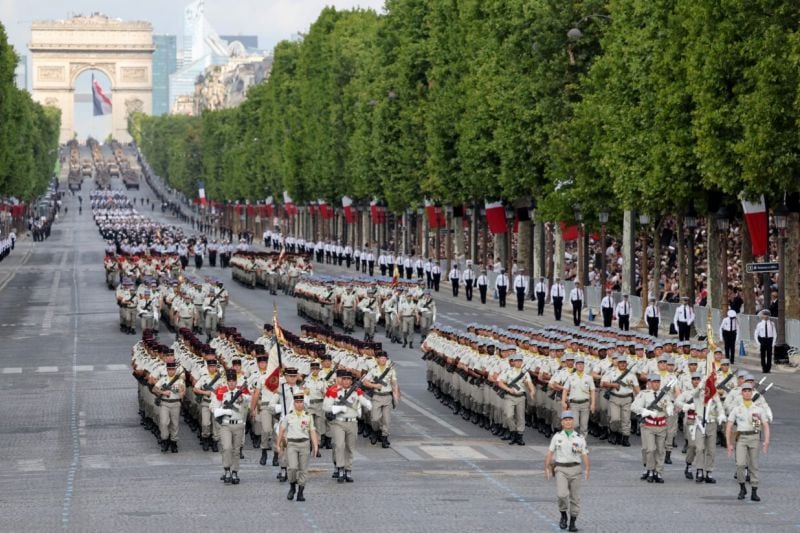
| | - Lebanon on the Champs-Élysées: Franco-Lebanese gendarme Jean-Pierre Chemaly is marching in today's Bastille Day parade in Paris — a poet and war crimes investigator who arrived from Lebanon in 2002 to study and now leads France's Central Office for Combating Crimes Against Humanity, representing both his countries with every step.
- A million views for Uncle Elias: An octogenarian Beirut hairdresser who has worked since 1965 and still opens his Ain el-Remmaneh salon six days a week went viral on TikTok, with videos surpassing one million views — and the internet responded by booking appointments, launching a fundraiser, and securing a company to renovate his beloved shop.
- Letters from two giants: Dar Nelson has just published a long-lost letter written by Lebanese artist Aref El Rayess to novelist Emily Nasrallah — composed between 1996 and 1997, kept for decades by Nasrallah's family, and now finally in print as a rare window into two of Lebanon's most beloved creative souls.
- Français meets Lebanese kitchen: Manon Douellou, a French woman married to a Lebanese man, has won over Lebanese culinary social media as "Cocotte et citron" — cooking Lebanese recipes with cheerful spontaneity, zero pretension, and a declared love for zaatar that her Lebanese followers find completely irresistible.
|
|
See you tomorrow — keep the good stuff close. |
It's an Ottoman-era building. |
Lebanon news, every weekday morning. Free, sharp, ~5 minutes. |
|
|
|
|