|   | Rome produced a blueprint, Damascus showed up with a checkbook, and the south's aquifers are quietly absorbing a war's worth of toxic residue. Bonjourein — Lebanon had a busy 48 hours while you were sleeping. Three stories, all of them matter. |
|
| | Lebanon-Israel Pilot Zones Get a Framework — and a Follow-Up CallTwo days of US-mediated talks in Rome wrapped with the most concrete outcome yet from Lebanon-Israel negotiations: an agreed operational structure for two pilot withdrawal zones in the south. It's a step forward, but significant disputes remain — particularly over who verifies the Lebanese army's control and whether Israel retains the right to strike inside zones where it has already withdrawn.
- The US Embassy confirmed talks were "productive and positive," with parties agreeing on the structure and implementation guidelines for the two experimental zones; executive instructions are to be finalized in the coming days, according to Al Modon.
- The compromise on zones: one area from which Israel fully withdraws, and a second where withdrawal happens concurrently with Lebanese army entry — a solution crafted by the American mediator to bridge the two sides' conflicting starting-point demands.
- A virtual tripartite military meeting between Lebanon, Israel, and the US is scheduled for Friday to finalize zone details and set a start date.
- Key unresolved issues: Lebanon rejects unilateral Israeli verification; Israel wants a new monitoring mechanism excluding UNIFIL; and Israel has not dropped its claim to retain military action rights inside zones where the army deploys.
What to watch: President Aoun heads to Washington on July 21 to meet President Trump — the Rome blueprint's durability will be tested well before that flight lands. Syria Pivots to Lebanon — With a Checkbook, Not a Security FileFor decades, Syria's relationship with Lebanon ran through intelligence services and political proxies. Now Damascus is trying something different: a pitch built entirely on trade and investment, with Syrian President Ahmed Al-Sharaa telling a Lebanese economic delegation that "economy is more important than politics."
- Lebanese Economy Minister Amer Bisat led a high-level delegation to Damascus that included the head of the Lebanese Economic Organizations and the president of the Lebanese-Syrian Business Council — the most concrete economic engagement between the two countries in years.
- The two countries' business councils signed a memorandum of understanding to open the door for greater investment cooperation, with specialized committees to follow up across multiple sectors.
- Syria is in active reconstruction mode and is courting Lebanese private-sector expertise; the delegation also raised practical hurdles facing Lebanese investors and traders already operating in Syria.
Zooming out: With political normalization, economic integration is emerging as the lower-friction path for rebuilding the Lebanon-Syria relationship. War's Invisible Legacy: Southern Lebanon's Groundwater Under ThreatDamaged roads and destroyed buildings are visible. What explosions leave inside Southern Lebanon's karst limestone aquifers is not — and a new analysis warns the hidden damage could shape public health and agriculture for generations.
- UN figures cited by An-Nahar show 34 water facilities damaged, affecting water supplies for more than 400,000 people in the South and Nabatieh governorates; losses in water, wastewater, and irrigation sectors total around $527 million, with reconstruction estimated at roughly $508 million.
- Agricultural losses reached around $704 million, but restoring output requires more than rebuilt infrastructure — contaminated soil and water must be cleared before crops are safe.
- Southern Lebanon's karstic geology is the core vulnerability: its fractures and channels can carry explosive residues — TNT, RDX, heavy metals, nitrates — into deep aquifers within days or weeks rather than the years it would take in lower-permeability rock.
The bigger picture: Environmental remediation timelines measured in decades sit uneasily alongside reconstruction timelines measured in years — how Lebanon sequences the two will determine whether the South's water crisis stays local or becomes regional. |
|
as of 3:22 AM GMT · Source: Polymarket |
| | - Army at the gates: Lebanese Army units have started taking control of Fatah-Intifada offices at the entrance to the Beddawi Palestinian camp in northern Lebanon — part of the broader state plan to assert authority over all access points to the Beddawi Palestinian camp.
- Dawlati, finally: Lebanon launched "Dawlati," a unified digital portal giving citizens direct access to 12 government services without intermediaries, under the "Reinventing Government 2030" reform program — with Agriculture, Tourism, IDAL, and the Council of the South as the first ministries onboard.
- €75M and a farewell: Outgoing French Ambassador Hervé Magro wrapped his tenure by confirming a 75 million euro loan to Lebanon for water and energy reconstruction in conflict-affected areas, alongside 17 million euros in emergency aid disbursed since March 2, 2026.
- Iraq freezes out Hezbollah: Iraqi authorities have listed Hezbollah on the country's official banking sanctions list, based on US Executive Order 13224 — targeting the party's financing and logistical support networks following Treasury designations issued in June 2026.
- A soldier comes home: The Lebanese Army received the body of soldier Patrick Antranik Bikarayan — born 2002, killed by Israeli forces inside his car on April 19 — via the Red Cross on July 15, more than two months after contact was lost.
|
|
| ─ | Parallel Rate | 89,500 LBP | 0.00% | | ─ | Official Rate | 89,500 LBP | 0.00% | | ▼ | Gold | $4,032.9 | -0.69% | | ▲ | Bitcoin | $64,604 | +0.18% | | ▲ | S&P 500 | 7,572.4 | +0.76% |
as of 3:01 AM GMT · Source: lbprate, BDL, Yahoo Finance, CoinGecko |
| | Kyiv Hit by Missiles Hours After EU Signs Drone Deal with UkraineRussia struck Kyiv with ballistic missiles on Thursday, setting off fires across multiple districts — the attack coming just hours after European Commission President Ursula von der Leyen visited the capital and signed a new drone-production agreement aimed at combining Ukrainian battlefield expertise with EU industrial capacity.
- Mayor Vitali Klitschko reported blazes in the Sviatoshynskyi and Darnytskyi districts after a warehouse and a non-residential building were hit; the Air Force confirmed the immediate threat was lifted after approximately one hour.
- The EU-Ukraine drone deal aims to rapidly scale up joint production, with von der Leyen citing the bloc's "huge technological and industrial capacity" and "safe and secure production sites."
- On Wednesday, Russian strikes across Ukraine killed 13 people and injured approximately 50 others, targeting industrial plants and healthcare facilities in Odesa and Sumy.
What to watch: Whether the EU drone partnership accelerates production fast enough to shift the battlefield calculus before the next major Russian offensive cycle. France's New PM Makes Morocco His First Foreign TripFrench Prime Minister Sébastien Lecornu chose Morocco as the destination for his first official foreign visit, a two-day trip on July 15–16, accompanied by roughly a dozen ministers — a signal of how central Paris considers the Franco-Moroccan reset after a period of strained relations from 2021 to 2023 over visas, intelligence sharing, and Western Sahara.
- The rapprochement accelerated in 2024 when President Macron recognised Moroccan sovereignty over Western Sahara, ending years of French ambiguity and opening the door to broader cooperation on defence, energy, and advanced technology.
- Morocco's Tanger Med port has grown into one of the Mediterranean's busiest shipping hubs, making Rabat an increasingly attractive gateway for European companies seeking access to African markets.
- As French influence has diminished across the Sahel, analysts say Paris is repositioning Morocco as its anchor partnership in North Africa amid growing competition from China, Turkey, and Gulf states.
The bigger picture: France's pivot toward Morocco reflects a broader realignment of European influence in North Africa as old partnerships erode and new strategic rivalries deepen. Saudi Inflation Holds at 1.8% as Middle East Conflict Rattles Energy MarketsSaudi Arabia's annual inflation rate stayed flat at 1.8% in June, according to the General Authority for Statistics — one of the lowest readings in the G20 at a moment when renewed conflict in the Middle East is pushing oil prices higher and stoking fears of a fresh global inflation wave.
- Housing led price pressures, with costs for housing, water, electricity, and fuel rising 3.5% year-on-year, driven by a 4.4% increase in actual housing rents tied to urban expansion under Vision 2030.
- Jewelry and watch prices surged 14.7%, reflecting record global gold and precious-metal prices, while clothing costs helped offset overall inflation by declining year-on-year.
- The IMF projects global average inflation at 4.7% in 2026; Saudi Arabia's rate is expected to stay below half that figure, consistent with the Finance Ministry's own forecast of roughly 2% for the year.
Zooming out: Saudi Arabia's price stability amid regional conflict underscores how its energy revenues and fiscal buffers insulate the Kingdom from the inflationary shocks that are squeezing most other economies right now. |
|
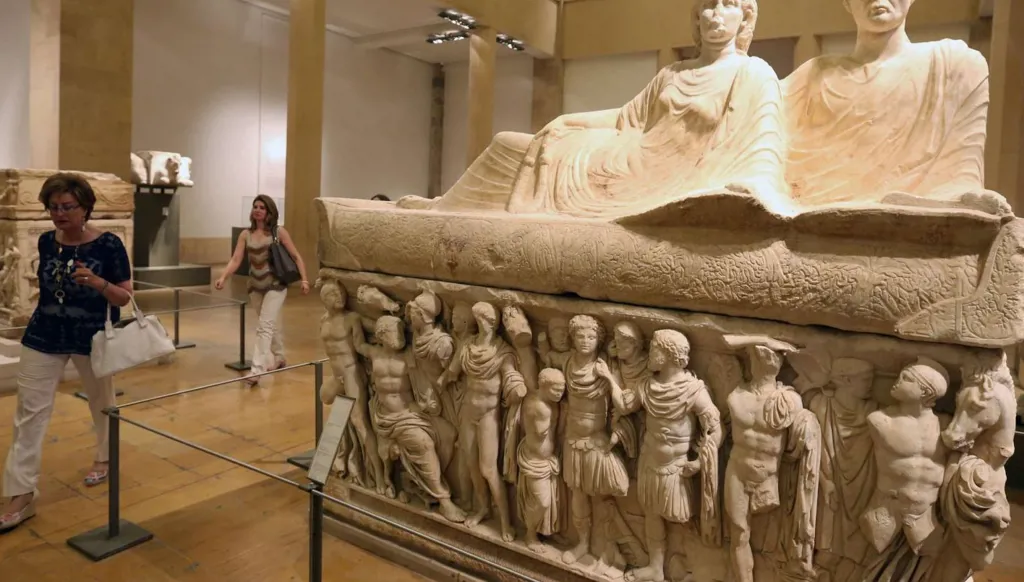
| | - Lebanon's night at the museum: Tonight, 30 museums across Lebanon open free of charge from 5 p.m. to 11 p.m. for Nuit des Musées — from the National Museum and Sursock to Baalbek and Tripoli Castle. Last year 30,000 people walked through museum doors in just four hours. Free buses depart from Martyrs' Square.
- Nolan's epic lands: Christopher Nolan's The Odyssey — starring Matt Damon, Zendaya, Tom Holland, and Anne Hathaway — is earning five-star raves ahead of its Friday release, with critics calling it the "film of the year" and a "watershed moment for filmmaking." Shot entirely on IMAX cameras, it carries a reported budget of $250 million and opens this weekend.
- Fairer lens for women: The European Broadcasting Union, working directly with female athletes including British pole vaulter Holly Bradshaw and Serbian long jumper Ivana Spanovic, has released new camera guidelines for broadcasters covering women's athletics — banning low angles, unnecessary slow-motion, and lingering body shots, reaching audiences of more than a billion people across 57 countries.
- 3,000-year-old surprise: A Dutch archaeological team from Leiden University has uncovered a 3,000-year-old Ramesside-era tomb in Luxor's Sheikh Abd el-Qurna area, complete with vivid murals of a man named Paser and his wife — she holds a sistrum, suggesting she was a temple singer. Restoration begins this autumn.
|
|
Take a long coffee this Thursday — you've earned the slow sip. |
Obaideh and Merwah are indigenous Lebanese white grape varieties grown in the Bekaa Valley, long cultivated on ungrafted vines. |
Lebanon news, every weekday morning. Free, sharp, ~5 minutes. |
|
|
|
|