|   | Kifkon — this morning Lebanon woke up to a lot. Its army entered an Israeli-held town for the first time, signed a new deal with Syria that's nothing like the last one, and its president flew home from Washington with a 41-year flight ban quietly lifted. Not bad for a Tuesday. |
|
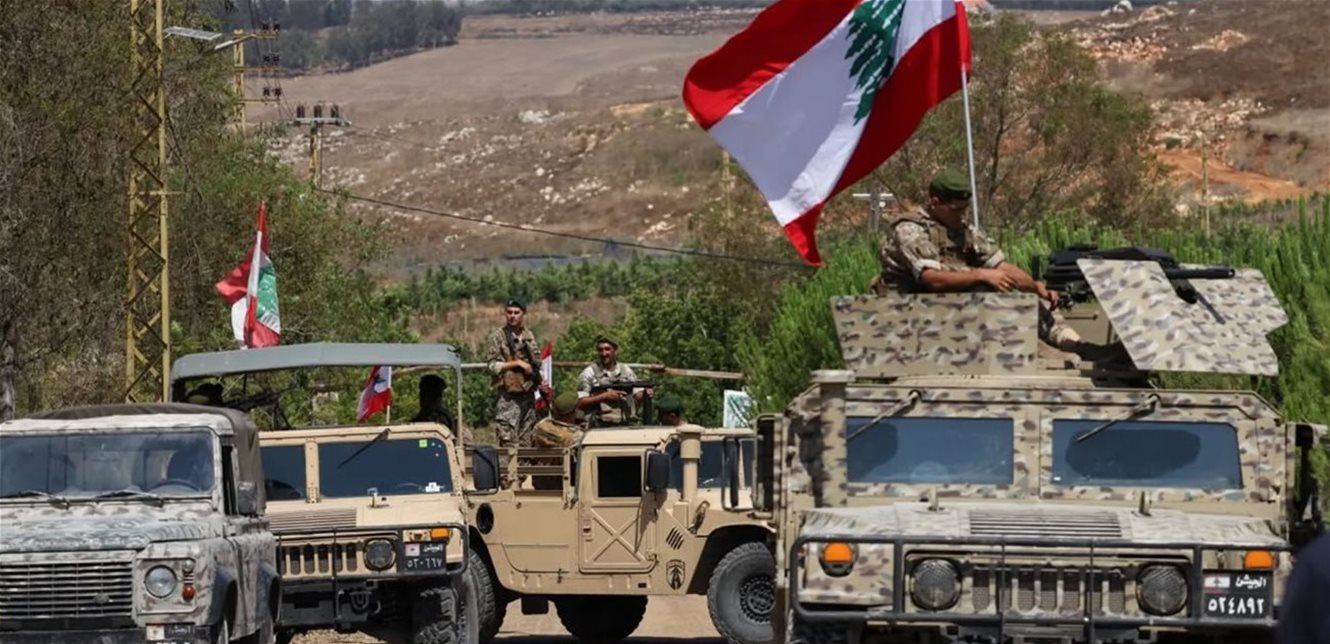
| | Lebanese Army Enters Zawtar al-Gharbiyah — But Israel Fires Near Its TroopsThe Lebanese army has now deployed inside Zawtar al-Gharbiyah, the first occupied town to change hands under the US-brokered pilot zone framework — a concrete step forward after weeks of deployments in unoccupied villages like Froun and Srifa. It did not go smoothly: Israeli forces opened fire near army units during the operation, a moment that tested the agreement almost immediately.
- Army engineering units entered Zawtar al-Gharbiyah Tuesday morning to begin demining and clear war remnants before residents can return; the municipality chief says initial estimates put destruction at over 50 percent of the town's homes, with no infrastructure or signs of life remaining.
- Israeli forces fired near Lebanese army positions during the deployment — the army called it aggression that could hinder implementation, while Israel claimed its troops fired warning shots after Lebanese soldiers entered an area outside the pilot zone.
- The two sides disagree on whether Israel was even in Zawtar al-Gharbiyah before Tuesday: a Lebanese military official said troops were unsure, while an Israeli official said forces had not been there "for quite a time."
- Residents waited at the town's entrances under summer heat but were not permitted to enter on the first day; Israel still occupies the adjacent town of Zawtar al-Sharqiyah.
What to watch: Whether the Israeli fire incident derails coordination or gets absorbed through US-mediated channels will signal how durable this framework is under real pressure. Lebanon and Syria Sign a New Joint Committee Deal — Nothing Like the Last OneLebanon and Syria have formalized the reset of their bilateral relationship by signing an agreement to establish a Joint Lebanese-Syrian Higher Committee — a body built, at least on paper, on sovereign equality rather than the dominance that defined their last major accord. The contrast with the 1991 Treaty of Brotherhood, which gave Syria binding authority over Lebanese political decisions and was signed under what critics called occupation, is deliberate and significant.
- Syrian Foreign Minister Asaad al-Shaibani and Lebanese Prime Minister Nawaf Salam signed the agreement in Beirut; the new committee will prepare agreements across politics, economics, finance, legal, and security affairs, grounded in principles of sovereignty, equality, and non-interference.
- The 1991 treaty created a joint council whose decisions were binding within both countries' constitutional systems; 127 of Lebanon's 128 MPs approved it, with the lone dissenter warning it would deprive Lebanon of its sovereignty.
- Political activist Bechara Khairallah calls the 2026 accord a shift "from tutelage towards equality"; former MP Fares Souaid urges caution, noting the new body's exact powers and scope remain undefined.
Zooming out: A generation separates these two agreements, and so does the collapse of the Assad dynasty — the real question is whether the principles written into the 2026 text hold when the politics get complicated. Trump Lifts 41-Year U.S. Flight Ban to Lebanon After Aoun White House VisitAfter four days in Washington that included meetings with both Trump and Secretary of State Rubio, Lebanese President Joseph Aoun left the White House with a headline nobody had expected: direct U.S. flights to Lebanon, banned since 1985 following the hijacking of TWA Flight 847 under the Reagan administration, are back on the table.
- Trump announced on social media after Aoun's departure that he was "directing" his administration to allow all U.S. carriers to fly directly to Lebanon "so that Americans can easily visit this beautiful land."
- In the room, Trump told Aoun "we're gonna help it a lot" — without concrete details — and floated the idea of personally speaking with Hezbollah, or having Syria intervene against the group, ideas that would be deeply unpopular in Lebanon.
- Analysts note U.S. carriers are unlikely to actually resume routes soon, given ongoing instability from the Iran war and unresolved questions about Hezbollah's presence in parts of the country.
Why it matters: The flight announcement is largely symbolic for now, but symbolism from a sitting U.S. president carries real diplomatic weight at a moment when Lebanon is trying to attract investment and international confidence. |
|
as of 3:21 AM GMT · Source: Polymarket |
Where is the largest collection of Roman sarcophagi outside Rome? Scroll to the bottom for the answer — or play all 10 at sobhiye.news/games/trivia |
| | - Search warrants, wholesale: Lebanon's Public Prosecution is moving to issue an "open judicial signal" granting the army broad powers to search homes, lands, and private properties in the pilot zones without needing a separate warrant for each — a legal shortcut designed to prevent weapons from being moved before raids.
- Hezbollah's airport gambit: Hezbollah's political council deputy Mahmoud Qamati threatened to shut down Beirut's Rafik Hariri Airport if the government keeps blocking Iranian flights and restricting visas for Iranian nationals — the Foreign Ministry said the measures won't be reversed, citing national security grounds.
- Europe packs its bags: Air France has extended its Beirut flight suspension until August 2, while Lufthansa Group routes to Beirut remain suspended until October 24 — leaving Lebanon's air connectivity increasingly dependent on carriers willing to navigate a volatile regional airspace.
- Bombs and bulldozers, still: Israeli forces triggered large explosions, set houses on fire, and fired missiles across multiple southern districts over the weekend — the Health Ministry reported 4,328 deaths and 12,229 wounded since the start of the war, as a Hezbollah protest in Sour denounced the framework agreement.
- Flag, checkpoint, occupation: AFP journalists accompanying a Christian NGO convoy witnessed Israeli flags and soldiers on the road to Naqoura — more than 5 kilometers from the last Lebanese army position — with Israel turning the convoy back despite UNIFIL-issued permits.
|
|
| ─ | Parallel Rate | 89,550 LBP | 0.00% | | ─ | Official Rate | 89,500 LBP | 0.00% | | ▲ | Gold | $4,132.6 | +3.05% | | ▲ | Bitcoin | $66,259 | +1.32% | | ▲ | S&P 500 | 7,509.2 | +0.69% |
as of 3:00 AM GMT · Source: lbprate, BDL, Yahoo Finance, CoinGecko |
| | Houthis Declare Naval Blockade of Saudi Arabia, Threatening Global Oil SupplyYemen's Houthi movement has declared a naval blockade against Saudi Arabia in the Red Sea's Bab el-Mandeb strait — the western chokepoint for global shipping — at the same moment the eastern chokepoint, the Strait of Hormuz, is already disrupted by the US-Iran war. Two blocked exits. One energy market in crisis.
- The Houthis said the blockade was retaliation for what they described as a Saudi siege on Yemen, announcing it would apply to the Bab el-Mandeb strait with "comprehensive and decisive escalation" if Saudi Arabia responds.
- Global oil supply has already fallen by 10 percent due to the Iran war; Kpler estimates closure of the Bab el-Mandeb could cut a further 7 percent from global output.
- The Houthis have disrupted this strait before — during Israel's Gaza war in 2024, their attacks caused Suez Canal trade to drop 50 percent year-on-year in early 2024, per the IMF.
The bigger picture: With both of the world's key energy shipping lanes now under simultaneous threat, the pressure on global markets and diplomatic efforts to end the Iran war is intensifying sharply. Syria Eyes a New Role: Regional Energy Transit HubSyria, which spent years as a theater of war and a recipient of foreign aid, is now being positioned by Washington as a potential transit corridor for Gulf energy — a strategic pivot that could reshape the country's economic and geopolitical standing if the infrastructure investment follows.
- US special envoy Tom Barrack revealed the US is working with five regional countries, including Syria, on alternatives to the Strait of Hormuz under a "precautionary delivery" framework, according to Asharq Al-Awsat.
- The plan envisions expanding the Kirkuk-Baniyas oil pipeline from its pre-1980s capacity of 300,000 barrels per day to 2 million, and eventually 3 million, barrels per day.
- Syrian economic adviser Osama Kadi said the project could reduce the share of global trade passing through the Strait of Hormuz to less than 5 percent by 2035 if fully implemented.
- Analysts note the route does not pass through southern Syria, meaning it does not technically require a peace deal with Israel — though regional stability remains a prerequisite.
What to watch: Whether the infrastructure investment and sanctions relief needed to make Syria a viable transit hub actually materialize, or whether the initiative remains an aspirational map on a diplomat's desk. Germany Launches 26-Point Plan to Claw Back Up to €200 Billion Lost to Financial CrimeGermany is bleeding between €100 and €200 billion a year to tax fraud and money laundering — and with a 2027 federal budget separately requiring €200 billion in new debt, the government has decided it can no longer afford to look the other way.
- Justice Minister Stefanie Hubig and Finance Minister Lars Klingbeil unveiled a 26-point action plan including a new Joint Center Against Tax and Financial Crime, staffed by 1,500 new posts using AI to untangle complex corporate structures.
- Maximum sentences for organized tax fraud will rise from 10 to 15 years; authorities will also gain power to seize assets for 180 days without a prior conviction, putting the burden of proof on the owner.
- Crypto gains are also in the crosshairs — currently tax-exempt if held over a year, that exemption is set to end, with blockchain analysis tools introduced to track digital transactions.
- Klingbeil has projected an additional €1 billion (about $1.1 billion) in revenue for 2027 from the crackdown, though he expects the real total to be significantly higher.
Zooming out: Germany's move mirrors a broader European push to close the gap between financial crime enforcement and the increasingly sophisticated tools that evaders use — from offshore shells to crypto wallets. |
|
| | - Spain wins, world watches: Sunday's World Cup final between Spain and Argentina drew a record 62.8 million combined viewers in the US alone — the most-watched soccer telecast in American TV history — as Ferran Torres scored in minute 106 of extra time to seal Spain's 1-0 victory.
- Keys without doors: Beit Beirut's "Hkeeli Ya Jnoub" exhibition has now drawn more than 3,500 visitors, who have contributed over 100 letters and 50 drawings; Adeeb Farhat's installation of keys — kept by southerners whose homes no longer exist — hangs from the ceiling as a quiet, devastating monument to return.
- Ziad, but make it Syrian: On the first anniversary of Ziad Rahbani's passing, a new essay traces how his plays — from "What About Tomorrow?" to "A Long American Film" — became a shared emotional language for Syrians navigating disappointment, love, and politics, making his Syrian presence a cultural phenomenon, not just a natural extension of a Lebanese or Arab audience.
- Baalbek trains its women: The Baalbek International Festivals, in partnership with UNESCO, ran a women's empowerment program from May to September 2025, training participants in everything from opera costume design to cultural production management — the resulting gender-responsive framework has now been published as a model for cultural institutions across the region.
|
|
Go make Wednesday count — we'll be back with the morning briefing tomorrow. |
Tyre has an impressive sarcophagi collection. |
Lebanon news, every weekday morning. Free, sharp, ~5 minutes. |
|
|
|
|