|   | A Lebanese prime minister planted a flag in a village the army just got back, and the water beneath the south is twenty times more poisoned than it was five years ago — Sabah el kheir, none of this is small talk. While Nawaf Salam stood in Zawtar al-Gharbiyah and said one village isn't enough, scientists were mapping out why returning to the rest of the south may be the easier half of the problem. Plus: what the Gulf's post-war recalibration means for a Beirut that keeps landing awkwardly in everyone else's strategy. |
|
| | Salam Plants a Flag in Zawtar — and Demands the Rest of the SouthThe first Israeli withdrawal under the pilot zones framework happened this week, and Lebanese Prime Minister Nawaf Salam made sure to be there. He visited the returned town of Zawtar al-Gharbiyah, planted a Lebanese flag, and made clear that one village is not enough — Lebanon wants every last Israeli soldier out.
- The next round of US-brokered talks is scheduled for August 4 in Italy, where Lebanese and Israeli ambassador-level delegations will continue working through the technical details of pilot zone implementation.
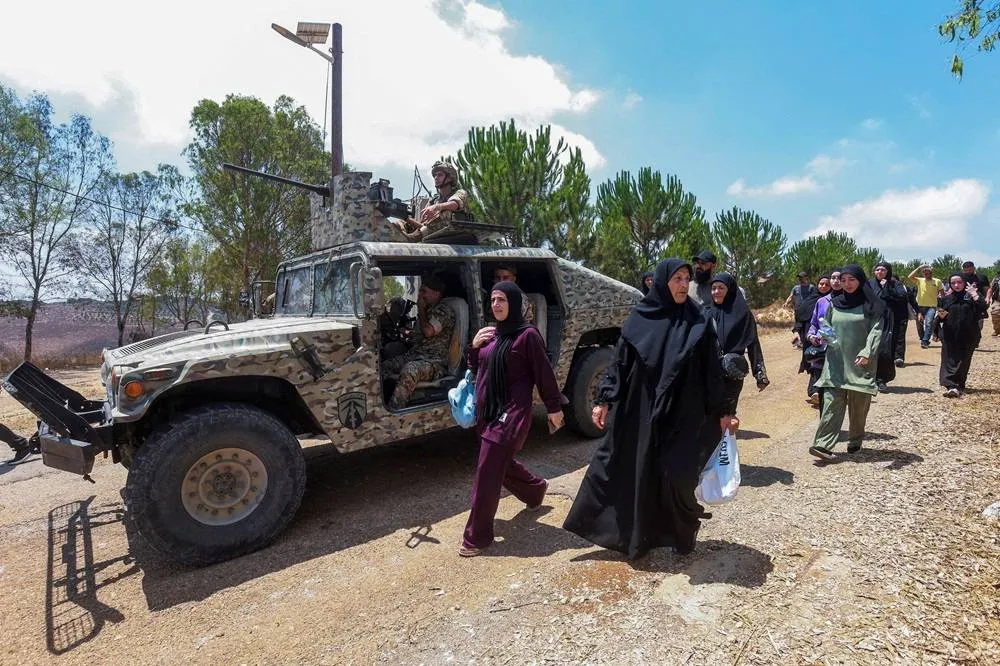
- Israeli forces withdrew from Zawtar al-Gharbiyah and the Lebanese army began deploying there, though residents were asked to delay their return while the town is cleared of unexploded ordnance.
- Salam said Israel's pullout was a significant first step but Lebanon wants a full Israeli withdrawal from all occupied territory — Israel still holds a buffer zone roughly 10 km deep along the entire border length.
- President Aoun, during his Washington visit, said Israeli withdrawal could remove the "root cause" Hezbollah has long cited to justify keeping its arms — and that disarmament could only follow from there.
What to watch: Hezbollah has rejected the direct talks and refused full disarmament, so how Lebanon navigates the gap between the army's deployment mandate and the group's red lines will define every round between now and August 4. Israel Destroyed Over 100 Wells — and the Litani Is Paying the PriceThe return to southern Lebanon isn't just a security question. It's a water question. New reporting reveals the scale of Israel's systematic targeting of the south's water infrastructure — and why the Litani River, the lifeblood of the region's agriculture and drinking supply, may be the most consequential front of the reconstruction battle.
- Israel destroyed more than 100 wells, approximately 16 main pumping stations, and around 43 water networks across southern villages, according to Al Modon's reporting from a Beirut water governance conference held Wednesday.
- Shell and missile residues have driven phosphorus and phosphate levels at four monitoring points on the Litani's lower basin to roughly 20 times the rates recorded over the previous five years, the National Litani River Authority found.
- AUB professor Dr. Najat Aoun warned that chemical pollutants from the bombing have entered the water and soil, posing long-term health risks — including cancer — for anyone returning to affected villages.
- The Litani Authority has reopened key crossings and roads to facilitate returns and agricultural transport, but says full environmental monitoring and rehabilitation require Israeli withdrawal from riverbank areas first.
Why it matters: Tens of thousands of displaced southerners cannot make a permanent return until the water that sustains their farms, homes, and health is assessed, cleaned, and restored — and that clock is running. The Gulf's Post-War Pivot — and What It Means for LebanonAfter months of conflict that shook Gulf energy markets and tested US-Iran limits, the region's major players are recalibrating fast. A new analysis in An-Nahar maps out where the Arab Gulf states are heading — and why Lebanon sits awkwardly at the intersection of every competing interest.
- Gulf states are accelerating economic diversification beyond fossil fuels and investing in export pipelines that bypass the Strait of Hormuz — with consultations reportedly underway on routes through Saudi Arabia, Iraq, Oman, and even reactivating pipelines through Lebanon, dormant since 1990.
- Washington's decision to calibrate strikes against Iran short of regime change signals a long-term US preference for coexistence with Tehran — which, the analysis argues, places Lebanon's framework agreement with Israel lower on America's priority list.
- Israel's position — requiring the Lebanese Army to disarm Hezbollah before any withdrawal — directly conflicts with the Lebanese presidency and army leadership, both of whom have repeatedly ruled out actions that could trigger internal conflict.
Zooming out: Lebanon's best-case scenario in this environment is exploiting windows of reduced regional tension for internal dialogue — rather than waiting on external powers whose strategic interests consistently run ahead of Beirut's. |
|
as of 8:40 AM GMT · Source: Polymarket |
What does "Il-kalb bya3rif sahib bayto" mean? | | | Everyone knows their limits |
| |
Scroll to the bottom for the answer — or play all 10 at sobhiye.news/games/trivia |
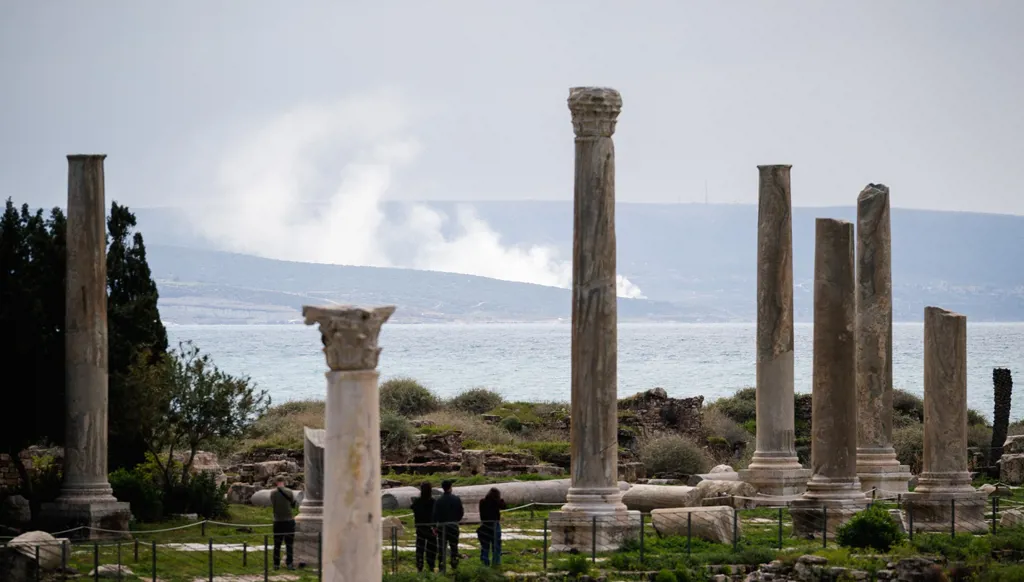
| | - Tyre officially in danger: UNESCO has formally added Tyre to its World Heritage in Danger list, citing direct Israeli strikes and sustained damage to the ancient Roman-era site — including a second-century hippodrome — after Lebanon requested the reclassification at the organization's 48th session in Busan.
- Beirut-Marseille, partners again: Beirut Port and Marseille Fos Port signed a three-year Memorandum of Understanding in France, with Public Works Minister Rasamny present, covering commercial development, logistics, digitalization, and emissions reduction — and an invitation for Beirut to join the IMEC Corridor Ports Club launched last May.
- 85,000 farmers, one window: Agriculture Minister Nizar Hani launched a "Unified Window" and seven reform axes for the ministry, including a national farmers' register covering 85,000 farmers and a farm-to-consumer tracking system — part of recovery efforts after the war impacted 25,000 farmers and 56,000 hectares of agricultural land.
- US flights: two months away: Lebanon's Civil Aviation Regulatory Authority head Mohammed Aziz says the country is technically ready for American carriers, but stricter security procedures mean actual flights are roughly two months out — once airlines add Lebanon to their seasonal schedules, travel time between the two countries would drop by about four hours.
- Banking law inches forward: Parliament's Finance Committee approved 11 additional articles of the banking restructuring law in Wednesday's session, with committee head Kanaan calling it significant progress and scheduling another round of talks next week to continue drafting the long-delayed legislation.
|
|
| ─ | Parallel Rate | 89,300 LBP | 0.00% | | ─ | Official Rate | 89,500 LBP | 0.00% | | ▲ | Gold | $4,129.7 | +1.44% | | ▼ | Bitcoin | $65,757 | -0.80% | | ▲ | S&P 500 | 7,498.96 | +0.75% |
as of 3:03 AM GMT · Source: lbprate, BDL, Yahoo Finance, CoinGecko |
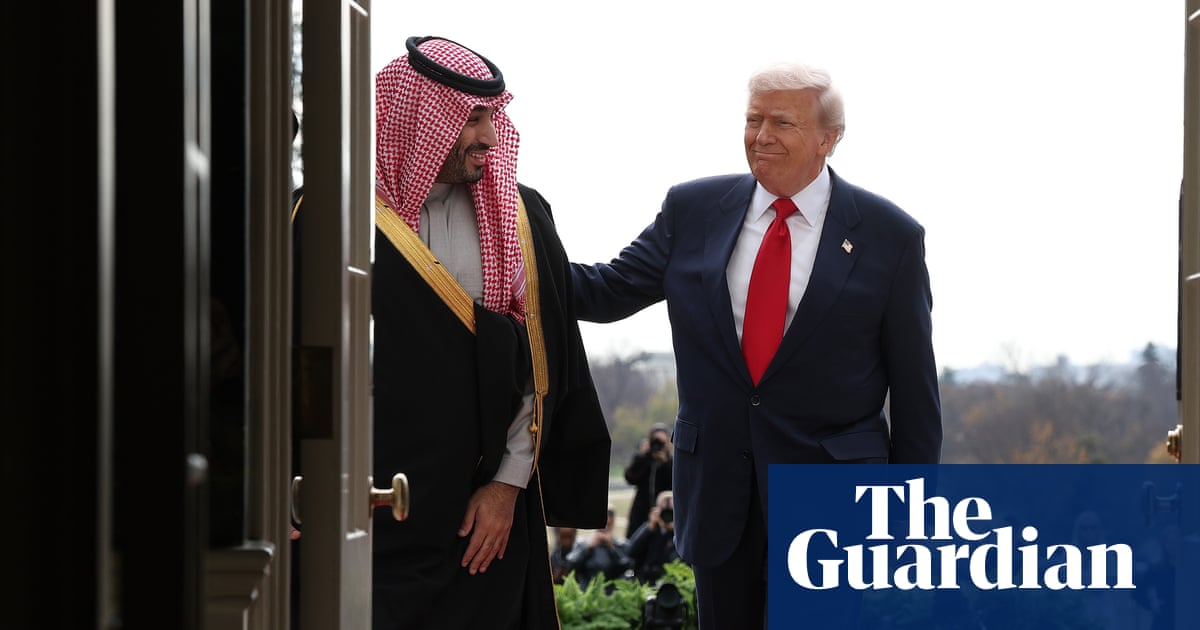
| | US-Saudi Nuclear Deal Sets Off Proliferation AlarmThe US and Saudi Arabia have signed a 30-year nuclear cooperation agreement that would use American technology to build a civilian nuclear program in the Kingdom — and it's already rattling nonproliferation experts, Congress, and Israel alike. The sticking point: whether Riyadh gets to enrich uranium on its own soil.
- The deal paves the way for a potential domestic enrichment facility in Saudi Arabia, but only after a two-year joint US-Saudi study — meaning the final call may fall to Trump's successor.
- Unlike a similar US deal with the UAE, the Saudi agreement reportedly does not include the "gold standard" clause barring enrichment or processing of spent fuel.
- Saudi Arabia will reportedly not be subject to the IAEA's Additional Protocol, the most rigorous UN nuclear monitoring framework.
- Senator Chris Murphy warned the deal would "set off a nuclear race in the region" — but blocking it requires a two-thirds congressional majority to override a presidential veto.
What to watch: The deal goes to Congress for approval in the coming days, and how lawmakers respond will signal whether Washington's nonproliferation guardrails still hold in a reshaped Middle East. Russia Suspected of Helping Iran Target CIA FacilitiesUS intelligence analysts are investigating whether Russia provided targeting data or advanced drone technology that helped Iran strike CIA facilities in the Gulf — a finding, if confirmed, that would mark a significant escalation in Moscow's willingness to directly disrupt American operations.
- At least two CIA sites were struck in March, including the CIA station inside the US embassy in Riyadh and a separate site in eastern Iraq, according to Reuters reporting citing four people familiar with US intelligence.
- One internal memo from a Western intelligence agency concluded Russia likely played a role in targeting the facilities; analysts believe the Riyadh strike used Russian-enhanced versions of Iran's Shahed drones.
- Russia reportedly supplied Iran with the Kometa-M satellite navigation system, described as far more accurate and harder to jam than Iran's own equivalent — the Kremlin has denied this.
- No deaths or injuries were reported in the Riyadh strike.
Zooming out: US intelligence has not reached firm conclusions, but the investigation reflects deepening concern that the Russia-Iran partnership is moving from arms supply toward active coordination against American targets. Hitler's Birthplace Opens as an Austrian Police StationAustria has converted Adolf Hitler's birthplace in the small border town of Braunau-am-Inn into a functioning police station, completing a years-long debate over how to handle one of the most fraught pieces of real estate in European history.
- The 20-million-euro ($23-million) refurbishment finished three years behind schedule; Austria purchased the 800-square-metre property for 810,000 euros after the Supreme Court approved its expropriation from the last private owner.
- Interior Minister Gerhard Karner called it "a place of democracy, of the rule of law, of security, of freedom, and of human dignity" — a memorial stone from the granite of the former Mauthausen concentration camp remains in front.
- Not everyone is convinced: a spokesperson for the Mauthausen Committee Austria said the renovation "will not prevent a single neo-Nazi from making the pilgrimage to Braunau."
The bigger picture: The conversion arrives as Austria's far-right FPOe — founded by former Nazis — holds around 37 percent support in polling aggregators, giving the symbolic gesture an unusually sharp present-day edge. |
|
| | - Lebanon meets Italy, in pine: A Lebanese-Italian art exhibition called "Echoes of Existence" has opened at the National Museum in Beirut, bringing together renowned Italian artist Enzo Cucchi and Lebanese-Italian painter Gilbert Halabi across three floors — with works by Lebanese modern masters Omar Onsi, Moustafa Farroukh, and César Gemayel rounding out a celebration of the pine tree as a shared Mediterranean symbol.
- Beirut on the big screen: Lebanese director Cyril Aris's new film "A Sad and Beautiful World" — a poppy, bittersweet love story set across decades of Beirut life — hits theaters on Friday, July 24, with IndieWire comparing its tone to "(500) Days of Summer" projected onto wartime, edited by the same co-editor who cut "Moonlight."
- West Belfast's history shot: Caoimhin Agyarko, born in London to an Irish mother and Ghanaian father and raised in west Belfast, fights IBF light-middleweight champion Josh Kelly this Saturday in Jeddah, chasing his dream of becoming Ireland's first black world boxing champion after 22 years and 18 unbeaten professional bouts.
- Ozzy gets a city day: Birmingham marked one year since the death of heavy metal legend Ozzy Osbourne with a full citywide celebration — fans in black T-shirts, a symphony orchestra tribute in the Bullring, and a mechanical bull statue specially dressed for the occasion, with Sharon Osbourne asking fans to remember him by playing his music "really loud."
|
|
Thanks for reading Sobhiye — share it with someone who needs their morning news in less time than a WhatsApp voice note from their ammo. |
| ✓C. Everyone knows their limits |
Knowing where you belong and how far you can go. |
Lebanon news, every weekday morning. Free, sharp, ~5 minutes. |
|
|
|
|