|   | Ahla w sahla. Washington is squeezing Damascus over what happens in Lebanon, your grocery bill is quietly lying to you, and Beirut is making a pitch to join a railway that could finally give its ports a reason to matter again. Saturday just got interesting. |
|
| | Washington Tightens the Screws on Syria — Over LebanonThe United States and Syria held a high-level military meeting in mid-July in Damascus, where Washington pushed harder on its conditions for normalizing the relationship with Ahmad Al-Sharaa's government — specifically after Syria tried to sidestep any military role against Hezbollah in Lebanon. Trump had publicly pressed Al-Sharaa to intervene; Damascus said thanks but no thanks.
- American officials renewed demands covering the foreign fighters file, monitoring of jihadist movements, a fair integration program for the Kurdish-led Syrian Democratic Forces (SDF), and preventing attacks on US allies — all conditions the two sides had previously agreed on in principle.
- Syria did not formally respond, choosing instead to consult Ankara and offer a counter-proposal: tighter control of the Syrian-Lebanese and Syrian-Iraqi borders, with drug and arms seizure samples shared with the US side.
- Damascus framed its position publicly around sovereignty: Al-Sharaa ruled out military intervention in Lebanon, calling such reports "baseless rumors" and saying Syria cannot afford a "new foreign quagmire" during reconstruction.
- Israel is watching nervously — Defense Minister Katz said Israel "does not need Ahmad Al-Sharaa in Lebanon," fearing any Syrian military footprint near its northern border.
What to watch: Whether Syria's border-control counter-offer satisfies Washington, or whether US pressure escalates toward the kind of explicit military coordination Trump has floated publicly. Lebanon's Cost-of-Living Gap: Official Numbers vs. Kitchen-Table RealityLebanon's official inflation figure and what families actually pay at the supermarket are telling two very different stories — and the gap between them is getting harder to ignore.
- The Consumer Association's index for the first half of 2026 recorded a price increase of 19.05% on 140 essential goods and services — more than double the 10% rise reported by the Central Administration of Statistics, which tracks all goods including cars and electronics.
- The head of the Consumer Association, Zouhair Berro, says the gap exists because the official index dilutes food prices with big-ticket items like iPhones — goods that poor and middle-income families simply don't buy.
- Food spending can reach 39% of total household expenditure for lower-income Lebanese, making a 20% food price jump a genuine threat to daily sustenance.
- The association blamed global oil and energy price jumps, warned the next inflation wave will be worse, and called on the Ministry of Economy to impose immediate price ceilings on essential goods.
The bigger picture: A stable lira exchange rate has offered no protection against rising living costs, exposing a structural gap between monetary stability and actual household welfare that monetary policy alone cannot close. Lebanon Moves to Join the Regional Railway RevivalWith the Hejaz Railway project — a corridor linking Saudi Arabia through Jordan, Syria, and onward to Turkey and Europe — gaining regional attention, Beirut is making a formal play to plug in.
- The head of the Railway and Public Transport Authority, Ziad Shia, says Lebanon's entry point is the Tripoli-Abboudieh route connecting north Lebanon to Homs in Syria — a study for this segment has already begun and is expected to complete within three months, after which tender documents for contractors will be issued.
- A second corridor is being studied in parallel: a tunnel linking Beirut to the Bekaa, then onward to the Syrian network — the government has allocated $800,000 from the budget reserve to fund that study.
- A memorandum of understanding with the Port of Tripoli has been signed, and a tender through the Public Procurement Authority to select a study consultant is already announced.
- Shia argues the project could transform Beirut and Tripoli into logistics hubs redistributing goods toward Syria, Jordan, and the Gulf — with rail being cheaper and more efficient than trucking for heavy cargo.
Why it matters: Rail connectivity to the Hejaz corridor would give Lebanon's ports a regional role they haven't had in decades — but the timeline from study to steel is long, and Lebanon's infrastructure track record is watching. |
|
as of 3:13 AM GMT · Source: Polymarket |
"3ish kteer, btesma3 kteer" suggests that: | | Elders exaggerate stories |
| | Life experience exposes you to many realities |
| | Knowledge comes from listening |
|
Scroll to the bottom for the answer — or play all 10 at sobhiye.news/games/trivia |
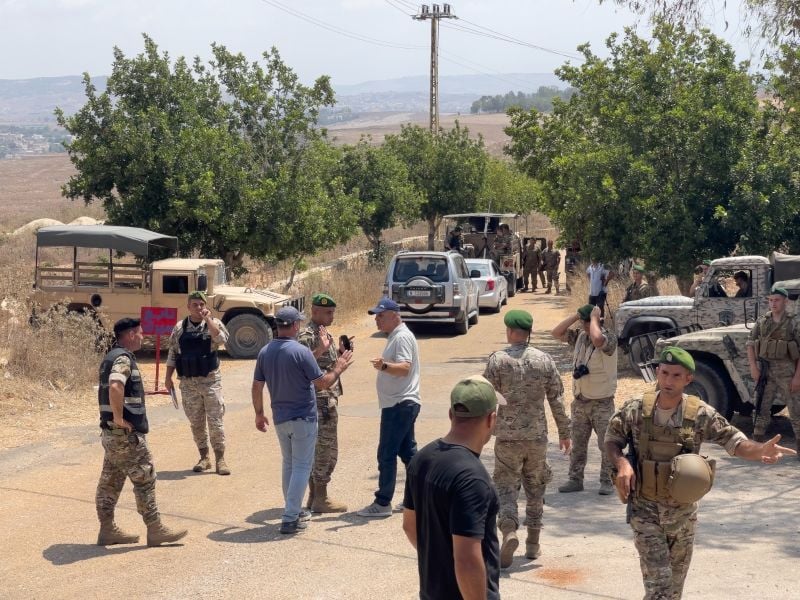
| | - Home, finally: Residents of Zawtar al-Gharbiyah officially began returning to their village on Friday in organized waves alongside the Lebanese Army — a milestone for the pilot zone process, though Israeli artillery struck Markaba and overnight demolitions continued in Khiam and Haddatha, with further demolitions reported in Taybeh.
- August 4th, high stakes: Lebanon's delegation to the next Rome negotiating round will include military personnel, arriving with maps and files to demand expanded pilot zones and full withdrawals — Israel wants to limit talks to evaluating Phase 1 results and inspecting villages for Hezbollah weapons.
- Not ammonium nitrate, just urea: The Military Tribunal acquitted Lebanese Forces-aligned businessman Maroun Sakr of trading ammonium nitrate for explosives — lab analysis showed the seized cargo was urea, a standard fertilizer — closing a case that had inflamed political tensions since October 2021.
- Lebanon's tobacco on the brink: South Lebanon's tobacco harvest has collapsed from 4,627 tons before 2023 to near-zero in 2026 after displacement struck at the peak of the planting season, with 22,400 farmers across Lebanon now largely without income and no clear state support plan announced.
- Lebanon's genetic map grows: Researchers at the Lebanese American University have documented the first confirmed Lebanese cases of SELENON-related congenital myopathy — a rare muscle disease affecting 3 unrelated families — expanding the catalogue of genetic diseases on record in Lebanon.
|
|
| ─ | Parallel Rate | 89,550 LBP | 0.00% | | ─ | Official Rate | 89,500 LBP | 0.00% | | ▲ | Gold | $4,055.7 | +0.22% | | ▼ | Bitcoin | $63,977 | -1.54% | | ▼ | S&P 500 | 7,411.98 | -1.16% |
as of 2:56 AM GMT · Source: lbprate, BDL, Yahoo Finance, CoinGecko |
| | ICC Fires Its Chief Prosecutor — A First in the Court's HistoryThe International Criminal Court has never removed a sitting chief prosecutor in its 24-year existence. On Friday, it did. Member states voted to dismiss Karim Khan over misconduct findings — but the process itself is now as controversial as the man it ousted.
- 82 of the court's 125 member states voted to remove Khan, well above the absolute majority threshold of 63; 13 voted against and 15 abstained.
- The vote centered on findings that Khan engaged in a sexual relationship with a subordinate — allegations he denied; a panel of independent judges had unanimously found the evidence insufficient to establish misconduct, but bureau member states voted to disregard that conclusion.
- Khan's removal takes immediate effect. Elections for a replacement follow.
- Israeli Foreign Minister Gideon Sa'ar welcomed the dismissal and called on the court to revoke arrest warrants against Israeli officials — warrants Khan's office had sought in 2024.
What to watch: Who the ICC's member states choose as the next prosecutor will signal whether the court moves to reassert its independence or continues operating under the political pressure that shadowed Khan's final months in office. China Pushes Pakistan to Restart US-Iran Talks — With the Strait of Hormuz on the LineThe US-Iran war has been grinding for nearly five months with no end in sight. Now China — whose oil imports flow through the nearly-closed Strait of Hormuz — is pressing Pakistan to revive stalled diplomacy, setting off a new round of shuttle contacts between Islamabad and Tehran.
- Iran's Interior Minister Eskandar Momeni made his second visit to Islamabad within ten days this week, meeting Pakistani government leaders and army chief Asim Munir to explore a path back to talks.
- China's foreign ministry confirmed it "supports the mediation efforts made by Pakistan and other parties" and said it will "play an active role in restoring peace and tranquillity in the Middle East Gulf region."
- Pakistan faces a delicate balancing act: Saudi Arabia, a close Islamabad ally that signed a mutual defense treaty last year, is now under Houthi naval blockade — and being seen as too receptive to Iran risks frustrating Riyadh.
- A Pakistani official said a halt to attacks on Saudi Arabia and other Gulf states is now a "prerequisite for any talks to resume" — a message conveyed directly to Tehran.
Zooming out: With the Strait of Hormuz near-closed and the Red Sea disrupted, both China and Pakistan have concrete economic reasons to push for de-escalation that go beyond diplomatic goodwill. Six Candidates, One Stage, and the Race to Lead the UNAntónio Guterres leaves the United Nations on December 31, and his successor faces a daunting inbox: a financial crisis, a credibility gap, and a US administration openly skeptical of the organization. Six candidates made their case in a televised debate on Thursday — and the race remains wide open.
- Chile's Michelle Bachelet, Ecuador's María Fernanda Espinosa, Argentina's Rafael Grossi, Costa Rica's Rebeca Grynspan, Guyana's Carolyn Rodrigues-Birkett, and Senegal's Macky Sall all appeared before diplomats, UN staff, and civil society in the General Assembly Hall.
- Grossi, head of the International Atomic Energy Agency, is frequently cited as the front-runner, though analysts say he has not locked up the race.
- On July 30, the Security Council holds its first closed-door straw poll — a candidate needs 9 votes without a veto from any of the 5 permanent members to advance.
- The new secretary-general takes office January 1, 2027.
The bigger picture: Under a tradition of geographic rotation, Latin America is pressing its claim this cycle — and many member states are calling for the position to be held by a woman for the first time. |
|
| | - Lebanon's seas, in a bag: Photographer Tareq Haddad's exhibition "As Close As It Gets" at Tanit Gallery turns the Lebanese coastline into 36 puzzle cubes — each one a different shade of blue, from gray-sad to joy-bright — so the diaspora can carry the sea wherever they go. On view until September 4, 2026.
- A cedar outlasts everything: A Lebanese cedar planted on the White House South Lawn by President Jimmy Carter in 1978 is still standing tall, healthy, and green — the U.S. National Park Service says it symbolizes Lebanon's "strength, beauty, and peace." Forty-eight years of Lebanese history later, the tree endures.
- Pogacar rewrites history: Tadej Pogacar won Stage 19 of the Tour de France on the legendary Alpe d'Huez climb in 35 minutes and 26 seconds, shattering Marco Pantani's 1997 record by more than a minute — his fifth stage win in 19 days, with one mountain stage still to come.
- 11 years old, world record: English schoolgirl Bodhana Sivanandan, aged just 11, defeated French grandmaster Marc'Andria Maurizzi — rated 2628 — in Aix-en-Provence, breaking Judit Polgar's 38-year-old world age record for the youngest girl to beat a grandmaster rated over 2600.
|
|
That's your Saturday — go enjoy it while the coffee's still warm. |
| ✓C. Life experience exposes you to many realities |
It's descriptive, not celebratory - exposure, not wisdom. |
Lebanon news, every weekday morning. Free, sharp, ~5 minutes. |
|
|
|
|