|   | Bonjourein — it's a Friday that feels like a history book is cracking open. Lebanon is on the verge of abolishing the death penalty, Macron is on the phone with Berri, and the banking reform law that could unlock an IMF deal is one session away from done — with a catch, naturally. Big week, bigger questions. Let's get into it. |
|
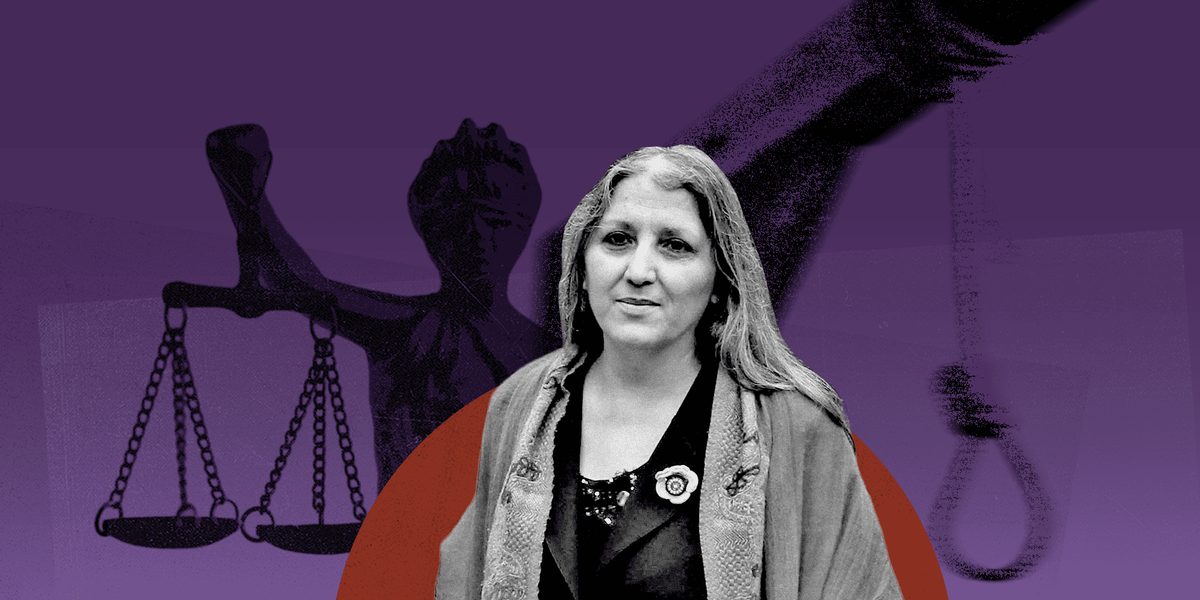
| | Lebanon Moves to Abolish the Death Penalty — 22 Years After Its Last ExecutionLebanon hasn't executed anyone since 2004, but the death penalty has stayed on the books — a legal ghost haunting a country that stopped using it. Now, after nearly three decades of campaigning, activist and legal scholar Ogarit Younan may finally see it gone for good.
- The draft abolition law — prepared by Younan and rooted in a campaign she launched in 1997 alongside the late thinker Kamal Salibi — has passed through the Council of Ministers, the Administration and Justice Committee, and the Parliamentary Human Rights Committee.
- 112 countries have permanently abolished the death penalty from their legislation; about 60% of OIC member states no longer apply it or have legally abolished it, along with 41 African countries.
- Younan's core argument: the death sentence is irreversible — no opportunity for review or rehabilitation — and applying an absolute judgment to a perpetrator who bears only partial responsibility is legally incoherent.
- She frames it as a question of state identity: "I do not accept living in a state of gallows and killing, because killing a human being is not the right of any human being."
Why it matters: If passed, abolition would mark a rare, concrete philosophical shift in how the Lebanese state defines the limits of its own power — a meaningful signal amid broader questions about what kind of country Lebanon is rebuilding itself to be. Macron Calls Berri, Pledges Support — Berri Calls for International Pressure on IsraelFrench President Emmanuel Macron phoned Parliament Speaker Nabih Berri to discuss Israel's continued military operations in southern Lebanon, reaffirming Paris's commitment to Lebanese sovereignty and reconstruction while Berri pushed for urgent international action.
- Macron reaffirmed France's support on "various fronts," including backing for the Lebanese army and reconstruction assistance, and expressed readiness from France and other friendly countries to help Lebanon through its current difficulties.
- Berri stressed the need for "urgent and exceptional" international efforts to compel Israel to end its war and withdraw from occupied Lebanese territory to the international border.
- Berri also called for UNIFIL's continued presence in the south and its role in implementing all provisions of UN Security Council Resolution 1701.
- On the economy, Berri told Macron that Parliament is working to complete the legislation required to finalize a deal with the IMF.
Zooming out: France has historically positioned itself as Lebanon's principal Western patron, and Macron's personal outreach to Berri — rather than the presidency — reflects the complex diplomatic geometry that defines Lebanese politics right now. Banking Reform Law Nearly Done — But the IMF May Not Like What's InsideLebanon's Finance Committee has spent over a year inching toward a banking restructuring law that could unlock an IMF deal and begin repaying the billions lost to depositors in the 2019 financial collapse. This week, that law got within one session of completion — with a significant catch.
- Committee chairman Ibrahim Kanaan confirmed the committee has completed review of all 29 articles of the draft bank resolution law after more than a month of discussions; only a one-and-a-half page annex on the hierarchy of required funds remains, to be settled in a final session Monday.
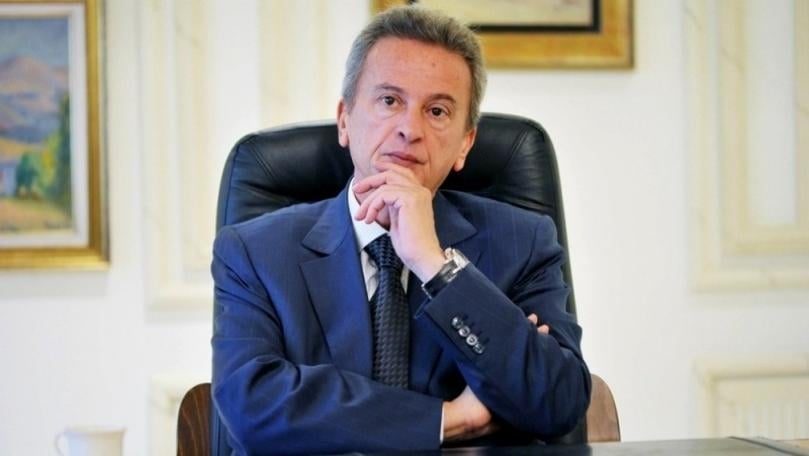
- The draft departs from IMF requirements — modifications pushed under Central Bank Governor Karim Souaid may not be acceptable to the Fund, which Lebanon has been courting since 2020.
- The Finance and Budget Committee separately pledged to launch an initiative ensuring the government doesn't delay amending the deposit recovery law, stressing the two laws must be linked so depositors can actually recover their money.
- Finance Minister Yassine Jaber and Justice Minister Adel Nassar both attended Thursday's session.
What to watch: Monday's final session will show whether the committee can close the annex cleanly — and then comes the harder question of whether the IMF will accept a law that reportedly drifts from the conditions it set. |
|
as of 3:32 AM GMT · Source: Polymarket |
| | - Salameh's door, forced open: Lebanon's Prosecutor General ordered security forces to bring former Banque du Liban Governor Riad Salameh in for questioning — and authorized them to forcibly enter his residence after he failed to open the door. The Public Prosecutor's Office is expected to conclude its investigation and refer charges imminently.
- 23 MPs, one document: Around 23 MPs from blocs spanning Amal to Marada gathered at the Phoenicia Hotel under Gebran Bassil's "Protecting Lebanon" initiative, agreeing on a joint paper demanding state monopoly on arms and Israel's withdrawal — while Hezbollah, Lebanese Forces, and Kataeb all stayed away.
- Israel owns the nitrate: Update — the Israeli army has now claimed the 4,000 kg of ammonium nitrate UNIFIL found in Houla, saying it was used to destroy Hezbollah infrastructure and denying any link to the Beirut Port explosion.
- Turkey wants in after UNIFIL: President Erdogan told Lebanese President Aoun during his Ankara visit that Turkey wants to participate in any new security initiative for southern Lebanon once UNIFIL's mandate expires at year's end — joining France and Italy in expressing interest in a successor force.
- Lebanon, meet 5G: The government has approved moving forward with a 5G rollout — yes, while parts of the world are already testing 6G — with the service arriving gradually once investment, new equipment, and infrastructure upgrades are in place.
|
|
| ─ | Parallel Rate | 89,550 LBP | 0.00% | | ─ | Official Rate | 89,500 LBP | 0.00% | | ▲ | Gold | $4,135.2 | +2.49% | | ▲ | Bitcoin | $64,221 | +0.10% | | ▲ | S&P 500 | 7,437.63 | +0.12% |
as of 3:06 AM GMT · Source: lbprate, BDL, Yahoo Finance, CoinGecko |
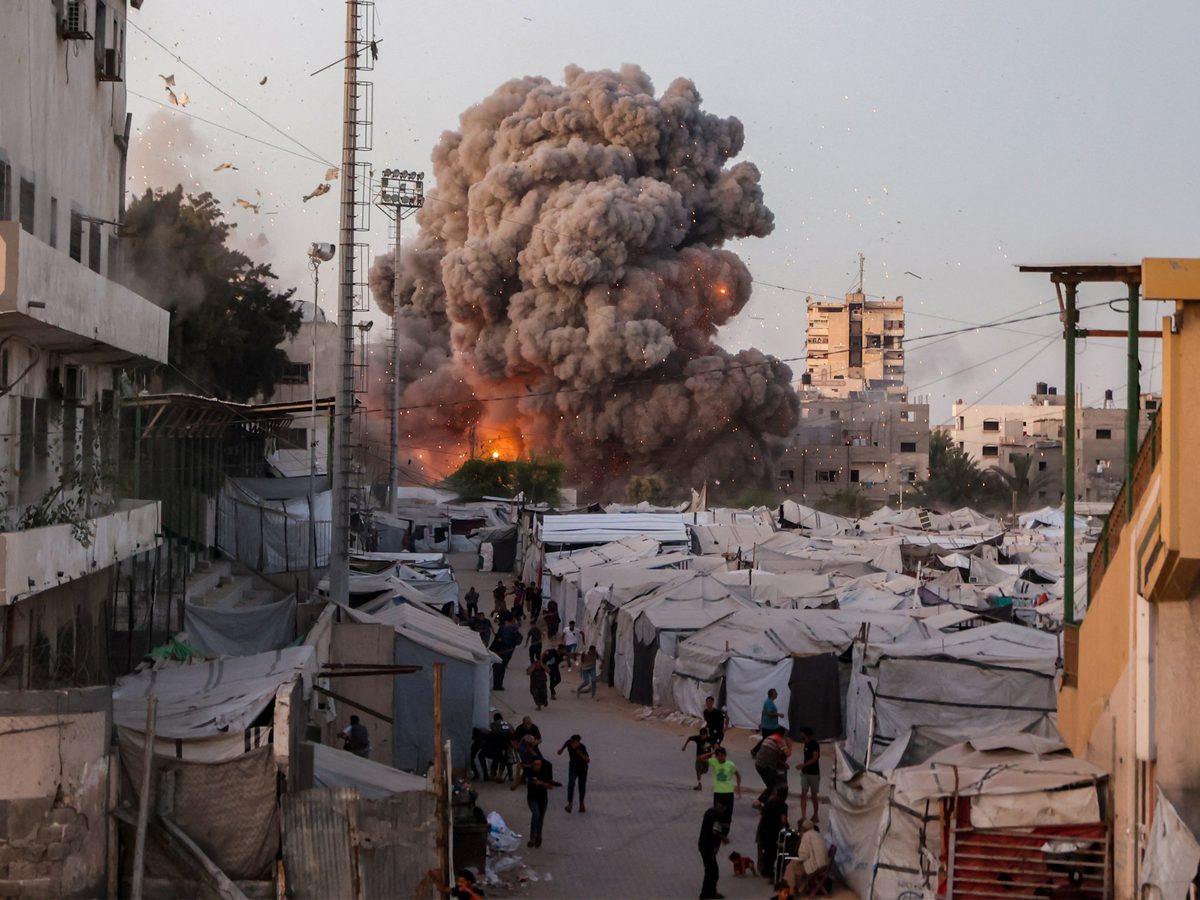
| | Hamas Agrees to Disarm in Gaza — With Conditions AttachedIn a development that's been discussed for months and dismissed nearly as many times, Hamas and other Palestinian factions have signed a document agreeing to a phased disarmament plan in Gaza, with a precise roadmap to be prepared within 14 days.
- Under the agreement, weapons held by police would be transferred first, followed by the decommissioning of heavy weapons; all military activity in Gaza would have to stop, with Hamas handing arms over to a National Committee set to administer the territory, according to Al Jazeera, which received a copy of the agreement.
- Trump called it "a monumental step" and framed it as part of the ceasefire deal he brokered in October, saying an International Stabilization Force would replace Israeli forces once disarmament is complete.
- Hamas negotiator Ghazi Hamad made one thing clear: disarmament is conditional on Israel's withdrawal from Gaza and progress on reconstruction.
- Palestinian Islamic Jihad said reports of an agreement were "inaccurate" and that it had reservations about the wording being circulated. No comment yet from Israel.
What to watch: The 14-day window to produce an actual disarmament roadmap — and whether Islamic Jihad's reservations harden into a formal rejection that unravels the deal before it starts. Voice of America Has Gone Nearly Silent — On PurposeVoice of America spent more than 80 years broadcasting news to people living under authoritarian regimes — Soviet dissidents, Iranians during the revolution, Ukrainians during the Russian invasion. Then, in early 2025, the Trump administration effectively shut most of it down.
- After Trump issued an executive order slashing V.O.A.'s parent agency, Kari Lake put 1,042 of its 1,147 staffers on paid leave in March 2025; the agency, which previously broadcast in 49 languages to a weekly audience of more than 350 million people, now operates in just 7 languages.
- V.O.A.'s Persian Service, which once reached close to a quarter of Iran's adults, was down to a few dozen people when the latest Israel-Iran war began — with programming limited to an hour a day.
- Paying sidelined employees to sit at home has so far cost taxpayers around $140 million, according to Senator Jeanne Shaheen's Senate testimony.
- The House voted to fund V.O.A. at $199.5 million for 2026 — down from $260 million in 2024, but far above what the President requested.
The bigger picture: As Russia and China expand their international broadcasting — with China reportedly offering free trips to local broadcasters in Latin America — the reduction of America's counter-programming leaves a gap that rivals are actively moving to fill. Iraq's "Honor Killing" Survivors Speak — and the State Mostly Looks AwayIn Iraq, Article 409 of the 1969 Penal Code has long provided legal cover for so-called "honor killings" — allowing perpetrators to receive reduced sentences or escape punishment entirely. A new investigation gives voice to three women who survived attempts on their lives by their own families.
- One survivor from Wasit governorate ironed her brother's shirt the same evening he drove her to an isolated area to kill her over a false tip — she was saved only because a phone call arrived announcing a relative's death; she has lived under the same roof as her would-be killer ever since.
- A second survivor from Dhi Qar fled to Baghdad after a judge — unable to apply the law against her influential tribal uncles — whispered to her: "Run away immediately to the capital, my daughter, there is no place for you here."
- Human rights activist Ruaa Khalaf of the Iraqi Women's Network told Assafir Al-Arabi that the core crisis is the absence of political will: "There is great political fear that women will take their space," she said, calling for safe houses with legal, psychological, and health support.
Zooming out: International bodies have repeatedly recommended abolishing Article 409, but with women's rights in documented decline across the region, advocates say the realistic near-term goal has shifted from legal reform to simply building shelters where survivors can exist without living alongside the people who tried to kill them. |
|
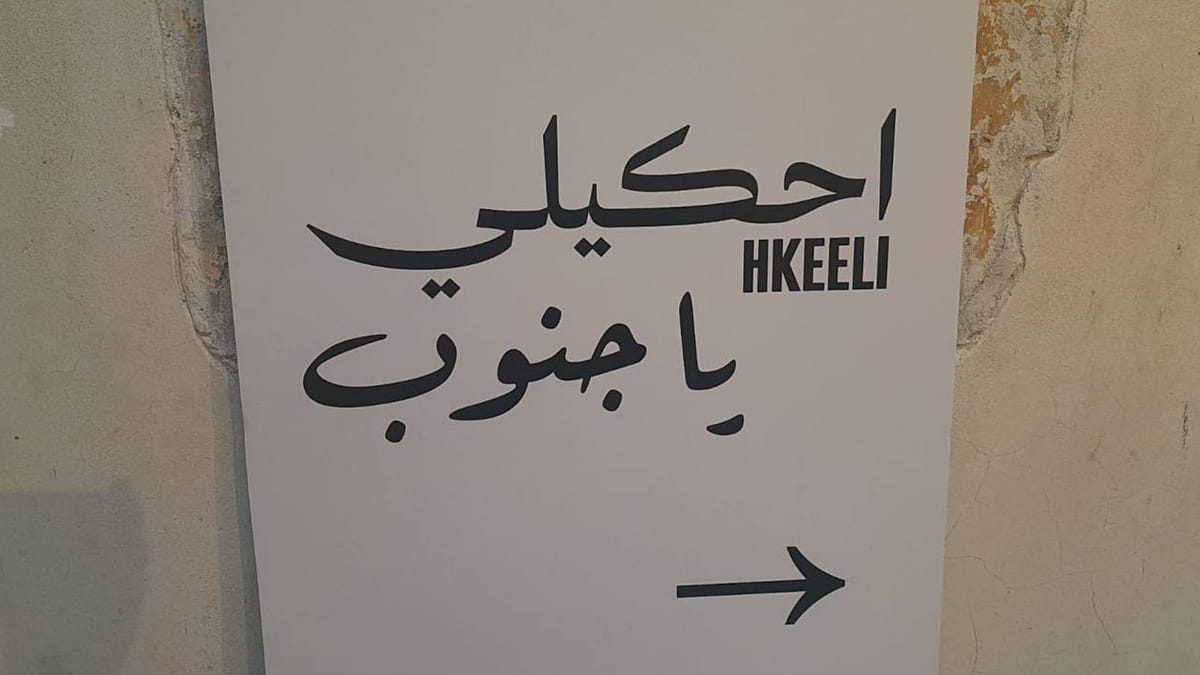
| | - South, seen differently: Beit Beirut's "Tell Me, South" exhibition has now welcomed more than 7,200 visitors — with visitors leaving over 130 messages and 90 drawings that have become part of the exhibition itself before it pauses for August.
- Lebanese knockout machine: Abdallah Ondash — 8-1 in ONE Championship with a 75% finishing rate — steps into Lumpinee Stadium on Friday, July 31 for a rematch against the only man to beat him, telling ONE Championship he's "hungry now" and has his sights set on a world title shot if he wins.
- Beirut's centenary poet: This year marks the centenary of Iraqi poet Badr Shakir Al-Sayyab, whose most celebrated collection "Anshoudat Al-Matar" was published in Beirut, proofread by Adonis and Shawqi Abi Shaqra, and won the Shi'r magazine award of 1,000 Lebanese lira — with Shawqi later writing that "Al-Sayyab died in Beirut, asking about Basra, to live in all our poems."
- South London to the NFL: Seydou Traore, raised in south London and the first graduate of England's NFL Academy to complete the full pathway to the NFL, signed a four-year rookie contract worth $4.8 million with the Miami Dolphins — his mum's celebratory zaghrouta at the draft went viral, and honestly, same.
|
|
Friday is yours — go enjoy it, and we'll have the weekend's news ready when you need it. |
"Znoud el sit" are cream-filled fried rolls. |
Lebanon news, every weekday morning. Free, sharp, ~5 minutes. |
|
|
|
|