|   | Some people came back to the south with packed bags still by the door — just in case. Ahla w sahla, and welcome to a Saturday that's asking hard questions: about what 'return' actually means, about a weapons cache built for a cell that's still out there, and about a marble obelisk on Ziad Rahbani Avenue that nobody wants to talk about but nobody will touch. |
|
| | Home but Not Home: South Lebanon's Returnees Caught Between Rubble and FearReturning to southern Lebanon after the war turned out to be the beginning of a new crisis, not the end of the old one. A new study by the Arab Center for Research and Policy Studies documents the experience through the voices of 64 returnees across 8 focus groups — and what they describe is life suspended between destroyed homes, vanishing services, and the constant dread of another round of fighting.
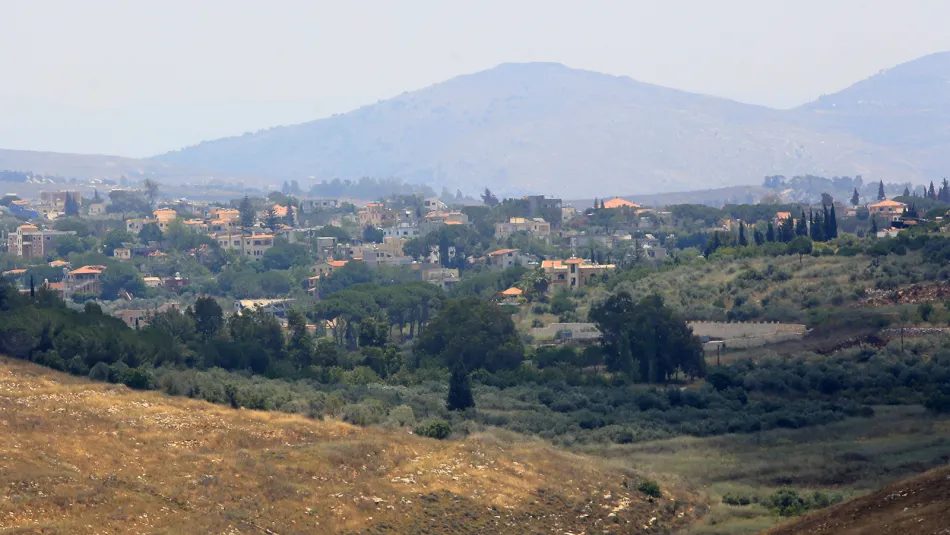
- Return was rarely driven by official guidance — people followed each other home out of attachment to the land, financial pressure, and the need to work, with one participant summing it up: "No one told us to return, but people returned on their own," according to Al Modon's report on the study.
- Damage estimates from participants varied widely; many said aid stopped after displacement ended, precisely when repair needs ballooned.
- The fear of renewed displacement runs so deep that some families kept bags packed and rental units in cities on standby — one woman said simply, "Where am I going this time?"
- Young people linked departure to lost futures: "I am losing my life, especially at twenty years old, and I cannot study under these circumstances."
Why it matters: The study makes a distinction that policymakers keep blurring — spatial return (being physically back) versus sustainable return (having the conditions to actually stay) — and argues Lebanon's recovery programs are measuring the wrong thing. Update: Ras el-Nabaa Weapons Cache Was Meant to Arm a 12–15-Person SquadWhen security forces raided an apartment in Beirut's Ras el-Nabaa neighborhood and found quantities of weapons and military equipment, the immediate story was a weapons cache. Now, new confessions have reframed it: this was a supply depot for an organized group — and that group is still out there.
- Detainee H.J. has now explicitly confessed to receiving direct orders from a Hezbollah official, a judicial source told Al Modon — upgrading the case from individual to organizational.
- The arsenal was being assembled to equip a trained cell of between 12 and 15 people, tasked with carrying out specific field operations in the Ras el-Nabaa area on command.
- Security agencies, under judicial supervision, have launched active tracking operations to identify and arrest the group's members before they can be activated.
What to watch: Whether security forces locate the remaining cell members before any planned operation is carried out will determine whether this stays a foiled plot or becomes something worse. Hafez al-Assad's Obelisk Still Stands on Ziad Rahbani Avenue — and Nobody Knows What to Do About ItAfter Bashar al-Assad's regime fell in late 2024, Lebanon's Cabinet renamed the airport highway from "Hafez al-Assad Avenue" to "Ziad Rahbani Avenue" — a symbolic clean break. There's just one problem: the marble obelisk at the Kuwaiti Embassy roundabout, inaugurated in 1998 and dedicated to Hafez al-Assad, is still standing, untouched, on that very road.
- A new Megaphone essay traces the obelisk's history: erected in 1998 when Rafic Hariri named the airport highway after al-Assad, its dedicatory plaque still reads "a greeting of love and brotherhood" — with Syria listed before Lebanon's own president.
- In 1999, installation artist Walid Sadek published a 62-page palm-sized booklet juxtaposing the obelisk's image with famous incidents of monument destruction worldwide — an audacious provocation under full Syrian military occupation of Lebanon.
- Google Maps now says "Ziad Rahbani Avenue"; the marble plaque beneath the obelisk still says "Hafez al-Assad Avenue" — two realities, one road.
- A blank white marble panel sits on the obelisk's base, as if waiting for someone to decide what comes next.
The bigger picture: The obelisk's survival — protected, as the essay puts it, by sectarian geography and confessional power-sharing — is a small monument to Lebanon's larger inability to reckon with its years under Syrian hegemony. |
|
as of 3:24 AM GMT · Source: Polymarket |
When did Lebanon first participate in the Olympics? Scroll to the bottom for the answer — or play all 10 at sobhiye.news/games/trivia |
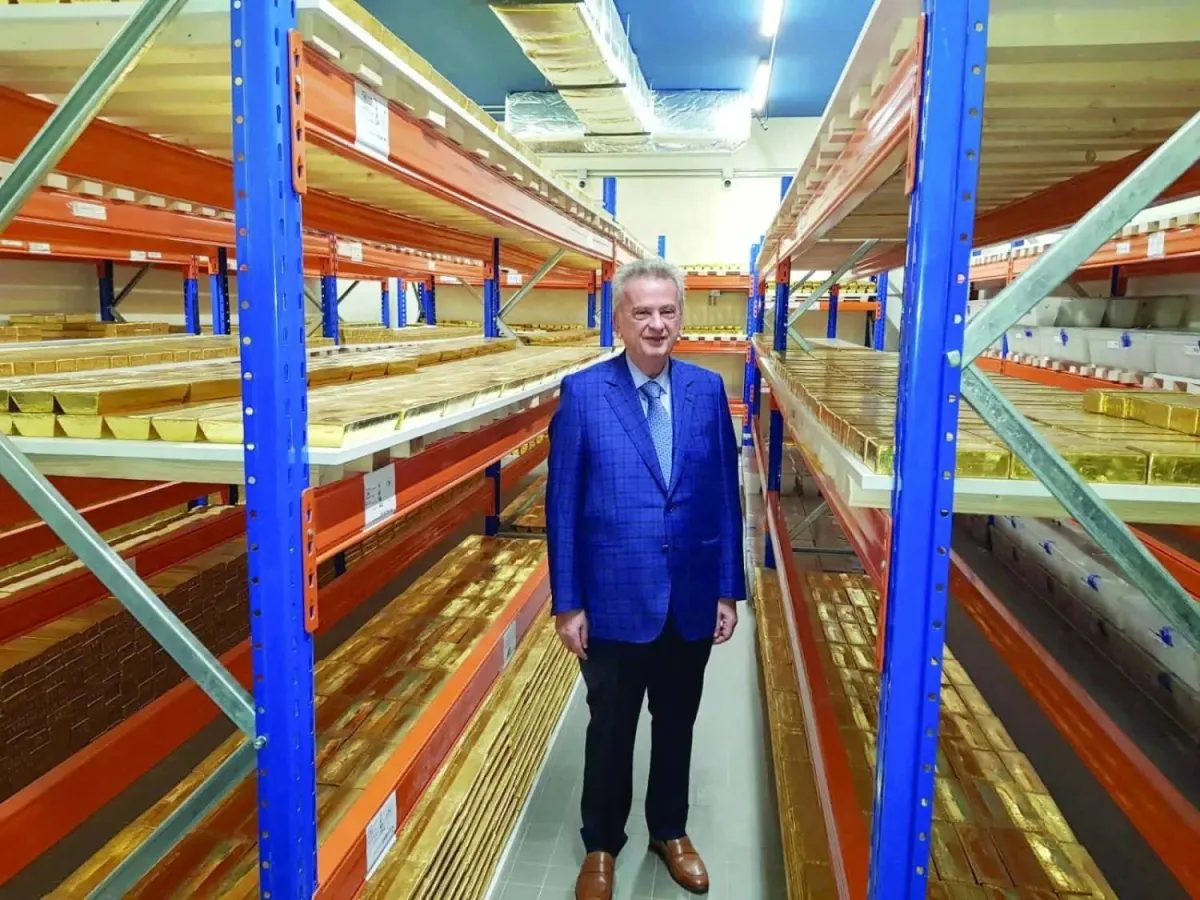
| | - Salameh caught at the hospital: Update: After a city-wide manhunt, security forces detained former central bank governor Riad Salameh at Bhannes Hospital in Mount Lebanon, where he'd checked in claiming a medical emergency — a claim prosecutors had already rejected. Co-defendant and former Bank Audi Chairman Samir Hanna appeared voluntarily and was released on $1 million bail.
- 700 tons and a castle: Israel detonated roughly 700 tons of explosives near Beaufort Castle in southern Lebanon, destroying what it described as a Hezbollah tunnel network; the blasts registered as a magnitude 3.8 earthquake and sent silica dust across Arnoun and Al-Shaqif — one week after the castle was added to UNESCO's World Heritage in Danger list.
- Lebanon eyes a US flight deal: Lebanon's transport sector is forming a committee to negotiate a new air transport agreement with the United States, in coordination with the US Department of Transportation; the committee will visit Washington in the coming weeks, while a US delegation is expected to visit Beirut soon for a field and security assessment of the airport.
- Baghdad tried, Beirut said no: Iraqi officials recently proposed hosting a direct Hezbollah-US meeting on Iraqi soil, but Hezbollah rejected the offer on principle — and pointed Washington back to Speaker Nabih Berri, whom the party has long designated as its channel for any American engagement.
- Drones go to sea: An Israeli security think tank warned that Hezbollah's naval unit may adapt Ukraine's tactic of launching FPV drones from light boats to target Israeli offshore gas platforms like Karish and Leviathan — a scenario Israeli military circles are now factoring into their defensive planning.
|
|
| ─ | Parallel Rate | 89,550 LBP | 0.00% | | ─ | Official Rate | 89,500 LBP | 0.00% | | ▼ | Gold | $4,098.6 | -0.04% | | ▼ | Bitcoin | $63,004 | -1.88% | | ▲ | S&P 500 | 7,489.72 | +2.37% |
as of 3:04 AM GMT · Source: lbprate, BDL, Yahoo Finance, CoinGecko |
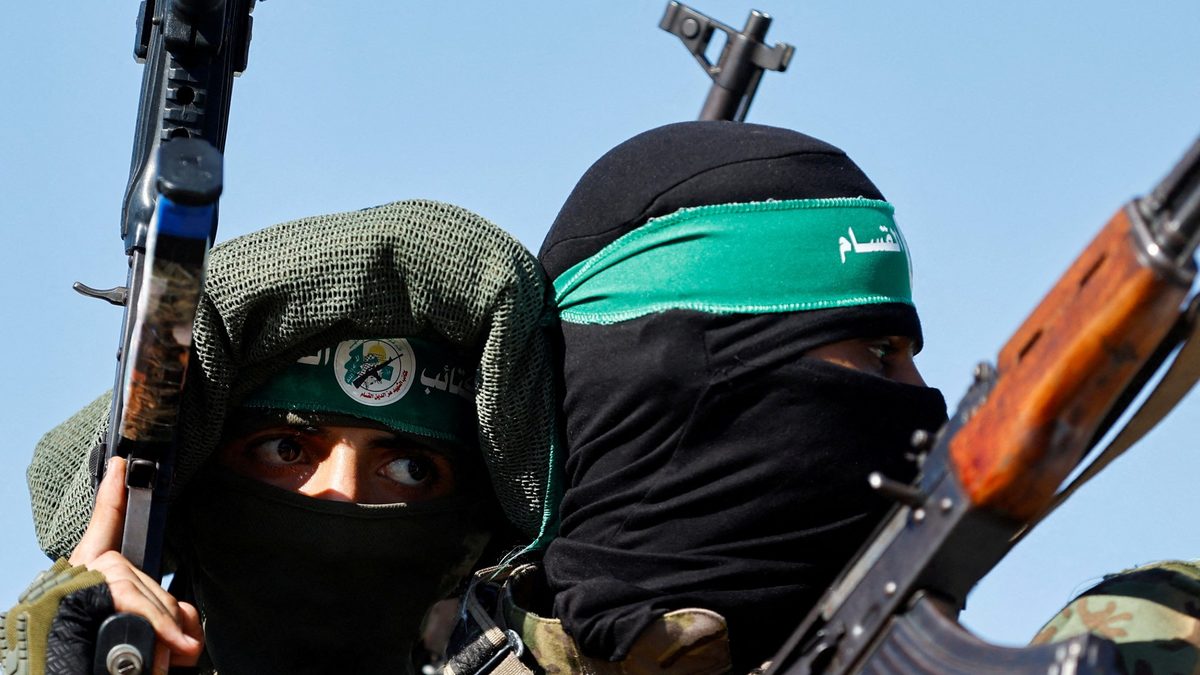
| | Hamas Agrees to a Gaza Disarmament Framework — Here's What the Deal Actually SaysAfter months of negotiations, Hamas has formally agreed to a detailed peace framework drafted with Trump's Board of Peace — one that commits to disarming before Israeli forces withdraw from Gaza. The full draft, obtained and published by Middle East Eye, reveals a far more complex process than any single headline can capture.
- Heavy weapons, tunnels, and weapons depots will be inventoried and stored under a new National Committee for the Administration of Gaza, in a phased process tied to an agreed timeline to be finalized within 14 days.
- No weapons will be surrendered to Israel or any non-Palestinian party; the National Committee alone will retain control at the process's conclusion.
- An International Verification Committee will certify each phase before the next begins — meaning no Israeli withdrawal happens without verified disarmament first.
- The plan commits to a "credible political path" toward Palestinian self-determination and statehood, though no timeline for that is specified.
What to watch: The verification mechanism is the load-bearing wall of this entire agreement — if the International Verification Committee stalls or disputes arise over compliance, the phased withdrawal framework could unravel before it begins. Lebanon Ranks Second Globally in Healthcare Workers Killed Since 2021Palestine leads the grim list of countries where healthcare workers have been killed in conflict over the past five years — but Lebanon sits in second place with 569 deaths, a figure that the Guardian's Beirut-based correspondent says reflects a "consistent" pattern across Israel's last two wars in the country.
- Since fighting escalated again this March, at least 135 Lebanese medics have been killed, with nearly 400 others injured; the combined toll across both the 2024 war and the current conflict accounts for the majority of that 569 total.
- "Double-taps" are a recurring pattern: an initial strike, then a second strike targeting arriving paramedics; in April, one incident in Mayfadoun escalated to a quadruple strike, killing 4 medics and wounding 6.
- MSF legal expert Natasha Sax notes the legal framework is not the problem — the Geneva Conventions, signed by every recognized state, are unambiguous. "The issue is a lack of will to implement it."
- Globally, healthcare attacks have more than doubled since 2021, per WHO data.
The bigger picture: A decade after the UN Security Council unanimously condemned impunity for attacks on medical facilities, the pattern has worsened — from condemnation to normalization, in Sax's words. Around 60,000 People Crossed Into Spain's Ceuta in a Single Day — Overwhelming the EnclaveSpain's tiny North African enclave of Ceuta, home to roughly 85,000 people, was overwhelmed on Thursday when an estimated 60,000 people crossed the border from Morocco in a matter of hours, the largest breach of its kind since a 2021 crisis. At least 18 people were killed in the chaos.
- Spanish Prime Minister Pedro Sanchez, who arrived in Ceuta on Friday, attributed the surge to human traffickers who spread a deliberate misreading of a recent Supreme Court ruling on sea arrivals.
- France and Italy announced temporary border checks with Spain; Italian Prime Minister Giorgia Meloni called for Spain's Schengen membership to be suspended.
- Ceuta's migrant reception center was completely overwhelmed, and border police shifted focus from enforcement to humanitarian response.
Zooming out: The crisis lands at a moment when Europe's migration politics are already inflamed, and the speed with which Italy and France moved to tighten their own borders shows how quickly a single border event can ripple across the continent's political landscape. |
|
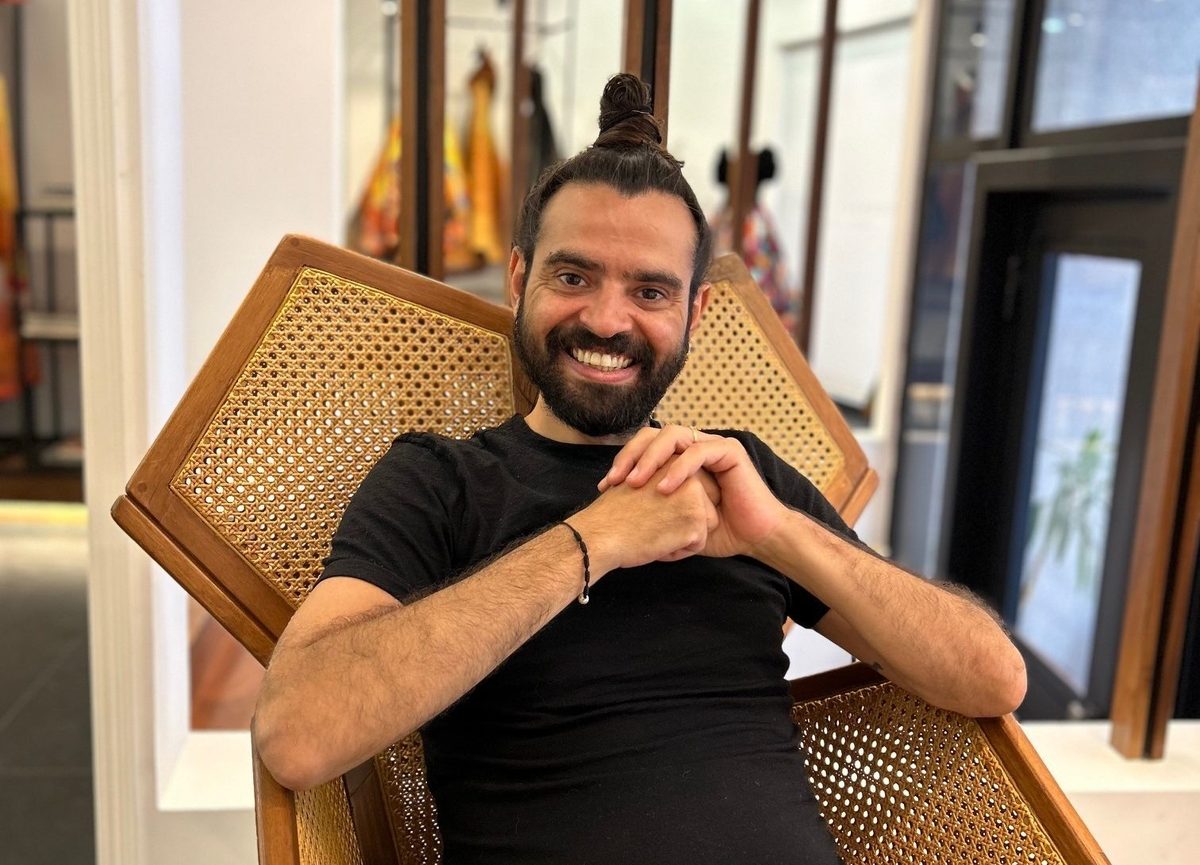
| | - Stitched from scratch: Lebanese couturier Georges Saade creates every fabric by hand — pulling threads, hiding internal supports, layering up to 60 different techniques into a single piece — and his dream client is Fairuz, naturally. The Baabda-born designer spoke about family, craft, and why Europe would panic if Lebanon's electricity tricks didn't exist.
- Fourth in the world: Ahmad Matar, a student at the Lebanese University's Faculty of Engineering, placed fourth globally in the Microsoft Excel 365 Apps category at the Microsoft Office Specialist World Championship 2026, held in California between July 26 and 29 — after finishing first at the national level to earn his spot.
- Mountain women, center stage: Lebanese actress Jana Abi Murshid performs her solo show "My Mother and Her Friends" — reviving the voices, laughter, and stories of Druze women from her childhood — with the production heading to the National Library in Baakleen this Saturday evening at 6 PM, after its Beirut premiere.
- Come back story of the year: Georgia Hunter Bell, who retired from running in her mid-20s and was working in tech just two years ago, won Commonwealth Games 800m gold in Glasgow on Friday night, completing a set that now includes Olympic, World, European, and Commonwealth medals.
|
|
Go enjoy your Saturday — Sobhiye will be here Sunday morning with fresh coffee and everything you missed. |
Lebanon first competed at the 1948 London Olympics. |
Lebanon news, every weekday morning. Free, sharp, ~5 minutes. |
|
|
|
|