|   | Shou el akhbar — a banker's dinner photo, a deep dive into Lebanon's murky treason laws, and army engineers defusing the south one weapons cache at a time. The Sehnaoui-Netanyahu story just got a century's worth of uncomfortable context, the legal question of whether meeting an Israeli is actually a crime turns out to have no clean answer, and Lebanon's army is quietly doing both peacekeeper and road crew in the Tyre district. Pull up a chair. |
|
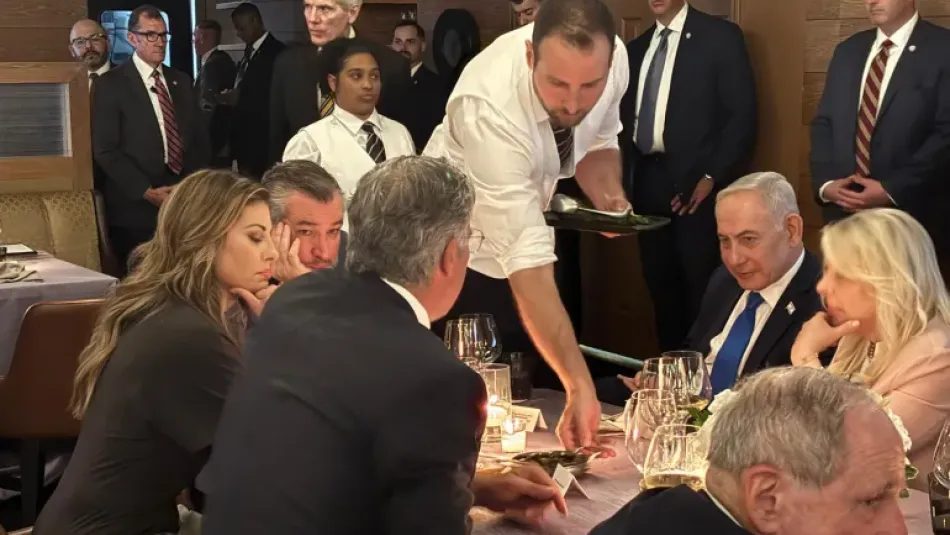
| | Sehnaoui's Netanyahu Photo Has Roots Running Deep in Lebanese HistoryThe storm over Lebanese banker Antoun Sehnaoui dining with Benjamin Netanyahu hasn't faded — it's gotten a fuller backstory. A new analysis traces how Lebanese political figures across every sect have sought Israeli ties since before 1948, putting Sehnaoui's Washington dinner in a far longer and more uncomfortable lineage.
- Documents published by Haaretz confirm Israel's ties with certain Lebanese parties date to the 1950s, including weapons allegedly transported via an Iranian plane to support right-wing factions during the 1958 war.
- Bachir Gemayel met Ariel Sharon 12 times — one famously over 12 plates of hummus at Al Bustan restaurant — while Dany Chamoun visited Yitzhak Shamir in Israel in August 1983.
- Sehnaoui is alleged to fund pro-normalization media campaigns; his photo emerged while Lebanon-Israel negotiations remain active and after President Aoun refused to meet Netanyahu despite US pressure.
- Walid Jumblatt himself admitted to meeting Shimon Peres in Moukhtara, initially framed under a Socialist International pretext.
The bigger picture: Sehnaoui's photo lands differently because it's specifically Netanyahu — but the historical record shows Lebanese leaders across the political spectrum have navigated Israeli relationships for decades, making the outrage as selective as it is genuine. Is Meeting an Israeli Actually a Crime? Lebanon's Law Is Murkier Than You ThinkLebanon is technically still in a state of hostility with Israel — but what that means legally for individual Lebanese who meet, interview, or dine with Israelis is far less clear-cut than the public fury suggests.
- Lebanese law doesn't have a single crime called "communication with Israel" — Article 275 of the Penal Code punishes contact with enemy forces only when the intent is to assist them, while Article 285 targets commercial and financial dealings.
- A Court of Cassation ruling established that mere contact is insufficient for a treason conviction — criminal intent and proof of assistance to the enemy must both be demonstrated.
- An informed European diplomatic source noted that Article 12 of the Framework Agreement already calls for communication between Lebanese and Israeli individuals and delegations, and that Lebanese military delegations have held direct talks — including a joint dinner — with Israeli counterparts at the Pentagon.
- Legal experts say the 1955 Boycott of Israel Law's broad phrase "any other dealing" leaves definition to interpretation, creating selective enforcement rather than consistent justice.
What to watch: With Lebanon-Israel talks advancing toward a potential peace framework, the legal grey zone around individual contact is likely to force a legislative reckoning — either through deliberate reform or through test cases that expose the law's inconsistencies. Lebanon's Army Engineers Clear Hezbollah Weapons — and Rebuild the Roads Israel CutDeep in the valleys of the Tyre district, Lebanese army engineers have been doing two jobs at once: seizing hidden weapons caches left over from the war, and rebuilding the roads Israel deliberately severed to cut Hezbollah's supply lines.
- Working without coordinates or maps, the Engineering Regiment swept river valleys meter by meter through rocks and dense vegetation, seizing thousands of weapons, ammunition, shells, grenades, and rockets — added to those already collected since the 2024 ceasefire.
- The unit destroyed some weapons on-site; others were transferred to army-designated storage or confiscated for the Lebanese army's own use.
- Near the damaged Tayr Felsay bridge, engineers opened a flooded dirt road and built a crossing so residents could move freely between the two riverbanks — a mission the report calls "purely humanitarian."
Why it matters: The operation captures the Lebanese army's dual mandate in the south right now — disarming the landscape while literally reconnecting communities that the war physically cut off from each other. |
|
as of 3:30 AM GMT · Source: Polymarket |
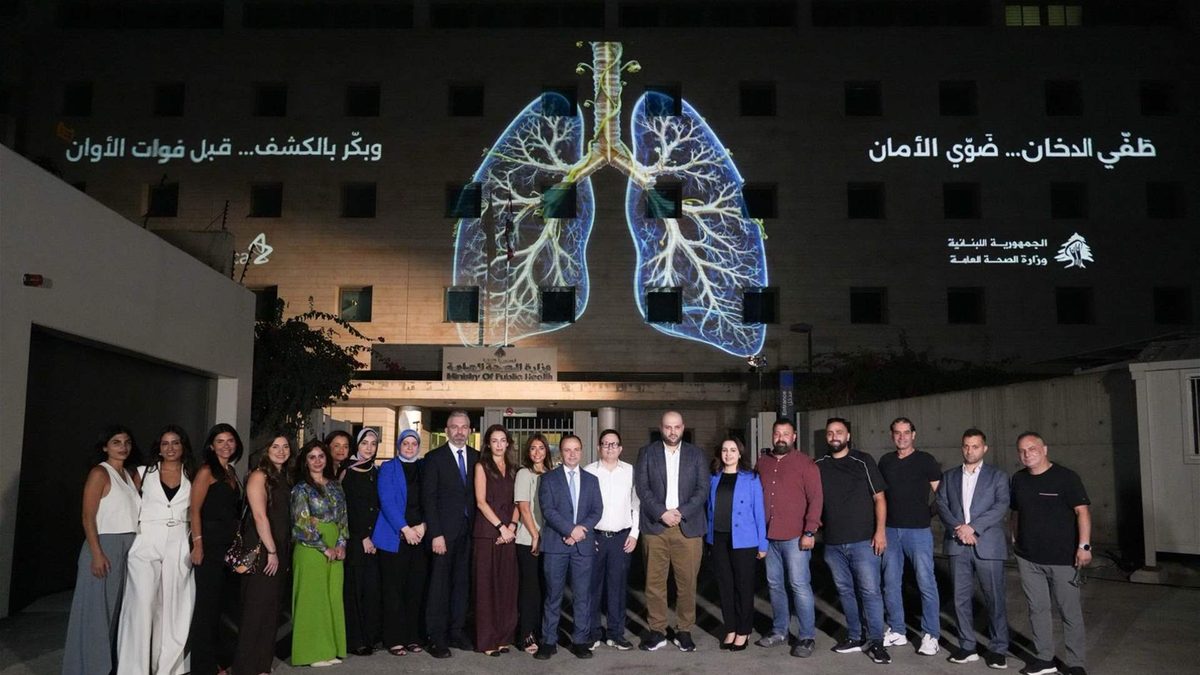
| | - 35% of teens smoke shisha: Lebanon's Health Ministry launched a national lung cancer awareness campaign on World Lung Cancer Day, warning that many adolescents smoke cigarettes and shisha, while the Ministry's building was lit up with 3D projection to drive the message home.
- Lebanon's postwar blueprint, unveiled: Social Affairs Minister Haneen Sayed presented the government's post-war recovery plan at the Grand Serail to ambassadors, UN agencies, and development partners, linking displaced persons' return, humanitarian aid, and reconstruction around a unified state-led framework — a plan developed under PM Nawaf Salam's government as Lebanon tallies more than 1 million displaced and over 450 killed since March.
- Tehran's shadow, still above Shaqif: Israel's army raised its alert level fearing an Iranian response after the Shaqif tunnel demolition — new reporting in Maariv reveals Netanyahu held off on approving the blast for about a month due to Iranian pressure on Washington, which then pressured Israel to stand down before he ultimately gave the go-ahead.
- Pack your bags, maybe: The US Embassy in Beirut — still on ordered departure status — joined missions in Amman, Jerusalem, Muscat, and Baghdad in urging American citizens to "consider departing" the Middle East, warning of potential flight cancellations, airspace closures, and an "unpredictable" Iranian regime capable of striking without warning or provocation.
- Heat wave + dry brush = danger: Lebanon's Ministry of Agriculture issued urgent guidelines as a heat wave expected to last until mid-August grips the country, warning farmers against spraying pesticides, urging municipalities to keep firefighting helicopters on standby, and reminding drivers not to throw cigarette butts from windows — because apparently that still needs saying.
|
|
| ─ | Parallel Rate | 89,600 LBP | 0.00% | | ─ | Official Rate | 89,500 LBP | 0.00% | | ▲ | Gold | $4,107 | +0.17% | | ▲ | Bitcoin | $63,379 | +0.59% | | ▲ | S&P 500 | 7,489.72 | +2.37% |
as of 3:02 AM GMT · Source: lbprate, BDL, Yahoo Finance, CoinGecko |
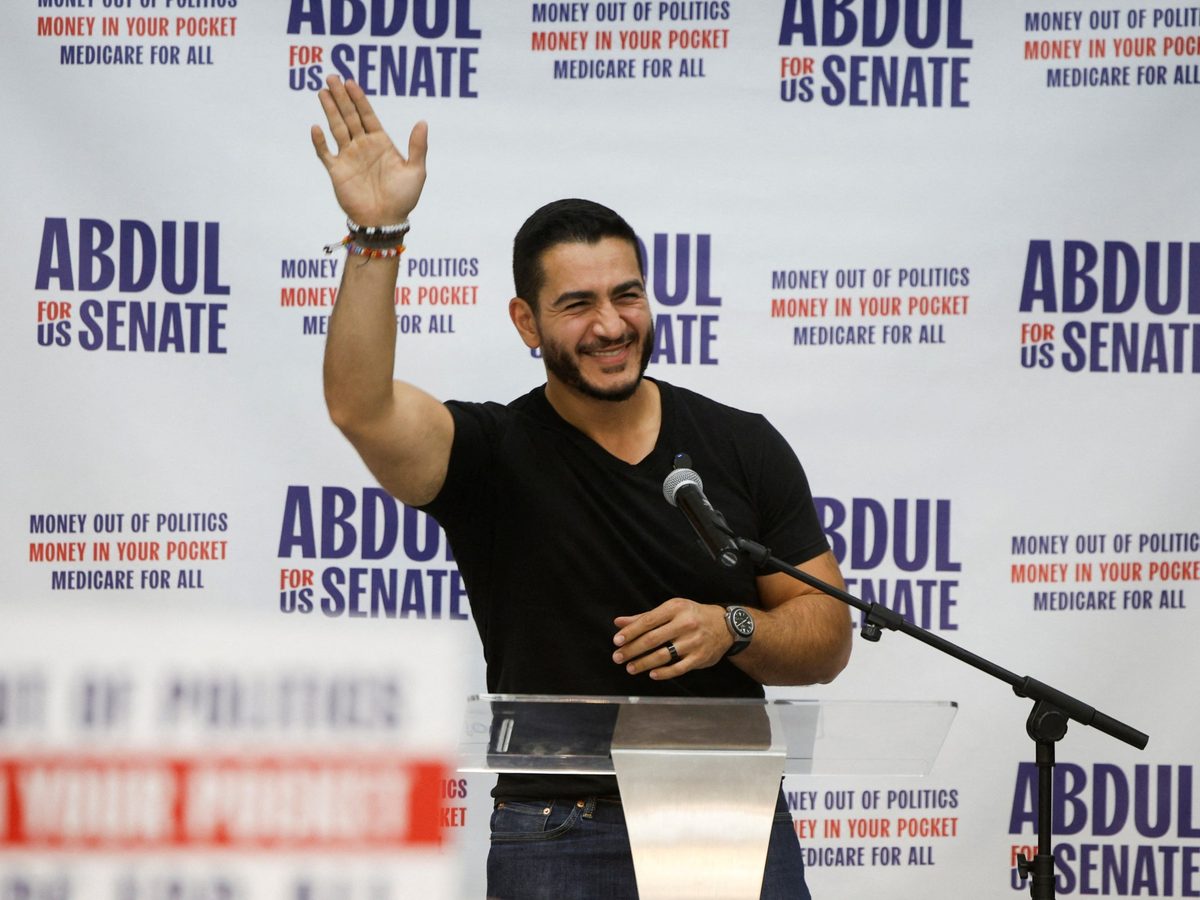
| | Arab American Doctor Takes on AIPAC in Michigan's Most-Watched Senate RaceAbdul El-Sayed, a physician of Egyptian descent born and raised in Michigan, is running for the US Senate on a platform opposing American support for Israel's wars — and pro-Israel group AIPAC has responded by pouring more than $50 million behind his Democratic primary opponent, Congresswoman Haley Stevens.
- El-Sayed has drawn backing from Senator Bernie Sanders and Congresswoman Alexandria Ocasio-Cortez, while Stevens — staunchly pro-Israel — holds endorsements from Michigan Governor Gretchen Whitmer and Senate Minority Leader Chuck Schumer.
- At a Dearborn rally held at the Bint Jebail Cultural Center, speakers drew direct lines between the Michigan race and the levelling of Lebanese border towns — Bint Jbeil among them — by Israeli forces, drawing tears and boos from the crowd.
- The Republican National Senatorial Committee responded by sharing a video of El-Sayed simply stating his full name, a tactic his supporters called bigotry — he was born and raised in Michigan.
What to watch: The Michigan primary result will be read as a bellwether for how much the Arab American vote — and broader Democratic unease over US foreign policy — can shift establishment-backed races in 2026. Europe Is on Fire — Literally — and the Reasons Run Deeper Than a Heat WaveSpain, France, Greece, and Sweden are all battling extraordinary wildfires this summer, with Spain alone burning through more than 200,000 hectares already this year — twice the historical average — and the Burgohondo fire complex becoming the largest wildfire in Spain's recorded history at over 135,000 acres.
- In Greece, a fire near the coastal village of Agios Vasileios — with winds up to 130 kilometres per hour — reached the sea, damaged homes, and killed three firefighters, while more than 70 locations across the country were affected in a single week.
- A conflagration west of Bordeaux, France, described as four times the size of Paris, prompted the largest peacetime evacuation in French history: 220,000 people.
- Experts point to decades of rural land abandonment, plantation monocultures, and under-investment in prevention — with Spain spending roughly 78% of its fire budget on suppression versus only 22% on prevention.
- Fast-growing tree plantations of pine and eucalyptus, covering some 4 million hectares afforested in Spain since the 1940s, have transformed broken landscapes into continuous fuel loads.
The bigger picture: Scientists say this isn't just climate — it's also a structural collapse of rural life across Mediterranean Europe, where abandoned farmland and monoculture forests are creating fire conditions that suppression teams simply can't outrun. Taiwan's Economy Is Growing at a Rate That Makes Everyone NervousTaiwan's GDP grew 12.92% in the second quarter of 2026, extending a streak fuelled almost entirely by its dominance in AI chips — the island produces roughly 90% of the advanced semiconductors powering leading AI models worldwide.
- Taiwan's stock exchange has soared to become the fifth largest in the world by market capitalisation, overtaking the UK, Canada, and India, while US imports from Taiwan reached $201bn last year — nearly double the $116bn imported in 2024.
- TSMC alone accounts for up to 40% of Taiwan's stock market and 4% of its GDP growth, while the entire chip industry employs at most 350,000 people — a narrow base for an island of millions.
- Taiwan's trade surplus with the US is approaching $200bn, a figure that analysts say could prompt Trump to renegotiate existing agreements.
Zooming out: Taiwan's AI-driven boom is real, but its concentration in a single sector, an ageing population, and a trade surplus that has caught Washington's attention all point to fragilities that the headline GDP numbers don't fully capture. |
|
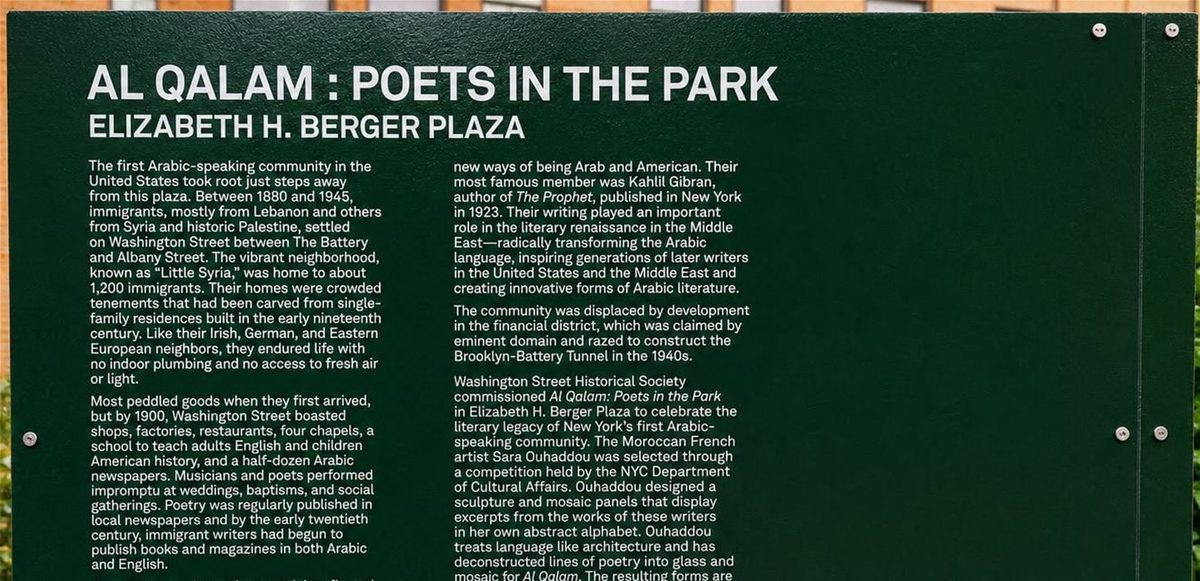
| | - Gibran gets his name back: The identification plaque on "The Pen" monument in New York City has been corrected to properly affirm the Lebanese identity of writers Gibran Khalil Gibran, Mikhail Naimy, Ameen Rihani, and Elia Abu Madi — a win the Lebanese-American Association for Democracy called an affirmation of Lebanon's intellectual and literary legacy in the world.
- 100 years, 4 stamps: The Automobile and Touring Club of Lebanon — founded in 1919 and now celebrating its centenary — unveiled four commemorative postal stamps issued by the Ministry of Telecommunications in partnership with LibanPost, making Lebanon only the second country after Monaco to issue official stamps for an automobile club, with the FIA logo appearing on a national stamp for the first time in history.
- Oleg has entered the chat: Meet Lebanon's only Borzoi — a 10-month-old Russian sighthound named Oleg who arrived in Beirut in January from a breeder in Krasnodar, complete with an international pet passport and an official pedigree, and now spends his Saturdays collecting treats and belly rubs at Souk El Tayeb.
- Love Island's loss, boxing's gain: Northern Irish boxer Jon McConnell, 23, turned down a spot on Love Island to train in Glasgow — a decision that paid off when he won Commonwealth gold in the men's 70kg final on Saturday via split decision, fulfilling a goal he'd written down on December 28 and chased since the age of eight.
|
|
That's your Sunday briefing — share it with whoever sent the most voice notes in the family group chat this morning. |
Sidon has a museum dedicated to traditional soap making. |
Lebanon news, every weekday morning. Free, sharp, ~5 minutes. |
|
|
|
|