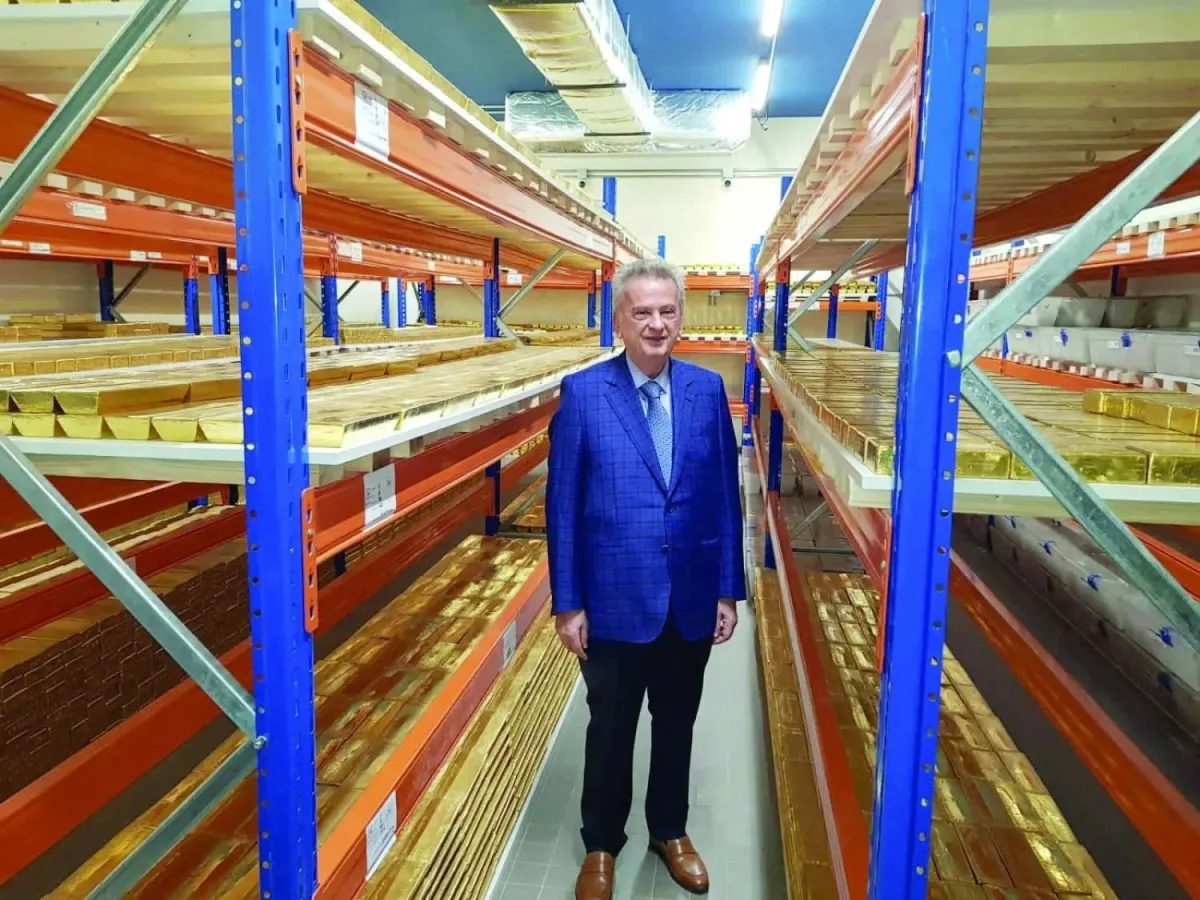
|   | Bonjourein. Welcome to your Sunday edition of Sobhiye — a look back at a week that Lebanon will not forget quickly. The biggest story: former central bank governor Riad Salameh was finally detained, found hiding inside a hospital after a dramatic manhunt. Meanwhile, a UN flash update confirmed 375,000 people remain displaced by the war, with full Israeli withdrawal still far off — and a separate study found that even those who did return south came home to damaged houses, absent services, and packed bags sitting by the door. A heavy week. Let's walk through it. |
|
Which Beirut hospital's chemotherapy ward is featured in the investigation into Lebanon's rising cancer rates? | American University of Beirut Medical Center |
| | Rafik Hariri University Hospital |
| | |
Scroll to the bottom for the answer — or play all 10 at sobhiye.news/games/news-quiz |
| | - Salameh Finally Caught: Former central bank governor Riad Salameh was detained Friday inside Bhannes Hospital after a dramatic manhunt. Security forces found him there after he submitted a medical excuse, then failed to appear for questioning — and wasn't found at any of three properties searched. The case stems from serious suspicions about financial mismanagement during the post-2019 crisis.
- Displacement Crisis Deepens: A UN flash update found at least 375,000 people still displaced by the war. The total death toll reached 4,329, including 253 children, with 12,233 injured. Pilot-zone disarmament operations only recently began, and full Israeli withdrawal remained far off, leaving mass return timelines deeply uncertain.
- Turkey Wants In on Security: President Erdogan announced Thursday, alongside visiting Lebanese President Aoun in Ankara, that Turkey wanted to participate in any security initiative replacing UNIFIL when the 7,500-member UN force expires at year's end. France and Italy also expressed interest, but the form of a successor force — UN-mandated or otherwise — remained unresolved.
- Reconstruction Without Aid: Finance Minister Yassine Jaber confirmed this week that Lebanon's post-war rebuilding would be funded through private investment and public-private partnerships, not donor grants. He outlined plans for an Iraq pipeline branch, a Beirut-Bekaa rail tunnel, and fiber-optic infrastructure — framing Lebanon as a regional logistics hub, contingent on stability.
- Compensation Still Frozen: Neither Hezbollah nor the Lebanese state had paid any war compensation to affected residents as of this week, sources confirmed. Analysts pointed to a deepening financial squeeze on Hezbollah; the state cited lack of funds. Damage surveys continued, but thousands in the southern suburbs and Nabatieh were still waiting with no timeline given.
- Lebanon's Cancer Emergency: A major investigation revealed Lebanon has the world's fastest-rising cancer rates, with cases up 162% and deaths up 80% between 1990 and 2023, per The Lancet. Smoking remains the primary driver, but war disrupted treatment for hundreds of patients — with 15% of cancer-treating hospitals rendered inoperable by Israeli strikes.
- Biometric Passport Controversy: Lebanon's General Security invalidated roughly 120,000 still-valid non-biometric passports issued during the 2021–22 crisis, requiring holders to pay full fees again before an October 1 deadline. An investigation published Tuesday raised sharp questions about who owns collected biometric data and whether Lebanon's systems are secure enough to protect it.
- UNESCO Heritage Win: A UNESCO committee voted Friday to inscribe five Crusader castles in southern Lebanon's Mount Amel area — including Beaufort Castle, directly struck by Israeli forces in May — on both the World Heritage List and the List of World Heritage in Danger. Tyre was also added to the danger list, citing ongoing bombardment threatening its ancient ruins.
- Captagon Network Dismantled: The Lebanese Army's intelligence directorate dismantled 50 Captagon factories and 14 fixed distribution points in Baalbek-Hermel, seizing over $1 billion in drugs and equipment. The crackdown achieved a reported 70% decline in trafficking — including busting novel "flying factories" hidden inside moving trucks and pickup vehicles.
- South's Suspended Return: A study by the Arab Center for Research and Policy Studies, based on 64 returnees across eight focus groups, found that going home to southern Lebanon didn't mean stability. Families returned to damaged homes, absent services, and ongoing security fears, with many keeping packed bags ready — suspended between displacement and genuine recovery.
|
|
That's your week wrapped. Enjoy the rest of your Sunday — we'll be back in your inbox tomorrow. |
Lebanon news, every weekday morning. Free, sharp, ~5 minutes. |
|
|
|
|