|   | It's August in Lebanon, which means the pools are packed, the heat is punishing, and apparently the water might also be trying to kill you — Marhaba, and welcome to Monday. Overnight, we've also got Israel quietly building what looks like a permanent footprint in southern Lebanon, and the Ministry of Economy taking a hammer to an insurance law older than the Apollo program. Big week already. |
|
| | Lebanon's Insurance Sector Gets Its First Real Overhaul Since 1968Lebanon's insurance industry has been running on a legal framework written before the moon landing — and with banks still in crisis and public institutions barely functioning, the sector has quietly become the country's last working financial safety net. The Ministry of Economy just unveiled a plan to finally fix it.
- Economy Minister Amer Bisat presented a three-pillar reform strategy at Université Saint-Joseph: restore capital adequacy for insurers, strengthen regulatory oversight, and contain runaway healthcare costs.
- The scale of the collapse is stark: annual life insurance premiums have fallen from $550–600 million before the financial crisis to less than 5% of that volume, leaving policyholders unable to recover their funds.
- An advisory firm is already engaged on market structure reforms, with completion expected by mid-2027; a broker regulation decree is due by end of summer 2026.
- The ministry also plans to replace the outdated 1968 Code des Assurances with a modern Insurance Code embedding consumer rights, governance rules, and a resolution framework for failing insurers.
Why it matters: With banks paralyzed and the state hollowed out, the insurance sector is now a load-bearing pillar of Lebanon's financial architecture — which makes its 58-year-old legal foundation a problem that can't wait much longer. Israel's "Yellow Line" in Southern Lebanon: A Buffer Zone Modeled on GazaSince the ceasefire, Israel has been building something in southern Lebanon that looks a lot like what it built in Gaza — an enforced buffer zone, stripped of buildings and residents, with permanent military positions dug in up to 10 kilometers deep inside Lebanese territory.
- The Israeli army announced in April 2026 that it had established a "Yellow Line" in southern Lebanon, covering an area that includes 55 Lebanese villages whose residents are barred from returning.
- The zone is divided into three layers: a "Red Line" of destroyed border villages with permanent Israeli positions, the Yellow Line extending up to 10 km into Lebanese territory, and a Litani Line targeting Hezbollah activity north of the river.
- Israel is building approximately 20 new advanced military positions inside Lebanese territory; Israeli Defense Minister Israel Katz described the zone as stretching from the Mediterranean coast to Mount Hermon.
- The analysis traces this strategy back to Israel's 1978 "Security Belt" in southern Lebanon, arguing the buffer-zone model follows a consistent historical pattern of displacement followed by permanent military entrenchment.
Zooming out: The same buffer-zone logic applied in Gaza — displacement, infrastructure destruction, permanent military presence — is now being documented in southern Lebanon, raising hard questions about what any future withdrawal agreement would actually require Israel to undo. Lebanon's Pools Are Making People Sick — and Nobody's CheckingDozens of Lebanese fleeing a brutal heatwave ended up in hospitals instead of heading home refreshed, after swimming in pools that may not have met basic health standards. A public health doctor is now warning that chlorine alone is not the safety guarantee most people assume it is.
- The most commonly transmitted pathogens in contaminated pools include E. coli, Salmonella, Norovirus, and Cryptosporidium — the last of which is resistant to chlorine and can survive in water for days even when basic sterilization is applied.
- Symptoms including abdominal cramps, frequent diarrhea, nausea, and fever can appear within hours or be delayed by several days, making it difficult to immediately link illness to a specific pool visit.
- Children, the elderly, pregnant women, and immunocompromised individuals face the highest risk of complications, including severe dehydration.
- The doctor calls for mandatory daily records of chlorine and pH levels, regular microbial water sampling, and immediate action against non-compliant pools — none of which appears to be systematically enforced right now.
What to watch: Whether Lebanon's health authorities move to enforce pool safety standards proactively — or wait for a larger outbreak to force the issue — will say a lot about where public health enforcement actually stands post-crisis. |
|
as of 3:17 AM GMT · Source: Polymarket |
"De2 el may may" is used when: | Teaching fails repeatedly |
| | | |
Scroll to the bottom for the answer — or play all 10 at sobhiye.news/games/trivia |
| | - Heatwave's exit plan: Update — the brutal 40°C stretch is nearly over: the Meteorological Department now forecasts hot air masses receding Tuesday, with temperatures returning to seasonal averages by Wednesday. Hold out one more day.
- $600M, not promises: Finance Minister Yassine Jaber says the government has secured between $500 million and $600 million for immediate post-war emergency relief, covering transitional housing, infrastructure repairs, and road clearance — a far cry from the empty treasury of 2024.
- Five soldiers, one mystery: Five Lebanese Army soldiers were wounded in Bint Jbeil after a "suspicious object" exploded near their vehicle; the army issued two conflicting statements on the cause, and an investigation is ongoing ahead of Monday's Lebanon-Israel talks in Rome.
- Hijab at the gate: A viral video shows a veiled woman barred from Byblos's public beach for not wearing a bikini — a municipality decision with no legal basis, reigniting a raw debate about Lebanon's deepening sectarian and cultural geographic divides.
- The $225 bail problem: Rabih al-Tawil, charged under Lebanon's Weapons Law for allegedly importing drone components for Hezbollah via a Europe-spanning procurement network, was released on bail of 20 million LBP (about $225) — leaving the French investigation and the question of where those "toy motors" actually went wide open.
|
|
| ─ | Parallel Rate | 89,550 LBP | 0.00% | | ─ | Official Rate | 89,500 LBP | 0.00% | | ▲ | Gold | $4,121.2 | +1.78% | | ▼ | Bitcoin | $63,080 | -0.48% | | ▲ | S&P 500 | 7,489.72 | +2.37% |
as of 2:59 AM GMT · Source: lbprate, BDL, Yahoo Finance, CoinGecko |
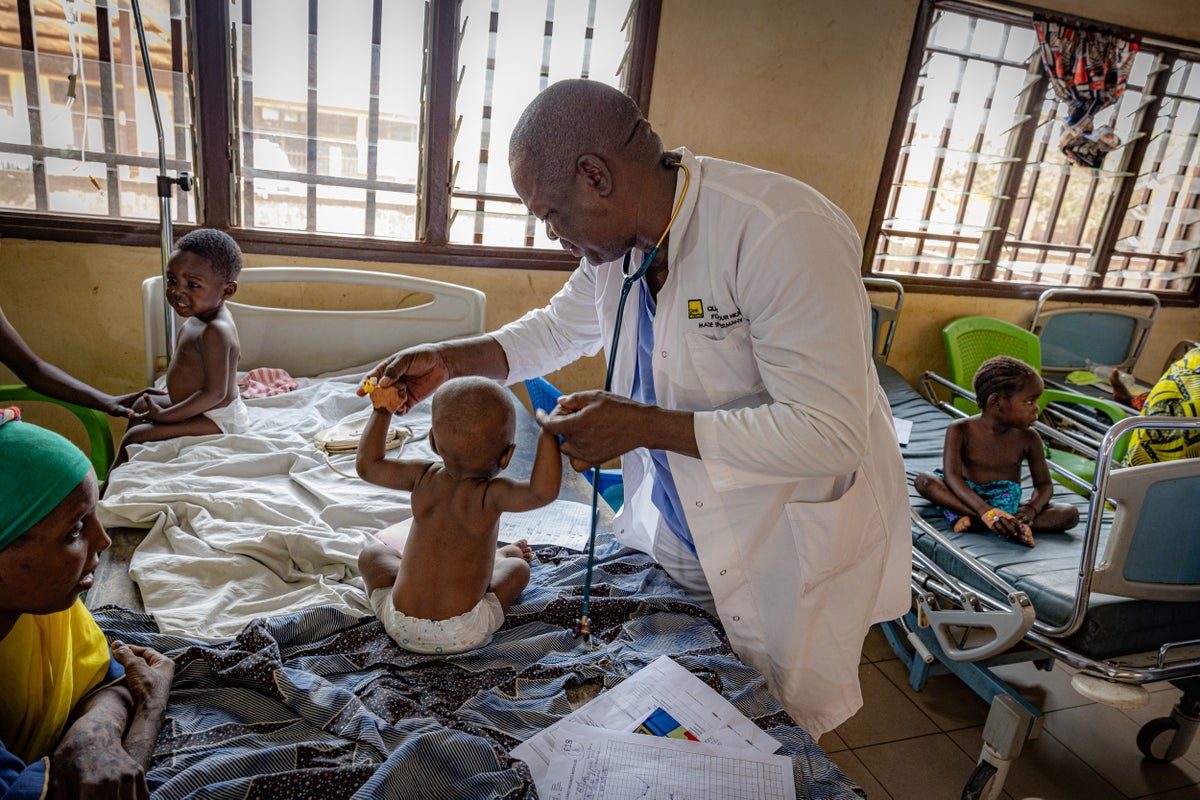
| | Aid Cuts Are Killing Newborns — The Numbers Are Now InWhen the US dismantled USAID in early 2025 and the UK followed with its own cuts, health experts warned of a coming catastrophe in sub-Saharan Africa. The data is now here, and it's worse than the warnings.
- Neonatal mortality among refugee women across 20 sub-Saharan African nations rose by 81% between 2025 and 2026, from 3.1 to 5.6 deaths per 1,000 live births, according to UNHCR data covering more than 3 million women.
- Deaths within the first year of life jumped 111%; mortality for children under five rose 50%.
- More than 11 million people lost access to sexual and reproductive health services; nearly 1,100 UNFPA health facilities and mobile clinics have closed, and almost 6,000 healthcare workers lost their jobs.
- In Nigeria alone, 386 health facilities closed during 2025 and early 2026, cutting off care for around 380,000 people.
The bigger picture: Global maternal mortality had fallen 40% over two decades before aid cuts reversed the trend — a generation of hard-won progress now at risk of unraveling faster than it was built. US Treasury's Yen Plan, Accidentally Made PublicA Reuters photographer at a Camp David cabinet meeting captured US Treasury Secretary Scott Bessent's handwritten to-do list — including a note to buy billions of dollars worth of Japanese yen. Currency markets moved. Transparency was not the goal.
- The notepad, photographed over Bessent's shoulder at 11:33 AM local time, read "Buy Japanese Yen (JPY) $5-10 bil" — a planned market intervention not yet publicly announced.
- The Financial Times later reported the Federal Reserve Bank of New York sold euros to buy yen on behalf of the US Treasury that same day.
- The yen had recently touched its weakest level since 1986; the dollar dropped roughly 0.8% against it during Friday afternoon trading.
- The last time the US intervened to prop up the yen was 2011, in a coordinated G7 action following Japan's earthquake and tsunami.
What to watch: Whether the accidental disclosure prompts any formal review of press access during cabinet meetings — and whether the yen stabilizes or requires further intervention in the weeks ahead. A Breakthrough HIV Drug Exists. Most People Who Need It Can't Get It.A twice-yearly injectable HIV prevention drug called lenacapavir could transform global public health — researchers estimate it could prevent 41% of new HIV infections in parts of sub-Saharan Africa. But the funding collapse triggered by USAID's dismantling means the people who need it most are the least likely to receive it.
- USAID had provided 73% of donor-funded HIV prevention resources globally, according to a study in the Lancet Global Health; its dissolution has gutted outreach programs worldwide.
- Lenacapavir requires only 2 injections per year, making it far more accessible than daily pills for people in remote areas or facing stigma.
- Brazil, Colombia, Mexico, Peru, and Argentina are excluded from low-cost access agreements — despite their populations playing key roles in the drug's clinical trials.
Zooming out: The Aids 2026 Conference in Rio de Janeiro heard that UNAIDS's goal of eliminating AIDS as a public health threat by 2030 now looks very difficult to achieve given the current funding environment. |
|
| | - Ansar are champions: Al Ansar lifted the Lebanese Premier League title on Sunday with victory over Nejmeh, bringing the much-delayed 2025/26 season to a close — bragging rights officially decided, family group chats officially ignited.
- Beirut's most musical streets: Beirut Governor Marwan Abboud has proposed naming a street in Ras Beirut after Ziad Rahbani and another in Ain El Mreisseh after Ahmed Kaabour — two giants whose music has been the soundtrack to every Lebanese living room, balcony, and late-night arak session.
- Summer on canvas in Jounieh: Lebanese poet, writer, and artist Charles Chahwan has an exhibition running all August at the Blue Rose gallery titled "Three in the Afternoon" — sun-drunk beach scenes painted with the loose, laughing energy of a Mediterranean noon that refuses to take itself seriously.
- Baltic Sea, conquered: Polish swimmer Bartłomiej Kubkowski became the first person ever to swim across the Baltic Sea — 160 km from Sweden to Poland in 56 continuous hours without sleep, on his fifth attempt, dedicating the feat to a foundation supporting children with cancer.
|
|
Take a breath, take a coffee — we'll be back tomorrow with everything that matters. |
| ✓A. Teaching fails repeatedly |
When teaching doesn't lead to absorption or impact, this phrase is used. |
Lebanon news, every weekday morning. Free, sharp, ~5 minutes. |
|
|
|
|