|   | Satellite images don't lie — and what they're showing in southern Lebanon right now is not a temporary military deployment. Sabah el kheir. While ceasefire talks grind through their seventh round in Rome, the ground tells a different story: new bases, new roads, and two very different Lebanese politicians arguing over who actually loves Lebanon — while Hezbollah quietly sorts its weapons into keep, relocate, and sacrifice piles. |
|
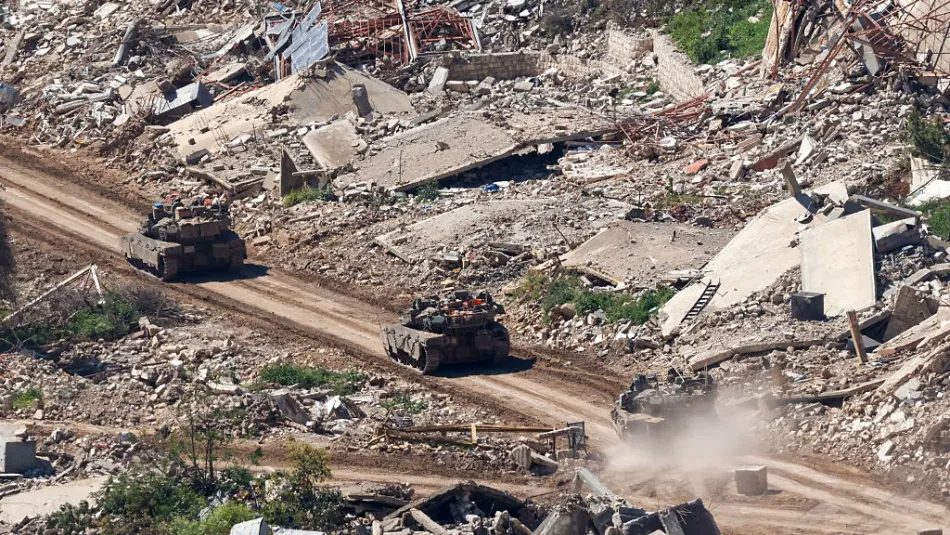
| | Satellite Images Reveal Israel Is Building a Permanent Occupation in the South — Not a Temporary DeploymentWe've reported on the demolition of Lebanese villages. Now Haaretz, citing satellite imagery, has revealed what's replacing them: a network of at least seven new military bases, tens of kilometers of military roads, and a fortified presence stretching across roughly 600 square kilometers of Lebanese territory — up to 12 kilometers deep. This isn't a field deployment anymore. It looks like infrastructure built to stay.
- The bases aren't on empty land — satellite images show some were built on the ruins of demolished Lebanese towns and civilian sites, including homes, neighborhoods, and religious facilities.
- The most striking finding: an Israeli military base now sits on the razed site of the Khiam Detention Center, with about 33 military vehicles spotted there in April images, plus fortifications and a helipad overlooking Marjayoun and the Golan.
- Independent reporting puts the total number of Israeli positions inside Lebanon at around 23 sites when smaller fortifications and sniper points are counted — far beyond the seven major bases Haaretz could clearly verify.
- All of this is happening simultaneously with Lebanese-Israeli negotiations in Rome, where Lebanon is pressing Israel to stop demolitions and expand withdrawal zones — while Israel appears to be consolidating the very infrastructure those talks are supposed to dismantle.
What to watch: Whether the Rome talks produce a binding withdrawal timetable — or whether Israel's facts on the ground harden into a permanent security zone before any deal is signed. PM Salam: The People Who Started the War Have No Right to Question Anyone's PatriotismLebanese Prime Minister Nawaf Salam went on the offensive, delivering his sharpest public rebuke yet of those who took Lebanon into war without a state decision — widely read as a direct message to Hezbollah and its allies, who have been accusing the current political leadership of failing Lebanon's sovereignty.
- Salam said those who "unilaterally drew Lebanon into futile support wars" gave Israel its greatest strategic advantage — the pretexts to attack, destroy towns, kill civilians, and displace hundreds of thousands.
- He argued that genuine national unity requires "the courage to acknowledge difficult truths" — not slogans from those who, in his words, continue trying to link Lebanon to external agendas.
- Salam reaffirmed the government's commitment to ending the Israeli occupation of all Lebanese territory, securing the return of detainees, and rebuilding displaced communities.
Zooming out: Salam's statement lands as Lebanon-Israel talks in Rome enter their seventh round, sharpening the domestic political battle over who gets to define sovereignty — and who bears responsibility for the war's cost. Hezbollah Has Sorted Its Southern Positions Into Three Tiers — and Plans to Offer Up Only the Least Valuable OnesAs the Lebanese army expands its deployment in the south and negotiations grind on, a Lebanese security source has outlined how Hezbollah has classified its remaining positions in southern Lebanon into three distinct levels — essentially a playbook for what it's willing to surrender and what it intends to protect.
- The first tier — command centers, deep tunnel networks, sensitive weapons depots, and elevated monitoring positions like Qalaat al-Shaqif and Ali al-Taher Hill — is considered irreplaceable and off-limits to army access.
- The second tier covers support infrastructure: ammunition depots, fighter accommodation points, and supply centers — movable and expendable enough that Hezbollah can hand some over while quietly relocating the contents.
- The third tier is the one Hezbollah is reportedly willing to give up entirely: old observation posts, exposed bunkers, and primitive launch platforms already known to Israeli aircraft — positions with little remaining operational value.
The bigger picture: The tiered classification suggests Hezbollah intends to manage international and Lebanese pressure by offering visible concessions at the margins, while keeping its core command-and-control infrastructure intact. |
|
as of 3:06 AM GMT · Source: Polymarket |
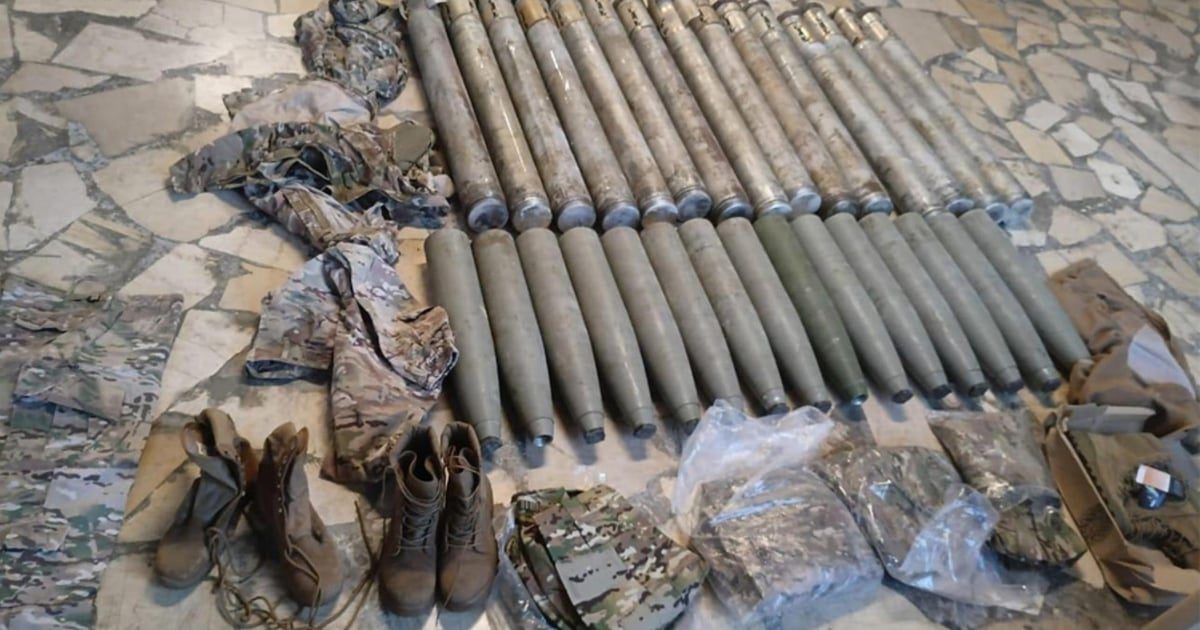
| | - Grad rockets from Syria, seized: The Lebanese army intercepted 122mm Grad rockets smuggled from Syria into the Arsal outskirts on August 3, arresting two Lebanese nationals and seizing the pickup truck used to transport them, as raids continue to round up the rest of the network.
- Hezbollah's olive branch to Damascus: Hezbollah chief Naim Qassem said Tuesday he has no objection to a public meeting with Syria's new leadership — the first such statement since his group spent years fighting to keep Bashar al-Assad in power, a regime Damascus's current rulers overthrew in December 2024.
- Bitar's verdict, 60 days out: Lebanon's Public Prosecutor's Office expects to complete its legal review of the Beirut port blast investigation within 60 to 90 days, after which Judge Tarek Bitar can issue his final decision.
- Annahar's rules for the machine: Annahar Media Group has published a formal nine-principle AI charter committing to human editorial oversight, transparent disclosure of AI-generated content, and a hard ban on fabricating quotes or impersonating real people.
- A newspaper turns 93: Founded by Gebran Tueni on August 4, 1933 — under the French Mandate, with little money and an uncertain future — Annahar marks its 93rd anniversary today, nearly a century after it became, as one contributor put it, part of the conscience of Lebanese society.
|
|
| ─ | Parallel Rate | 89,550 LBP | 0.00% | | ─ | Official Rate | 89,500 LBP | 0.00% | | ▲ | Gold | $4,169 | +3.35% | | ▲ | Bitcoin | $64,381 | +0.84% | | ▲ | S&P 500 | 7,736.52 | +3.30% |
as of 2:46 AM GMT · Source: lbprate, BDL, Yahoo Finance, CoinGecko |
| | America's Robot Soldier Startup Is Worth Over $1 Billion — and the Debate Is Just Getting StartedA San Francisco startup called Foundation Future Industries says it's the only company in the US or Europe explicitly building humanoid robots for military use. Its all-black, six-foot Phantom robot is already being tested across multiple military branches — and the ethical alarms are getting louder by the day.
- Foundation reportedly holds an estimated $24 million in defense-related contracts and is in conversations with the Department of Homeland Security about deploying robots to patrol the US-Mexico border.
- The company's Phantom robot stands roughly six feet tall, carries nearly 90 pounds, and perceives its surroundings through a full 360-degree AI-powered camera array.
- Human Rights Watch warns that a Silicon Valley "move fast and break things" approach to autonomous weapons risks catastrophic effects without proper legal safeguards.
- The UN Secretary-General has called for international law to ban "killer robots" — the Catholic Church agrees — while Foundation's co-founder says opposition to military robotics is "backwards."
The bigger picture: Drone battlefields in Ukraine and elsewhere have already shown how quickly autonomous military technology outpaces the international rules designed to govern it. Colombia Swears In a Senator Who Ran the Whole Campaign in a Cartoon Elephant SuitColombia's new parliament includes a man who spent five years anonymously exposing government corruption — dressed as a cartoon white elephant — and just won a senate seat with about 124,000 votes without revealing his face until three days before the election.
- Luis Carlos Rúa, 34, created the Elefante blanco character in November 2021, filming dozens of videos about unfinished bridges, roads, schools, and tunnels — narrated in a distorted voice, sometimes while wading through mud in the plush costume.
- He received at least one vote in almost all of Colombia's approximately 1,100 municipalities, making him one of the country's most broadly supported new senators.
- One of his first legislative proposals: a law requiring municipalities to budget specifically for pothole repairs, named after his father, who died in 2024 after falling on a potholed street.
Zooming out: Rúa's election reflects what one analyst describes as the growing influence of social media on elections and a weariness with traditional politics, as voters increasingly connect with activists unaffiliated with political parties. DiCaprio and Bezos Put $200 Million Behind a Plan to Save 100 Species from ExtinctionLeonardo DiCaprio's Re:wild foundation and Jeff Bezos's Bezos Earth Fund have jointly launched what they're calling the largest single fund in history dedicated exclusively to recovering critically endangered species — $200 million targeting 100 animals on the edge of disappearing forever.
- The Phoenix Species Project, announced Tuesday, targets animals including Madagascar's golden-crowned sifaka lemur, the Malayan pangolin, Attenborough's long-beaked echidna from New Guinea, and the pink land iguana found only on Wolf Volcano in the Galápagos.
- DiCaprio and Re:wild co-founder Wes Sechrest first met Bezos and his wife Lauren Sánchez Bezos in 2021, leading to years of consultations with local governments, environmental groups, and Indigenous communities before the project took shape.
- The fund's goal is to give long-term financial sustenance to conservation efforts that have succeeded on shoestring budgets — preventing successful but underfunded programs from collapsing.
Why it matters: The scale of the commitment signals a shift in how major private wealth is engaging with biodiversity loss, moving from one-off donations toward structured, multi-species recovery programs. |
|
| | - Haifa lights up Times Square: Lebanese superstar Haifa Wehbe has been named Spotify's EQUAL Global Ambassador for July, landing on the cover of Spotify's EQUAL Arabia playlist and on a billboard in New York's Times Square — because if you're going to represent Arab women in music globally, you may as well do it in the most visible spot on earth.
- The world's biggest rosary: Lebanon is building a 600-meter pilgrimage path in the hills of Deir El Ahmar in the Bekaa Valley, featuring 59 massive concrete beads — each large enough to enter and pray inside — funded entirely through private donations exceeding $13 million, with the finished shrine expected to become one of the Middle East's major international pilgrimage destinations.
- Country's historic sweep: For the first time in Billboard Hot 100 history, country songs claim all five of the top five spots simultaneously — led by Ella Langley's "Choosin' Texas," now in its 16th week at number one, tying an all-time chart record shared with Mariah Carey, Boyz II Men, and "Despacito."
- Dublin says goodbye to Glen: Bono, Eddie Vedder, Hozier, and The Edge gathered at St. Patrick's Cathedral in Dublin on Tuesday to honor Oscar-winning Irish singer-songwriter Glen Hansard, who died July 29 at age 56 — the service ending with a choir rendition of Bob Dylan's "Forever Young" that left few dry eyes in the cathedral.
|
|
Until tomorrow — go make something good happen today. |
It means skip the details and tell me the conclusion. |
Lebanon news, every weekday morning. Free, sharp, ~5 minutes. |
|
|
|
|