|   | Shou el akhbar — the Lebanese government told Solidere to do its homework before getting another eight years on the clock, Lebanon and Israel found common ground on who watches the watchers in the south, and Washington sent a bipartisan bill to Capitol Hill tying Hezbollah sanctions to aid for the Lebanese army. Three big moves, one Saturday morning. Let's get into it. |
|
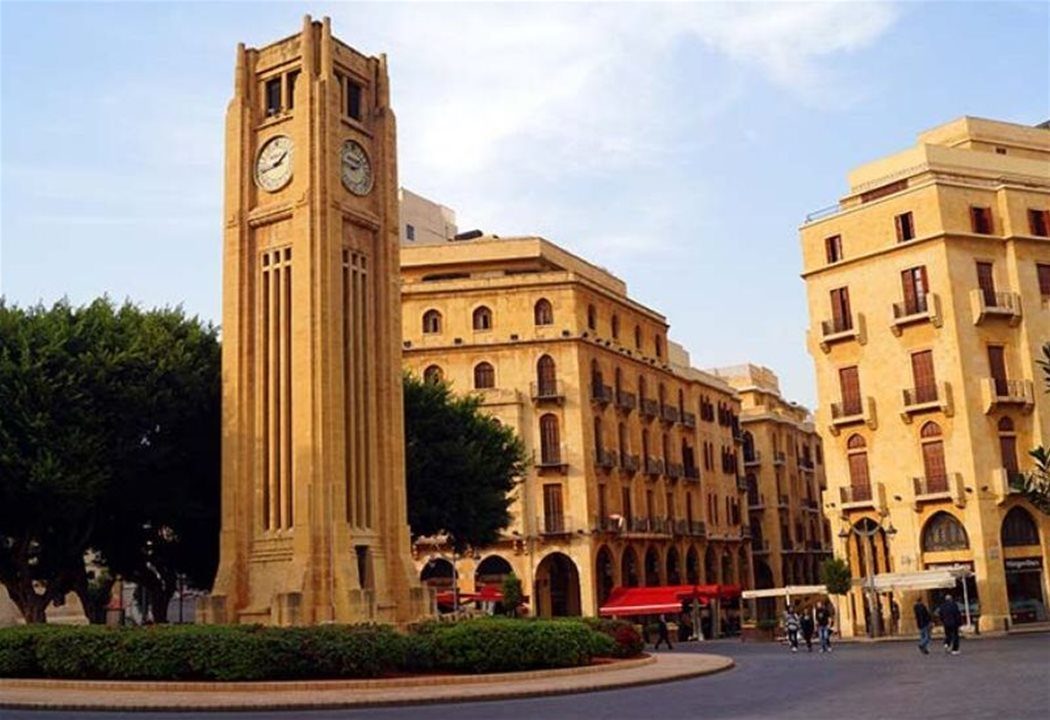
| | Government Puts Solidere on Notice: Rebuild Downtown or Lose the ExtensionSolidere — the company that received public land, tax breaks, and subsidized loans worth an estimated $3 billion to rebuild Beirut's downtown after the civil war — asked the government for a fresh 25-year extension of its mandate. The government's response: not so fast.
- The Council of Ministers replied with a detailed letter setting out non-negotiable preconditions: a full independent audit of Solidere's assets, a tax clearance certificate, and a formal General Assembly vote requesting the extension — before any talks can begin.
- Rather than the 25 years Solidere requested, the government is proposing an initial 8-year extension, renewable for another 6 years only if the company meets binding performance targets — with financial penalties for delays.
- Solidere still holds roughly 1.35 million square meters of undeveloped land in central Beirut, and has left long-promised public projects — Martyrs' Square, Rafic Hariri Park, the Grand Theatre (built in 1929), and the Beirut History Museum — unfinished for decades.
- The government also wants future Solidere income — land sales, leases, new construction — taxed like any other real estate company, ending decades of special fiscal treatment.
Why it matters: After more than 30 years of stalled promises and land hoarding, the government is attempting to use the threat of non-renewal to finally extract the public-benefit projects that justified Solidere's extraordinary privileges in the first place. Lebanon and Israel Agree on a Shortlist for Hezbollah Disarmament VerificationSince a June 26 deal linked Israel's gradual troop withdrawal from Lebanon to verified Hezbollah disarmament, the thorniest question has been: who does the verifying? After meetings at the U.S. embassy in Rome this week, Beirut and Jerusalem finally have a common shortlist of candidates.
- A Lebanese official confirmed the two sides agreed on a shortlist of countries that could send troops as third-party verifiers, with Washington now set to make the final selection — possibly choosing more than one country.
- Lebanon rejected an earlier U.S. proposal to use private security companies, insisting all verifiers be sovereign states.
- In what the Lebanese official called a breakthrough, the U.S. and Israel signaled they are now willing to consider a new UN Security Council resolution — potentially housing the verification forces under UNIFIL, whose mandate expires at year's end.
- No agreement was reached on the next area from which Israeli troops would withdraw; Lebanon had proposed Bint Jbeil and Khiam. The next round of talks is set for early September.
Zooming out: The U.S.-Israel willingness to work within a UN framework marks a meaningful shift from earlier positions, but Hezbollah has refused to join the agreement or give up its arsenal — meaning the hardest part of implementation hasn't started. U.S. Senate Bill Targets Hezbollah Financing, Offers Security Aid to Lebanese ArmyTwo U.S. senators — one Democrat, one Republican — introduced a bipartisan bill this week that would combine fresh sanctions on Hezbollah's financial network with direct security assistance to Lebanon's armed forces, framing it as Washington's chance to lock in gains from the ongoing disarmament talks.
- The Lebanon Sanctions, Stabilization and Support Act was introduced by Ranking Member Jeanne Shaheen (D-NH) and Senator James Lankford (R-OK), tying sanctions on Hezbollah enablers to security and recovery assistance conditioned on congressional oversight.
- The bill cites an estimated 1.2 million Lebanese displaced from the south, describing the situation as risking a fresh regional crisis if left unaddressed.
- It is framed around the trilateral U.S.-Israel-Lebanon framework and what sponsors called "the first direct talks in 30 years".
What to watch: A bill introduced in the Senate is a long way from becoming law, but bipartisan sponsorship signals that U.S. policy toward Lebanon's disarmament process has enough cross-aisle support to shape how Washington conditions any future aid packages. |
|
as of 2:12 AM GMT · Source: Polymarket |
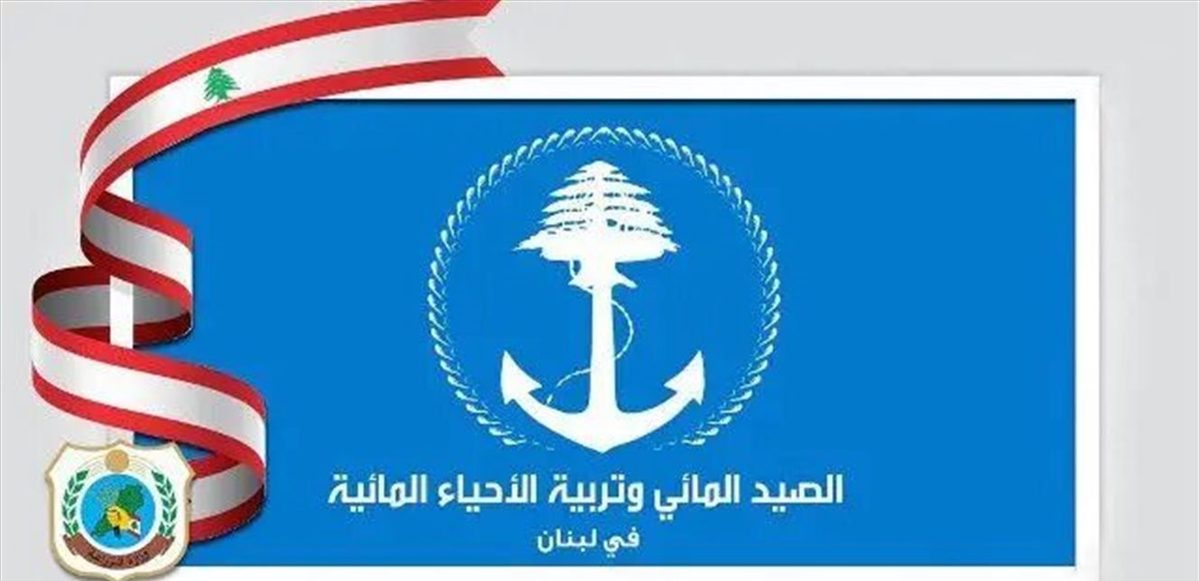
| | - Fishermen gain six miles: Lebanon's new marine fishing law doubles fishermen's territorial rights from 6 to 12 nautical miles, bans industrial fishing inside territorial waters entirely, and took 12 years to prepare in cooperation with the FAO and GFCM to protect food security and the marine environment.
- Pump price split: The Ministry of Energy's latest fuel schedule has 95 and 98 octane gasoline falling by 7,000 LBP (about $0.08) each, while diesel climbs 10,000 LBP (about $0.11) — a small but opposite-direction move that diesel-generator users will feel first.
- Aoun and Berri, same page: A meeting between President Joseph Aoun and Speaker Nabih Berri is being read by political circles as an attempt to unify Lebanon's negotiating position ahead of upcoming talks — with observers cautioning that meetings alone don't guarantee a lasting coordination mechanism.
- Rome ends, clock starts: The seventh round of Lebanon-Israel talks in Rome closed without a breakthrough, and Lebanon now has roughly 4 weeks before Israel could pivot back to a military option — with the next round scheduled for September 1.
- A Lebanese at the Vatican: Pope Leo XIV renewed Archbishop Youssef Soueif of Tripoli's appointment to the Vatican's Dicastery for Promoting Integral Human Development for a new five-year term — one of the Holy See's principal institutions focused on social justice, refugees, and humanitarian response.
|
|
| ─ | Parallel Rate | 89,550 LBP | 0.00% | | ─ | Official Rate | 89,500 LBP | 0.00% | | ▲ | Gold | $4,401.3 | +3.76% | | ▲ | Bitcoin | $64,896 | +0.85% | | ▲ | S&P 500 | 7,757.64 | +0.44% |
as of 1:47 AM GMT · Source: lbprate, BDL, Yahoo Finance, CoinGecko |
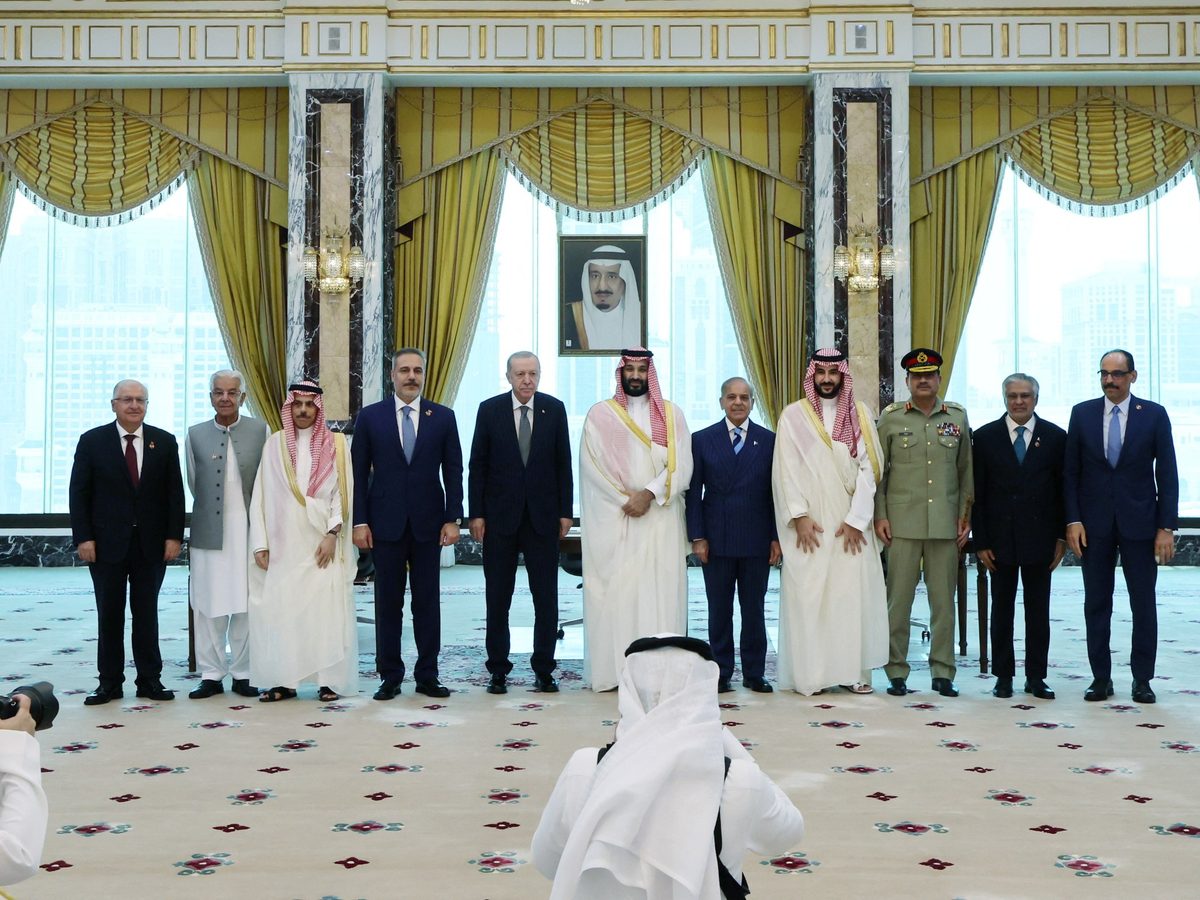
| | Turkey, Saudi Arabia, and Pakistan Sign Mutual Defence Pact in MeccaThree of the Muslim world's most powerful states — one with NATO's second-largest military, one the world's top oil exporter, and one its only nuclear-armed Muslim nation — signed a binding collective defence agreement in Mecca on Friday, declaring that an attack on any one of them is an attack on all three.
- The Mecca Joint Deterrence Agreement was signed by Turkish President Erdogan, Saudi Crown Prince Mohammed bin Salman, and Pakistani PM Shehbaz Sharif, building on an existing bilateral pact between Ankara and Islamabad.
- Negotiations began after October 7, 2023 and accelerated as US and Israeli military operations against Iran intensified, with Saudi Arabia coming under Houthi and Iranian attack.
- Analysts describe the deal as a framework for strategic coordination rather than a NATO-equivalent mutual defence treaty — combining Turkey's defence industry, Saudi financial muscle, and Pakistan's nuclear deterrent.
- A Turkish official told Reuters the pact is defensive in nature and open to other regional countries.
The bigger picture: The deal signals a push by three major Muslim states to build an independent regional security architecture at a moment when confidence in the existing US-led order has visibly eroded. ICC Judges Quietly Split Taliban Gender Persecution Case from Afghanistan Probe Covering US ForcesIn a move with significant geopolitical undertones, judges at the International Criminal Court have ordered prosecutors to open a standalone investigation into the Taliban's systematic persecution of women — effectively separating it from the court's broader Afghanistan inquiry, which also covers alleged war crimes by US military and CIA personnel.
- A three-judge panel in pre-trial chamber II issued the request to the Office of the Prosecutor in mid-July, finding that the Taliban's post-2021 conduct is "materially different" from the armed conflict that defined the original investigation authorised in 2020.
- The ICC already issued arrest warrants for Taliban Supreme Leader Hibatullah Akhundzada and Chief Justice Abdul Hakim Haqqani for gender persecution a year ago.
- The decision came days after US Secretary of State Marco Rubio threatened to "dismantle the ICC, brick by brick" — the US has imposed financial and visa sanctions on court officials over the Afghanistan and Palestine investigations since February 2025.
- The original Afghanistan investigation, which nominally covers all parties including US forces, has sat dormant for years; judges flagged a new procedure allowing prosecutors to formally close it.
What to watch: Whether prosecutors open the new standalone Taliban investigation — and whether the original probe covering US forces is quietly closed — will reveal how far the court adjusts its posture under sustained American pressure. A 400-Year-Old Masterpiece Was Sitting in a Museum's Storage Room. Nobody Knew Who Painted It.A painting that spent decades misattributed and then buried in storage at Norway's National Museum has been officially reattributed to Clara Peeters, a pioneering 17th-century Flemish still-life artist whose work hangs in the Prado and the Met — a discovery that researchers say is a preview of many more recoveries to come.
- American researcher Cynthia Osiecki identified the work, Still Life with Small Game and Grapes on a Gilded Tazza (c. 1620), after noticing the panel was from a supplier Peeters commonly used and that a distinctive tazza appeared in other confirmed Peeters paintings.
- The painting had been attributed to Ambrosius Brueghel, then reclassified as "anonymous" in the early 20th century.
- Peeters's signature was likely lost to woodworm damage at the panel's bottom edge, the precise spot where she typically signed her works.
- The reattributed piece will be a centrepiece of Woman Painter, opening at the National Museum of Norway on October 8, featuring 19 female artists from 1550 to 1650.
Zooming out: The find is part of a broader, accelerating effort by European museums to recover and reattribute works by women artists long filed away under "anonymous" — and curators say the archival research has only just begun. |
|
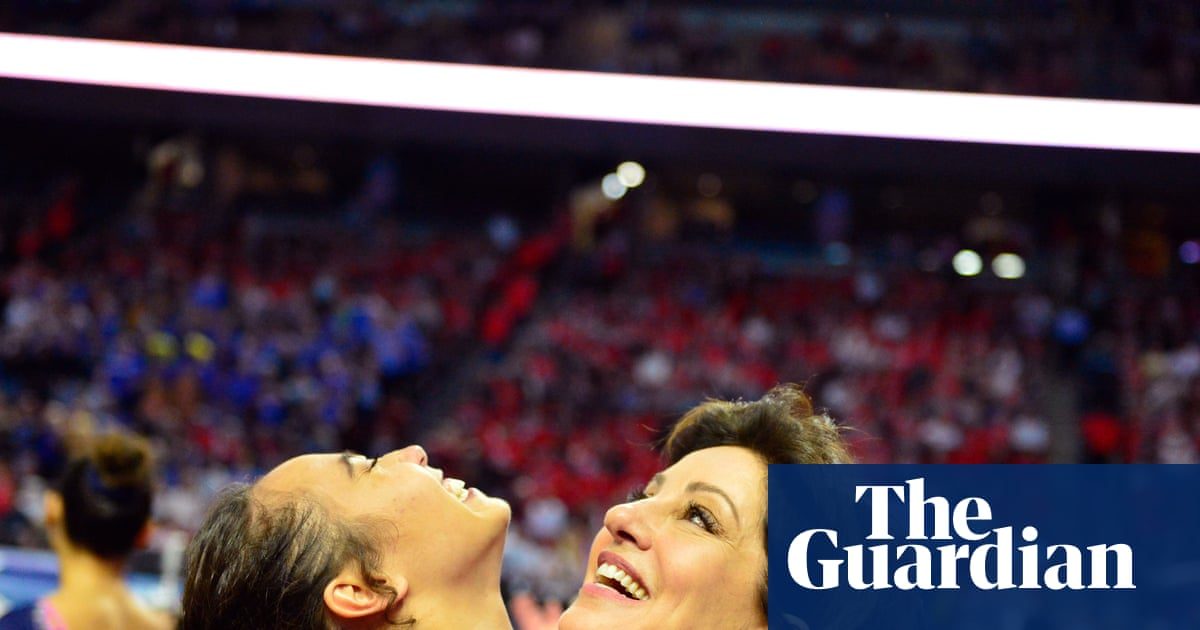
| | - Comeback queen on the beam: Gymnast Katelyn Ohashi — once the last person to beat Simone Biles in an all-around final — is training four days a week, four hours a day, chasing a spot on the US team for the 2028 Los Angeles Olympics at age 29, and her coach says she has "one of the strongest minds of any athlete that's ever played sport."
- Rodrigo, live and unscripted: Olivia Rodrigo surprised 1,100 fans at Brooklyn's Warsaw venue on a sweltering Thursday, debuting eight new songs from her upcoming album "You Seem Pretty Sad for a Girl So in Love" — including her self-described favorite track "The Cure" — before a months-long "Unraveled" world tour launches September 25.
- Jounieh's caveman-poet: Lebanese writer and artist Charles Chahwan, whose current Beirut exhibition runs through the end of August, published his first poetry collection after sending poems to Annahar — a ray of light, he says, that made him feel he existed — going on to write landmark works including "Jazz of Solitude" and "Street War."
- Olivia Dean's big year: British R&B singer Olivia Dean brings her "The Art of Loving" tour to Madison Square Garden for four nights this month, riding a Grammy for Best New Artist and three Brit Awards — Artist of the Year, Album of the Year, and Pop Act — all earned in one extraordinary year.
|
|
Yalla, that's your Saturday — share something good with someone today. |
| ✓B. Fermented yogurt-grain |
"Kishik" tops this tangy bread. |
Lebanon news, every weekday morning. Free, sharp, ~5 minutes. |
|
|
|
|