|   | Shou el akhbar — parliament actually passed two major laws in one week, the gas power plan already has a cost problem (three times the estimate, before construction begins), and the post-UNIFIL verification deal that Reuters reported this week? Washington and Tel Aviv say it doesn't exist. It's a full Friday. |
|
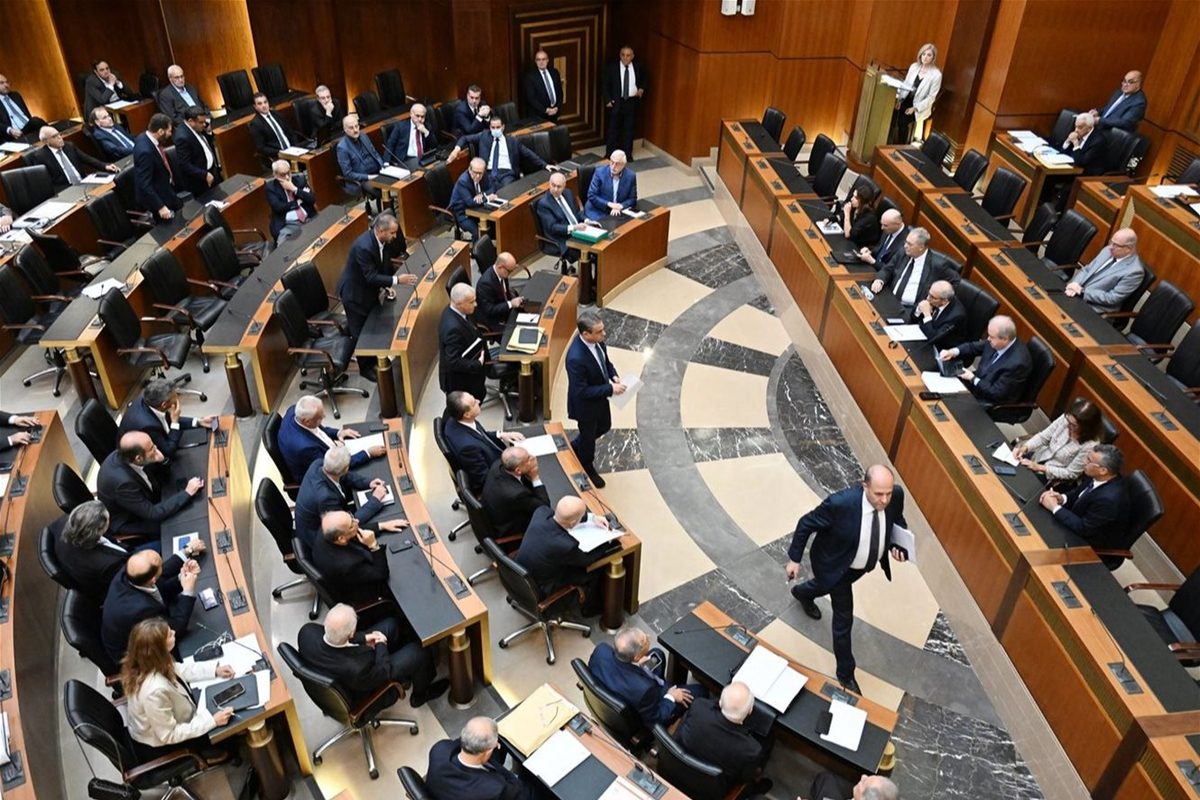
| | Parliament Passes Amnesty and Banking Reform in a Marathon Legislative WeekLebanon's parliament did something almost no one expected it to do this fast: pass two major, overdue laws in a single session. The general amnesty law and the banking reform law both cleared parliament this week, capping two days of heated debate — and one very awkward cabinet standoff.
- The amnesty law covers crimes committed before March 1, 2026 and will release every detainee who has spent 12 years or more behind bars without a final judgment — with trials continuing after release.
- Death sentences are converted to life imprisonment, now capped at 17 years — a direct consequence of linking the amnesty to the abolition of the death penalty.
- MP Imad al-Hout said 79 Islamist detainees will be freed out of 194; cleric Ahmad al-Assir is among those expected to walk after roughly a year and a half.
- Major exclusions: intentional murder, terrorism, corruption, banking crimes against depositors, rape, human trafficking, torture, and enforced disappearance are all kept out of the amnesty's scope.
Why it matters: The banking reform law's passage — with IMF involvement — and a comprehensive amnesty in the same week signals a legislative push that Lebanon's creditors and international partners have been waiting years to see move off paper. Deal or No Deal? US and Israel Walk Back the Verification AgreementEarlier this week, Reuters reported Lebanon and Israel had agreed on Britain, Italy, Switzerland, and Indonesia as candidate countries for a new post-UNIFIL verification force. Then came the pushback — fast and official.
- Senior US and Israeli officials told the Walla news portal there is "no agreement" on which countries will monitor Hezbollah's disarmament or oversee Lebanese Army operations in the pilot zones — directly contradicting the Reuters report.
- Israel's embassy in Washington confirmed negotiations over the verification body are "ongoing" with no deal reached; Switzerland said it is "exploring" ways to support stabilization but declined specifics.
- What Rome did produce: shared definitions for "verification" and "clearing," common maps, and a roadmap — progress on methodology, not on who actually does the verifying.
- Lebanon is expected to present more detailed plans on securing new pilot-zone areas in the next round of talks, with no date yet confirmed.
Zooming out: The gap between what Reuters reported and what Washington and Tel Aviv denied reflects how live — and contested — the core question of the post-UNIFIL framework still is. Lebanon's Gas Power Plan Could Cost Three Times More Than BudgetedEnergy Minister Joe Saddi announced in May that Lebanon would build two new gas-fired power plants for an estimated $2 billion total. A global turbine shortage is now threatening to blow that figure apart before a single brick is laid.
- Financial expert Mike Azar told L'Orient Today that under current market conditions, Lebanon could end up spending roughly $6 billion — three times the ministry's estimate — to secure the turbines it needs.
- GE Vernova told L'Orient Today it is "effectively fully sold out through 2030" and is currently contracting for 2031; Siemens Energy confirmed lead times have lengthened significantly, driven by AI data center demand in the US.
- Lebanon currently generates only around 500 MW against a nationwide demand of roughly 3,000 MW — the two existing operational plants, Deir Ammar and Zahrani, are running well below their combined 900 MW capacity due to fuel costs.
- Experts recommend transitional fixes: run existing plants more efficiently, connect to energy infrastructure in Syria and Iraq, and accelerate solar development — rather than waiting on turbines that may not arrive until the 2030s.
The bigger picture: Decades of delayed reform have left Lebanon needing to build major energy infrastructure at the precise moment global competition for the components has made it most expensive to do so. |
|
as of 2:30 AM GMT · Source: Polymarket |
What is "hindbeh"? | | | | Dandelion greens with caramelized onions |
|
Scroll to the bottom for the answer — or play all 10 at sobhiye.news/games/trivia |
| - Katz says stay, Washington says no: The Trump administration publicly criticized Israeli Defense Minister Israel Katz after he declared Israel would not withdraw from south Lebanon, calling his remarks inconsistent with the framework both countries agreed to — and reaffirming US support for Lebanon's full territorial sovereignty.
- 50 years, still no graves: Lebanon and the Palestinian diaspora are marking the 50th anniversary of the Tel al-Zaatar massacre, where an estimated 3,500 people were killed during a 52-day siege — many buried between houses, with the camp destroyed and almost no recoverable bodies remaining.
- Port blast victims, finally covered: Health Minister Rakan Nassereddine issued a decision guaranteeing 100% coverage — medical, surgical, and hospitalization — for all Beirut Port explosion wounded at public expense, across both government and private hospitals, with no financial burden on patients.
- Assad general, 200-name list: Syria's arrest warrant against detained former Maj. Gen. Adel Issa charges him with murder and crimes against humanity — and Damascus has separately asked Lebanon to surrender more than 200 other former Syrian officers, each requiring an individual warrant and a presidential decree to extradite.
- Bridge down, crossing up: Lebanon's Ministry of Public Works has begun constructing a temporary culvert over the Litani River at Qaaqaait al-Jisr to replace a bridge destroyed by Israeli attacks, aiming to restore movement of people, vehicles, and agricultural produce in the South.
|
|
| ─ | Parallel Rate | 89,550 LBP | 0.00% | | ─ | Official Rate | 89,500 LBP | 0.00% | | ▼ | Gold | $4,373.6 | -0.80% | | ▲ | Bitcoin | $63,522 | +0.20% | | ▲ | S&P 500 | 7,798.99 | +0.92% |
as of 2:11 AM GMT · Source: lbprate, BDL, Yahoo Finance, CoinGecko |
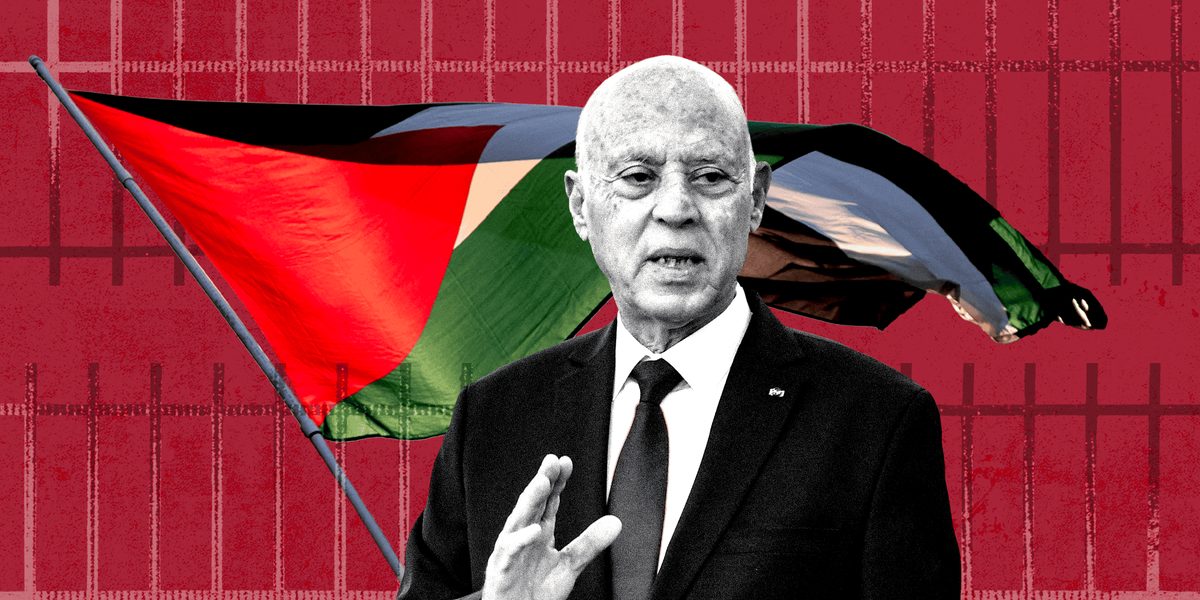
| | Tunisia Jails Gaza Flotilla Activists While Its President Celebrates PalestineTunisia's President Kais Saied built his political career on fierce anti-normalization rhetoric. So it's notable that four activists who actually sailed toward Gaza to deliver aid have been sitting in a Tunisian prison for more than four months — while charges of financial fraud against them crawl through the courts.
- Wael Nawar, Nabil al-Shanoufi, Ghassan al-Hinchiri, and Ghassan al-Boughdiri have been detained since March 6, 2026 — over 140 days — after organizing the 2025 Global Fleet of Steadfastness, which sailed toward Gaza before being intercepted by Israeli forces.
- Charges include forgery, fraud, and money laundering; lawyers say detention warrants were issued before several accused were even interrogated, and key investigative steps remain incomplete.
- Three other activists were released with movement restrictions; one detainee, al-Hinchiri, reportedly suffers ongoing head injuries sustained during Israeli detention.
- An international petition demanding their release has gathered hundreds of signatures from dozens of countries.
What to watch: Whether Tunisia's judiciary moves toward a referral or dismissal — or leaves the case in indefinite limbo — will signal how far the gap between official pro-Palestinian rhetoric and the treatment of actual Palestinian solidarity activists can stretch. A West Bank Spring Is Vanishing — and So Is the Community Around ItEin al-Auja, a natural spring north of Jericho that once flowed at more than 1,000 cubic metres per hour, has lost between 50 and 70 percent of its flow in recent years — and the Bedouin community of more than 100 families that depended on it has been displaced entirely.
- Since early 2024, at least 38 documented settler attacks were recorded in the area in a single year, compared to just 2 between 2017 and 2023, according to the UN's OCHA.
- An environmental researcher told Middle East Eye that Israeli authorities deepened state-managed wells to nearly 1,000 metres and added a fourth, collectively extracting an estimated 4 to 6 million cubic metres annually from the deep aquifer feeding the spring.
- Irrigated land in the area has shrunk from more than 30,000 dunums to around 3,000 dunums.
- In February, an Israeli court ordered authorities to help families return — but by April the deadline had passed unmet.
The bigger picture: The Ein al-Auja case illustrates how water access, settler violence, and legal delays can combine to make displacement effectively irreversible long before any formal eviction order is issued. Iran Eyes BRICS Bank Membership as Its War Economy BucklesIran's central bank governor announced this week that Tehran would soon join the New Development Bank — the multilateral lender backed by Brazil, Russia, India, China, and South Africa — as the country searches for financial lifelines outside the reach of US sanctions.
- Governor Abdolnaser Hemmati made the announcement at the BRICS finance meeting in Jaipur on August 11-12; the bank itself has not confirmed that Iran's membership is imminent.
- The NDB launched with $100 billion in authorized capital — significant, but dwarfed by earlier estimates placing Iran's wartime infrastructure damage at roughly $270 billion.
- Egypt joined the NDB in 2023 under similar circumstances and currently has no active NDB-backed projects listed on the institution's website.
- Tehran is simultaneously pursuing bilateral monetary arrangements with BRICS members and pushing to connect national payment systems to reduce dollar dependence.
Zooming out: Iran's NDB push is as much a political signal — that the country is actively cultivating non-Western financial architecture — as it is a practical solution to a reconstruction bill its war economy cannot currently cover. |
|
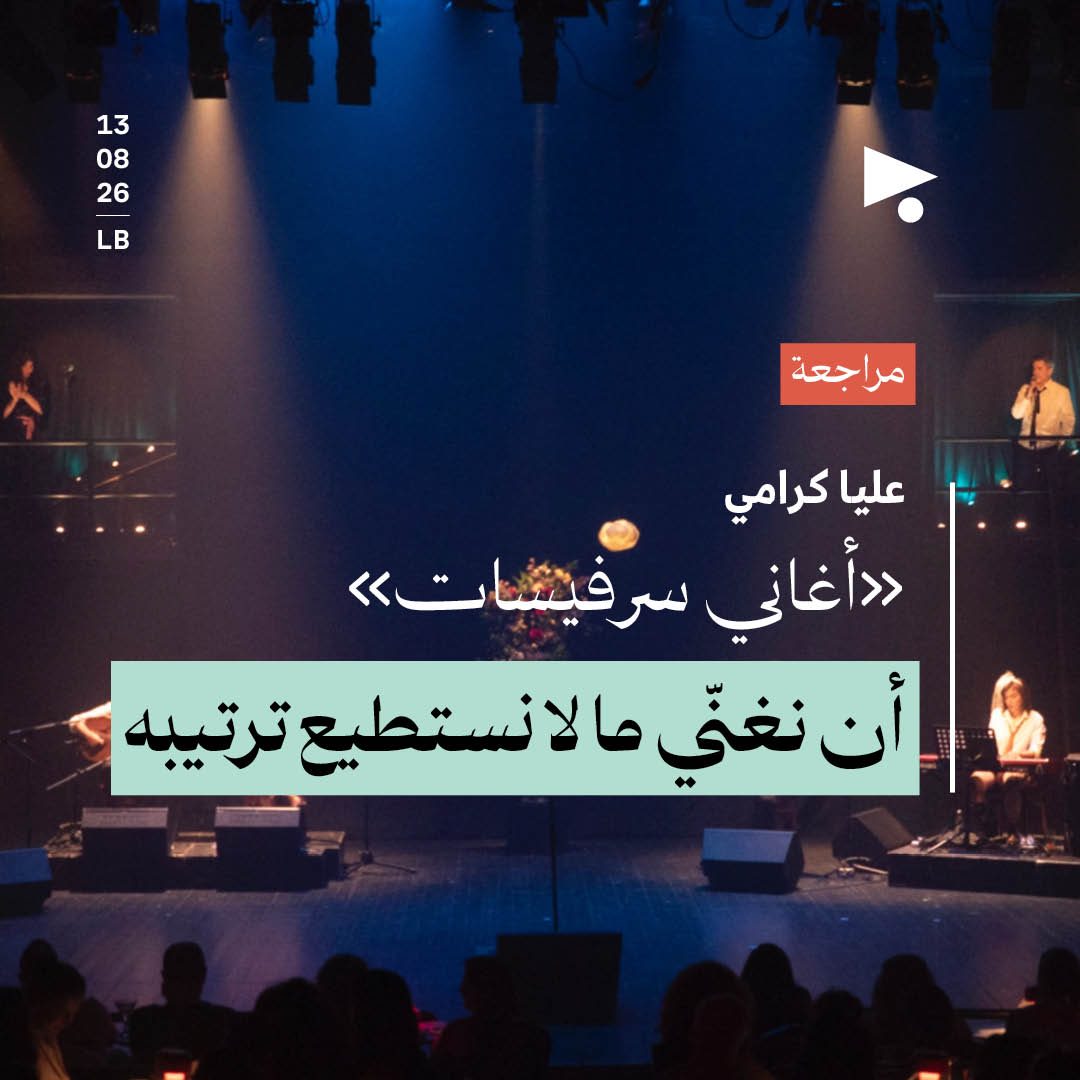
| | - Beirut on the setlist again: Metro Al Madina's beloved "Servicet Songs" — a show mixing jazz, Maqam Hijaz, bouzouki, and biting sarcasm that's been running since 2015 — returns for another night on September 15, 2026, giving Beirut one more reason to stay out late and feel every complicated emotion at once.
- Lebanese football gets bold: The Lebanese Football Association's 94th General Assembly approved a new national team strategy under incoming Algerian coach Madjid Bougherra, focused on young local talent and Lebanese professionals abroad, while VAR technology will now extend to the Second Division's top and bottom clubs for the first time.
- A woman leads the pulpit: Reverend Dr. Rima Nasrallah has been installed as pastor of the National Evangelical Church in Beirut — automatically making her head of the National Evangelical Union in Lebanon — in a milestone moment for women in Eastern church leadership that's already sparking wide theological debate across the region.
- 406 mph on hydrogen: A British team driving the JCB Hydromax set a new hydrogen-powered FIA land speed record of 406.320 mph at Utah's Bonneville Salt Flats, piloted by Andy Green — the only person ever to break the sound barrier on land.
|
|
Yalla, take the weekend for yourself — see you back here Saturday morning. |
| ✓D. Dandelion greens with caramelized onions |
"Hindbeh" is a traditional dish of wild dandelion greens sauteed with caramelized onions, served with olive oil and lemon. |
Lebanon news, every weekday morning. Free, sharp, ~5 minutes. |
|
|
|
|