|   | presented by  | Ahla w sahla. Israel just moved the goalposts on southern Lebanon — again — this time tying any withdrawal to Hezbollah disarmament across the entire country, while back in Beirut, the Cabinet published an environmental tax, watched business owners and unions revolt, and quietly buried it before the ink dried. Diplomatic stalemates and policy U-turns in one morning: very Lebanese, very Monday. |
|
| | Israel Ties South Lebanon Withdrawal to Hezbollah Disarmament Across All of LebanonThe phased Israeli withdrawal framework that Sobhiye readers know from earlier coverage — experimental zones, geographic milestones, gradual handovers — just hit a wall. Israeli Defense Minister Israel Katz has shifted the condition for any Israeli withdrawal from local field achievements to something far larger: the complete disarmament of Hezbollah across all of Lebanon.
- Katz issued two contradictory statements within 24 hours — first declaring Israel would not leave its self-described "security zone" at all, then linking withdrawal to Hezbollah disarmament and ordering the army to prepare for an "extended presence."
- The US objected to the first framing as incompatible with Israel's stated position of no territorial ambitions, prompting Katz's second statement — which reopened withdrawal theoretically while conditioning it on an undefined Israeli assessment of when "the threat" has disappeared.
- Zawtar al-Gharbiyah remains the sole completed withdrawal; Katz's new framing risks turning it from a template into an isolated exception.
What to watch: Whether the Rome talks scheduled for September can survive a framework whose sequencing now depends on a security benchmark that Israel alone defines. Washington Ups the Pressure on Hezbollah — and Rome Talks Face a Long RoadThe US has sharpened its language on Hezbollah's weapons in a way that shifts the diplomatic atmosphere heading into the September Rome talks. This is a follow-up to the "encouraging" framing US Ambassador Michel Issa used in earlier rounds — the tone has changed.
- Issa publicly called Hezbollah disarmament the "only solution," followed by a US State Department spokesperson who held Hezbollah fully responsible for Israel's continued presence on Lebanese territory.
- The statements came hours after Hezbollah Secretary-General Sheikh Naim Qassem threatened an "explosion of anger" on the anniversary of the 2006 war — a speech Washington read as a direct provocation, per Al Modon's sources.
- No final monitoring mechanism or third-party verifier for the experimental zones has been agreed; Israel reportedly demanded to run verification itself before Lebanese rejection sent the process back to square one.
Zooming out: The verification deadlock — who watches the watchers in southern Lebanon — is now the practical ceiling on any diplomatic progress, regardless of what the Rome table produces. Cabinet Suspends Pollution Tax After Business and Labor BacklashLebanon's government published a new environmental fee last week, then thought better of it almost immediately. The Cabinet held an emergency meeting and suspended the decree before a single lira was collected.
- The decree had introduced a one to three percent environmental tax on 98 categories of imported and locally manufactured goods — including food, alcohol, electrical appliances, detergents, and perfumes — with rates tied to the volume of waste a product generates.
- Both the Syndicates of Food Importers and the General Confederation of Labor Unions warned of immediate price increases across basic commodities, pushing the government to act.
- Revenue was earmarked exclusively for the National Authority for Solid Waste Management — sorting and treatment projects nationwide — and would not have entered the state's general treasury.
- The Cabinet cited "current living conditions, the economic situation, and the repercussions of the war" in its suspension statement, pending a review of customs rate schedules.
Why it matters: Lebanon's waste management crisis is real and underfunded, so suspending the one mechanism designed to finance it leaves both the environmental problem and the political question of who pays for it unresolved. |
|
Stainless that lasts in Lebanon's climate.Coastal air is hard on cheap metal. Tchaghlassian Steel supplies architectural-grade stainless steel, Rheinzink, and Seven ACP panels built to take salt, sun, and time — specified by architects who don't want to redo it in five years. |
as of 7:45 AM GMT · Source: Polymarket |
What is meant by "3ala 2ad 7afak med ejrek"? Scroll to the bottom for the answer — or play all 10 at sobhiye.news/games/trivia |
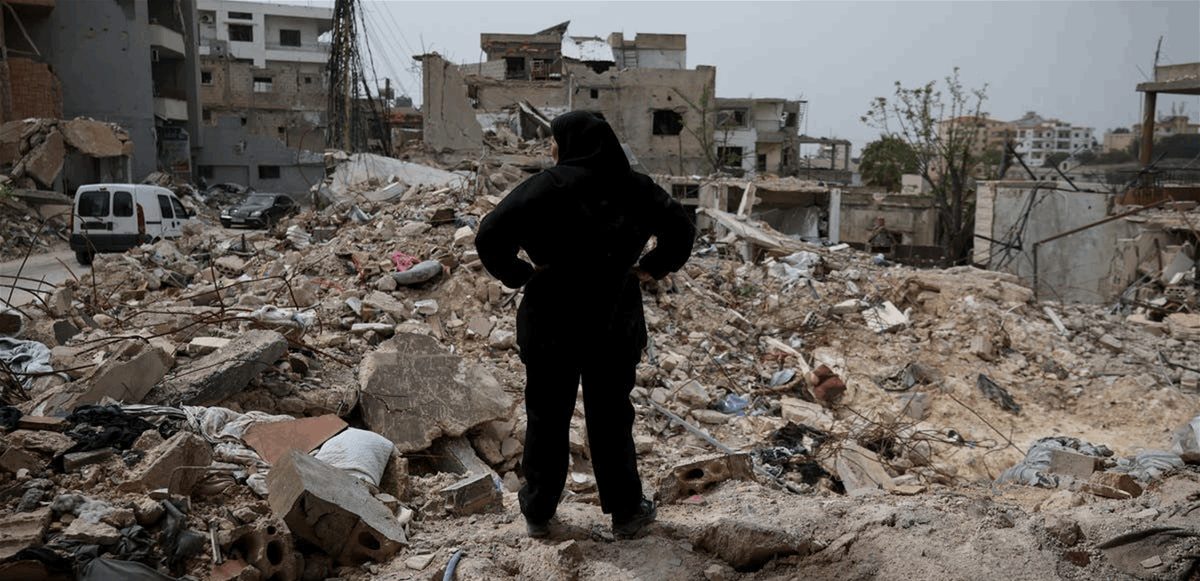
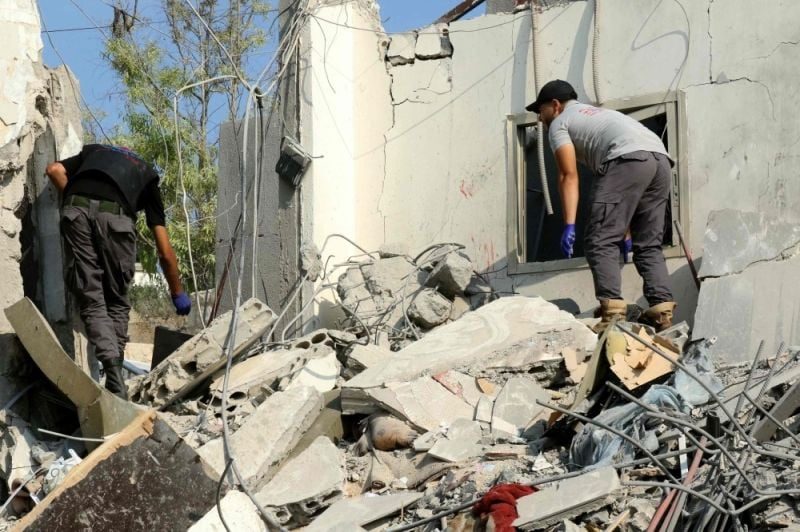
| | - Ansar's second wave: Saturday's strike — which killed 7 people including a mother and her 4 children, confirming the figure we reported yesterday — triggered a new displacement wave; the road from Nabatieh to Saida was congested with cars throughout the day as returning residents fled again.
- Aitou on fire, again: A wildfire that was extinguished Saturday reignited Sunday in Aitou (Zgharta district) with greater intensity due to high temperatures and dry winds, prompting Lebanese Army helicopters, Civil Defense teams, and volunteers to scramble to contain a blaze that has reached difficult-to-access forest terrain.
- Don't go in the water: Civil Defense has warned all residents and visitors against swimming anywhere along Lebanon's coast — from Abdeh in the north to Naqoura in the south — due to high waves and strong sea currents that raise the risk of drowning.
- Patriarch plants a flag: Maronite Patriarch al-al-al-Rahi used his Sunday sermon in Dimane to call for a strong independent state, an independent judiciary, and full Lebanese Army sovereignty in the south, framing political dysfunction and sectarian quotas as the thorns choking Lebanon's national will.
- Ministry faker, caught twice: Internal Security Forces identified a Lebanese woman (born 1970) who, after earlier fraud arrests in the North, was also found to have been impersonating a Ministry of Economy inspector across South Lebanon and Nabatieh, and asked additional victims to contact the Sidon Judicial Detachment.
|
|
| ─ | Parallel Rate | 89,300 LBP | 0.00% | | ─ | Official Rate | 89,500 LBP | 0.00% | | ▲ | Gold | $4,453 | +0.35% | | ▲ | Bitcoin | $63,504 | +0.79% | | ▲ | S&P 500 | 7,785.76 | +0.48% |
as of 7:24 AM GMT · Source: lbprate, BDL, Yahoo Finance, CoinGecko |
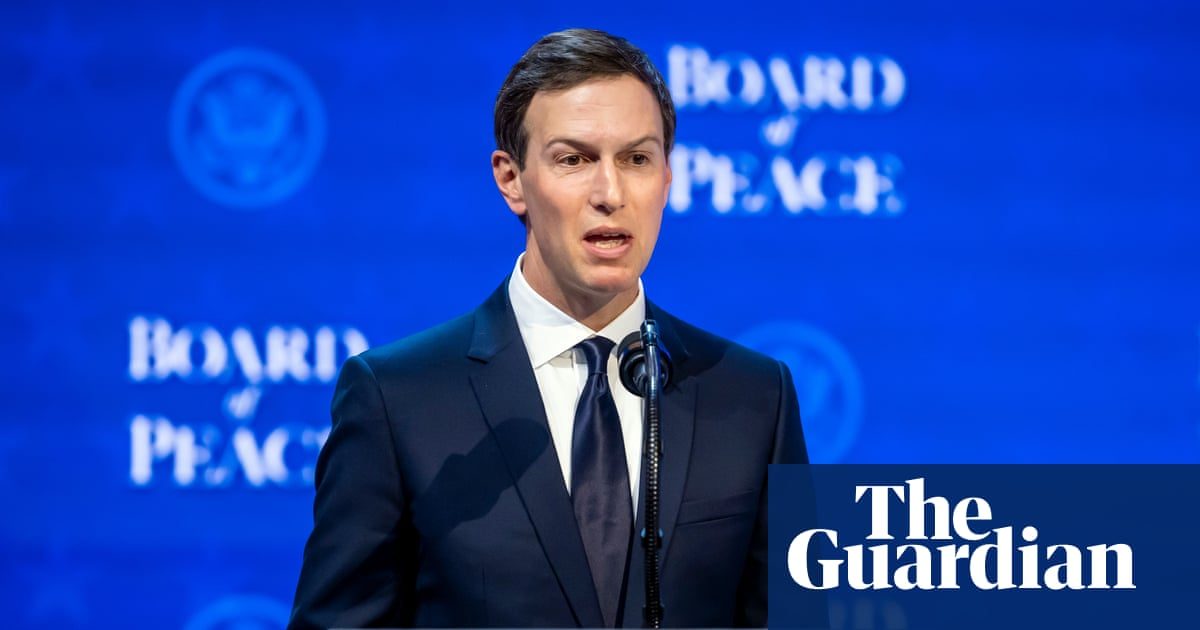
| | Kushner Meets Hamas in Egypt, Then Heads to Netanyahu With a Stalled Gaza Road MapGaza's ceasefire is holding by a thread. Jared Kushner sat down with Hamas's political chief Khalil al-Hayya in Egypt on Sunday, then flew to meet Benjamin Netanyahu — who last week publicly rejected the US-backed 15-point road map meant to move the conflict toward Hamas disarmament and an Israeli withdrawal from Gaza.
- The meeting, confirmed by regional and Hamas officials, lasted over two hours and included representatives from mediating countries Egypt, Qatar, and Turkey; Kushner was joined by former British PM Tony Blair and Board of Peace director Nickolay Mladenov for the Netanyahu talks.
- Israel has killed more than 1,200 Palestinians in Gaza and wounded more than 4,100 since the ceasefire began on October 10, 2025, according to Gaza's health ministry.
- Israeli forces now control about 60% of Gaza, with Netanyahu having said in May the next step was moving to 70%.
- Saudi Arabia, the UAE, Jordan, Pakistan, and Indonesia jointly condemned Israel's rejection of the road map, saying Israel "now bears responsibility for obstructing" peace efforts.
What to watch: Whether Netanyahu, facing an election on October 27, makes any concrete move on the road map before the October 7 anniversary — or holds his coalition's hard line through both dates. The Hormuz Stranglehold Is Reshaping Africa's Economies — QuietlyThe Strait of Hormuz has been choked since US-Israeli strikes on Iran began in late February, and the ripple effects are now reaching deep into Africa — reshaping fuel supplies, harvest prospects, and the continent's diplomatic calculus.
- Maritime traffic through Hormuz has been reduced to a bare minimum for nearly six months, with cargo ships fired on by Iranian forces and repeated threats from both Tehran and Washington halting shipping; a US-Iran memorandum of understanding signed in June has not stabilized the situation.
- Ethiopia faced fuel rationing, forcing its government to prioritize security agencies, public transport, and agriculture; neighboring Kenya fared better, having diversified its supply chains early.
- Nigeria's Dangote refinery — which came online just as the crisis hit — became the world's largest exporter of aviation fuel in April, positioning Nigeria as a key alternative supplier for African clients.
- Over 191,000 wildfires were reported across Africa this year, the highest of any continent, compounding the continent's economic stress.
The bigger picture: The crisis is giving new urgency to the African Continental Free Trade Area as governments recognize that dependence on Gulf supply chains carries strategic risk no memorandum can fully insure against. The World Is on Fire — Literally: 370 Million Acres Burned Across 80 CountriesThis summer has broken wildfire records on nearly every continent. Scientists say the scale and intensity of the blazes are unprecedented in recent human history, driven by climate-change-fueled heat and drought.
- More than 370 million acres have burned across 80 countries so far this year — a land mass larger than France, Spain, and Germany combined.
- Europe alone has seen more than 550,000 hectares devastated, with preliminary estimates putting the economic cost at between €15.6 billion and €19.1 billion.
- Canada recorded its largest wildfire season on record, with between 4 million and 6 million hectares burned; California saw nearly a quarter of a million acres scorched by May.
- More than 300,000 people were evacuated across Spain and France; nearly 10,000 First Nations community members in Canada were displaced.
Zooming out: Scientists warn the worst fire events are now measurably more extreme than they were even a decade ago, and countries historically unaccustomed to wildfires — including the UK, Germany, and Norway — are recording emissions well above their typical values. |
|
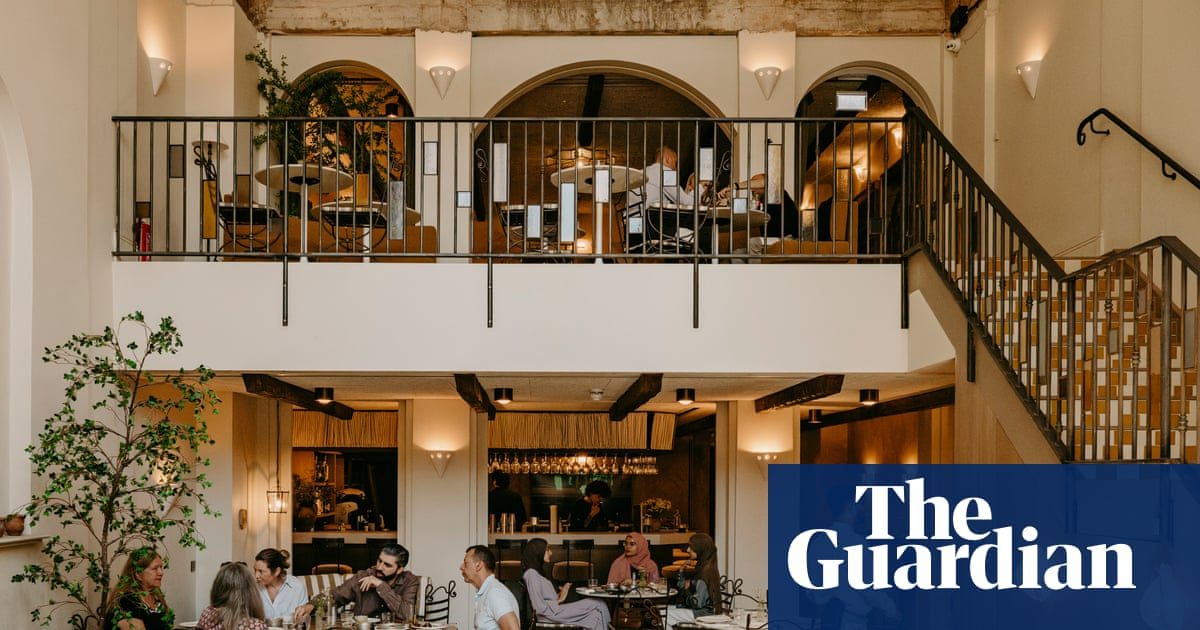
| | - Notting Hill gets a vault: Lebanese brasserie Kinz — opened inside a former Lloyds Bank in London's W11 — is earning rave reviews, with The Guardian calling it "Lebanese food cooked with immense pride," and the osmalieyeh, kibbeh nayyeh, and a chocolate cake recipe from the Lahoud brothers' mother already drawing packed lunchtime crowds.
- Ain Ebel refuses to dim: Residents of the besieged southern village of Ain Ebel gathered in its squares to celebrate the Feast of the Assumption with singer Chadi Nasr, with participants from Ain Ebel and Rmeish navigating Israeli checkpoints and UNIFIL escorts to reach the celebration — singing "Lebanon Will Be Rebuilt" into the night.
- Lebanese director, Locarno spotlight: A documentary honoring the life of Lebanese filmmaker Jocelyne Saab — drawing on 115 film reels spanning 1973 to 1983 — made its global premiere at the Locarno Film Festival, already having won best project at the Cairo Film Connection.
- History made in Philadelphia: Islam Makhachev secured a record-breaking 17th consecutive UFC win at UFC 330, defeating Ian Machado Garry by unanimous decision to break Anderson Silva's 13-year-old record and extend his career mark to 29 wins and one defeat.
|
|
Monday is waiting — make it count. |
| ✓C. Live within your means |
Financial and lifestyle restraint in general. |
Lebanon news, every weekday morning. Free, sharp, ~5 minutes. |
|
|
|
|