|   | Bonjourein. The 60-day US-Iran ceasefire expired overnight, and with it, any pretense that Lebanon's south is just a local dispute — but buried inside the same morning news cycle is a land border reopening and 600,000 Syrians quietly getting a second chance. It's a lot to hold at once, so let's break it down. |
|
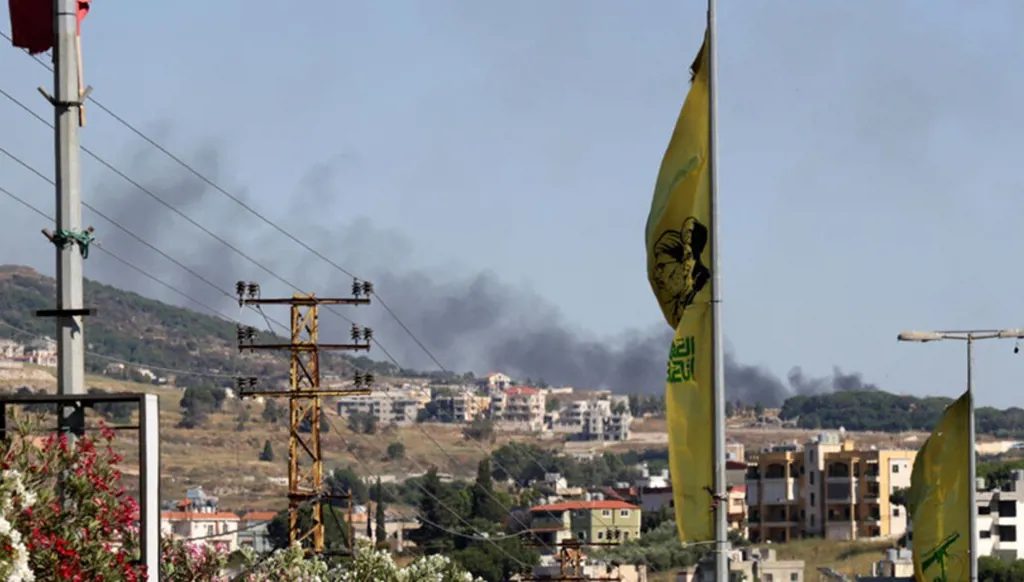
| | The US-Iran Ceasefire Expired. Now Ali al-Taher Sits at the Center of Everything.Ali al-Taher — a series of commanding hills in south Lebanon that Israel holds "by fire" but not physical presence — has been the sticking point in Lebanon-Israel negotiations for months. Now the stakes just got higher: the 60-day US-Iran ceasefire period has expired, and with it, whatever buffer was keeping the southern front from becoming part of a wider regional war.
- Israel is refusing to participate in the eighth round of Lebanese-Israeli negotiations in Rome unless Ali al-Taher is handed to the Lebanese Army and Hezbollah is fully disarmed — a demand that has no near-term path to fulfillment.
- Reports circulating in Hebrew-language media say Israel wants the hill because it views it as part of Hezbollah's defensive architecture — controlling it would give Israeli forces greater freedom to maneuver on the ground.
- Iran, whose ceasefire window with the US has now closed, is described as "applying pressure" on both tracks — diplomatic and military — with IRGC reportedly deciding to launch an attack to break a siege and having increased missile and drone production during the truce.
- Hezbollah, meanwhile, is pushing hardline rhetoric: Secretary-General Naim Qassem recently cited what analysts say is a nonexistent Jewish thinker, raising questions about the group's grasp of its own stated enemy.
What to watch: Whether Iran's post-ceasefire moves force Lebanon's eighth negotiating round off the table entirely — or drag the south into a confrontation that goes well beyond the al-Taher dispute. Saudi Arabia Officially Opens the Land Route for Lebanese ExportsSaudi Arabia banned Lebanese agricultural imports in 2021 after drug smuggling in produce shipments caused a diplomatic rupture. More than four years later, the relationship has been rebuilt step by step — sea, then air, and now, officially, land.
- Saudi Ambassador Fahd al-Dosari inaugurated the land export route at the Masnaa crossing this week, the third phase of resumed trade after sea and air shipping had already restarted.
- A new scanner device — sourced through a partnership with CMA CGM — is now operational at Masnaa and will inspect 100 percent of goods crossing, compared to the two-to-three percent standard at most international ports.
- The Aboudieh crossing is expected to open within weeks to relieve pressure on Masnaa, the only active land route for now.
- A full redevelopment plan for Masnaa — including smart lanes, a fast track, a VIP lane, and a free zone — carries a price tag of $61 million and would take three years to complete after funding is secured.
Why it matters: The ambassador said Saudi Arabia hopes Lebanese export volumes will exceed pre-ban levels — a signal that Riyadh's confidence in the Lebanese state, fragile as it is, is real enough to put trade behind it. General Security Moves to Clear 600,000 Syrians From Entry BlacklistsLebanon hosts more refugees per capita than almost any country on earth, but it also maintains security blacklists that have barred hundreds of thousands of Syrians — many of them carrying only administrative or financial violations, not criminal records — from legally entering Lebanese territory. That is about to change.
- General Security chief Major General Hassan Shaqir has formed a specialized committee to review files and strike eligible names from entry-restriction lists; the committee has one month to process all files.
- Those eligible include Syrians who overstayed residency, entered via smuggling routes, violated work permit terms, or committed minor misdemeanors — but anyone with felony-level criminal restrictions stays on the list.
- General Security has already processed more than 90,000 files in a preliminary phase.
- In parallel, 27 categories of Syrians — including syndicate card holders, university students in Lebanon, real estate owners, and those married to Lebanese women — can now enter without a visa or fees at border crossings.
The bigger picture: The move reframes Lebanon's approach to Syrian entry from reactive crisis management to something closer to a structured bilateral policy — though its practical impact depends entirely on how quickly and fairly the committee works through the remaining files. |
|
as of 1:51 AM GMT · Source: Polymarket |
What permanently connected the island of Tyre to the mainland? | | | | Alexander the Great's causeway |
|
Scroll to the bottom for the answer — or play all 10 at sobhiye.news/games/trivia |
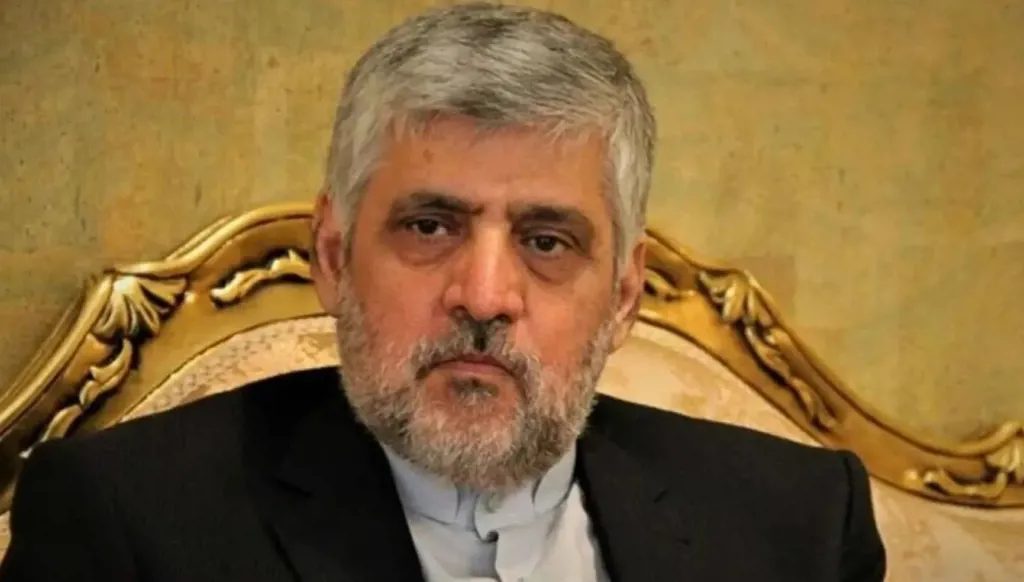
| | - Sheibani stays, sort of: Lebanon and Iran's visa standoff found a quiet workaround — Aoun and Berri reached a deal that lets expelled Ambassador Sheibani remain in Beirut under permanent-residency protocol as a former ambassador, not in any diplomatic capacity, while the chargé d'affaires gets a visa extension to keep the embassy running.
- IMF says yasla: The IMF welcomed parliament's passage of the bank resolution law amendments as a "major step" — though the law still needs presidential approval and faces a potential Constitutional Council challenge before Lebanon can access IMF funding to climb out of default.
- Aoun asks the Pope: President Aoun met Pope Leo XIV at the Vatican and called on the Holy See to press Israel to halt attacks and withdraw from occupied Lebanese territory — the Vatican responded by expressing "grave concern" about the difficulties blocking implementation of the June 26 framework agreement.
- Cash on a flight: The US Treasury sanctioned 10 people it says ran a courier network smuggling hundreds of millions of dollars to Hezbollah on commercial flights between Iran, Turkey, the UAE, and Lebanon — OFAC also re-designated Hezbollah a "specially designated global terrorist."
- No Rome date yet: American Task Force on Lebanon head Edward Gabriel returned from Beirut saying he has "no information" on when Rome negotiations will resume, while flatly denying his group ever called for US dialogue with Hezbollah, calling that report "taken out of context."
|
|
| ─ | Parallel Rate | 89,550 LBP | 0.00% | | ─ | Official Rate | 89,500 LBP | 0.00% | | ▲ | Gold | $4,582.5 | +2.07% | | ▲ | Bitcoin | $74,718 | +7.85% | | ▼ | S&P 500 | 7,641.16 | -0.66% |
as of 1:33 AM GMT · Source: lbprate, BDL, Yahoo Finance, CoinGecko |
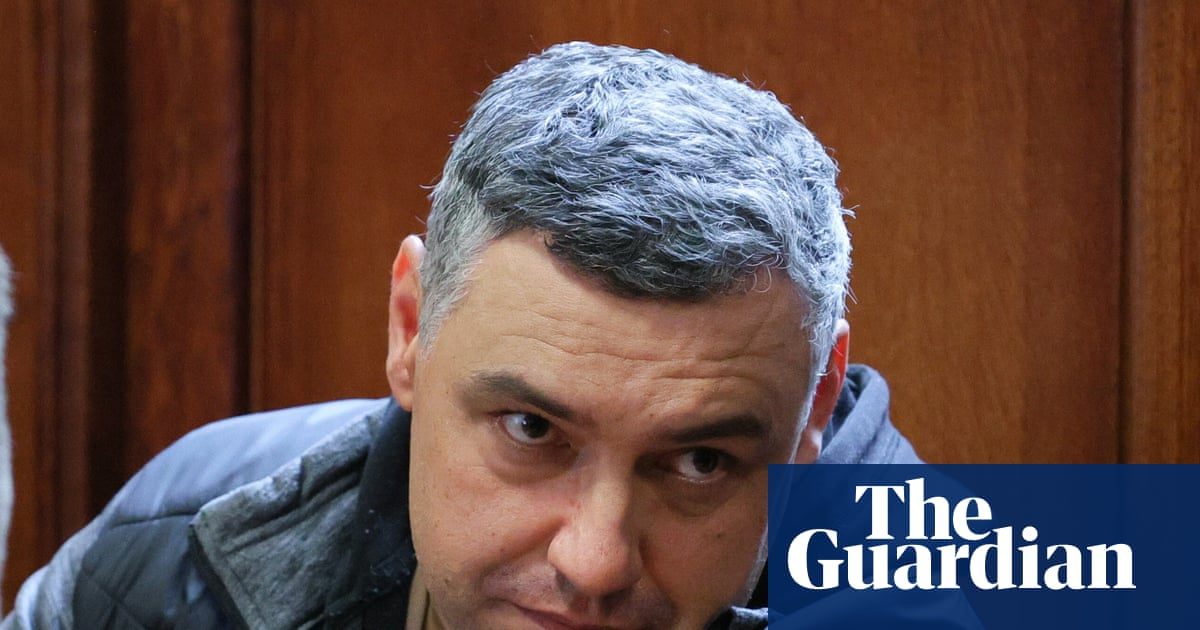
| | Nord Stream Sabotage Suspect Arrested — While Consulting on a Movie About ItIn 2022, underwater explosions destroyed the Nord Stream gas pipelines running from Russia to Germany, triggering one of the most convoluted espionage investigations in recent European history. The lead suspect just got caught — on the set of the Hollywood film dramatizing his alleged crime.
- Ukrainian diver Volodymyr Zhuravlev was detained in Croatia on a German European arrest warrant, with reports indicating he had been working as a consultant on Snake Island, a Doug Liman film starring Sean Penn and Adrien Brody that dramatically reconstructs the alleged sabotage.
- German prosecutors describe Zhuravlev as an experienced scuba diver who planted explosives as part of a group led by another Ukrainian, Serhii Kuznetsov, previously extradited from Italy to Germany.
- Both suspects deny involvement. The case now hinges on whether Croatia will extradite him — a Polish court previously refused, ruling German jurisdiction didn't apply and that pipeline sabotage could be seen as a justified act of defensive war.
- His Polish lawyer calls it a test for European law: same person, same facts, same arrest warrant, different country.
What to watch: Croatia's extradition decision will either send Zhuravlev to Germany for trial or open a fresh legal standoff between EU member states over how international law applies to wartime sabotage. Syria's Civil Society Has Room to Breathe — but the Walls Are Being MeasuredWhen Bashar al-Assad fell in December 2024, Syria's civil society organizations — many of which had spent 14 years running clinics, schools, and rescue operations in the state's place — suddenly had to figure out what their role was in a country with a functioning government again.
- More than a year on, registration is now open and straightforward, according to Al Jazeera — founding an association is sometimes easier than founding a company, with near-zero costs and no criminal conviction as the main condition.
- But a 1958 associations law, still on the books, requires prior government approval for foreign funding — and when a ministerial circular last October told groups to comply, 31 organizations jointly called it a return to a repressive framework.
- The sector is split three ways: organizations that registered and work within new rules, those that refuse out of distrust, and those that, as one activist put it, "beat the drum" for the government.
- The boundaries of civic work are being drawn right now, one activist said — making this moment more consequential than it may appear.
The bigger picture: The tension between a returning state and a civil society built to replace it is playing out in real time across Syria, and how that balance settles will shape what kind of public space Syrians have for years to come. China's Arctic Shortcut Is Rewriting the Map Between East and WestThe Suez Canal has been the spine of trade between Asia and Europe since 1869 — but Chinese shipping company Sea Legend has just launched a regular container route through the Arctic that cuts the journey from roughly 40 days to approximately 20, calling it the "Ice Silk Road."
- The route connects the Chinese port of Ningbo to the British port of Felixstowe, according to reporting cited by Assafir Al-Arabi, and runs through the Northern Sea Route along Russia's Arctic coast.
- Arctic navigation trips increased to 23 last summer, driven by accelerating sea ice loss — and demand for ice-classed vessels is rising alongside it.
- The route is still seasonal, requires specialized ships, and carries high rescue costs — meaning it complements rather than replaces the Suez Canal for now.
- Suez Canal revenues have already fallen by nearly half over the past two years, partly due to shipping companies diverting around Africa to avoid Houthi attacks in the Red Sea.
Zooming out: The Arctic route adds another dimension to a global competition already underway between China's Silk Road infrastructure and Western-backed economic corridors — with the Suez Canal's long-term centrality no longer something Egypt or anyone else can take for granted. |
|
| | - Lebanon's youngest world champ: Sky Shadi Zgheib, a Lebanese junior athlete, won the 2026 Junior MMA World Championship, climbing the podium to carry Lebanon's flag at one of the most competitive global youth combat sports events — proof that Lebanese champions can start their journey from childhood and reach the very top.
- Fady runs the whole country now: Building on his celebrated tenure leading Montreal's police service, Lebanese-Canadian Fady Dagher was elected president of the Canadian Association of Chiefs of Police at the organization's 121st annual summit in Edmonton — making him the national voice for police leadership across all of Canada.
- Rami Kadi, where art lives: Lebanese couturier Rami Kadi sat down with Annahar to talk about how he builds each collection at the intersection of hand embroidery, unconventional materials, and technology — with Lebanese artisans at the heart of every piece, because, as he puts it, "the human hand is what gives every creation its character."
- UNESCO puts cash on Tyre: UNESCO Director-General Khaled Al-Anani wrapped his Lebanon visit with a tour of Tyre's Al-Bass archaeological site, where Minister of Culture Ghassan Salamé announced the organization will provide $100,000 in urgent financial assistance to begin restoration work at the site, which was recently added to the World Heritage List's enhanced protection framework.
|
|
Yalla, khod your weekend — you've earned it, habibi. |
| ✓D. Alexander the Great's causeway |
Alexander the Great built a siege causeway to Tyre in 332 BCE; silt later widened it, permanently joining the island to the coast. |
Lebanon news, every weekday morning. Free, sharp, ~5 minutes. |
|
|
|
|