|   | Three numbers to hold in your head this Saturday: $200 million, $750 million, and six years. Kifkon — Lebanon is reopening the Turkish power barge scandal, reckoning with a massive funding gap in the south, and one legal reform is quietly making it harder for a key Beirut blast suspect to keep hiding in Europe. Let's get into it. |
|
| | Lebanon Launches Full Audit of Turkish Power Barges — and the Numbers Are UglyFor nearly a decade, three Turkish electricity barges sat off the Lebanese coast under contracts so murky that millions in penalties were never collected, bribery allegations went nowhere, and the company that owed Lebanon money somehow left demanding $200 million instead. Energy Minister Joe Saddi just reopened the file.
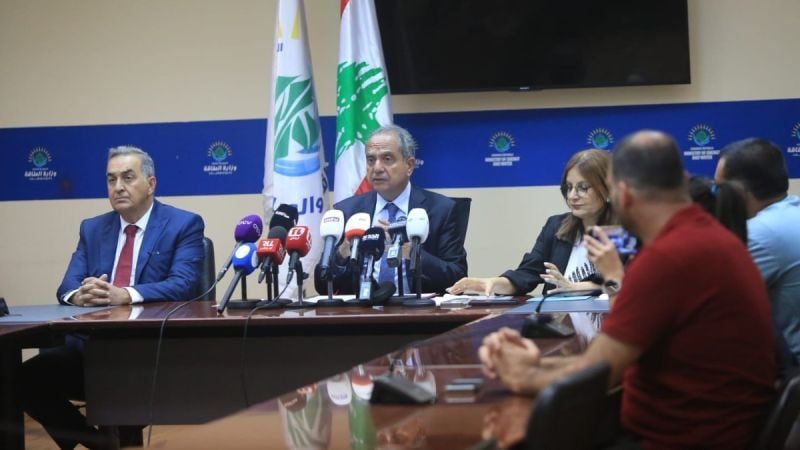
- Saddi announced a technical, financial, and legal audit covering the full barge deployment period, from 2012 to 2021, with bids to be opened on Oct. 15 — the cabinet approved a transfer of 44.75 billion LBP (about $500,000) to fund the tender.
- The minister directly contradicted former Energy Minister Gebran Bassil's defense: Bassil claimed barge electricity cost 14 cents per kilowatt; Saddi says EDL's own documents show it was higher than EDL's production cost every single year.
- The barges arrived late, underperformed, and were linked to adulterated fuel and bribery — yet Lebanon never collected delay penalties, and a $25 million penalty clause meant to guarantee the state's rights went unenforced when the ships were allowed to leave in 2021.
- Sources close to the file are cautiously skeptical: the audit is welcome, they say, but without political will to name senior officials, it risks becoming a tool for scapegoating rather than accountability.
What to watch: Whether the Oct. 15 bid opening produces a genuinely independent auditor — or whether the file quietly returns to the drawer it sat in for five years. Beirut Port Blast: Death Penalty Abolition Could Bring Ship Owner Back to LebanonIgor Grechushkin owned the vessel that carried the ammonium nitrate to Beirut's port before the August 2020 blast that killed many people and flattened entire neighborhoods. Bulgaria and Cyprus long refused to extradite him, citing the risk of execution under Lebanese law. Lebanon abolished the death penalty earlier this year — and now that argument is gone.
- Legal experts say the abolition removes the primary humanitarian obstacle that European courts cited to block extradition under the European Convention on Human Rights, making international judicial cooperation more urgent.
- Lawyer Adel Yammine says extradition is now procedurally possible but won't hold up the case — Judge Tarek Bitar should issue his indictment decision regardless, and the trial can proceed in absentia if Grechushkin isn't handed over.
- Justice Minister Adel Nassar previously confirmed the indictment is expected within a maximum of three months.
- Grechushkin is a primary suspect: the ship changed course to dock in Beirut for unexplained reasons, he refused to answer Bitar's questions in Bulgaria, and his company operated through shell entities registered in the Marshall Islands before declaring bankruptcy.
Why it matters: The death penalty abolition, passed as a broader judicial reform, may have just unlocked the most consequential extradition request in Lebanese legal history. Southern Lebanon's Recovery Is Real — But a $750 Million Funding Gap Threatens ItRestoring state presence in the south was always going to be harder than deploying soldiers. Schools, farms, water lines, and livelihoods don't rebuild themselves — and Lebanon's recovery framework is running on a fraction of what it needs.
- The Lebanon Emergency Assistance Project (LEAP) was designed to scale to $1 billion; only $250 million has been secured, leaving a $750 million gap — with $455 million earmarked for reconstruction still almost entirely unfunded.
- Of 267 schools in the South and Nabatieh governorates, 198 have been damaged — 30 completely destroyed — and the Education Ministry is targeting an in-person school opening on Sept. 15 for buildings that pass safety assessments.
- A social safety net covers roughly 230,000 families, reaching more than 1 million people through the Ministry of Social Affairs — cash assistance designed to help residents repair homes and stay in their communities rather than relocate permanently.
- Agriculture's emergency program has mobilized $1,650,150 in cash assistance targeting 4,840 farmers, with in-kind support expected to reach 1,850 more.
The bigger picture: A functioning south requires far more than a security deployment — and the gap between what Lebanon's recovery framework promises and what donors have actually committed will define whether residents stay or drift away permanently. |
|
as of 1:54 AM GMT · Source: Polymarket |
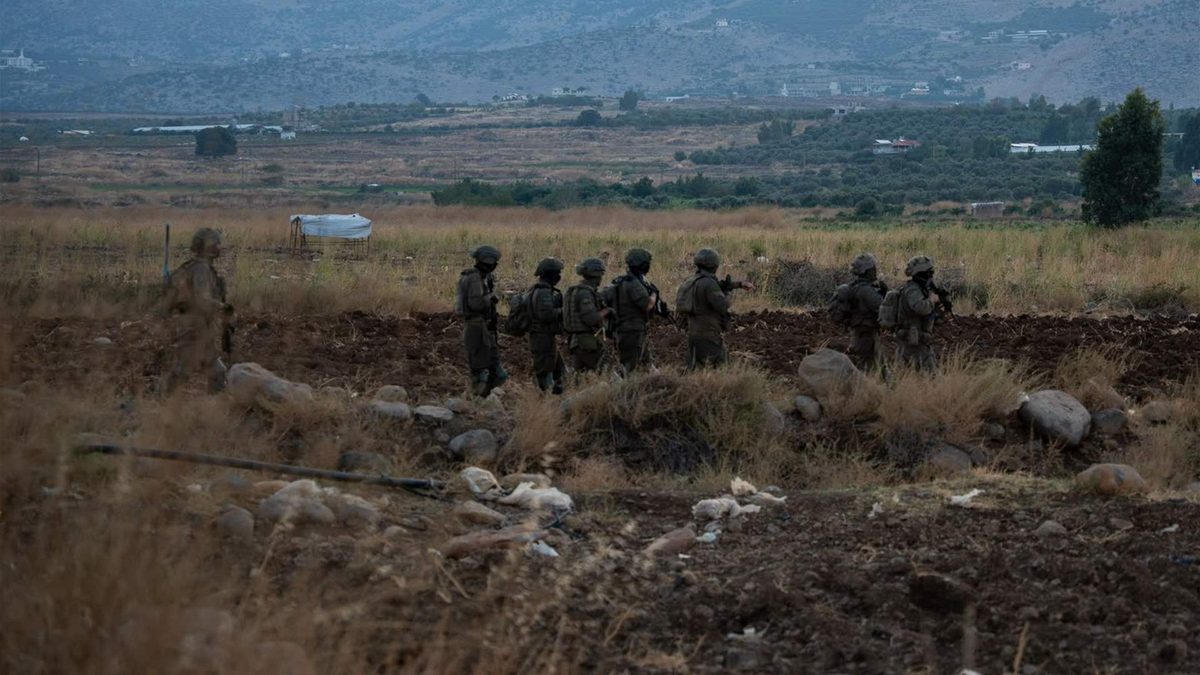
| | - Ali al-Taher tightens: Israel has decided to expand attacks on the contested hill in southern Lebanon — airstrikes, drones, and special ground operations — after reports that Hezbollah fighters emerged from tunnels. Israeli assessments estimate fewer than 30 Hezbollah and IRGC fighters remain trapped inside, with political approval for escalation still pending.
- United front, southern backdrop: Prime Minister Nawaf Salam and Defense Minister Michel Menassa stood side by side in Tyre — pointedly — 10 days after a very public parliamentary spat. Salam told reporters asking about the rift: "Do we look like we're at odds?"
- Economy shrinks, inflation bites: The World Bank projects Lebanon's real GDP will contract by 6.4 percent in 2026, blaming collapsed tourism, disrupted supply chains, and displacement — a brutal reversal after an estimated 4.2 percent growth in 2025, the country's strongest since the 2019 financial crisis.
- Chemical waste, exported: After days of public outrage, the Électricité du Liban board ordered tons of chemical waste — stored in Bisri and Zahle since being transferred there last year — to be exported from Lebanon regardless of cost, closing the disposal controversy for now.
- War's running toll: Lebanon's Ministry of Public Health updated its cumulative figures: 8,915 killed and 30,543 injured since October 8, 2023, through August 21, 2026 — of those, 4,348 killed and 12,307 injured in the second phase of hostilities from March 2 through August 21, 2026.
|
|
| ─ | Parallel Rate | 89,600 LBP | 0.00% | | ─ | Official Rate | 89,500 LBP | 0.00% | | ▲ | Gold | $4,661.6 | +3.22% | | ▲ | Bitcoin | $78,011 | +4.46% | | ▼ | S&P 500 | 7,674.37 | -0.44% |
as of 1:30 AM GMT · Source: lbprate, BDL, Yahoo Finance, CoinGecko |
| Israeli Settler Violence Nearly Doubles Inside Palestinian-Governed West Bank AreasSince the Oslo Accords divided the West Bank into administrative zones in 1995, Areas A and B — covering the major Palestinian cities and rural built-up areas — were meant to be under Palestinian Authority governance. Now, settler violence inside those zones has nearly doubled, and the tactics have shifted from the fringes to the Palestinian heartland.
- Almost two-thirds of all settler violence incidents in 2026 have taken place in Areas A and B, up sharply from previous years, according to a report by Israeli human rights organization Yesh Din shared with The Guardian.
- Attacks in Area B alone jumped from 25% of all West Bank incidents last year to 55% this year, while attacks in Area C fell from 67% to 37%.
- The UN estimates roughly 190 settler attacks per month in the first four months of 2026, putting the West Bank on track for more than 2,000 attacks by year's end.
- France announced sanctions against National Security Minister Itamar Ben-Gvir this week, with Foreign Minister Jean-Noël Barrot calling the situation in the West Bank "utterly disgraceful."
What to watch: Whether the coordinated European sanctions pressure on individual settler figures translates into any change in Israeli government policy toward outpost establishment in Areas A and B. Egypt's Security Forces Detain Women as Hostages — Without a Single Arrest RecordA Daraj investigation documents a decades-long, recurring pattern in Egypt: security forces storm homes of wanted men, detain their female relatives without charges or paperwork, and hold them until the fugitives surrender. At least 160 women and girls appear in the documented incidents alone — and not one detention appears in any official record.
- Testimonies collected from Upper Egypt and border governorates over five years reveal women held for days in police stations, questioned only about their relatives' whereabouts, with release contingent on a fugitive's surrender.
- In one documented 2025 incident in Matrouh, 24 women were detained; two men from the suspect's family were subsequently handed over by the village mayor and later found dead in a desert area.
- Human Rights Watch first documented the practice in 1995. Its May 2025 report confirmed it continues — and that Egypt's Interior Ministry denied the detentions despite multiple witnesses.
- Lawyers told Daraj that filing a formal complaint is itself a risk: officers can fabricate charges against the detained woman to protect themselves.
The bigger picture: Three decades of documentation — from 1995 to 2025 — without a single prosecution suggests the practice is structural, not incidental, and testing the limits of Egypt's own constitutional guarantees of personal freedom. Poland Builds Europe's Longest Defense Barrier — With German Engineers on SitePoland is constructing an 800-kilometer defensive barrier along its borders with Russia and Belarus called the East Shield, the most ambitious land fortification project in NATO's eastern flank since the Cold War. German combat engineers are now helping build it — a politically loaded partnership given the two countries' history.
- Around 40 German sappers have been deployed near Budry in Masuria since June, installing anti-tank obstacles including rows of concrete "Czech hedgehogs" within 200 meters of the Russian border, according to DW.
- Poland's 2026 defense budget reached 200 billion zlotys (about 46 billion euros, or 54 billion dollars) — nearly 5% of GDP, the highest share of any NATO member.
- The German-Polish defense cooperation agreement was signed on June 17, 2026, formalizing what has become one of NATO's most active bilateral military partnerships.
- Not everyone in Poland is on board: the right-wing Law and Justice Party (PiS) has long opposed German military presence, with leader Jaroslaw Kaczynski declaring in 2014 it would be "at least seven generations" before that was acceptable.
Zooming out: The East Shield reflects a broader European reckoning with land-based deterrence — and the political symbolism of Germany deploying engineers on Polish soil is as significant as the concrete barriers they're laying down. |
|
| | - Brummana boy, still strumming: Gus Farah, the Lebanese singer-songwriter who turned down Warner Brothers and Philips to stay in war-torn Lebanon, is releasing a new album called "The Outcome" — 110 songs written over a lifetime, narrowed to eight or ten, including one called "Beirut City" that pairs old footage of the city with how it looks now.
- Lebanon's UN long shot: Ivonne A-Baki, an Ecuadorian diplomat of Lebanese origin whose family hails from Btater in the Aley district, has joined the race to succeed António Guterres as UN Secretary-General — she speaks five languages, holds a Harvard Kennedy School master's degree, and says sheltering with her children in a Beirut basement during the bombing shaped her entire vision for peace.
- Fifty years, still fresh: Half a century after his death in May 1976, Lebanese poet and prose writer Amin Nakhle — son of the lyricist of the Lebanese national anthem and dubbed Prince of Arab Prose — is being remembered as a writer whose classical elegance still reads, as one admirer put it, "fresh and delicious like village things."
- TikTok's newest champion: Boxing legend Amanda Serrano, seven-weight world champion and 37-year-old Puerto Rican icon, is defending her featherweight titles in the first world championship boxing bout ever streamed live on TikTok — with a farewell fight in Puerto Rico already planned for later this year.
|
|
That's your Saturday morning — see you Sunday with a fresh cup and fresh news. |
The "buzuq" (also spelled bouzouk) is a long-necked fretted stringed instrument, related to the Greek bouzouki, used in Lebanese folk music. |
Lebanon news, every weekday morning. Free, sharp, ~5 minutes. |
|
|
|
|