|   | presented by  | Yalla — someone at Lebanese General Security has a very uncomfortable Monday morning ahead of them, if anyone in Beirut still believes in accountability. Iranian Revolutionary Guard officers checked into a Ramada using genuine Lebanese passports, Rome talks with Israel just fell apart, and Washington has quietly concluded that Plan A for Hezbollah's weapons was never really a plan. Ahla w sahla to the week. |
|
| Lebanese Passports, Forged for Iran's IRGC — and Nobody Has Been Held AccountableWhen an Israeli strike hit Beirut's Ramada Plaza Hotel on March 4, it killed four Iranian Revolutionary Guard officers — who had checked in using genuine Lebanese passports issued under false names. An investigation by Alhurra has now mapped out the forgery network that made it possible, and found that the accountability trail goes cold at exactly the point where it should begin.
- The officers were booked through a shell company called "Power" — registered in Zahle, nominally in car trading, with a single partner and no actual business activity — which security sources say was used to bypass Lebanon's hotel check-in system linked to General Security.
- Sequential passport numbers on the seized documents point to a single issuance center; a General Security source says this "precisely identifies the employee and the center responsible" — yet the center head has not been summoned for questioning.
- The same forgery mechanism is believed to have been used for senior figures from the former Syrian regime after Assad's fall, who allegedly obtained Lebanese passports to exit via Lebanese territory.
- MP Ghada Ayoub filed a report with the Public Prosecutor citing "indications and evidence" of passports issued to IRGC members and Hezbollah leaders, and warned of "deep-state networks" inside official institutions.
Why it matters: The question is no longer how the forgery happened — sources say it's technically traceable — but why, months later, no one inside the institutions that enabled it has faced consequences. Washington Knows the Lebanese Army Can't Disarm Hezbollah Alone — So Here's Plan BAfter a detailed military survey last month, the US has concluded that the Lebanese Army is outgunned by Hezbollah in almost every meaningful category. Rather than a confrontation it describes as bordering on catastrophic, Washington is now building a hybrid strategy: more money and equipment for the army, reconstruction funding in areas transitioning from Hezbollah control, and Israeli military action where the army simply cannot go.
- The Lebanese Army has roughly 60,000 active-duty soldiers and 35,000 reservists, operating 115 aging M48 and M60 tanks — while Hezbollah retains an estimated 25,000 rockets and shells, around 1,000 drones, and between 40,000 and 50,000 active fighters, giving it what one US military assessment called "absolute qualitative superiority" over Lebanese Army armor.
- The three "experimental areas" where the army has deployed — Zawtar al-Gharbiyah, Srifa, and Froun — were already under Israeli control and had no Hezbollah presence to begin with, according to informed sources.
- A significant complication: a large share of army soldiers are Shiite, some from the same families as Hezbollah fighters — making forced raids in those communities a strategic and human minefield.
Zooming out: Washington's implicit plan — the army advances where Hezbollah permits, Israel handles the rest — is less a disarmament strategy than a managed holding pattern, with reconstruction dollars as the softer instrument of pressure. Rome Talks Stall, Hostilities Continue — Lebanon's Framework Agreement Faces Its Electoral SqueezeThe June 26 Framework Agreement between Lebanon and Israel, brokered by Washington, was designed as a staged, reciprocal path: the Lebanese army reclaims sovereign territory, non-state armed groups disarm, and Israel withdraws — all with verification mechanisms. But the latest round of negotiations in Rome stalled, and with Israeli elections expected in October and US midterms in November, Lebanon's diplomatic window is narrowing fast.
- Rome talks broke down over Israeli withdrawal specifics, the concept of experimental zones, and verification mechanisms, while Israel continued demanding additional Lebanese steps on Hezbollah's weapons.
- Despite two truce agreements — on June 4 and June 26 — hostilities have continued; Israeli strikes were reported Friday on al-Mansouri, Mayfadoun, and a massive explosion between Arnoun and Kfar Tibnit, according to Lebanon's National News Agency.
- Any Israeli security concession before October elections risks being used against Netanyahu domestically, making field escalation a potential electoral tool rather than a diplomatic liability.
What to watch: Whether Lebanon can lock in institutional commitments — timelines, verification mechanisms, implementation guarantees — before both the Israeli and American electoral calendars absorb all political oxygen. |
|
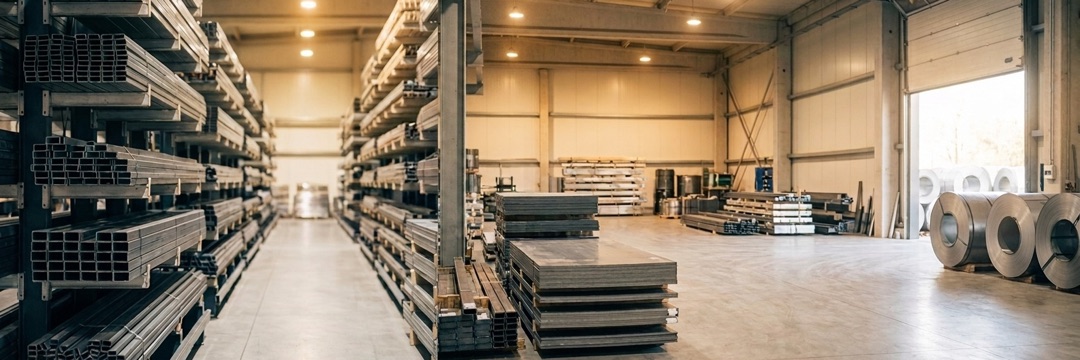
Every material your project needsCarbon and stainless steel, aluminum, copper, insulation, polycarbonate, composite panels, gratings — Tchaghlassian Steel carries the full list, so contractors and fabricators in Lebanon source it all in one place instead of chasing five suppliers. |
as of 1:55 AM GMT · Source: Polymarket |
| | - Dr. Food, finally caught: Georges Dib, the influencer-turned-drug-lord sentenced in absentia to life in prison for smuggling 820 kilograms of hashish hidden in chocolate packaging, was arrested on August 23 in Rahbeh, Akkar, after a month of surveillance — one day after his ex-wife threw a very public divorce party.
- 17,000 faces, still unnamed: The ICRC unveiled a 40-by-16-meter mural on the wall of its Hamra building — painted over 21 days by graffiti artist Spazouno — to mark the approaching International Day of the Missing and Forcibly Disappeared, honoring more than 17,000 Lebanese still unaccounted for.
- Fake-map claim, rejected: Lebanon's negotiating delegation denied that Israel presented maps of alleged Hezbollah tunnels beneath Baalbek's Citadel during the Rome or Washington talks — official sources say Israel raised no such claim at the table, and the army has found nothing beneath the site.
- Pink containers, Hebrew letters: New reporting links the mysterious pink containers spotted across southern Lebanon to Israeli demolition operations — AFP cited sources saying containers previously found in Houla carried Hebrew writing and were likely intended for demolition, raising pointed questions about who left them there.
- FPM's mock-mugshot campaign: The Free Patriotic Movement's youth sector distributed flyers styled as criminal records targeting MPs who voted for the general amnesty law in Jezzine and beyond — the FPM claimed the campaign as political protest, while MP Saeed al-Asmar asked security agencies to investigate what he called anonymous intimidation.
|
|
| ─ | Parallel Rate | 89,550 LBP | 0.00% | | ─ | Official Rate | 89,500 LBP | 0.00% | | ▲ | Gold | $4,681.3 | +1.24% | | ▲ | Bitcoin | $77,286 | +0.02% | | ▼ | S&P 500 | 7,674.37 | -0.44% |
as of 1:28 AM GMT · Source: lbprate, BDL, Yahoo Finance, CoinGecko |
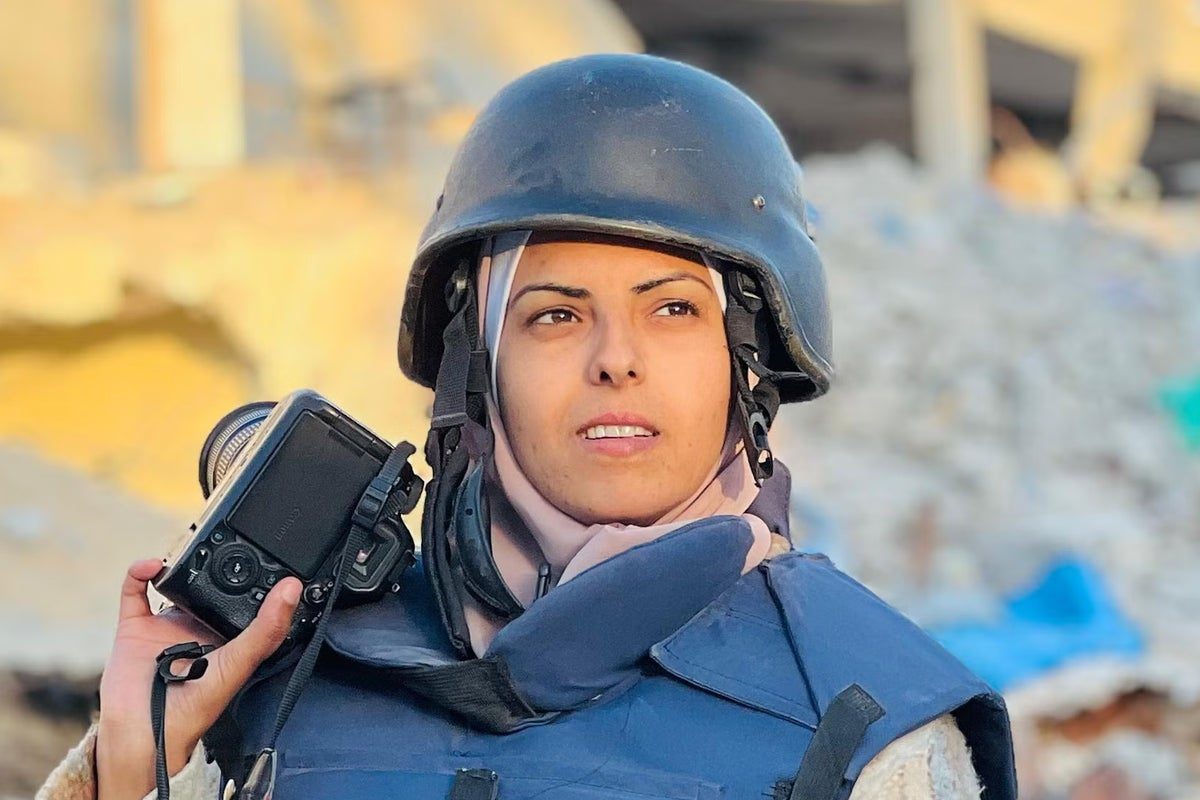
| | One Year On: The Nasser Hospital Double-Tap That Killed Journalists on Live TVOn August 25, 2025, Israeli tank fire struck Nasser Medical Complex in Khan Younis twice — eight minutes apart — killing Gaza journalist Mariam Abu Dagga and at least 19 others, including five journalists and five first responders, as rescue teams gathered on a stairwell in full view of live cameras. One year later, The Independent has published a detailed reconstruction — and no one has been held accountable.
- Two Israeli whistleblowers told The Independent the double-tap method — one shell to break the shelter, a second to kill those who gather — was deliberate and would have required sign-off at battalion level or higher.
- Acoustic analysis by Earshot NGO identified the likely weapon as a 120mm M329 tank shell fired from approximately 2.5 kilometers northeast of the hospital; satellite imagery confirmed a tank base 2.5km north of the hospital.
- British MPs, including Labour's Rachael Maskell, have since called on the UK government to cease all trade with Israel and increase sanctions in response to the investigation.
- The Committee to Protect Journalists says Israel has killed more than 200 Palestinian media workers since 2023 — more than any other government in CPJ records.
What to watch: Whether the UK government responds to parliamentary pressure with concrete measures, and whether the ICC case against Netanyahu advances to address the pattern of journalist killings documented in the investigation. Syria's Foreign Minister Says Talks With Israel Were 'Almost Complete' — Then CollapsedSyria and Israel had agreed on paper to nearly all terms of a security deal earlier this year — then Israel struck the Abu al-Duhur airbase, contact was cut, and the negotiations froze. Syrian Foreign Minister Asaad al-Shaibani says the door to diplomacy is still open, but trust is not.
- The draft agreement included a commitment by Israel not to attack Syria, several security zones along the border, a UN-only buffer zone, and a link to Israeli withdrawal from territory seized after Assad's fall in 2024.
- "We do not trust Israel at the moment," al-Shaibani told Reuters, while still calling on Israel to seize a "historic opportunity."
- Israel struck Abu al-Duhur claiming Syria was preparing to allow Turkish forces to deploy there; Syria and Turkey both denied the claim.
- No date has been set for resuming talks. US envoy Tom Barrack said Washington is working on a deconfliction mechanism among Israel, Turkey, and Syria.
The bigger picture: Syria's simultaneous pursuit of US partnership, Turkish military cooperation, and Israeli diplomatic engagement reflects how Damascus is threading a narrow needle in a region where each of those relationships creates friction with the others. Britain Visits Kyiv With a Long-Range Missile Promise — and a Political SubtextUK Prime Minister Andy Burnham traveled to Kyiv for Ukraine's independence day, announcing that Britain would allow defence company MBDA to declassify information about UK-made components of Storm Shadow cruise missiles to help Ukraine build its own long-range version. The visit lands as Zelenskyy faces the most direct domestic political challenge of his presidency.
- The missile technology transfer will take years to affect the battlefield, but it signals a deepening British commitment at a moment when Russia has withdrawn its ambassador from London without naming a replacement.
- Ukraine's military has exhausted its US-made Patriot interceptors; Zelenskyy said he sought 300 to 360 Patriot missiles for winter and reached a separate agreement with France on at least one air-defence system this year.
- Former Ukrainian Defence Minister Mykhailo Fedorov, dismissed in July and now polling at 12.5% in presidential ratings, has called for elections — which Zelenskyy says would be "a tsunami" for the state at war.
Zooming out: The Burnham visit and missile announcement come as the 34-country "coalition of the willing" co-chaired by Britain and France works to sustain Ukraine's military capacity through a winter with no ceasefire in sight. |
|
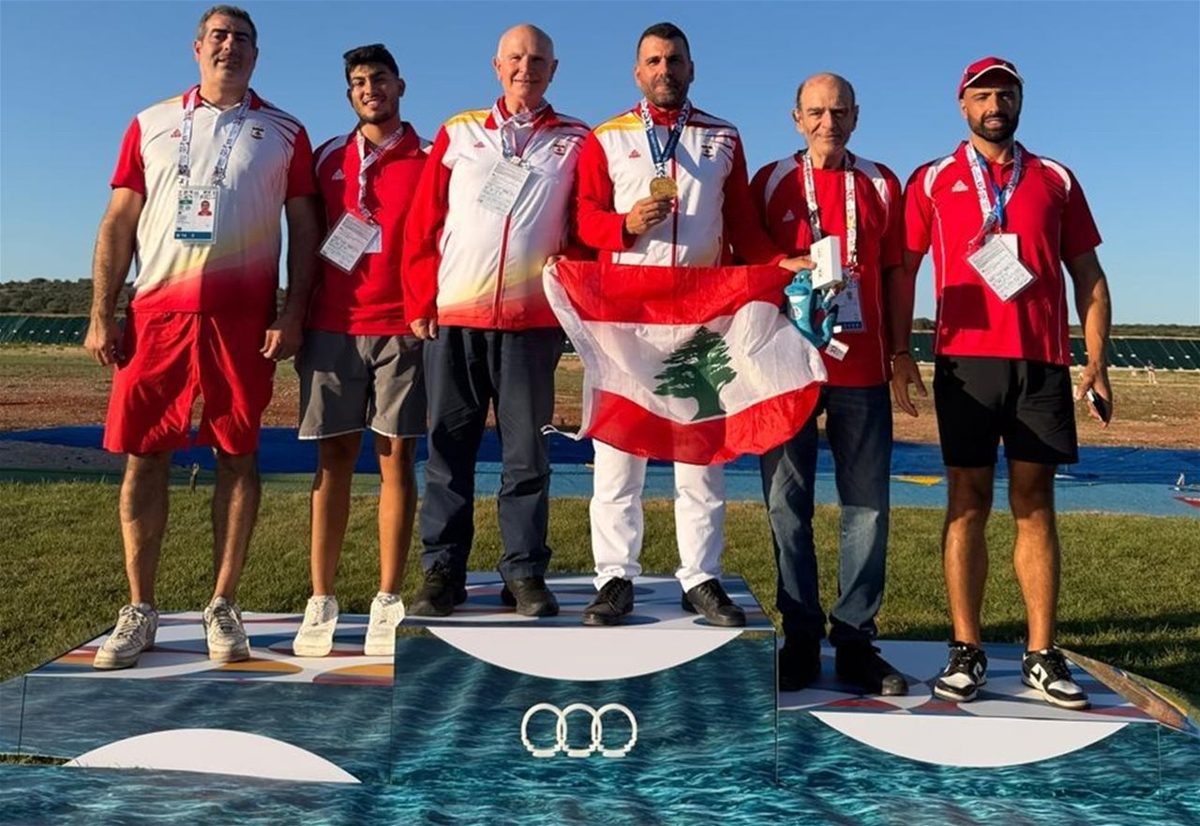
| | - Gold in Taranto: Lebanese shooter Samer Sarkis won gold at the Mediterranean Games in the men's skeet competition, hitting 32 out of 36 targets in the final to beat Turkey's Muhammad Seyhoun and Cyprus's Nikolaos Vasileiou — congratulations rang from Taranto all the way to Beirut.
- Beirut's vintage whisperer: Yahya Khaled is quietly restoring some of the rarest cars on earth in the heart of Beirut — including a 1961 Jaguar E-Type, a 1972 Porsche 911T Ölklappe, and a 1982 Maserati Merak, preserving automotive history one immaculate detail at a time.
- Headbanging with a baton: Conductor Gustavo Dudamel spent his final Hollywood Bowl weekend trading his symphony for Foo Fighters, leading the LA Philharmonic through a 15-song set that had 17,000 fans' phones glowing — and Dave Grohl calling it a night he'd want to repeat every night for the rest of his life.
- Fils makes history in Cincinnati: French tennis star Arthur Fils defeated Frances Tiafoe 6-3, 1-6, 6-0 to claim his first Masters 1000 title at the Cincinnati Open — the final was a historic first: the ATP's first Masters 1000 final ever played between two Black players.
|
|
Monday's yours — make something good happen with it. |
The sinkhole is impressively deep. |
Lebanon news, every weekday morning. Free, sharp, ~5 minutes. |
|
|
|
|