|   | Yalla — UNIFIL is officially out, southern villages are satellite-images of what used to be homes, and Greece quietly dropped off armored vehicles at Beirut Port while the Patriarch reminded everyone that state weapons monopoly is not a partisan talking point. A Sunday with a lot to sit with. Let's get into it. |
|
| UNIFIL's Clock Is Running — Now Comes the Hard PartUNIFIL is officially done. The UN Security Council has formally decided the force's mandate ends December 31, 2026, closing a chapter that began in 1978. The debate now shifts to what replaces it — and whether a successor mission can do what UNIFIL never could.
- France and Italy plan to co-lead an international coalition supporting Lebanon after UNIFIL's departure, focused on strengthening Lebanese sovereignty and the Lebanese Armed Forces.
- Germany has separately proposed an EU-mandated force; the EU's diplomatic service has also proposed a three-year mission to train and advise the Lebanese Army on border security, intelligence, surveillance, and maritime operations.
- The core critique of UNIFIL: despite thousands of peacekeepers, Hezbollah built tunnels and accumulated weapons throughout the South — UNIFIL could report violations but couldn't prevent them.
- Any successor mission, the editorial argues, should help the Lebanese Army assume exclusive security control, dismantle unauthorized infrastructure, and facilitate a phased Israeli withdrawal — then make itself unnecessary.
What to watch: Whether the France-Italy coalition and the EU advisory proposal get folded into a single coherent framework, or fragment into parallel missions with overlapping mandates and unclear authority. Southern Villages: Destroyed Beyond Recognition — and Maybe Beyond RebuildingSatellite images and Israeli television's own reporting suggest parts of southern Lebanon haven't just been damaged — they've been erased. The scale raises a question that goes beyond reconstruction engineering: can these places be brought back at all, and under what political conditions?
- Israeli Channel 12 published an investigation covering 19 villages where destruction rates reached 74%, with 10 of them exceeding 80% destruction and some surpassing 95%, according to Annahar.
- History offers mixed precedents: Warsaw rebuilt its historic center in about five years after 85% of it was destroyed in 1944; Hiroshima required a special national law in 1949 to even begin recovery after the atomic bombing.
- Lebanese University historian Imad Mourad says three parties hold the decision on reconstruction — Israel, the Lebanese state, and Hezbollah — and warns that what's happening in the south suggests a "long-term control project" with no rebuilding unless disarmament and a peace agreement are concluded.
The bigger picture: Reconstruction timelines and political conditions are inseparable — the villages' fate will ultimately be determined not by engineers, but by whatever peace framework, if any, emerges from the current negotiations. Greek Military Hardware Lands in Beirut — and the Patriarch Weighs In on Who Should Hold the GunsGreece delivered a second batch of military equipment to the Lebanese Army this week, a quiet but concrete sign of European investment in Lebanon's security forces. The following day, the Maronite Patriarch urged that the question of weapons monopoly be handled as a matter of national unity — not a political weapon.
- The delivery, received at Beirut Port on August 29, included 13 M113 armored personnel carriers and 10 trucks — the second Greek donation batch, following a first batch received on January 16, 2026.
- Patriarch Bechara Boutros al-al-Rahi, in his Sunday sermon from Dimane, stressed that the exclusivity of arms in the hands of the state "should not turn into a confrontation between Lebanese, nor into a title used by one party against another" — a step beyond his previous calls for army sovereignty, now explicitly warning against sectarian instrumentalization of the issue.
- Al-al-al-Rahi also called for Lebanon to adopt "active neutrality" to protect itself from regional conflicts while preserving its right to defend its own territory.
Zooming out: European arms deliveries and clerical calls for state monopoly on force are converging signals — but the gap between symbolism and operational capacity remains wide as long-term financing for the army stays unresolved. |
|
as of 11:07 AM GMT · Source: Polymarket |
"3ish kteer, btesma3 kteer" suggests that: | | Elders exaggerate stories |
| | Life experience exposes you to many realities |
| | Knowledge comes from listening |
|
Scroll to the bottom for the answer — or play all 10 at sobhiye.news/games/trivia |
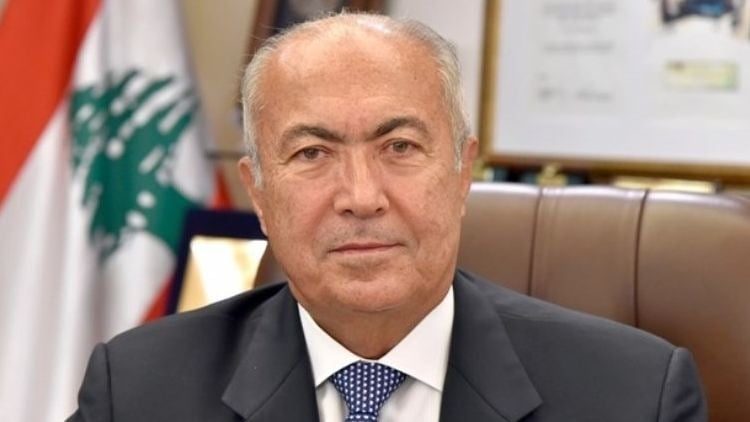
| | - End of an era in Beirut: Independent MP Fouad Makhzoumi's list swept 11 of 18 seats in the Union of Associations of Beirut Families elections, handing Saad Hariri's Future Movement its first-ever defeat in the union — local media called it a "Beirut earthquake" and a sign of "the decline of Harirism" in the Sunni street.
- Amnesty's fine print: Megaphone's analysis of Lebanon's General Amnesty Law — passed August 13 — argues it may be the largest financial crime whitewash in the country's history, potentially shielding former BDL Governor Riad Salameh from pre-2020 prosecutions and opening doors for major drug traffickers and public sector corruption cases covering the past 35 years.
- Qlayaat, cleared for takeoff: Lebanon's second international airport at René Moawad in Qlayaat has moved from blueprints to construction — the terminal has been expanded from 2,000 to 4,700 square meters, and the Minister of Public Works says the first flight, targeting Saudi Arabia, is expected in early October 2026, with an initial capacity of 114,000 passengers annually.
- Birds vs. planes: Beirut's Rafik Hariri International Airport has logged over 25 bird strike incidents near its runways, prompting parliament to order farms and slaughterhouses within a 5-kilometer radius to close — though poultry and cattle unions are pushing back, blaming the Costa Brava landfill and the polluted Ghadir River instead.
- More births, for now: Lebanon recorded 70,986 births versus 33,952 deaths in 2025 — still net positive, but the trend is grim: births have fallen 24.4% since 2019 while deaths jumped 27% in a single year, and people over 65 now make up 15% of the population, the highest share among Arab countries.
|
|
| ─ | Parallel Rate | 89,550 LBP | 0.00% | | ─ | Official Rate | 89,500 LBP | 0.00% | | ▲ | Gold | $4,529.9 | +1.16% | | ▲ | Bitcoin | $78,067 | +0.47% | | ▲ | S&P 500 | 7,711.76 | +0.47% |
as of 10:39 AM GMT · Source: lbprate, BDL, Yahoo Finance, CoinGecko |
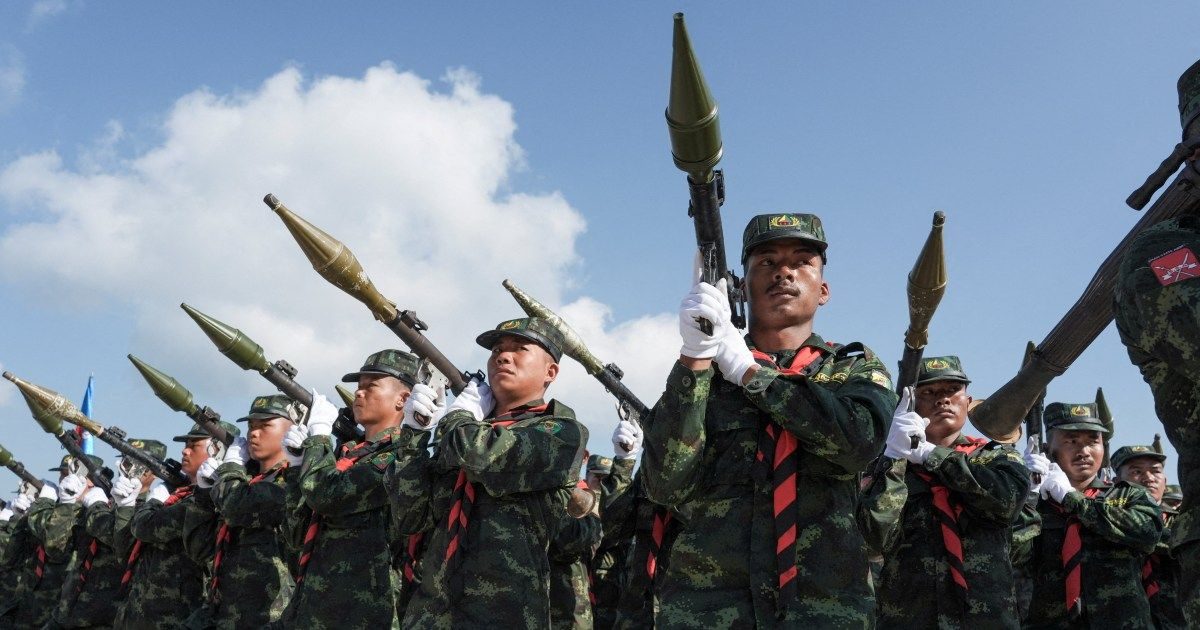
| | Myanmar's Military Is Winning Back Territory — With Conscripts, Airstrikes, and China's HelpMore than five years into a civil war that began with a 2021 coup, Myanmar's military is clawing back ground it lost to resistance forces — not through battlefield brilliance, but through sheer numbers, unchallenged airpower, and a crucial assist from Beijing.
- The military has retaken 22 of the 101 towns it lost after the coup — just 9% of lost territory, but strategically positioned along key trade corridors linking border areas to central Myanmar.
- Close to 150,000 troops have been added through conscription since 2024; China pressed two major opposition forces out of the fight and pushed the United Wa State Army to stop selling weapons to resistance groups, triggering ammunition shortages nationwide.
- The air campaign's civilian toll: 520 airstrikes from April through June alone, hitting 87 townships and killing at least 314 civilians, including 41 children — Chin State was hit hardest with 122 strikes.
- Deaths in the conflict have surpassed 100,000, with 3.9 million people displaced and an estimated one in three people requiring humanitarian assistance, according to the UN.
What to watch: Analysts warn Myanmar faces a protracted war of attrition — the military is unlikely to score decisive wins, but resistance forces have been pushed from coordinated offensives into defensive guerrilla warfare. Gaza's Toxic Waste Is Now Israel's Public Health Problem TooThe destruction of Gaza's sanitation infrastructure has created a pollution crisis that doesn't stop at the fence. Shared coastlines, aquifers, and marine ecosystems mean the environmental consequences of the war are now washing up — literally — in Israeli waters.
- Over 100,000 cubic metres of raw, untreated sewage flow into the Mediterranean or onto land from Gaza every day; because currents in this part of the Mediterranean move south to north, the waste drifts directly into Israeli coastal waters.
- The Ashkelon desalination plant in southern Israel has been forced to shut down multiple times due to high faecal bacteria contamination from Gaza's wastewater.
- Israel has also begun moving an estimated 60 million tonnes of rubble from Gaza into undisclosed locations inside Israel and the West Bank — potentially transferring heavy metals, asbestos fibres, white phosphorus particulates, and biological matter directly to disposal sites.
- Israeli PM Netanyahu and representatives of the Board of Peace agreed to set up a working group on sanitation and public health affecting both Israel and Gaza; its membership has not yet been made public.
The bigger picture: Environmental groups have warned for years that Gaza and Israel share a coastal ecosystem, meaning humanitarian and sanitation crises on one side carry direct public health consequences for the other. Greece and Turkey Are Fighting Over Marine Parks NowGreece and Turkey managed nearly three years of unusual calm after the 2023 earthquake brought them closer together — then Turkey declared two marine parks in disputed Aegean waters, and the truce evaporated. The parks look like conservation; they function like sovereignty claims.
- Turkey's two new marine parks include a protected area between the Greek islands of Lemnos and Samothrace in the northeastern Aegean, and a southern park surrounding the Greek island of Kastellorizo — both in waters Greece considers outside Turkish jurisdiction.
- Greece called the designations "illegal," with PM Mitsotakis stressing that "areas under Greek sovereignty are determined by international law" and that Greece is "always ready to defend them."
- Athens is planning an air defense shield over the Aegean modeled on Israel's Iron Dome, dubbed the "Achilles Shield," expected to be fully operational by 2029.
Zooming out: Turkey's "Mavi Vatan" doctrine — which challenges Greek and Cypriot maritime zones — has until now remained largely theoretical; using marine park designations to advance it through legislation marks a shift from strategy to legal action. |
|
| | - Lebanon plays Mozart in Moscow: The National Youth Orchestra of Lebanon performed at the World Youth Orchestra Festival in Russia, playing two concerts in Moscow and Sochi under legendary maestro Yuri Bashmet — their program included Mozart's Symphony No. 40 and Ravel's Bolero, alongside musicians from 20 countries.
- Lebanese-Australian hall of fame: Lebanese-Australian Grandmaster Dr. Hassan Iskandar was inducted into the Taekwondo Hall of Fame in New Jersey, capping a career of more than 50 years — he holds a 9th-degree black belt and previously served as president of the Australian Taekwondo Federation, and his family was named Taekwondo Family of the Year 2026.
- Walnut season in Jarjouaa: Writer Mohammad Farhat's essay on the walnut-picking season in his Lebanese village of Jarjouaa is the kind of thing you read slowly — fathers with sickles cutting corridors through blackberry bushes, children racing to fill baskets, and a perfume of green husks and cut branches that, he writes, "if we were allowed to devour it, we would."
- GTA VI is almost here: Rockstar Games' long-awaited Grand Theft Auto VI launches November 19 on PlayStation 5 and Xbox Series X, with global preorders already reaching an estimated $260 million and projected launch-week sales of up to $4.5 billion — the game's campaign alone takes roughly 80 hours to complete.
|
|
Wherever this Sunday finds you — balcony, kitchen, or somewhere in between — hope it has at least one slow, good hour in it. |
| ✓C. Life experience exposes you to many realities |
It's descriptive, not celebratory - exposure, not wisdom. |
Lebanon news, every weekday morning. Free, sharp, ~5 minutes. |
|
|
|
|