|   | August 31, 1978 — the day Imam Musa Sadr vanished in Libya — and 48 years later, Lebanon is still trying to figure out what was lost with him. Ahla w sahla: this morning we're also watching southern villages get erased house by house, and a new set of rules being written in the skies above the south that nobody in Beirut seems to have signed off on. |
|
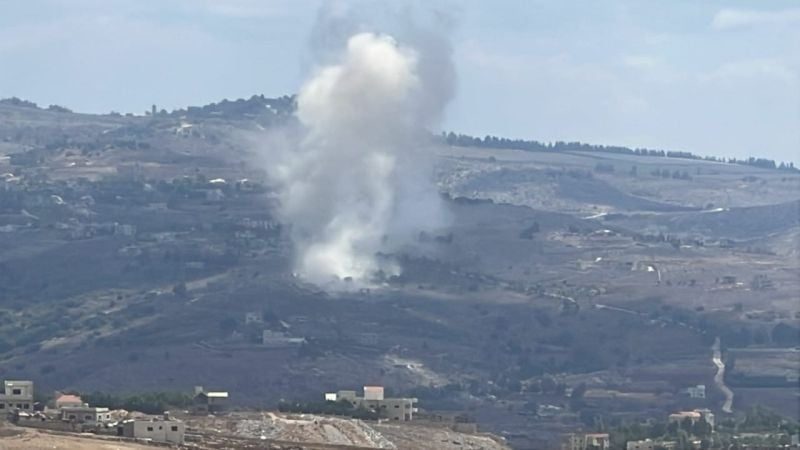
| | Houla on the Edge: 90% of a Village Wiped Out as Israel's Southern Operations IntensifyWe've reported on the systematic destruction of southern Lebanese villages for weeks now — Mansouri, Yaroun, and others reduced to rubble. Houla is the latest alarm. The village's mayor says Israeli strikes, shellings, and demolitions have now destroyed 90% of its homes and infrastructure, and he's warning it could soon be officially declared a "disaster-stricken village."
- Israel demolished ten houses on Thursday, eight on Friday, and another ten on Saturday — plus a senior community center that had been serving as the municipality's temporary offices.
- Israeli forces also set fire to forests and agricultural fields, destroying a large number of fruit trees and olive trees.
- Overnight operations spread across multiple districts: artillery hit Kfar Reman, Mansouri, and Toulin; an Apache helicopter fired toward the Litani River; phosphorus bombs dropped on the Ali al-Taher hill's forests; and Israeli vehicles advanced from Haddatha into Aita al-Jabal.
- The mayor issued a pointed denunciation of the "official silence" in the face of what he called mass destruction.
What to watch: Whether Lebanon's government and international partners move beyond condemnation to apply concrete pressure before more villages cross the threshold from damaged to permanently erased. Israel Sets New Rules of Engagement Around Ali al-Taher — and Strikes Deeper Into LebanonFor months, Israeli operations near the strategic Ali al-Taher Heights east of Nabatieh had been a slow grind — tunnels, drones, gradual encroachment. That changed on August 29, when Israel struck the town of Arabsalim, deeper into Lebanese territory than it had gone in nearly two weeks, killing a Lebanese woman. Security sources say it's a deliberate signal: confront Israeli advances at Ali al-Taher, and the strikes expand outward.
- The Arabsalim strike came after Hezbollah reportedly launched two drones toward Israeli forces at Ali al-Taher; Israeli media report five explosive-laden drones have targeted Israeli troops in the area since early August.
- Lebanese sources say the US curbed Israel's push for a large-scale military operation, prompting a strategy of "gradual encroachment" — repeated strikes within a three-kilometer radius of the heights, destroying dozens of homes and buildings in Nabatieh al-Fawqa and surrounding areas.
- Iran drew its own line: Major General Mohsen Rezaee said Beirut and its southern suburbs are a "red line for Tehran," and that Israel is "no longer capable" of striking them.
- Hezbollah has claimed no operations publicly, maintaining deliberate secrecy — but Israeli statements consistently point to Hezbollah activity at the heights whenever their vehicles attempt to advance.
Zooming out: Two sets of rules of engagement are now being written simultaneously — one by Israel around Ali al-Taher, one by Iran around Beirut — and Lebanon sits squarely between them. The Imam Who Chose Lebanon: Remembering Musa SadrAugust 31 marks the anniversary of Imam Musa Sadr's disappearance — a disappearance that has never been officially resolved. Today, Al Modon publishes a deep biographical essay on the man who, despite being Iranian-Najafi by birth and education, came to define a vision of Lebanese Shiite identity rooted in citizenship and coexistence rather than sectarian separatism.
- Sadr was of Lebanese origin — his ancestors came from the village of Shehour in the Tyre district — and he settled in Tyre in 1959 at the invitation of Marja' Sayyed Abdel Hussein Sharafeddine, building on a Lebanese Shiite heritage that predated his arrival.
- He was the first cleric to enter the University of Tehran's Faculty of Law, later co-founding the reformist magazine Maktab-e Islam alongside martyr Beheshti and Sheikh Naser Makarem.
- His project, as framed by Sheikh Mohammad Mehdi Shamseddine: an "Arab-Islamic-Human National Project" that integrated Lebanese Shiites into a reform-of-nation framework, not a sectarian one.
The bigger picture: Sadr's disappearance remains an open wound in Lebanese memory, and revisiting his intellectual legacy on this anniversary is a reminder of what kind of political vision was lost — and what's still being argued over today. |
|
as of 6:44 AM GMT · Source: Polymarket |
What is implied by "S3a bi jneze w ma tes3a bi jeze"? | | Death is easier than hardship |
| | A bad marriage is worse than loss |
| | Don't interfere in relationships |
|
Scroll to the bottom for the answer — or play all 10 at sobhiye.news/games/trivia |
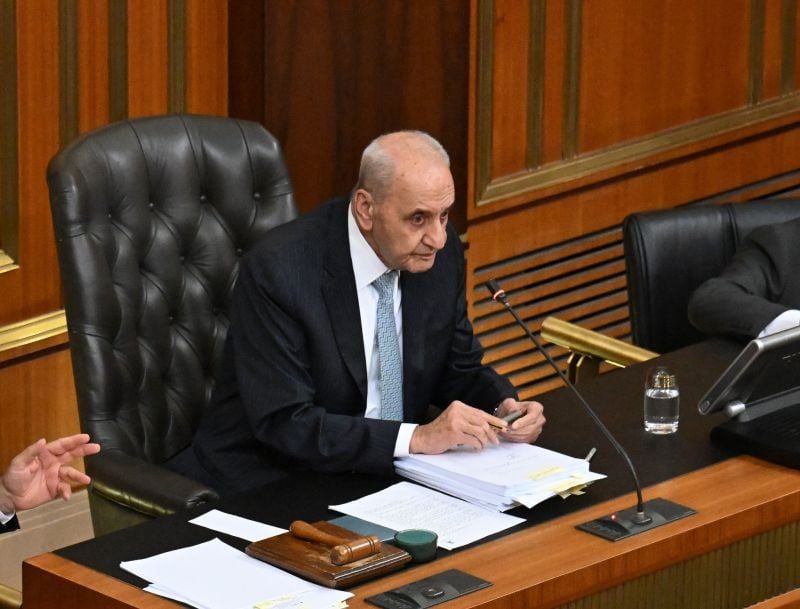
| | - All eyes on Berri: Parliament Speaker Nabih Berri delivers his annual August 31 speech today marking the 48th anniversary of Imam Sadr's disappearance — and with the south burning and negotiations with Israel stalled, every word will be parsed for signals on Hezbollah's disarmament and the framework agreement.
- Army bags two smuggling rings: Lebanese Army intelligence freed a kidnapped person in Amchit, arrested 7 suspects, then raided a Keserwan complex and detained 12 Syrians — including 3 women — found to be running two separate human smuggling gangs whose financial dispute triggered the kidnapping.
- Jordan to Lebanon: We've got you: Lebanese Army Commander Gen. Rodolphe Haykal met Jordan's King Abdullah at Al-Husseiniya Palace, where the king affirmed Amman's support for Lebanon's security and sovereignty, followed by separate military coordination talks with Jordan's Joint Chiefs chairman.
- Apples up, markets wider: Agriculture Minister Nizar Hani toured Chouf farms with a UAE agribusiness executive, spotlighting techniques that can push apple yields from 2 tons per dunam to as high as 13 tons, as Lebanon moves toward contract farming tied directly to Emirati and Gulf markets.
- Sick cows, calm ministry: Disease cases appeared among cattle near Lake Qaraoun in the Western Bekaa, prompting the Agriculture Ministry to deploy veterinary teams immediately and warn municipalities to intensify mosquito and insect control — stressing that no diagnosis has been confirmed and urging media not to speculate.
|
|
| ─ | Parallel Rate | 89,550 LBP | 0.00% | | ─ | Official Rate | 89,500 LBP | 0.00% | | ▲ | Gold | $4,499.5 | +0.48% | | ▼ | Bitcoin | $77,778 | -0.41% | | ▲ | S&P 500 | 7,711.76 | +0.47% |
as of 1:49 AM GMT · Source: lbprate, BDL, Yahoo Finance, CoinGecko |
| | NASA's $4.3 Billion Roman Telescope Launches — and It Makes Hubble Look Like a KeyholeOn Sunday, NASA launched the Nancy Grace Roman Space Telescope aboard a SpaceX Falcon Heavy rocket, sending a bus-sized observatory toward a point 1.6 million kilometers from Earth. It's the most powerful wide-field space telescope ever built, and scientists say it will transform our understanding of the universe in ways Hubble simply couldn't.
- Roman's field of view is more than 100 times wider than Hubble's — one month of Milky Way observations by Roman would take Hubble a century to complete.
- It's expected to find thousands of supernovae, tens of thousands of planets, billions of galaxies, and tens of billions of stars, according to NASA's science mission director.
- The telescope launched nearly a year ahead of schedule and within its $4.3 billion budget — a rare feat in big science.
- Named after NASA's first chief astronomer, who died in 2018 aged 93, Roman is the first NASA space telescope named after a woman.
The bigger picture: Roman joins Hubble, Webb, the ESA's Euclid spacecraft, and the Vera C. Rubin Observatory in Chile for a coordinated push to map dark matter and dark energy — the invisible forces that make up roughly 95% of the universe. Syria Reopens Its Embassy in Libya After 14 Years — and Signs a Cooperation DealSyria's post-Assad government and Libya's internationally recognized administration agreed Sunday to reopen the Syrian embassy in Tripoli, closed since 2012 when Libya severed ties with Bashar al-Assad's government during the Syrian civil war. It's the latest sign of Syria's diplomatic rehabilitation under its new leadership.
- Syrian Foreign Minister Asaad al-Shaibani met Libyan Prime Minister Abdul Hamid Dbeibeh in Tripoli, where they agreed to reactivate the Libyan-Syrian Joint Higher Committee and open a Syrian consulate in Benghazi.
- Talks covered security cooperation, counterterrorism, consular services, prisoners and detainees, and unresolved financial dues between Libyan and Syrian institutions.
- The two sides also discussed energy and investment cooperation with Libya's oil and gas minister.
- Separately on Sunday, representatives of Libya's rival governments signed a deal to hold national elections within two years.
Zooming out: The embassy reopening is part of a broader wave of Arab states restoring ties with Damascus since Assad's fall in December 2024, as Syria's new government works to reintegrate into regional diplomacy. Sudan's Civilians Are Being Pulled Into the War — Whether They Want to Be or NotSudan's civil war between the army and the paramilitary Rapid Support Forces has now ground into Kordofan, the resource-rich region south of Khartoum. In cities like Bara, ordinary civilians — pharmacists, activists, students — have taken up arms in Popular Resistance units alongside the army, often after the RSF killed family members or ransacked their homes.
- The Popular Resistance was formally established in June 2023, with the army providing weapons and training to tens of thousands of civilians.
- Bara has changed hands multiple times; since July it has been held by the army, with Popular Resistance fighters crediting their role in its recapture.
- Not all pro-democracy activists support the mobilization — some say religious conservatives linked to former president Omar al-Bashir's era are dominating the units to stage a political comeback.
- The RSF stands accused of genocide in Darfur by the US and several human rights groups; in el-Fasher, defensive lines collapsed in October 2025 after a siege of over 550 days.
What to watch: Whether the Popular Resistance, once the war ends, becomes a vehicle for civilian democratic forces or a platform for old-regime figures to reclaim political power is a question Sudanese political parties are already fighting over. |
|
| | - Lebanese director goes Netflix: Mounia Akl — whose debut film Costa Brava, Lebanon won prizes at Toronto, London, and El-Gouna — has been tapped to direct Kate Winslet in Netflix's The Unheard, a five-episode limited series written by the Emmy-winning creator of Adolescence, with filming set to begin in 2027.
- Roger, hall of fame, tears: Roger Federer was inducted into the International Tennis Hall of Fame in Newport, Rhode Island, delivering a speech that made him cry more than once — the 20-time Grand Slam champion who spent 310 weeks as world number one said he is "still writing" his love letter to tennis.
- Beirut's August rain surprise: An unseasonal August storm caught a wedding in Dbayyeh completely off guard on Saturday afternoon, with guests scrambling and umbrellas shattering — before the party relocated indoors and carried on.
- Ghana's Premier League pipeline: Former West Ham striker Michail Antonio's Samba Stars Academy brought 20 Ghanaian teenagers to England this summer, with Bournemouth, Everton, Manchester City, and four other clubs already taking players on trial after a summer tour that included a 6-0 win over Peterborough's under-19s.
|
|
Make it a good Monday — the kind your family group chat won't stop talking about. |
| ✓C. A bad marriage is worse than loss |
This darkly humorous proverb suggests that enduring a bad marriage is worse than attending a funeral - a classic Lebanese take on domestic life. |
Lebanon news, every weekday morning. Free, sharp, ~5 minutes. |
|
|
|
|