|   | A billion dollars. That's how much Lebanon's bank bosses may have quietly wired out of the country while your deposits were frozen — and the judiciary just came knocking. Marhaba: this morning we've also got generator crooks on notice nationwide, and a tense debate over whether UN peacekeepers will still be standing between south Lebanon and a vacuum by year's end. |
|
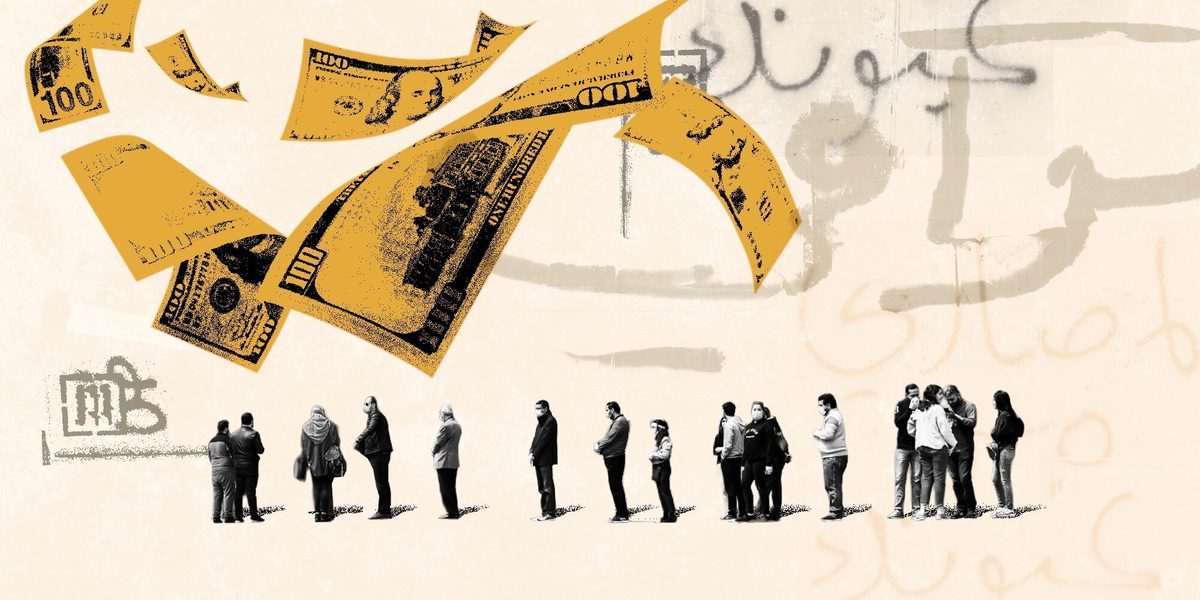
| | Lebanon's Bank Bosses Wired $1 Billion Abroad While Freezing Your DepositsWhile Lebanon's banks locked more than a million depositors out of their savings, the chairmen and board members of those same banks were quietly wiring their own money abroad. Now, for the first time, the judiciary has the names — and it wants the cash back.
- The Financial Public Prosecution, led by Judge Maher Chaito, has so far received responses from six banks via Banque du Liban Governor Karim Souaid — and the transfers from those six alone exceed $100 million.
- With 60 banks in Lebanon (46 commercial, 14 investment), judicial sources told Daraj the total could approach $1 billion once all responses arrive.
- About 60 individuals have already been summoned — roughly all board members of the six banks that responded — and the prosecution says it has legal authority to seize funds from anyone who delays or refuses.
- Bank lawyers are already floating a defense: what their clients did was "legal, even if unethical." The prosecution's counter-move would convert the recovered "fresh" dollars into mandatory reserves at BDL, with lollar-equivalent credits issued back to the bankers.
What to watch: Whether the remaining 54 banks comply or mount a political lobbying campaign against the prosecution — judicial sources say both scenarios are live. Generator Crackdowns Go National: Salam Moves Beyond WarningsLebanon has been fighting illegal generator overcharging for years with violation reports that mostly gathered dust. Prime Minister Nawaf Salam just escalated: the enforcement model piloted in Tripoli — inspect, report, judiciary, confiscate — is now official policy for the entire country.
- Diesel prices drove a 35% rise in the cost of a 20-liter canister between July 7 and August 21, pushing the official city kilowatt-hour rate from 40,746 LBP (about $0.46) in July to 48,241 LBP (about $0.54) in August — an 18% increase we first reported on September 1.
- The new mechanism chains inspection directly to the judiciary: violation report → public prosecutor → judicial order → seizure, with local governors and municipalities responsible for running confiscated generators so residents don't lose power.
- Citizens can report violations via the MOET Digital Services app, the consumer protection platform, or hotline 1739.
Why it matters: Confiscating a generator while keeping the lights on for its subscribers is a harder operational challenge than issuing a fine — how quickly local authorities can execute that handoff will determine whether this crackdown has teeth. UNIFIL Is Leaving. Nobody Agrees on What Comes Next.UNIFIL has patrolled southern Lebanon since 1978, and its mandate runs out at the end of 2026. Lebanon wants it to stay; the United States — under Israeli pressure — says it has failed and won't extend it. The gap between those positions is now southern Lebanon's most urgent diplomatic problem.
- 86 Lebanese MPs signed a petition demanding UNIFIL's extension, and Lebanon formally renewed that request at a closed UN Security Council session on August 28 — the US rejected it.
- UN Secretary-General António Guterres has proposed three alternative models, ranging from 5,525 personnel (Option 1) to 1,980 (Option 3), each with progressively reduced monitoring, demining support, and army-assistance capabilities.
- Israel has imposed a "Yellow Line" inside Lebanese territory that blocks thousands of residents from their villages and prevents Lebanese Army deployment — with no international monitor left, analysts warn that line could harden into a de facto border.
Zooming out: UNIFIL's departure would also strip southern Lebanese communities of decades of direct employment and economic activity from the force's bases — a quieter loss on top of the security vacuum. |
|
as of 2:07 AM GMT · Source: Polymarket |
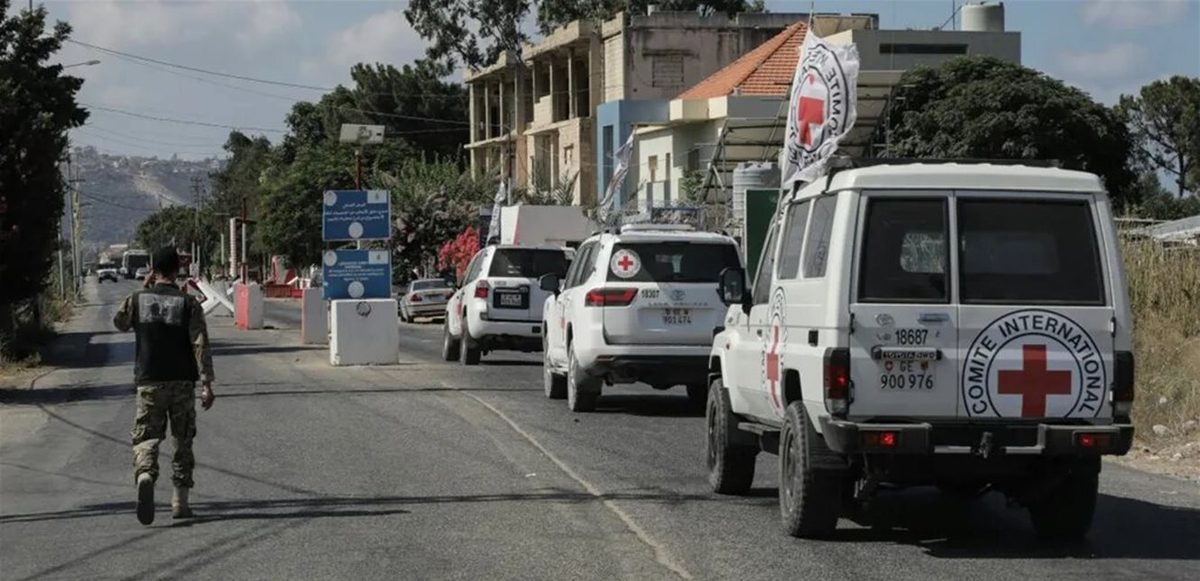
| | - 5 out, dozens still waiting: Israel released five civilian detainees via the Red Cross — two Lebanese and two Syrians on Friday, plus one on Thursday — in exchange for Lebanon's help locating remains of missing Lebanese Jews. Dozens more are still believed held, and the Red Cross says it hasn't accessed Israeli detainees since October 2023.
- Refunds from generator guys? Security agencies summoned generator owners — including some with political backing — after some were caught charging up to $1.80 per kilowatt against the official rate of under 60 cents. The surprise: some owners returned money to subscribers after recalculating bills at the official tariff.
- 40 kids, no school: A Beirut appeals court ruled that Sacred Hearts Sioufi School could expel 40 students whose parents disputed a mid-year tuition hike of roughly 100% — setting a precedent that school-parent disputes are just contracts, and schools can walk away from them.
- Evidence, no courtroom: Lebanon built a war-crimes archive against Israel but signed away key prosecution rights under Article 13 of the June framework agreement, according to Daraj. Deputy PM Tarek Mitri confirmed the threat of a U.S. lawsuit against Lebanon was used as negotiating pressure to accept the vague clause.
- UAE pardons, Lebanon extradited: UAE President Sheikh Mohamed bin Zayed pardoned Abdul Rahman Yusuf al-Qaradawi — sentenced last week to 10 years — just days after the Abu Dhabi court issued its ruling. Lebanon had extradited him in January 2025 following his arrest in late 2024 after crossing from Syria.
|
|
| ─ | Parallel Rate | 89,550 LBP | 0.00% | | ─ | Official Rate | 89,500 LBP | 0.00% | | ▼ | Gold | $4,477.2 | -0.32% | | ▼ | Bitcoin | $79,679 | -1.37% | | ▲ | S&P 500 | 7,718.6 | +0.68% |
as of 1:45 AM GMT · Source: lbprate, BDL, Yahoo Finance, CoinGecko |
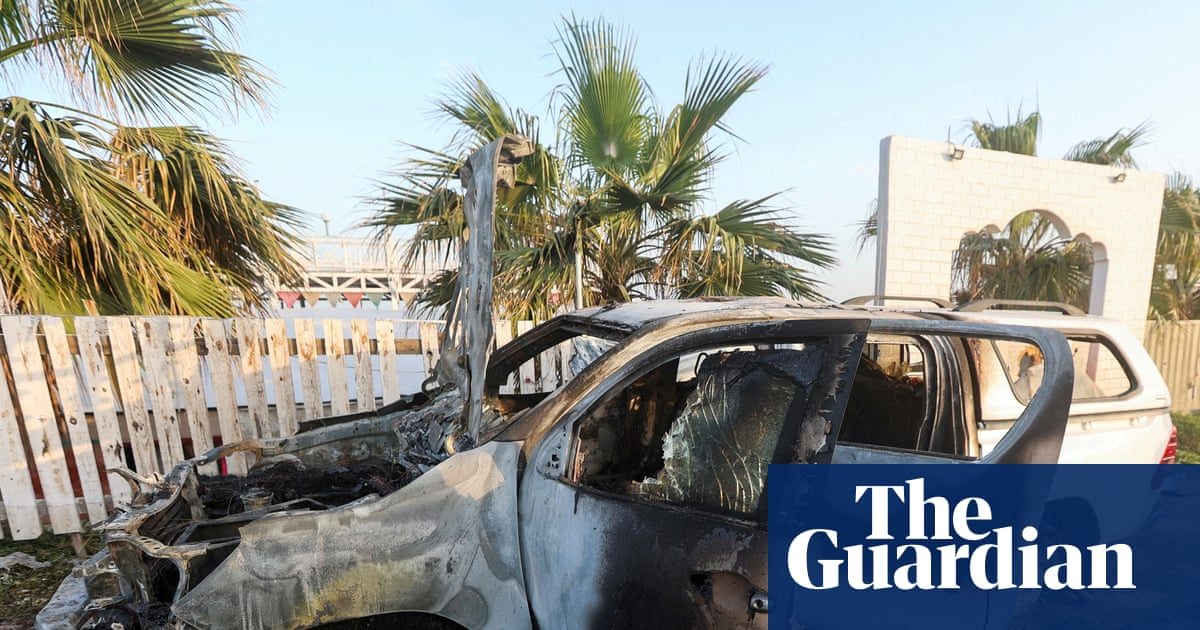
| | The World Central Kitchen Strike Was No Accident — It Was PolicyIn April 2024, Israeli drones killed seven aid workers from World Central Kitchen in Gaza despite their clearly marked vehicles and pre-coordinated movements. A Guardian investigation reveals the strike wasn't a rogue act — it was the foreseeable product of a targeting doctrine called haflala, or "incrimination by association."
- The reserve colonel who ordered the strikes said the WCK convoy became a target after workers briefly encountered armed guards — an assumption later shown to be groundless — and that anyone "near them, talking, playing, hanging out" could be deemed incriminated.
- An IDF officer familiar with the incident estimated that in "99% of cases" other qualified officers would have dropped the first missile under the same circumstances, and "80%" would have fired the third.
- Israel's top military prosecutor declined criminal charges; the colonel who ordered the strikes was dismissed but has not been prosecuted.
- More than 70,000 Palestinians have been killed in Gaza since 2023, with IDF internal data suggesting over three-quarters were civilians.
What to watch: The UK inquest into the three British victims — adjourned pending Israel's investigation — is now expected to resume, and Britain, Australia, and Canada have said they will continue seeking answers. Russia Hits Ukraine's Intelligence HQ in Central KyivA Russian drone struck the central headquarters of Ukraine's Security Service in Kyiv, in one of the most symbolically charged attacks of the war. The building sits directly across from St. Sophia Cathedral, a UNESCO world heritage site.
- 12 people were injured, including two seriously, with nine requiring hospitalisation, according to Kyiv mayor Vitali Klitschko.
- President Zelenskyy said the drone was aimed specifically at the office of SBU chief Oleksandr Poklad, and instructed him to prepare "an appropriate, tangible response that mirrors this strike."
- Ukraine's foreign minister called it a "major escalation" launched during "a renewed push for peace," and asked UNESCO to react to the threat to the nearby cathedral.
- Zelenskyy later posted that "the geography of our response has been determined" — timing to be chosen for maximum effect.
Zooming out: The strike landed just as Germany prepares for a state election in Saxony-Anhalt where the far-right AfD — which has pushed for reduced support to Ukraine — could take power. The UN Just Voted to Retire the 450-Year-Old Mercator MapThe map on your classroom wall — and probably in your phone — makes Greenland look almost as large as Africa. Africa is actually 14 times bigger. The UN just voted to fix that.
- 164 countries voted in favor of a resolution to phase out the 1569 Mercator projection in favor of the 2018 Equal Earth design; the US voted no, calling the resolution "superfluous," and 6 countries abstained.
- The resolution is non-binding — no country is mandated to switch — but it is expected to influence classroom curricula and mapping technology worldwide.
- France announced it will move to the Eckert IV projection, close to the Equal Earth standard, with the change framed partly as diplomatic outreach to African nations.
- Togo, which led the campaign for the African Union, plans an implementation event with UNESCO and tech companies including Google Maps early next year.
The bigger picture: The campaign frames cartographic reform as a step toward decolonizing global education — though analysts note that shifting deeply embedded mental maps of the world tends to take a generation, not a resolution. |
|
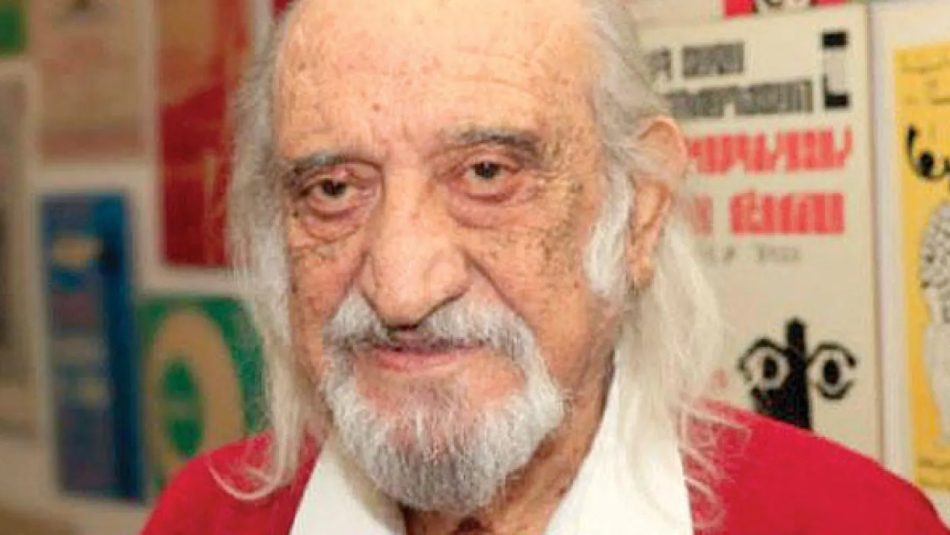
| | - A century of Lebanese theater: This year marks 100 years since the birth of Berj Fazlian, the Armenian-Lebanese director who staged Fairuz at the Cedars so the setting sun appeared behind her as she sang — and who shaped modern Lebanese theater across decades, from Rahbani classics to Shakespeare, despite never receiving formal Lebanese citizenship.
- Lebanon in a bottle: Franco-Lebanese perfumer Rania Naim spent over 26 years bottling the scents of home — fell jasmine, zaatar, cedar, smoked mountain wood — creating the first perfume to recreate Arabian jasmine for Jacques Fath Parfums, and is now working on a new fragrance inspired by the cedar of Lebanon, Cedrus libani.
- Beirut's living room is open: Maison Dada, the boutique hotel Lebanese brothers Mario and Marc El Dada built inside a restored 1930s French Mandate building overlooking Martyrs' Square, has become an intimate destination where heritage meets contemporary creativity — blending their personal art collection, Lebanese craftsmanship, and a rooftop bistro into what they call "the Beirut that is becoming."
- Van Gogh's hidden ear, revealed: A Van Gogh self-portrait unseen at a temporary exhibition since 1990 — painted just three weeks after he cut his ear, pipe in mouth — will be the centerpiece of a major show at the Fondation Louis Vuitton in Paris opening October 9, with its insurance value now estimated at $200 million to $300 million.
|
|
That's your Saturday — go find something beautiful in it. |
Jesus famously attended a wedding in Cana, which is near Lebanon. |
Lebanon news, every weekday morning. Free, sharp, ~5 minutes. |
|
|
|
|