|   | Yalla — nine people from one family are gone overnight, a 30-year-old curriculum is finally getting a makeover, and Lebanon is somehow holding both of those headlines at once. Ahlan, habibi — this is your Tuesday morning briefing, and it's a heavy one with a sliver of light at the end. |
|
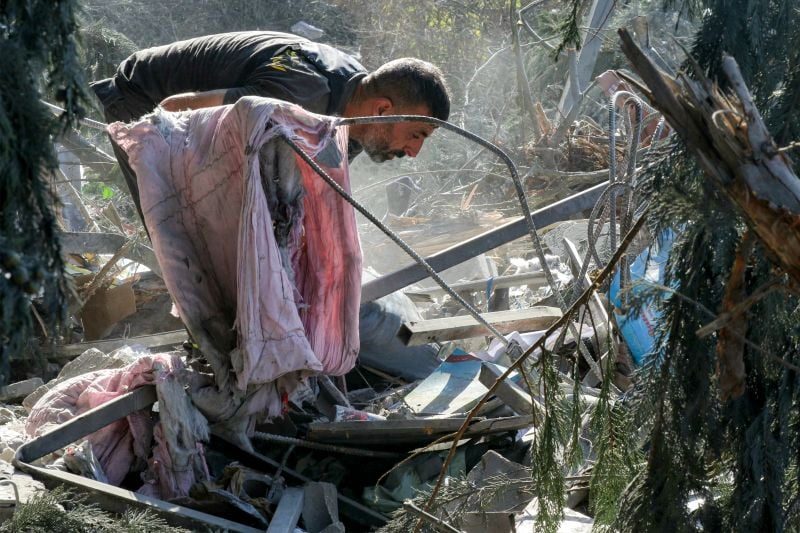
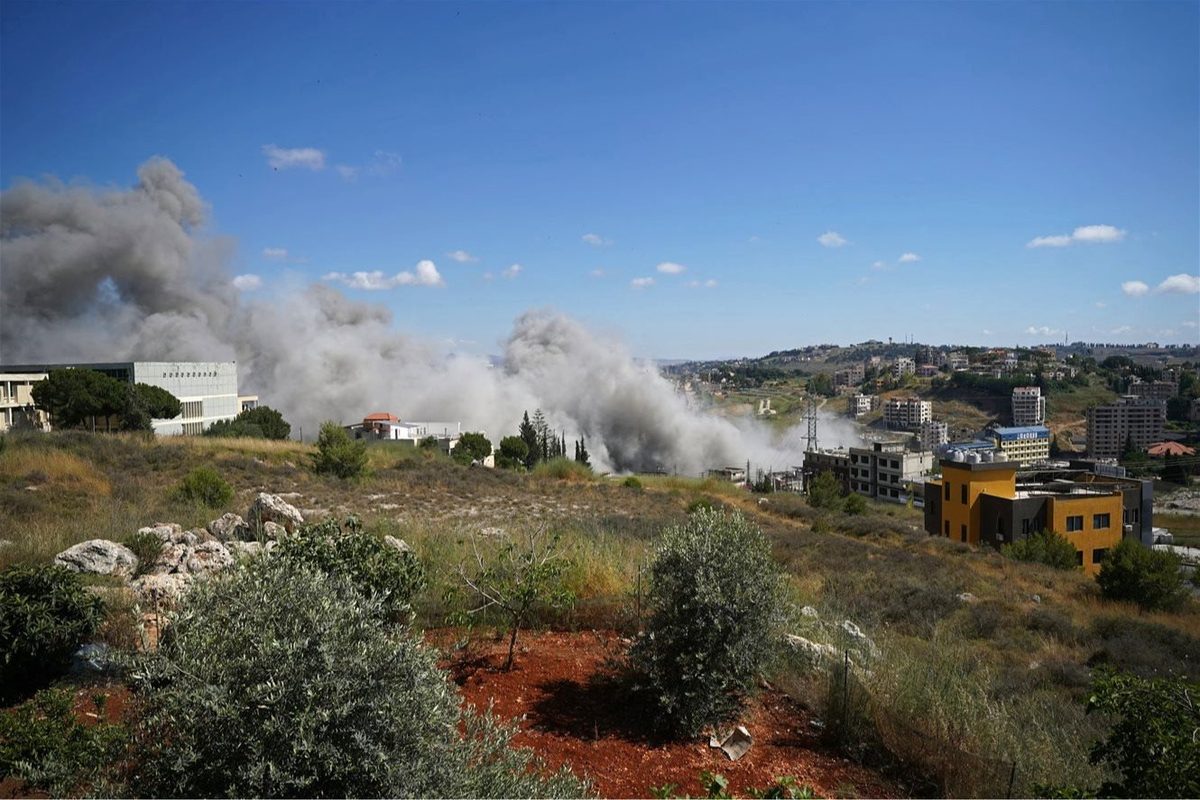
| | Nine from One Family: Israel's Deadliest Strike Yet on NabatiehA pre-dawn airstrike on a residential building in Kfar Reman Monday killed nine members of the Farhat family — including two infants — in what L'Orient Today described as a massacre. It comes as Israeli forces claim a foothold on the strategic Ali al-Taher ridge nearby.
- The building strike killed nine Farhat family members, including two infants; search-and-rescue teams were still working through the rubble Monday.
- A separate drone strike on a vehicle in front of a supermarket in Kfar Reman killed two paramedics and wounded a third.
- Israel also struck a building in Deir ez-Zahrani roughly 20 minutes after issuing an evacuation order — at around 2 a.m., while residents were asleep — completely destroying it.
- On the Ali al-Taher ridge, a Hezbollah fighter was reportedly killed in a separate strike, as Israeli forces maintain their claimed operational control of the hill.
What to watch: Whether Monday's death toll in Kfar Reman accelerates international pressure for genuine ceasefire implementation — something the US-brokered truce has so far failed to produce. Three Bloody Days: Lebanon's Health Ministry Counts 27 Dead, 69 WoundedLebanon's Health Emergency Operations Center released a preliminary cumulative toll for September 5–7: 27 killed and 69 wounded, including children, women, and paramedics — a sharp escalation from the 4 martyrs and 30 wounded we reported for Friday alone.
- Monday's building strike alone accounts for 11 deaths — the toll rose after three of the wounded, including a child and two women, later died of their injuries.
- Sunday, September 6, added 11 martyrs and 26 wounded across Arabsalim, Nabatieh al-Fawqa, and surrounding areas; two journalists were among those wounded in strikes near Nabatieh's Fakhr el-Din parking lot.
- Six paramedics were among those wounded in Ar-Ramadiyah in the Tyre district on Friday night.
Zooming out: The three-day toll underscores that civilian and emergency-worker casualties are climbing in tandem, raising fresh questions about the protection of medical personnel under the repeatedly violated ceasefire framework. Lebanon's New School Curriculum Launches After 30 Years — On a Voluntary BasisLebanon hasn't overhauled its national school curriculum since 1997. That changes this academic year — sort of. The Educational Center for Research and Development is launching an optional experimental phase of the new curricula, with mandatory rollout coming only gradually over the next several years.
- The experimental phase will test learning units in three class levels: nursery one, nursery three, and second grade, with schools able to volunteer to participate during part of the current year.
- The rollout follows a two-year cycle model: year one trains teachers and schools; year two implements the curriculum — designed to avoid forcing an unprepared transition on the system.
- The new history curriculum, absent for 60 years in its updated form, will use a "multiple perspectives" approach rather than a single mandated national narrative.
- Citizenship education becomes a "transversal competence" woven across all subjects, replacing its previous silo in civic education classes alone.
Why it matters: A generation of Lebanese students has grown up on a curriculum written before the civil war's wounds had even fully scarred over — how the new framework handles contested history will be its first real test. |
|
as of 2:08 AM GMT · Source: Polymarket |
| | - Nabatieh's endless Monday: Israeli strikes continued through the day — 10 raids on Nabatieh al-Fawqa, 8 demolition operations in al-Mansouri alone, and artillery hitting al-Dabsha, al-Qantara, and Bani Hayyan, with bulldozing of homes recorded in both al-Qantara and Bani Hayyan as the escalation stretched across multiple axes.
- Ali al-Taher: it's official: A sharp L'Orient Today commentary argues the hill didn't fall through tactics or negotiation — it fell, full stop, with Israel taking control both above and below ground, and even Hezbollah's own silence on the matter speaks volumes.
- MP, weapons, questions: A video circulating online shows MP Nadim Gemayel alongside armed men; the Government Commissioner to the Military Court has referred the matter to the Information Branch and Army Intelligence to identify the individuals and verify whether their weapons were legally licensed.
- UNIFIL's replacement problem: With the US blocking UNIFIL's mandate renewal and December's deadline looming, Foreign Minister Rajji told the Arab League that Lebanon will push for a strengthened UN mechanism — but direct talks on which countries would staff it remain deadlocked.
- Beirut meets Amman: Education Minister Rima Karami launched an official visit to Jordan, agreeing to form joint technical committees on curriculum development and school-principal training — two countries with one language, shared geography, and nearly identical educational headaches.
|
|
| ─ | Parallel Rate | 89,500 LBP | 0.00% | | ─ | Official Rate | 89,500 LBP | 0.00% | | ▲ | Gold | $4,476.8 | +1.06% | | ▼ | Bitcoin | $79,307 | -0.70% | | ▲ | S&P 500 | 7,718.6 | +0.68% |
as of 1:47 AM GMT · Source: lbprate, BDL, Yahoo Finance, CoinGecko |
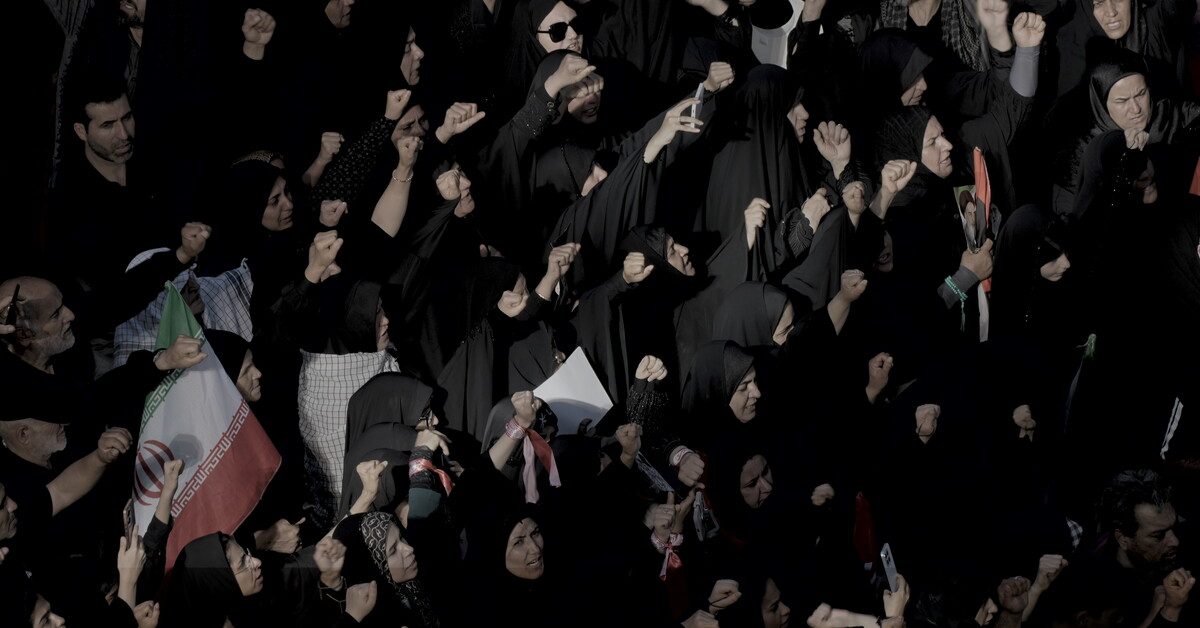
| | Iran's Invisible Supreme Leader: Governing from OccultationSince U.S.-Israeli strikes killed his father Ali Khamenei in March 2026, Iran's new Supreme Leader Mojtaba Khamenei has not appeared in public — governing instead through written notes delivered by motorcycle couriers. It's an eerie echo of a doctrine central to Twelver Shiism itself: occultation, the rightful leader withdrawing from view while retaining authority.
- According to The New York Times, cited by The Public Source, Mojtaba suffered severe burns, lost a leg after three surgeries, and sustained injuries that impaired his speech — his first message as leader was read aloud by a state TV anchor over a still image.
- He served as his father's aide in the Office of the Supreme Leader for 18 years before assuming power, selected by the Assembly of Experts on March 8.
- State eulogists have folded his invisibility into religious lament, performing elegies that equate his concealment with the Hidden Imam's occultation.
The bigger picture: A sovereign governing entirely from concealment is unprecedented in the Islamic Republic's history, and how Iran's political system sustains itself under these conditions is a question with consequences well beyond its borders. Assad's Syria Was Building a Nuclear Weapons-Capable ReactorThe IAEA has confirmed what long-circulating suspicions suggested: the reactor Syria was secretly constructing under Bashar al-Assad — built with North Korean assistance in Deir el-Zour and destroyed by an Israeli airstrike in 2007 — was configured specifically to produce fissile material for nuclear weapons.
- IAEA Director General Rafael Grossi said the reactor's "configuration" and "technical features" were "very efficient in the production of fissile material that could be directly used for the fabrication of nuclear weapons," though he noted intentions cannot be judged.
- Inspectors visiting a newly disclosed site in August had to tear down walls and navigate narrow passages to find hidden material — roughly 73 tonnes of natural uranium metal in fuel rods, now under IAEA safeguards.
- Syria's new government notified the IAEA of the site's existence in a July 17 letter, inviting inspectors to cooperate on verification.
What to watch: Whether Syria's new government moves the uranium to a third country for safe disposition, or keeps it in place under IAEA camera surveillance, will signal how transparently Damascus intends to engage on its nuclear past. Yemen's West Coast Battle: Government Forces Push Back Houthis in HodeidahYemen's grinding civil war has flared sharply on the country's strategic west coast, where government forces say they've reversed a Houthi offensive that threatened to extend the group's control toward the Bab al-Mandeb strait — one of the world's most critical shipping chokepoints.
- Government and joint forces announced the full liberation of the Hays district in Hodeidah from the Houthis on Saturday, with forces now advancing toward the al-Jarahi district.
- The escalation entered its fourth day Sunday; government forces detained dozens of Houthis during the battles, the majority of whom were minors, according to Hodeidah Governor Al-Hassan Taher.
- Over 790 families have been displaced by Houthi rocket, drone, and mortar attacks on the west coast.
- Taher attributed the offensive to Iran, saying Tehran ordered it after losing leverage at the Strait of Hormuz and shifting focus to Bab al-Mandeb.
Zooming out: Control of the Bab al-Mandeb strait would give any actor significant leverage over global shipping lanes connecting the Red Sea to the Gulf of Aden — which is why the battle for Hodeidah's west coast draws attention far beyond Yemen's borders. |
|
| | - Céline knows baba ghanoush: Canadian superstar Céline Dion admitted she doesn't know Fairuz — and the Arab internet briefly lost its mind. But as Al Modon points out, Lebanese cuisine has crossed more cultural borders than Lebanese music: baba ghanoush made it to Paris before any of our singers did.
- Star Wars meets Frida Kahlo: George Lucas's long-awaited $1 billion museum of narrative art finally opens in Los Angeles on September 22, featuring more than 1,200 objects across 35 galleries — from Robert Crumb comics to Frida Kahlo canvases, with free admission for all children under 17.
- Popcorn season, record-breaking: Hollywood just had its biggest summer in history — domestic ticket sales surpassed $4.76 billion from May through Labor Day, beating the previous all-time record set in 2013, with Spider-Man: Brand New Day alone pulling in $2.4 billion globally.
- Poetry is mischief: Lebanese poet Hamza Aboud, whose debut collection dates to 1978, sat down with Al Modon to discuss his new collection and his lifelong craft — insisting poetry's job is to challenge common language and find the extraordinary buried inside the everyday ordinary.
|
|
Wherever you're reading this — balcony coffee in hand or somewhere far from home — carry something good into the rest of your Tuesday. |
The nay is a traditional reed flute. |
Lebanon news, every weekday morning. Free, sharp, ~5 minutes. |
|
|
|
|