|   | Kifkon — a Russian general is running spy networks through Baalbek, Israeli forces are rolling into Lebanese territory while the army gets welcomed with flowers in Nabatieh, and Lebanon is staring at a Gulf-to-Europe railway corridor and deciding whether to show up or watch from the platform. It's a heavy Wednesday morning, habibi, but we've got all of it broken down. |
|
| | The Security Cell Arrest Was Just the Tip: A Moscow-Run Network Spans Lebanon and SyriaWhen Lebanese security forces arrested five people last week for allegedly plotting bombings and assassinations against Syria's new government, it looked like a contained bust. New details from the investigation reveal it wasn't. The network runs all the way to Russia — and has about fifty more members waiting for orders inside Syria.
- The operation is directed from Moscow by Major General Mohammad Jaber, commander of the former Syrian army's Desert Brigade, with roughly 50 members in Syria awaiting mobilization.
- Confessions map a security triangle: recruits enter from the Tall Bireh area in Akkar, pass through Beirut's southern suburbs, and link up with training camps affiliated with Hezbollah in Baalbek and Hermel.
- Official Lebanese security personnel were also arrested for allegedly facilitating weapons transfers on behalf of Assad-era remnants — widening the scandal beyond outsiders.
- Sophisticated weapons seized in the bust contradict claims the group was merely preparing a defensive posture; investigators say the evidence points to planned sabotage and assassinations inside both Lebanon and Syria.
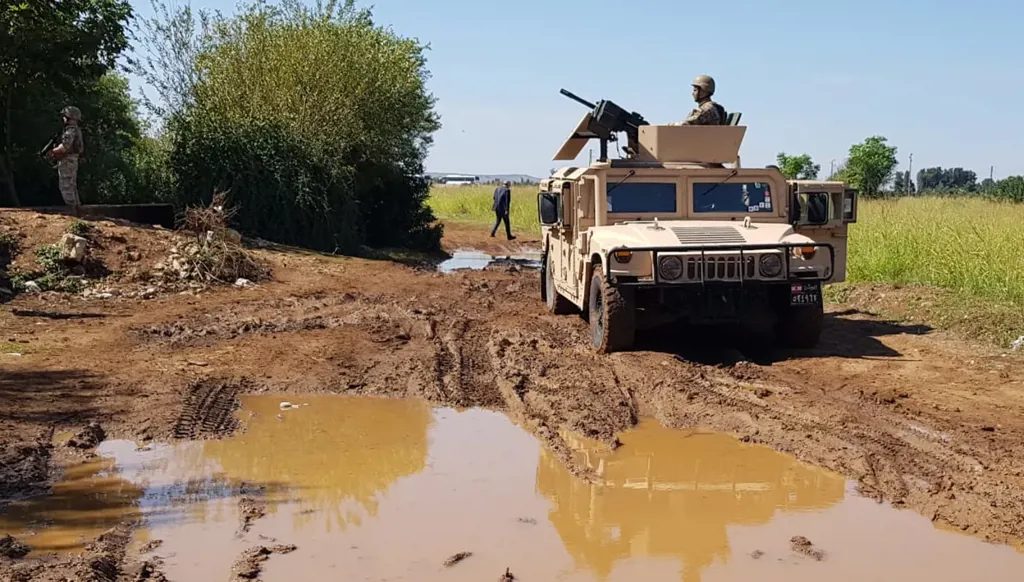
Why it matters: A network stretching from Moscow through Baalbek to Akkar, with insiders in the Lebanese security apparatus, is a different threat category entirely from the five-person cell that made headlines last week. Army Moves Into Nabatieh as Israel Signals New Wave of RaidsAfter three days of intense Israeli strikes that killed at least 28 people and sent hundreds fleeing Nabatieh and surrounding villages, Tuesday brought a complicated mix: a relative dip in airstrikes, Israeli ground incursions that didn't stop, and the Lebanese army rolling into Nabatieh streets for the first time — welcomed with flowers and rice.
- The Municipality of Kiryat Shmona announced Tuesday evening that Israeli forces were preparing a new series of raids inside Lebanese territory within the hour, warning residents to expect loud explosions.
- On the ground, Israeli forces carried out explosions in Mansouri and Zawtar al-Sharqiyah, conducted bulldozing operations, and raised an Israeli flag on a hill on the outskirts of Kfar Shouba.
- Parliament Speaker Nabih Berri and Prime Minister Nawaf Salam reportedly agreed to extend army deployment to the Iqlim al-Tuffah region, beyond Nabatieh city.
- U.S. Ambassador Michel Issa, meeting the Supreme Islamic Shia Council, said any dialogue on Hezbollah's weapons must go through the Lebanese state — and that Washington does not conduct direct negotiations with the party.
What to watch: Lebanon is awaiting a U.S. response before week's end on the date of an eighth round of negotiations with Israel, expected to be held in Rome in September. Lebanon's Railway Gamble: Join the Gulf–Europe Corridor or Get Left BehindSaudi Arabia and Turkey are drawing a new regional trade map — a railway linking the Gulf through Jordan and Syria to Europe. Lebanon isn't on the main route. What it does next will determine whether it ends up as a node on that network or watches the trains roll past.
- In mid-May 2026, Lebanon's Public Works Ministry launched a tender to update the study and design of a railway line between Tripoli and Al-Aboudiyah at the Syrian border — an administrative first step, not a construction launch.
- A second proposed route would connect the port of Beirut through a mountain tunnel to the Bekaa and the Syrian border; the government has approved $800,000 to fund a feasibility study for that line.
- Turkey's transport minister says the Saudi–Turkish corridor aims to complete its connection within three to four years, with roughly 400 kilometers of track between Syria and Jordan still to be built.
- Analysts cited by Daraj warn the real obstacle isn't money — it's Lebanon's record of announcing projects and not delivering, plus unresolved encroachments on railway land and the absence of a transparent operating model.
The bigger picture: Commercial corridors don't wait for hesitant countries; they route around them — and once transit agreements and specifications are locked in, joining late costs significantly more. |
|
as of 2:24 AM GMT · Source: Polymarket |
What does "El ahbal byaarif el ahbal mitlo" imply? | | | People recognize their own kind |
| |
Scroll to the bottom for the answer — or play all 10 at sobhiye.news/games/trivia |
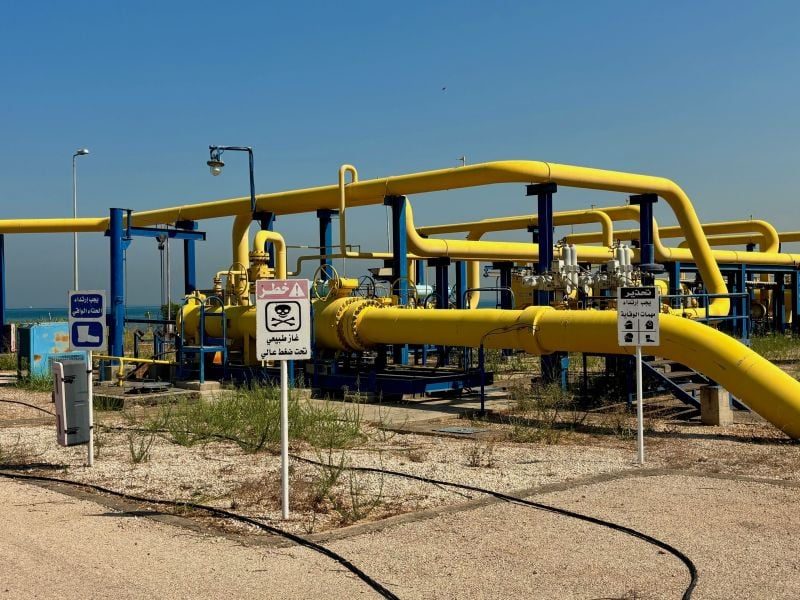
| | - Jordan says yes to gas: The Jordanian government approved a plan to supply Lebanon with natural gas via a floating storage unit in Aqaba, transported through Syria to the Deir Ammar plant in North Lebanon — the only plant currently capable of running on gas, with a capacity of 450 megawatts against national demand of roughly 3,000 MW.
- 89,500 — discovered or decided? A deep analysis by Al Modon reveals that Lebanon's official exchange rate of 89,500 LBP per dollar first appeared on December 19, 2023, as a single entry with no recorded trading volume, then was formally adopted as the system-wide price in February 2024 — meaning the number came before the market, not from it.
- Ankara's quiet back channel: Turkey is actively mediating between Damascus and Hezbollah to narrow their differences over the arms file, while also offering Lebanon military aid for the army and expressing reservations about Beirut's strategic tilt toward Cyprus and Greece.
- Budget season, overtime edition: PM Nawaf Salam chaired a cabinet session to begin article-by-article review of the 2027 draft budget, with successive daily sessions announced until the law is complete — and a separate ministerial committee formed tonight to address a six-salary raise demand from armed forces veterans.
- Deposits, gold, six-to-eight months: Banque du Liban Governor Karim Souaid says the financial gap law — the key piece determining how depositor losses are distributed — won't pass parliament for another six to eight months, while BDL obligations to banks and depositors currently stand at approximately $79.5 billion.
|
|
| ─ | Parallel Rate | 89,550 LBP | 0.00% | | ─ | Official Rate | 89,500 LBP | 0.00% | | ▼ | Gold | $4,419.9 | -0.43% | | ▼ | Bitcoin | $78,862 | -0.64% | | ▼ | S&P 500 | 7,673.52 | -0.96% |
as of 1:57 AM GMT · Source: lbprate, BDL, Yahoo Finance, CoinGecko |
| LIV Golf Files for Bankruptcy with at Least $45 Million Owed to PlayersSaudi Arabia's Public Investment Fund spent more than $5 billion building LIV Golf from scratch since 2021 — then pulled the plug in April 2026. Now the breakaway golf league has filed for Chapter 11 bankruptcy protection in the U.S., leaving its star players in limbo and its future in the hands of a new investor.
- Court documents show LIV owes at least $45 million to its 14 current and former players among the top 30 creditors, with Jon Rahm topping the list at $7.5 million.
- LIV estimates its assets at $100 million to $500 million and its liabilities at between $500 million and $1 billion.
- PIF is providing a bankruptcy loan of $49.6 million to fund the restructuring process, even as it withdraws as the primary backer.
- A new investor, BC Partners, is lined up, with a player-owned league model — and lower prize purses than the PGA Tour — planned for early next year.
What to watch: Players are under no obligation to sign on to the new LIV, leaving the roster for any relaunched league deeply uncertain until contracts from the original iteration are formally wound up through the court process. UK Bans Settlement Goods, Declares Occupation Unlawful in Major Middle East Policy ShiftBritain just made one of its sharpest breaks from its post-Brexit foreign policy caution. Prime Minister Andy Burnham announced a package of measures targeting Israel's settlement activity — including a trade ban on settlement goods, sanctions on settlers, and a formal declaration that the Israeli occupation of Palestinian territory is unlawful.
- The UK will ban trade in goods from illegal Israeli settlements in Palestinian territory and sanction individuals and companies that support, facilitate, or profit from them.
- The government formally changed its legal position, declaring the Israeli occupation of Palestinian territory unlawful — described as independent of, but in line with, the International Court of Justice's conclusion.
- The measures specifically target the E1 mega-settlement, for which tenders are proceeding ahead of October elections in Israel; the UK says it would cut through the heart of the West Bank.
- More than 70,000 people have been killed in Gaza, at least 20,000 of them children, according to figures cited by Burnham; a new humanitarian aid package for Gaza was also announced alongside the sanctions.
Zooming out: The UK's move follows years of hesitation and positions it alongside other European governments that have taken formal legal or trade steps against Israeli settlement policy, reshaping the diplomatic landscape ahead of Israel's October elections. New Syria, Old Guardianships: A Female Journalist's Dispatch from Post-Assad AleppoAssad fell, but some of the social controls that defined daily life under his regime didn't fall with him. A female journalist traveling from Sweida to Aleppo found that the gatekeepers have simply changed — from security agencies to policemen, colleagues, and taxi drivers.
- A policeman at Harasta garage asked the journalist — a 32-year-old traveling with a colleague — to call her husband to confirm she was leaving of her own free will, despite no Syrian law requiring such permission for internal travel.
- In Aleppo, a local colleague physically closed buttons on her shirt, telling her: "Here, we don't dress like this."
- Kurdish journalists reported being told to hide their flags at government checkpoints after celebrating Nowruz — the first year Kurds were officially permitted to celebrate it in Syrian history.
- Alawite colleagues stayed silent about their city of origin when speaking to strangers, revealing how identity itself has become something to calculate before sharing.
The bigger picture: Syria's different communities emerged from decades of enforced silence into an open space for speech — but without a shared language or framework for processing deeply competing grievances, suggesting that rebuilding civic life will take far longer than rebuilding institutions. |
|
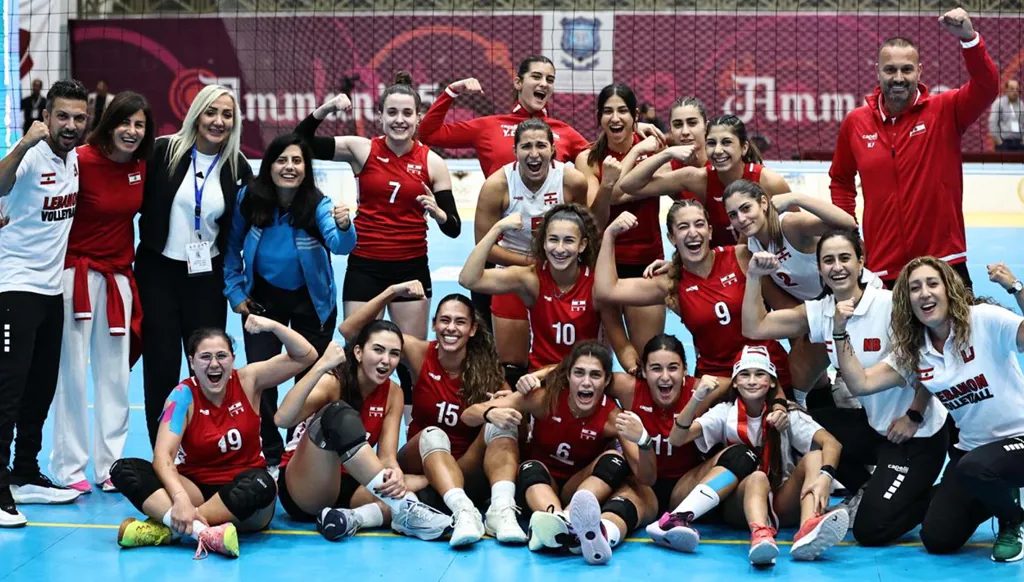
| | - Three-peat, no sweat: Lebanon's women's national volleyball team claimed the West Asia Championship title for the third consecutive time, going undefeated in Amman — beating Iraq, Jordan, and Qatar in straight sets — with Mirna Cheikho named tournament MVP and three other Lebanese players earning All-Star Team honors.
- Pines, poems, and the mountain: A Lebanese-Armenian scholar revisiting Dhour El Choueir this August connected a 1936 Moustafa Farroukh watercolor of Lebanese pine trees with a sonnet written by Armenian poet Vahan Tekeyan in the same mountain town in 1937 — a meditation on resilience that reads, nearly 90 years later, as deeply and unmistakably Lebanese.
- Kunafa beats Michelin: Saudi Arabia held its first-ever Michelin awards ceremony in Riyadh — and the most memorable meal of the evening turned out to be a late-night slab of kunafa at a packed street institution on Tahlia Street, where the man behind the counter pressed two free pieces of pistachio baklava on a visiting food writer near midnight.
- Mary, mapped in stone: Lebanon's landscape is dotted with dozens of shrines and churches dedicated to the Virgin Mary — from the cave of Our Lady of Al-Mantarah in Maghdouché to Our Lady of the Wind in Anfe — each name carrying a local story of protection, harvest, or homecoming woven into the memory of its village.
|
|
Go find your own pine tree today — you've earned a moment of quiet. |
| ✓C. People recognize their own kind |
Recognition through similarity, not attraction. |
Lebanon news, every weekday morning. Free, sharp, ~5 minutes. |
|
|
|
|