|   | Three numbers landed overnight that you'll want to hold onto: $100 million, 7,700, and one eight-year-old boy who survived a strike that took everyone else he loved. Bonjourein — this morning Lebanon is making moves on the global shipping map while still counting the cost of a ceasefire that keeps getting violated. Plus, the Arab League put Hezbollah's disarmament in writing — actual writing — and that changes a few things. |
|
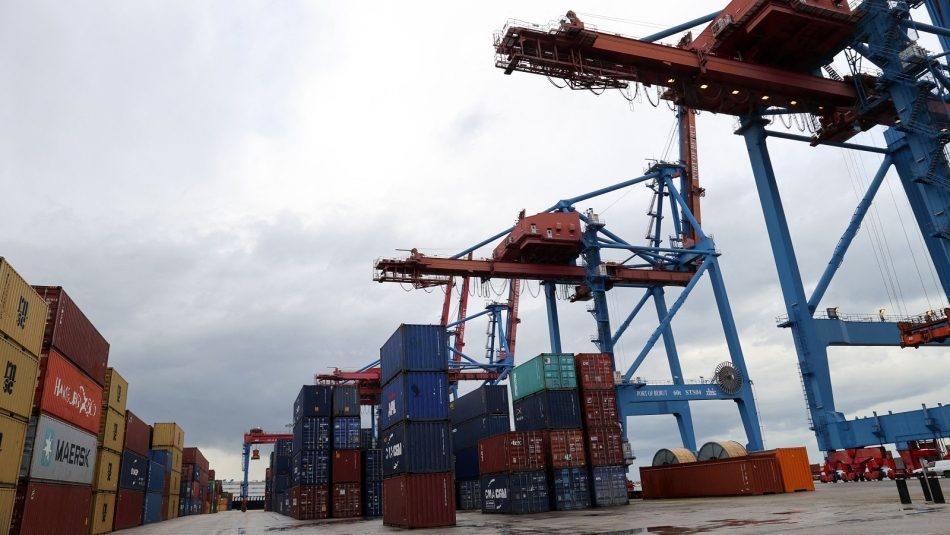
| | Beirut Port's $100 Million Expansion Is Bigger Than We ThoughtWhen we reported last Sunday that Beirut Port was reporting on an expansion, the numbers were good. Today, they got better — and more specific. French shipping giant CMA CGM is putting $100 million into a phased overhaul that would more than double the port's capacity, targeting 3 million container units annually by 2028.
- Current capacity sits at 1.2 to 1.3 million TEUs per year; this expansion, the terminal's third and largest since it was established in 2000, would more than double that figure.
- The bulk of new capacity is earmarked for transit and transshipment — serving neighboring countries — not just Lebanon's own import needs, which the port already covers at roughly 80 percent.
- Both Beirut and Tripoli ports have joined the IMEC Ports Club, part of the India-Middle East-Europe Economic Corridor, with their first formal meeting in that framework expected in India in roughly two weeks.
Why it matters: A Beirut port handling 3 million TEUs annually isn't just a logistics upgrade — it's a pitch to reposition Lebanon as a regional transshipment hub at a moment when disrupted global shipping routes are pushing companies to scout alternatives. The Arab League Just Put Hezbollah Disarmament in WritingArab foreign ministers meeting in Cairo this week didn't just issue a warm statement of solidarity with Lebanon — they endorsed a specific text, obtained by L'Orient-Le Jour, that backs the Lebanese government's drive to monopolize weapons and security decisions, directly naming Hezbollah's disarmament as a goal.
- The resolution, drawn from a draft submitted by the Lebanese government, reaffirms support for the March 2 cabinet decisions requiring weapons to be held exclusively by the army and legitimate security forces — and explicitly addresses prohibiting Hezbollah's arsenal outside state control.
- The text also backs Lebanon's sovereignty, independence, and the government's exclusive authority to decide matters of war and peace — language that directly counters Hezbollah's long-held position that its weapons are a strategic deterrent, not a political question.
- The resolution expresses full Arab League solidarity with Lebanon and support for the government's efforts to extend its authority over all Lebanese territory.
Zooming out: Arab League backing for Hezbollah disarmament, in writing, marks a notable shift in regional posture — and hands the Lebanese government a multilateral reference point. South Lebanon: 7,700 Violations, One Survivor, and a Tally That Keeps RisingThe Lebanese Army has published its most comprehensive field report yet on operations in the south — and the numbers are stark on every front: weapons seized, families still displaced, and Israeli violations documented since the June 26 framework agreement.
- Army units established 6 fixed checkpoints and 13 observation points across model deployment areas, confiscating 1,818 pieces of weapons and ammunition including rockets, drones, and mines, while opening roughly 12 kilometers of roads.
- In Zawtar al-Gharbiyah, about 70 percent of residents returned to inspect homes, but only 16 percent — around 60 of 450 families — could actually settle, because Israeli forces destroyed 85 percent of the town's homes completely and 15 percent partially.
- The Army documented 7,700 Israeli violations since June 26; an Israeli airstrike on the Farhat family home in Kfar Reman killed 12 people, including 6 children — up from the 9 we reported — with eight-year-old Mustafa Farhat, who lost his entire immediate family, among the survivors.
- UN Secretary-General Guterres condemned the "massive devastation" and "growing civilian casualties," called for an immediate cessation of hostilities, and urged Israel to withdraw from Lebanese territory in line with Resolution 1701.
What to watch: With 7,700 documented violations and an eighth round of Lebanon-Israel talks expected later this month, whether Washington can translate multilateral pressure — from the UN, the Arab League, and the army's own field report — into actual Israeli compliance is the question every displaced family in Nabatieh is waiting on. |
|
as of 2:11 AM GMT · Source: Polymarket |
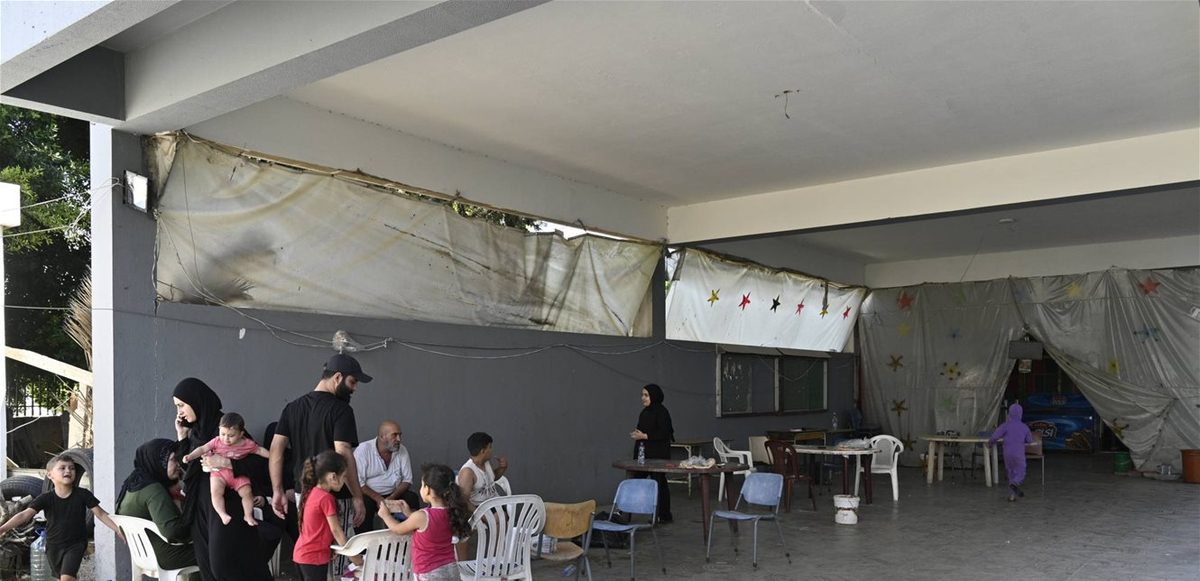
| | - Desks vs. displaced: With the school year starting September 15, Lebanon's Education Ministry says 80 public schools were still serving as shelters — roughly half evacuated, 30 operating as both school and shelter simultaneously, and 9 remaining fully dedicated to housing those still displaced.
- Budget fury hits the streets: Public sector unions rallied at Riad Solh Square Wednesday, demanding the 2027 budget honor the Cabinet's own February 16 commitment to an elevenfold salary increase — while retired military personnel blocked the road and pitched tents overnight, burning tires to protest pension cuts.
- Aoun clarifies the peace talk: President Joseph Aoun pushed back against misreadings of his call to end hostilities with Israel, saying it means ending wars that "destroyed the country and claimed innocent lives" — not a political concession — and warned that anyone seeking foreign support against fellow Lebanese would ultimately be abandoned.
- Pharmacies going dark: Around 200 Lebanese pharmacies have recently closed, and another 700 are at risk of shutting, with the Pharmacists Syndicate warning that 80 percent barely cover operating costs — crushed by generator bills, refrigeration requirements, and drug pricing rules that haven't kept pace with inflation.
- Shiites, arms, and guarantees: Shiite Council head Sheikh Ali Al-Khatib told U.S. Ambassador Michel Issa that Lebanon's Shiite community is open to disarmament — but only if given security guarantees and protection for their "future and survival in Lebanon," per Al Liwaa, framing the weapons issue as defensive necessity rather than political choice.
|
|
| ─ | Parallel Rate | 89,500 LBP | 0.00% | | ─ | Official Rate | 89,500 LBP | 0.00% | | ▲ | Gold | $4,451.9 | +1.32% | | ▼ | Bitcoin | $78,056 | -1.02% | | ▼ | S&P 500 | 7,636.36 | -1.07% |
as of 1:52 AM GMT · Source: lbprate, BDL, Yahoo Finance, CoinGecko |
| | Pakistan Warns Iran to Rein In Houthis as Saudi-Yemen War EscalatesA proxy conflict just got a lot more complicated. Pakistan delivered a Saudi warning to Iran this week, telling Tehran to restrain its Houthi allies after they struck a Saudi airbase and oil infrastructure — and Pakistan's own defense minister made clear that if attacks spill into the kingdom, a three-country defense pact with Saudi Arabia and Turkey kicks in.
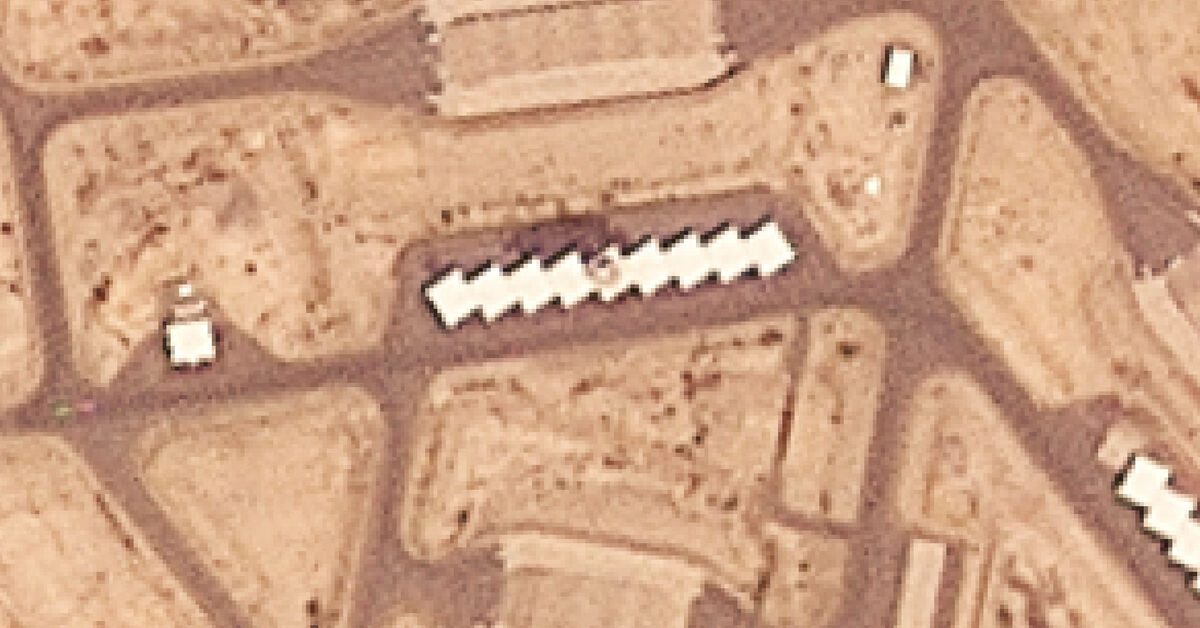
- The Houthis struck an airbase in Khamis Mushait and nearby oil infrastructure on Tuesday, wounding 73 people in one of the biggest attacks on Saudi Arabia since the U.S.-Israeli war on Iran began in February.
- Saudi warplanes carried out 54 airstrikes across Yemeni provinces in 12 hours in response, according to Houthi military spokesman Yahya Saree.
- A senior Iranian official confirmed Pakistan's message was received — but Tehran's response was that "Iran does not control the Houthis." Two Iranian sources told Reuters that Tehran had in fact urged the Houthis to attack Saudi Arabia last week, promising additional funding and weapons.
- Qatar is separately exploring proposals to bring both sides back to negotiations, per regional sources.
What to watch: Whether Pakistan's intervention stays diplomatic — or whether Houthi attacks on Saudi territory reach the threshold that activates the three-country security arrangement with Riyadh and Ankara — will shape whether this becomes a contained proxy conflict or a wider regional one. Trump Says Putin Wants a Ukraine Deal. U.S. Intelligence Isn't Convinced.President Trump told reporters Wednesday that Vladimir Putin is ready to negotiate an end to the war in Ukraine — but American, Ukrainian, and European intelligence officials are publicly skeptical that Moscow is serious, now nearly four years into the invasion.
- Trump spoke with Putin by phone on Tuesday, shortly after U.S. envoy Steve Witkoff and Jared Kushner returned from diplomatic visits to both Moscow and Kyiv to discuss potential peace proposals.
- "He is wanting to make a deal, and if Zelenskiy is wanting to make a deal, that'd be very nice," Trump said before boarding Air Force One to Dallas.
- CIA Director John Ratcliffe also met with Russian intelligence officials last month to encourage Moscow to end the invasion.
- Trump attributed the stalemate bluntly: "The holdup is two people who hate each other."
Zooming out: The gap between Trump's optimistic public framing and the skepticism from intelligence agencies on three continents reflects how far a negotiated settlement in Ukraine still is from anything concrete. Google's €13 Billion Finland Bet Is Its Biggest EU Investment EverGoogle just made its largest single investment in the European Union — and it comes with a nuclear power deal attached. The tech giant announced it will pour €13 billion (about $15.1 billion) into AI infrastructure in Finland in 2027 and 2028, and will buy power from a Finnish nuclear plant for the next 22 years.
- The investment covers data centers, electrical grid upgrades, and clean energy and battery projects across four Finnish locations, including an expansion of an existing site in the coastal city of Hamina.
- Google's deal with plant operator Fortum covers 50 percent of output from one of Finland's two nuclear plants through 2050 — without the deal, the plant would have had to shut down by 2030.
- Fortum shares jumped 15.5 percent on the news, their highest level in over four years.
- Finland's grid operator Fingrid forecasts a 40 percent spike in national energy consumption from the broader data center boom, raising energy and security concerns alongside the economic gains.
The bigger picture: Google's move — pairing AI infrastructure expansion with a long-term nuclear energy commitment — signals that the race to build AI capacity in Europe is now reshaping energy markets and grid planning across the continent. |
|
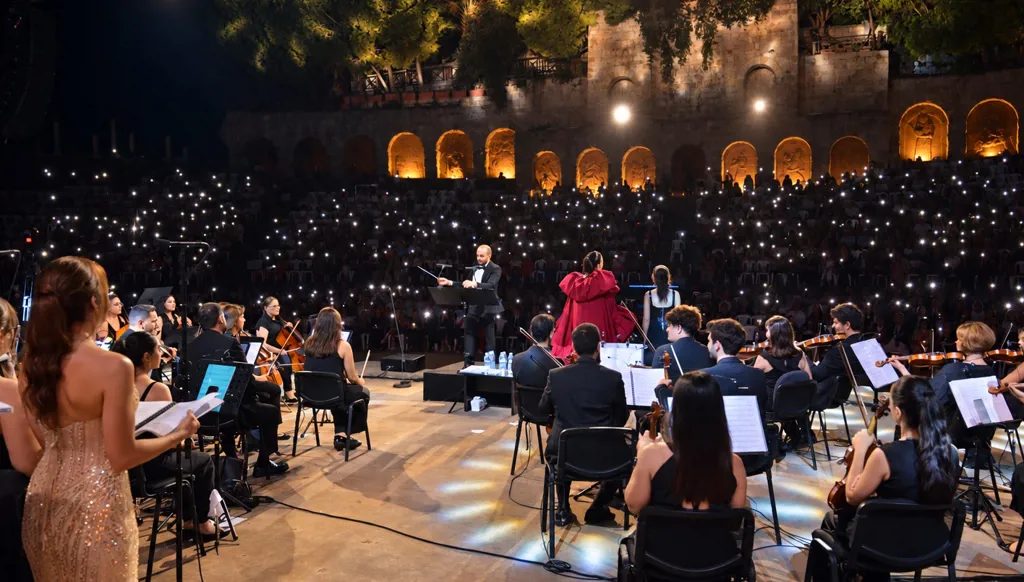
| | - Opera comes to the amphitheater: Beirut's Roman Amphitheater in Zouk Mikael hosted the inaugural Beirut International Opera Festival this week, with the first-ever Beirut International Opera Competition set to follow in Spring 2027 — complete with an international jury, a grand prize, and a special award for the best Lebanese contestant.
- Portland's Lebanese wordsmith: Lebanese American author George Jreije — whose work is published by HarperCollins and Scholastic and draws on Arab American mythology and identity — was selected from 51 applicants for a year-long writer-in-residence role at Mechanics' Hall in Portland, Maine, beginning September 22, with a $2,500 honorarium included.
- Lebanon's lost trains, found: The General Directorate of Railways and the Holy Spirit University of Kaslik signed a deal to digitize the Directorate's historical railway archive — maps, blueprints, photos, and records — preserving the memory of a rail network that once crisscrossed the country, for researchers and future generations to explore.
- 500 kids, one trophy: The Order of Malta Lebanon wrapped its fourth annual sports tournament at Notre Dame de Jamhour in Baabda, with roughly 500 children aged 6 to 15 from across Lebanon competing in football and basketball before a crowd of more than 1,000 spectators, with adventurer Maxime Chaya handing out the medals.
|
|
Take something from today's good news into the rest of your Thursday — it's there if you look for it. |
Deir el Qamar is known for its abundance of red-roofed buildings. |
Lebanon news, every weekday morning. Free, sharp, ~5 minutes. |
|
|
|
|