|   | Israel blew a mountain into rubble overnight, Washington is trying to talk to Lebanon's Shia community over Hezbollah's head, and a political analyst just spent several thousand words explaining why Lebanon's ballot paper keeps producing the same results — ahla w sahla, none of it is simple. Marhaba — this Saturday, the south is the story, and every other story runs through it. |
|
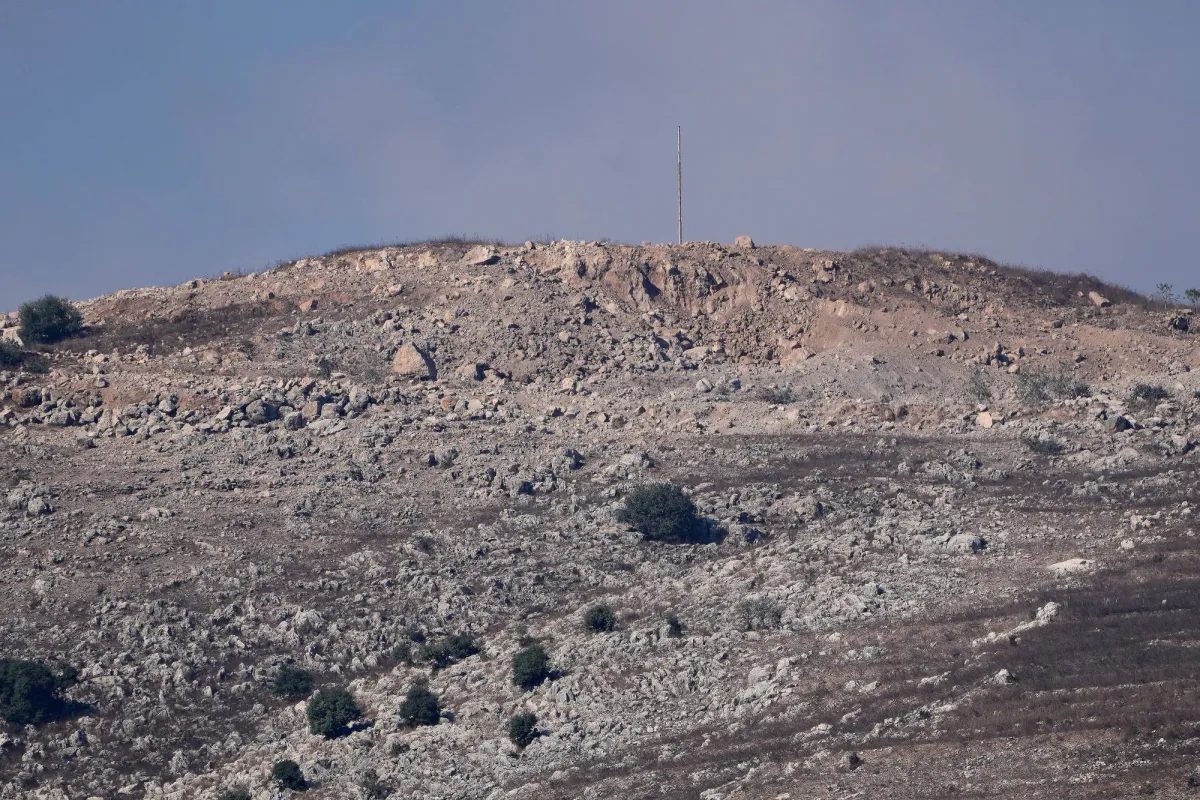
| | After Ali al-Taher: Israel Redraws the South's Map — and Lebanon Has No Counter-PlanIsrael didn't just destroy tunnels at Ali al-Taher. It used the rubble to announce a new strategic concept: a "security zone" stretching from the coast to Mount Hermon, controlled remotely by fire and surveillance rather than permanent boots on the ground. Netanyahu flew to Metula to display captured weapons. Speaker Berri said the framework agreement is "gone." Lebanon still hasn't been officially told about the next negotiating round in Rome.
- The Israeli explosion on Thursday was powerful enough to register as a magnitude 4.1–4.2 seismic event — windows and doors shattered in Marjayoun, roads blocked by debris, and residents 20 kilometers away saw flames light the sky red.
- Israeli Chief of Staff Eyal Zamir linked any progress on the framework agreement to the Lebanese Army's "effectiveness" — meaning Beirut must prove its deployment meets Israeli standards before getting withdrawals in return.
- PM Salam received Kfar Reman municipality leaders and promised the Council for Development and Reconstruction would begin recovery projects soon; the Kfar Reman massacre — 12 dead from one family, including children — is being documented by the National Committee for International Humanitarian Law.
- President Aoun heads to Paris on September 17 for an army-support conference with Macron and King Abdullah II — a trip Lebanon wants completed before any new Rome round begins.
What to watch: Whether Beirut can link the Paris conference, the army deployment, and the Rome negotiations into a single coordinated posture — or whether Israel continues setting terms one fait accompli at a time. Washington Goes Directly to Lebanon's Shia StreetUS Ambassador Michel Issa's visit to the Supreme Islamic Shia Council was coordinated, quietly, with Hezbollah's deputy leadership — a deliberate step beyond the usual channel through Speaker Berri, and a signal that Washington is now trying to address the broader Shia community directly rather than through political intermediaries.
- Issa told the Council that the US "holds all respect and love for the Shia community" but classifies Hezbollah alone as a terrorist organization — an attempt, observers say, to separate the community from the party in the American framing.
- The Council's Sheikh Al-Khatib pushed back: the Shia position is unified across Hezbollah, Amal, and the Council itself — "it is difficult to neutralize or isolate a faction because it is the position of the community."
- The community's core demand: guarantees that disarming won't happen without a verified Israeli withdrawal from the South. So far, no guarantees have been offered.
Zooming out: The visit follows Hezbollah's earlier signal of openness to direct contact with Washington, but the Council's unified-front response shows how much distance still separates the two sides' actual positions. Why Lebanon Keeps Getting the Same Ballot Paper and the Same ResultBerlin holds state elections on September 20 using a system that separates the voter's choice of person from their choice of party — producing measurable party mandates and clear accountability. A Daraj analysis asks why Lebanon can't simply import that model, then spends several thousand words explaining exactly why the question answers itself.
- Berlin gives each voter two votes: one for a local candidate, one for a party list — the second vote determines each party's overall share of seats, making it straightforward to ask who won and who is accountable.
- Lebanon's 2017 proportional law with a preferential vote was meant to open space for new forces — but in the 2018 Beirut II district, traditional alliances still captured 10 of 11 seats; in South III, one list swept all 11.
- The deeper problem: Lebanese MPs historically serve as intermediaries between citizens and the state — arranging transactions, services, jobs — a role that persists because the state hasn't built institutions that make citizens independent of those networks.
The bigger picture: Electoral law reform matters, but the analysis lands on a harder truth — a better ballot paper can't substitute for a state that citizens trust enough to hold accountable through it. |
|
as of 2:25 AM GMT · Source: Polymarket |
| | - Wages frozen, bills aren't: Lebanon's consumer price index rose 17.25 percent annually through June 2026, fruit prices alone jumped 22.8 percent, and the minimum wage — frozen at roughly 28 million LBP (about $313) — hasn't moved. Labor unions say a family of four needs $1,200 a month just to break even.
- Assad's cousin, arrested: The Lebanese Army detained Suleiman Hilal al-Assad, a cousin of ousted Syrian President Bashar al-Assad, in a drug trafficking raid in the Baalbek area of the northern Bekaa Valley, alongside the son of drug lord Nouh Zaiter. Syria has reportedly asked Beirut for his extradition over alleged killings on Syrian soil.
- SSNP eats itself: Lebanon's Syrian Social Nationalist Party is in full internal meltdown — its Supreme Council voted by a two-thirds majority to dismiss party president Rabih Banat, while Banat's camp fired back that the session was unconstitutional and declared a state of emergency. Two competing statements, one very awkward party WhatsApp group.
- 7 charged in Germany: German prosecutors charged seven suspected Hamas members — including three Lebanese nationals — with plotting attacks on Israelis and Jewish targets timed to the second anniversary of October 7. When arrested, police found an automatic rifle, 13 pistols, and 700 bullets.
- Lights on, eventually: The Lebanese Business Leaders Association and Energy Minister Joe Saddi unveiled a seven-paths electricity reform plan at Beirut Energy Forum 2026, covering renewables, natural gas, and regional interconnection — with the private sector expected to carry most of the load. The World Bank is offering financing, but says political will is the missing ingredient.
|
|
| ─ | Parallel Rate | 89,550 LBP | 0.00% | | ─ | Official Rate | 89,500 LBP | 0.00% | | ▲ | Gold | $4,390 | +0.58% | | ▲ | Bitcoin | $77,280 | +0.41% | | ▲ | S&P 500 | 7,656.98 | +0.27% |
as of 2:06 AM GMT · Source: lbprate, BDL, Yahoo Finance, CoinGecko |
| | UAE's $30 Billion AI Campus Goes Underground — LiterallyIran's missile and drone attacks on Gulf infrastructure didn't just rattle nerves — they reshaped a flagship tech project. The UAE is quietly redesigning its massive AI data center campus, originally planned as a single 10-square-mile complex in Abu Dhabi, into a distributed network of hardened facilities after the war made the original blueprint look dangerously exposed.
- Two Amazon Web Services data centers in the UAE were damaged in Iranian attacks in March, along with one in Bahrain; cloud services in the region remain disrupted.
- The first phase — a $30 billion, 1-gigawatt compute cluster called Stargate UAE — is continuing, but with modifications including blast-resistant concrete, air defense systems, drone interceptors, and electronic jamming equipment.
- Officials are considering placing the most sensitive facilities inside mountains in the Ras Al Khaimah and Fujairah emirates.
- Iran issued a video in April explicitly naming Stargate UAE as a potential target, including a map of the site near Al Dhafra Air Base.
The bigger picture: The redesign signals that Gulf states — long marketed as stable investment havens — are now engineering critical infrastructure around the assumption that regional conflict is an ongoing variable, not an edge case. 25 Years After 9/11: The War on Terror That Couldn't Be WonA quarter century after Al Qaeda killed nearly 3,000 people on September 11, 2001, the experts who spent their careers fighting terrorism reach a blunt consensus: the "War on Terror" as declared by President George W. Bush was unwinnable by design — and the threat today is more diffuse, not less.
- Roughly 7,000 American service members have died in post-9/11 campaigns; nearly 1 million people were killed as a direct result of conflicts in Afghanistan, Iraq, Syria, Pakistan, and Yemen, according to Brown University's Costs of War project.
- The State Department now lists five times as many extremist groups as were designated in 2001 — Al Qaeda alone has spawned more than two dozen offshoots threatening governments on three continents.
- Afghanistan is once again a "permissive haven," with the UN reporting Al Qaeda has established a presence in many of the country's 34 provinces since the Taliban's return.
Zooming out: Researchers describe today's terrorist landscape as a decentralized ecosystem of regional franchises and digital radicalization — harder to target, harder to define, and shaped partly by the same wars launched to eliminate it. Sudan's Gold Rush Is Poisoning the Nile — and Feeding the WarIn Abu Hamad on the banks of the Nile, fertile orchards and wheat fields have been replaced by more than 700 toxic waste mounds from artisanal gold mining — a practice that now accounts for more than 90 percent of Sudan's gold production and is directly financing both sides of the country's civil war.
- A single acre of wheat that once yielded 40 to 60 sacks now produces 12 to 18; orange groves that should yield 10 truckloads now produce less than half of one.
- The mining sector generated approximately $1.8 billion in revenue, accounting for 58 percent of Sudan's total export value in army-controlled areas.
- Analysis from 2022 found that 20 percent of drinking water samples contained mercury; local medical records show roughly 1 in 50 children born with serious congenital abnormalities.
- Primary school classes in one affected town dropped from 75 pupils to 20 as young men abandon education for mining work.
What to watch: Sudan's prime minister ordered the removal of all gold-processing mills from residential areas in July, but the contaminated mounds remain untreated as rainy season approaches and the risk of toxins reaching the Nile rises. |
|
| | - Céline takes Paris back: After four years battling stiff person syndrome — a rare neurological condition that broke her ribs and left her unable to walk — Céline Dion returned to the stage in Paris before more than 30,000 fans, with thousands more joining free outdoor karaoke events organized around the city. The Paris region expects the 16-date residency in September and October as well as further sold-out dates in May to boost the local economy by up to €800m (£690m).
- Beirut in Architectural Digest: A French designer's 1952 Achrafieh apartment — with 13-foot ceilings, handmade local furniture, and midcentury finds — just landed in Architectural Digest's October issue, showcasing Beirut's overlooked modernist architecture to a global readership. The designer calls the city's vibe simply: "Beirut is not about minimalism — here, you might host 40 people and that's considered small."
- Sithu power in Wilkes-Barre: Volunteers at St. Anthony & St. George Church in Pennsylvania are mincing mountains of garlic, rolling grape leaves, and layering phyllo for the annual Lebanese Food Festival — just as their mothers and sithus (grandmothers) did before them. On the menu: kibbeh, tabbouleh, shawarma, lamb chops, and Lebanese coffee stronger than anything you'll find at the corner café.
- Grand Slam, career complete: Katerina Siniakova and Taylor Townsend won the US Open women's doubles title, completing a historic career Grand Slam as a pairing after victories at Wimbledon, the Australian Open, and the French Open. It was Siniakova's 12th Grand Slam doubles title — and she became the first player ever to complete the career Slam with two different partners.
|
|
Saturday only comes once a week — make yours count. |
Different services have different numbers, with 112 being the emergency number. |
Lebanon news, every weekday morning. Free, sharp, ~5 minutes. |
|
|
|
|