|   | Marhaba — school's back, tuition's up, UNIFIL's on the way out, and Lebanon's amnesty law just hit a legal wall, all before your first coffee. Three stories this morning that capture the country's permanent condition: something important is either costing more, running out, or suspended pending review. Let's get into it. |
|
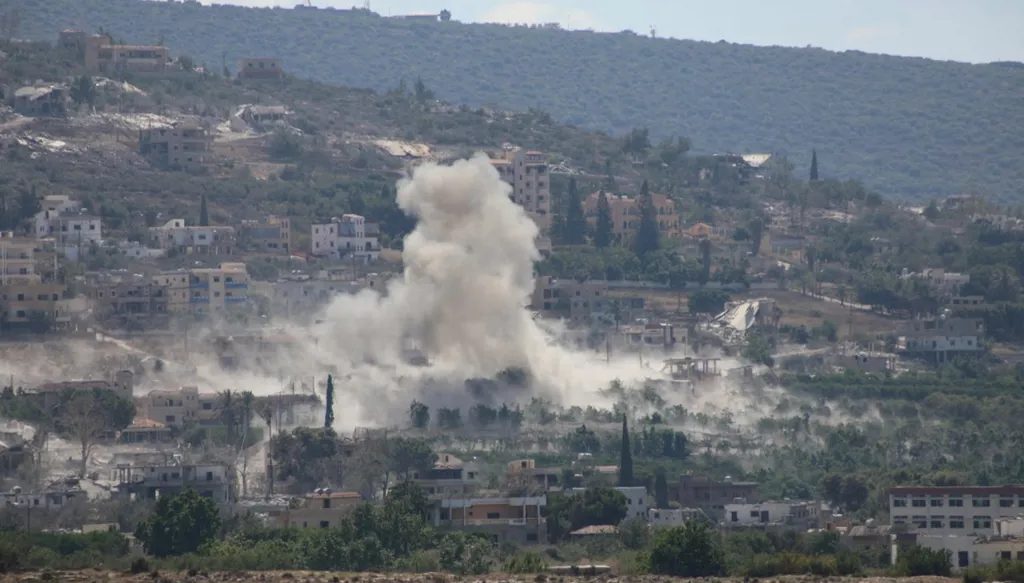
| | Lebanon Formally Asks the UN to Keep UNIFIL as the South BurnsUNIFIL, the UN peacekeeping force that has patrolled southern Lebanon since 1978, is set to end on December 31, 2026 — and Lebanon just made its most formal move yet to stop that from happening. Beirut has sent a letter to the Security Council calling any scheduled withdrawal "premature," while Israeli strikes continue almost daily in the very territory the force is meant to oversee.
- Lebanon's UN representative Ahmad Arafa warned the Security Council that the security context "changed dramatically" since the withdrawal timeline was set, and called for a limited extension of current arrangements to avoid a security vacuum.
- The Financial Times, citing three informed sources, reports France and a majority of Security Council members back Lebanon's request — but the US position remains undecided, with Washington reportedly recognizing "belatedly" that some of UNIFIL's functions need to continue in some form.
- On the ground, an Israeli patrol questioned the mayor of Kfar Shouba near the town's water reservoir, took his phone, then released him — a snapshot of the sovereignty gap the army is not yet equipped to close.
- A Paris meeting on September 17 — chaired by Presidents Macron and Aoun alongside Jordan's King Abdullah — aims to assess the Lebanese army's material and logistical needs as a follow-up to the broader UNIFIL transition question.
What to watch: Whether the September 17 Paris meeting produces concrete equipment or funding commitments for the Lebanese army, which still lacks the capacity to absorb UNIFIL's role even if an extension buys time. School's In — and So Is a 15–30% Tuition HikeLebanon's new school year is open for business, and private schools are charging more for it. The head of the Union of Parents' Committees in Private Schools says tuition fees have risen between 15% and 30% across Catholic and private schools for 2026–2027 — on top of last year's increases, which we reported were already squeezing middle-income families hard.
- The average private school tuition now sits at $4,000 per year, according to Lama Al-Tawil, with mid-range schools running $3,000 to $5,000 and top-tier international schools exceeding $10,000.
- Schools cite teacher salaries and generator fuel costs as justification — but Al-Tawil says when basic costs are divided by student count, a significant financial surplus still appears, suggesting the numbers don't add up.
- Some school administrations are accused of pressuring parent committee members to sign off on budgets without review — what Al-Tawil called "mafia-like" tactics to block financial auditing or silence dissenting parents.
- School bus subscriptions are expected to exceed $600 per month due to rising fuel prices, adding another layer of cost for families already stretched by Lebanon's wider cost-of-living spiral.
Why it matters: With the minimum wage frozen and inflation still running hot, tuition hikes of this scale are accelerating a quiet exodus of students from private into public schools — a system that already faces serious capacity and stability questions. Lebanon's Constitutional Council Freezes the Amnesty LawLebanon's General Amnesty Law — passed by parliament amid intense political controversy — is now on ice. The Constitutional Council issued Decision No. 10 on September 10, 2026, temporarily suspending the law's implementation while it reviews a legal challenge filed just one day earlier, on September 9.
- The suspension passed with a dissenting opinion from two council members, Awni Ramadan and Michel Tarzi, signaling the decision was not unanimous.
- Legal analysts caution that a suspension is not an annulment — it's a precautionary measure to prevent irreversible effects (like dropped prosecutions) before the Council finishes its review.
- The appeal covers a wide range of grounds: alleged violations of Article 36's voting requirements, claims the published text differs from what parliament actually voted on, and concerns about the law's clarity and enforceability.
Zooming out: The Constitutional Council's handling of this case will test whether Lebanon's constitutional review institutions can credibly police a parliament that has, in recent years, been accused of bypassing its own procedural rules. |
|
as of 2:17 AM GMT · Source: Polymarket |
What does "mit7amme2" mean? | | | I'm feeling hot/frustrated |
| |
Scroll to the bottom for the answer — or play all 10 at sobhiye.news/games/trivia |
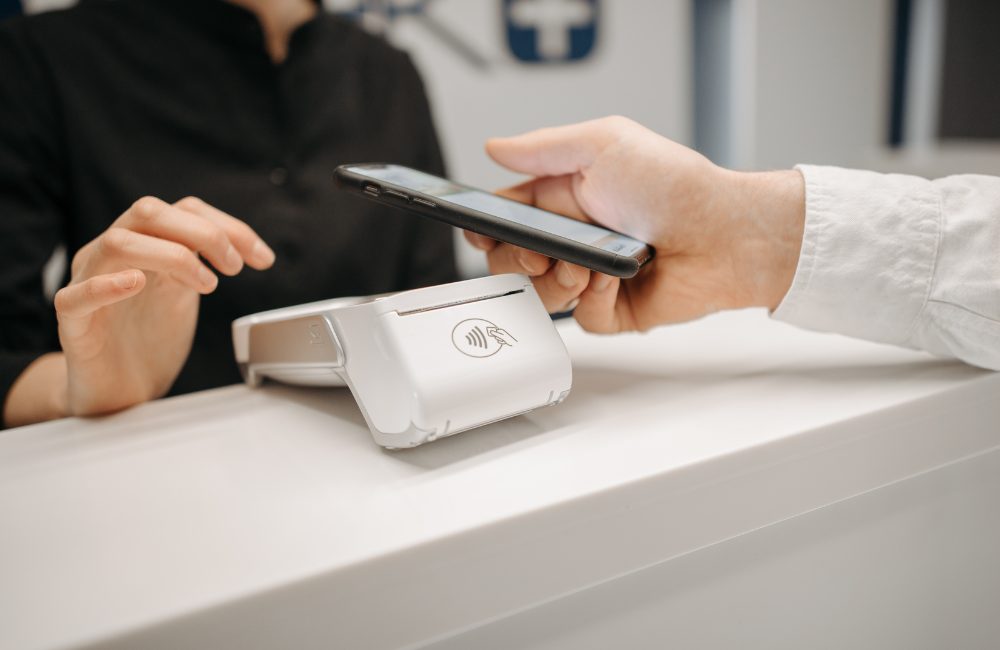
| | - Merchants, meet your new best friend: Lebanon's electronic point-of-sale terminals jumped 22.6% in the first half of 2026, reaching 27,410 machines — meaning the ratio of payment cards to terminals fell from roughly 77 to 63. More merchants taking cards matters more for daily spending than the near-flat 0.8% rise in total cards.
- Sidon breathes again: After pressure from the Municipal Council and coordination with judicial and security authorities, the solid waste treatment plant outside Sidon has reopened and contractor NTCC has launched an intensive street-clearing campaign. The municipality says this is an emergency measure and pledges a "radical and sustainable" long-term solution to prevent a repeat crisis.
- $500 and a vision: Lebanese streetwear brand ReFramed — started in late 2023 by two founders who were under 18 at the time — now ships to 52 countries and holds one of the largest shares of Lebanon's local streetwear market, with sales passing multiple six figures. A Dubai ground operation is next.
- Two pulpits, two Lebanons: Maronite Patriarch Raï called Sunday for concrete guarantees to end attacks in the south, warning negotiations must not become "open-ended." Jaafari Mufti Qabalan accused the government of abandoning the south and serving Israeli and American interests — a sharp public sectarian divergence on the war's management.
- Banks: big assets, small ambitions: Lebanon's commercial banks held $100.42 billion in combined assets as of July 2026, but 74.97% of that sits at the central bank. Domestic lending fell 7.79% year-on-year to just $4.1 billion — meaning Lebanese banks now lend more to foreign financial institutions than to customers at home.
|
|
| ─ | Parallel Rate | 89,300 LBP | 0.00% | | ─ | Official Rate | 89,500 LBP | 0.00% | | ▲ | Gold | $4,384.8 | +0.43% | | ▼ | Bitcoin | $77,056 | -0.32% | | ▲ | S&P 500 | 7,656.98 | +0.27% |
as of 2:01 AM GMT · Source: lbprate, BDL, Yahoo Finance, CoinGecko |
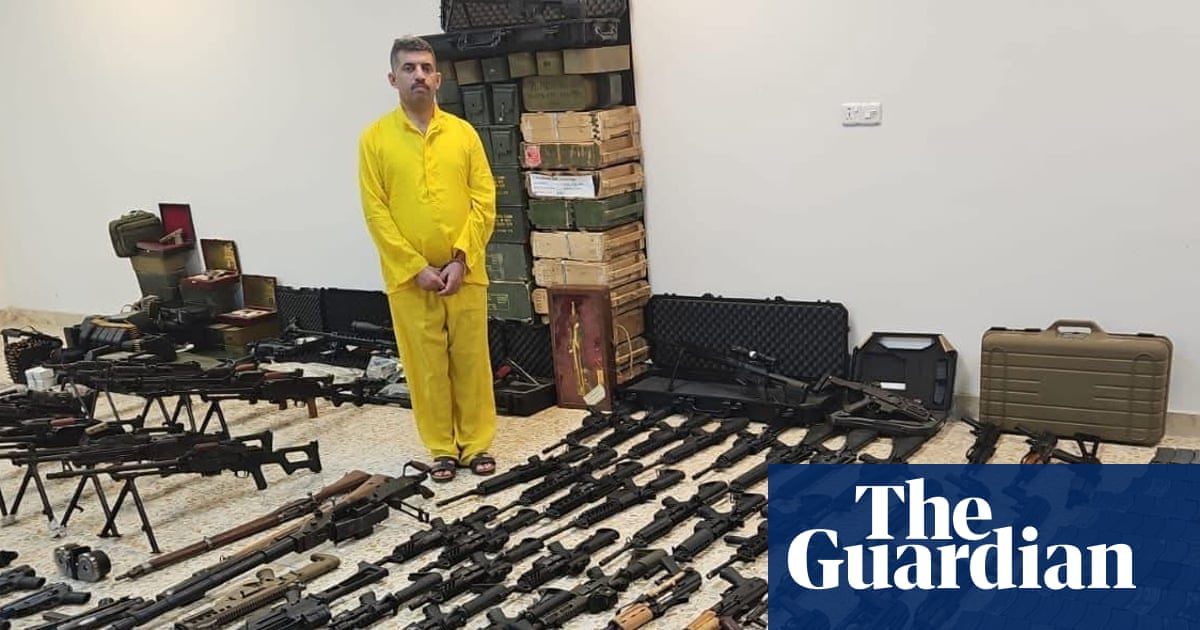
| | Iraq's New PM Arrests Dozens, Seizes $96 Million — but Is This Different?Iraq has seen this movie before: a new prime minister takes office, promises to fight corruption "with no red lines," arrests a few officials, and then ends his term mired in the same system. But Ali al-Zaidi's June crackdown — nearly 50 arrests, including MPs and senior officials, and the seizure of cash stuffed into pickle jars and burned in ovens — is drawing comparisons to something genuinely new.
- The case that set it all off: former deputy oil minister Adnan al-Jumaili, whose home yielded $10 million in cash, 3 billion dinars (about $2 million), 1.5 kg of gold, and around 40 properties.
- By mid-July, the total seized in the case reached 127 billion dinars (about $96 million), $24 million in cash, 375 kg of gold, and 70 properties.
- Al-Zaidi reportedly claimed al-Jumaili had offered him a $200 million bribe to keep his post before his arrest.
- A government insider told The Guardian the goal is to sever, in all its forms, the relationship between political party economic offices and the state — a system one international banker estimated siphons 5% to 10% off every government contract.
What to watch: Whether the arrests reach the senior party bosses who built these networks, or stop short in ways that suggest score-settling over structural change. EU's Foreign Policy Chief: Treat Israeli Settlements Like Occupied CrimeaThe EU has banned goods from Russian-occupied Crimea since 2014. Now the bloc's top foreign policy official says the same logic should apply to illegal Israeli settlements in the occupied West Bank — a statement that crystallizes a growing rift inside Europe over how to respond to Israel's actions.
- EU foreign policy chief Kaja Kallas told The Irish Times that Europe "cannot be taken seriously" while divided on Israeli settlements, and called for an EU-wide trade ban as a "principled stance."
- If framed as a trade measure rather than a foreign policy decision, the ban would require only a majority of member states — bypassing Germany, Hungary, the Czech Republic, and Slovenia, which currently oppose sanctions.
- The UK announced its own sanctions on Israeli settlements on September 8, with 10 other European countries and Canada signing a joint statement signaling their intention to follow.
- Israel responded by closing the British consulate in occupied East Jerusalem and banning 11 British MPs from entering the country.
The bigger picture: Western public approval of Israel has reached record lows, and the Kallas statement reflects how the gap between European public opinion and official EU policy has become increasingly difficult for institutions to hold. BRICS Summit: Xi Pushes AI Cooperation and a Bigger Global RoleThe BRICS grouping — once a loose club of five emerging economies — has grown into a 10-plus-member bloc that now includes Iran, the UAE, Egypt, Ethiopia, and Indonesia, alongside 10 partner countries. At this weekend's annual summit in New Delhi, China's Xi Jinping used the closing session to push it toward something more ambitious: a practical platform for Global South trade, AI, and supply-chain coordination.
- Xi proposed a BRICS AI Open Source Zone to promote cooperation on large language models and AI training, a BRICS Special Economic Zone partnership, and a BRICS Service Trade Forum to be hosted by China next year.
- The summit expressed "deep concern" over escalating Middle East tensions, with tit-for-tat US-Iran attacks and Houthi strikes on Saudi Arabia widening the regional conflict.
- Russia's Putin called the bloc "a powerful driving force" toward a multipolar world order; India's Modi said BRICS solutions should extend beyond the bloc to the broader Global South.
Zooming out: With the UAE and Iran both inside "Greater BRICS" while their regional rivalry intensifies, the summit's consensus language on the Middle East masks a bloc whose member interests are anything but aligned. |
|
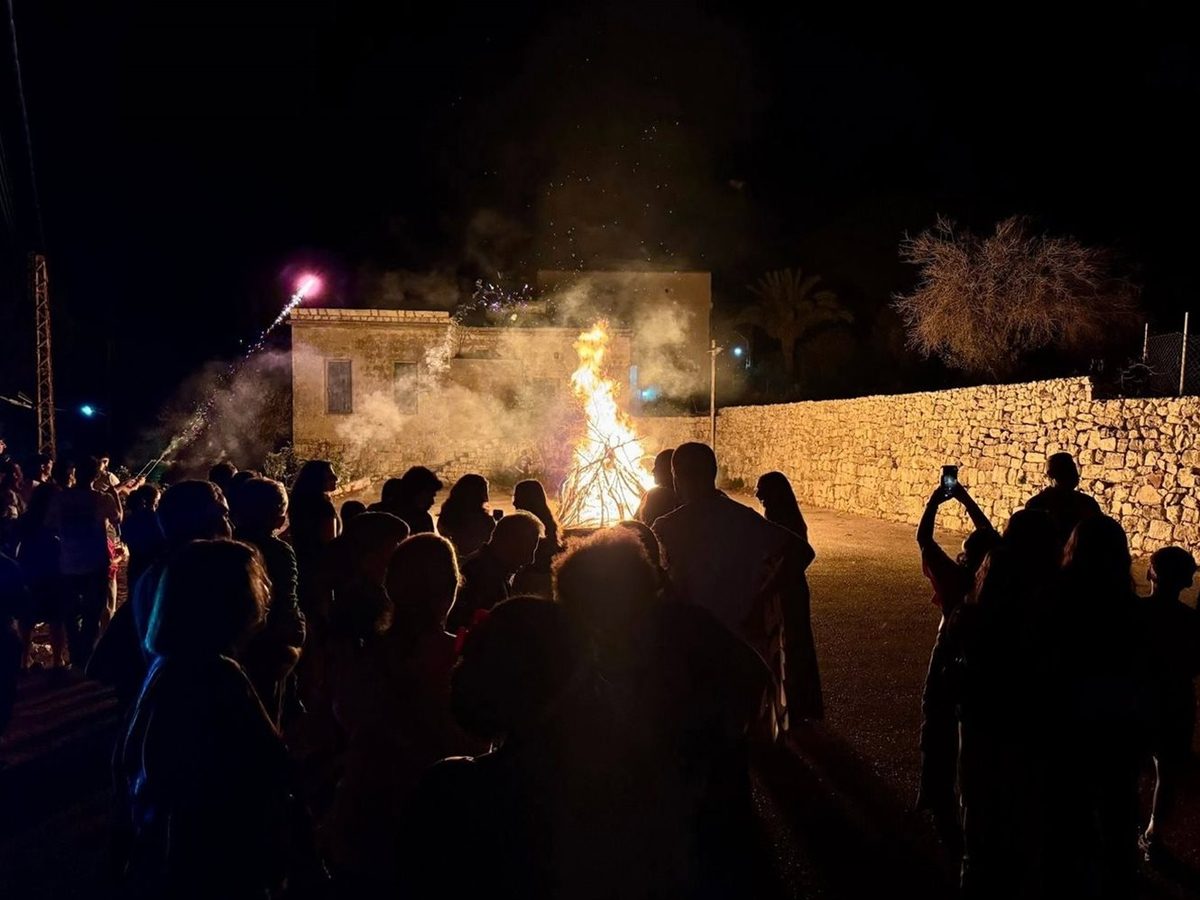
| | - Fire on the mountain: Tonight is the eve of the Feast of the Exaltation of the Cross, and Lebanese villages — especially in the mountains and south — will light the "Al-Qabbouleh" bonfires, a tradition tracing back to Saint Helena's 4th-century discovery of the Cross, when hilltop fires carried the news from peak to peak across Lebanon.
- Beirut poet, global page: Lebanese poet Asem Bazzi has released his second English-language poetry book, Endless Night, from Ornithopter Press — four years after his debut — weaving Beirut's streets into a concept-album-style work he describes as being about a young man who wants the end of the world, gets it, and promptly misses the old one.
- Grandmother's story, grandson's French: French-Palestinian-Lebanese novelist Jad Hilal has made the shortlist for the fourteenth Arab Literature Prize at the Institut du Monde Arabe in Paris, for Here the Earth Begins — a novel that reconstructs his grandmother's 1948 departure from the Palestinian village of Shafa Amr, written in the French that exile granted him.
- Riyadi's Final 8 call: Lebanese basketball club Riyadi — two-time defending WASL champions — will face India's Indian Railways, Saudi Arabia's Ittihad, and Kuwait's Kuwait club when the WASL tournament's "Final 8" tips off at Nouhad Naufal Stadium on September 26.
|
|
Go light something — even a candle counts on a Monday like this. |
| ✓C. I'm feeling hot/frustrated |
Mit7amme2 means feeling hot or frustrated (from 7amme2 - to heat up). |
Lebanon news, every weekday morning. Free, sharp, ~5 minutes. |
|
|
|
|