|   | Kifkon. Three stories this morning, and they all rhyme: the south is bleeding while some throw parties, an Israeli patrol tried to turn a Lebanese mayor into an informant on his own soil, and Hezbollah — the party of eternal resistance — is quietly asking Tehran to cut a deal. Lebanon, habibi, never a dull morning. |
|
| | When "Resistance" Has a VIP Section: The Weddings Dividing Lebanon's SouthSinger Julia Boutros built her legacy singing sacrifice for the South — then her family celebrated a lavish wedding while the South buries its dead. A planned ceremony for Amal MP Ali Hassan Khalil's son at Sursock Palace sparked a sharper fury: Khalil faces charges in the Beirut port explosion file, and the palace's owner died from injuries she sustained in that same blast.
- Since October 2023, Israeli attacks have killed 8,920 people and wounded 30,543 in southern Lebanon, including 4,350 killed since March 2, 2026, while many families remain displaced or unable to return to occupied villages.
- Sursock Palace management announced the ceremony's cancellation after the invitation went viral; Khalil denied the narrative, saying his son's marriage had already taken place at the bride's home, limited to both families.
- Daraj's analysis cuts to the core: "steadfastness" has become a social function assigned to the poor, while those who produce the discourse of sacrifice enjoy far wider margins between rhetoric and reality.
The bigger picture: The outrage isn't really about a wedding — it's a public reckoning with who gets to decide when a war starts and who is left to pay the bill once the speeches are done. Israeli Army Detains Kfar Shouba Mayor, Offers Cash for IntelligenceThe head of Kfar Shouba's municipality was stopped, held for over an hour inside Lebanese territory by an Israeli army patrol, and offered money in exchange for information about local homes and installations. He said no.
- Mayor Qassem Al-Qadri told Al Modon the Israeli officer proposed opening a direct communication channel with the municipality, offering financial aid and supplies — Al-Qadri refused, stating the municipality operates exclusively through Lebanese state institutions.
- The officer also requested information on locations and infrastructure in the area; Al-Qadri replied that Israeli forces themselves block residents from accessing their own lands and mountains.
- Israeli vehicles are now moving freely through agricultural lands, damaging fields and trees, while residents don't know where they can safely move — "going wherever they want," Al-Qadri said.
What to watch: Whether the Lebanese government formally responds to the detention of an elected municipal official on Lebanese soil will signal how much leverage Beirut believes it still holds in the south. Hezbollah Starts Talking Settlement — and Leaning on Tehran to Deliver ItFor a party that built its identity on resistance as a permanent posture, the shift is striking: Hezbollah figures are now openly floating a regional settlement as the preferred path forward, tying their hopes to Iran's negotiating hand with Washington rather than to battlefield outcomes.
- Hezbollah MP Hasan Ezzeddine said clearly that "things are heading toward a regional settlement in which Lebanon would be an essential part" — framing Iran as a capable regional power whose negotiations with the U.S. could force an Israeli withdrawal.
- The new language explicitly sidelines the idea that weapons alone can recover occupied land — a notable departure from decades of core Hezbollah doctrine.
- Ezzeddine acknowledged direct Israel-Lebanon talks recently "reached a dead end," and that no solution can be found for Lebanon independently of broader regional dynamics.
Zooming out: Hezbollah signaling openness to a negotiated settlement brokered through Tehran marks a real shift in register — though whether Iran's leverage with Washington is as strong as Ezzeddine suggests remains the central open question. |
|
as of 2:50 AM GMT · Source: Polymarket |
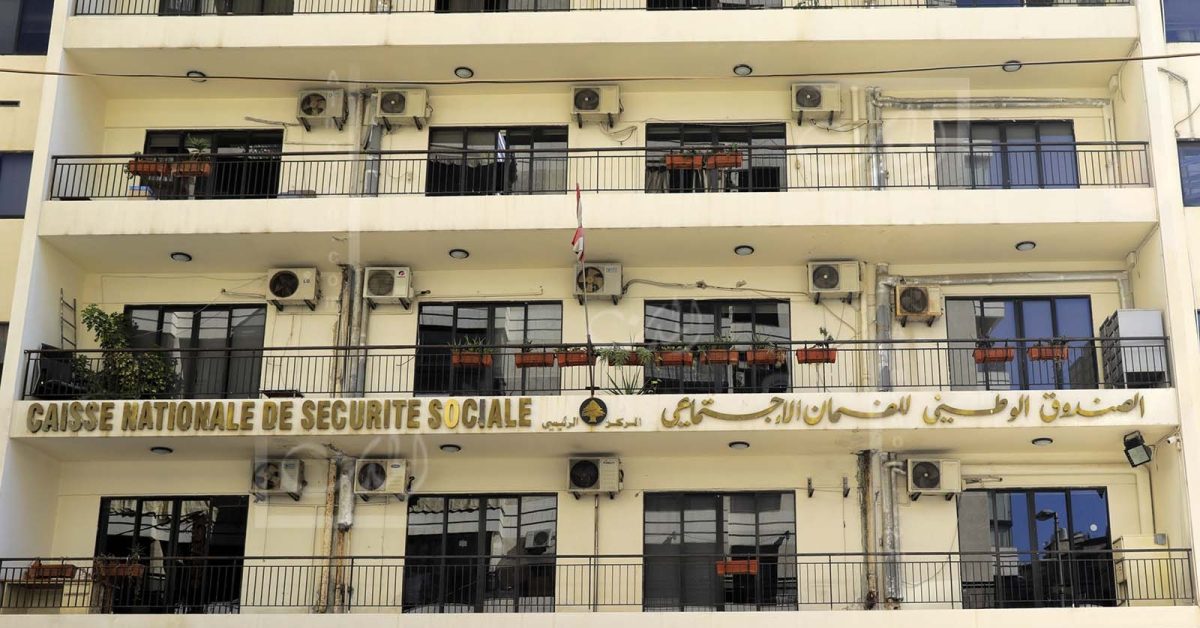
| | - 85% off your guilt: Lebanon's National Social Security Fund is slashing 85 percent of interest and penalties on debts accumulated through end-2025, giving employers and individuals until July 2027 to pay or installment their dues — with pre-2001 debts cancelled outright.
- Paris arms run on Sept. 17: Defense Minister Michel Menassa met France's new ambassador Patrick Durel and discussed the September 17 Paris conference to bolster Lebanese Armed Forces capabilities, along with arrangements for the period following UNIFIL's mission end later this year.
- Kataeb's peace bombshell: MP Nadim Gemayel said at a Sassine Square commemoration of his father Bachir's assassination that Lebanon has "no problem making peace with Israel" — while blasting the state for lacking the "boldness" to disarm Hezbollah and curb Iranian influence.
- Vatican hears Lebanon's pain: Greek Orthodox Patriarch John X met Vatican Secretary of State Cardinal Parolin, calling for international pressure to halt attacks on Lebanon's south and urging support for constitutional institutions to end the war and enable displaced residents to return.
- Four years of lost desks: Public school students received only about 270 days of in-person education across four academic years between 2019 and 2023 — against an expected 600 — and by 2022 just 2.8 percent of second-graders reached average reading comprehension, down from 11 percent in 2018.
|
|
| ─ | Parallel Rate | 89,550 LBP | 0.00% | | ─ | Official Rate | 89,500 LBP | 0.00% | | ▼ | Gold | $4,347.5 | -0.10% | | ▲ | Bitcoin | $77,992 | +0.63% | | ▲ | S&P 500 | 7,619.98 | +0.37% |
as of 2:30 AM GMT · Source: lbprate, BDL, Yahoo Finance, CoinGecko |
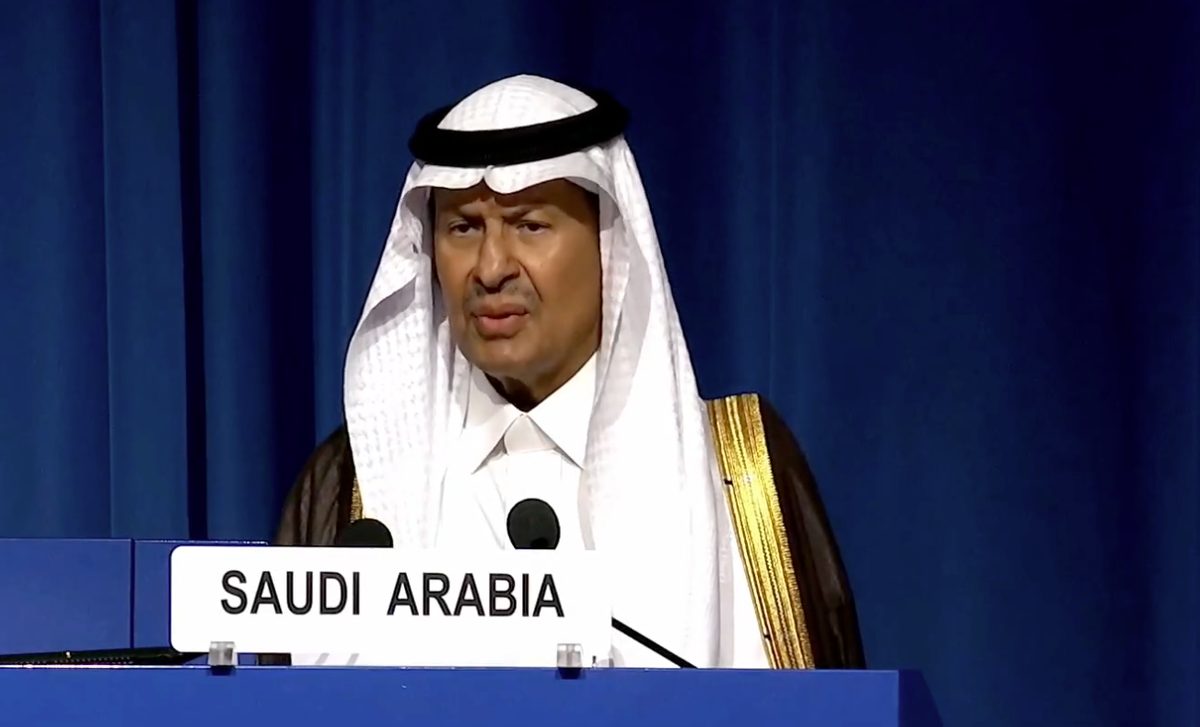
| | Saudi Arabia Strikes Rare Earth Gold — and Uranium — in MadinahSaudi Arabia just announced a find that could reshape global critical minerals supply chains: an estimated 110 million tonnes of rare earth ore and uranium-bearing rock at a single site in the Madinah region, disclosed at the International Atomic Energy Agency's general conference.
- The deposit at Jabal Sayid, roughly 350 km northeast of Jeddah, is believed to rank fourth globally for heavy rare earths, holding an estimated 552,000 tonnes of elements like dysprosium and terbium, plus a co-located uranium resource of around 31,000 tonnes, according to a Center for Strategic and International Studies analysis.
- The announcement follows a July US-Saudi civil nuclear cooperation agreement, under which the US Department of Defense agreed to finance 49 percent of a new rare earth processing plant in the Kingdom.
- Saudi Arabia's rare earth discoveries were valued at $100 billion as of November 2025, up 90 percent from 2018.
The bigger picture: A domestically controlled rare earth and uranium supply would give Saudi Arabia significant leverage in clean energy supply chains currently dominated by China. U.S. Pilot Survived 50 Hours Behind Enemy Lines in Iran with a Broken BackThe American weapons officer whose F-15E Strike Eagle was shot down over Iran in April has given his first public account of surviving two days alone in Iranian mountains with a broken back, arm, and shoulder — waiting for a rescue mission the CIA quietly engineered.
- The officer, known as "Bravo," free-fell at speeds of up to 100 mph after a shoulder-fired Iranian missile shredded his parachute, then climbed to a 7,000-foot ridgeline despite his injuries to avoid capture.
- His pilot, "Alpha," was rescued the same day; Bravo spent another 50 hours in the mountains with almost no food or water before US forces arrived.
- The $31 million Strike Eagle was downed on April 3 over Iran.
- A senior Trump administration official told NBC that CIA technology located Bravo; CBS reported that a deception campaign distracted Iranian forces — Iran framed the rescue as a cover story for stealing uranium.
What to watch: The first-person account adds new detail to an episode that has already complicated US-Iran relations and raises questions about what further military incidents could follow ongoing tensions over Iran's nuclear program. Lebanon's Coast Holds Clues to 400,000 Years of Human PrehistoryA new study published in Nature has reanalyzed animal bone collections from three Lebanese coastal sites — Na'ameh, Nahr Ibrahim, and Ras El Kelb — and found they document continuous woodland habitats and distinct hominin hunting strategies stretching back roughly 400,000 years, filling a major gap in Levantine prehistory.
- Political instability since the 1970s severely limited Pleistocene research in Lebanon, leaving the country's rich archaeological record largely unstudied while southern Levantine sites shaped broader assumptions about human evolution across the entire region.
- Dental wear analysis of prey species consistently points to Mediterranean woodland environments in central Lebanon from approximately 400,000 to 100,000 years ago — a more stable, forested habitat than the open grasslands documented at contemporaneous southern Levantine sites.
- Cut marks, impact notches, and split bones at Na'ameh confirm hominins — not carnivores — were the primary agents of prey accumulation, with prime-age adults making up 82 percent of the Na'ameh assemblage.
Zooming out: The findings challenge long-standing assumptions of ecological uniformity across the Levant and position Lebanon's Mediterranean coast as a distinct, resource-rich corridor that shaped human dispersal and survival strategies differently from the arid south. |
|
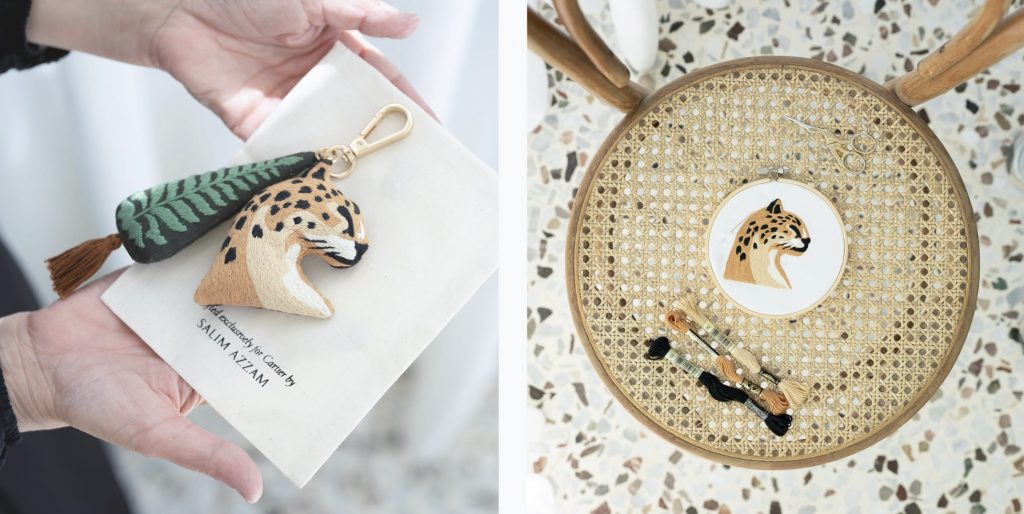
| | - Cartier meets the Chouf: Lebanese designer Salim Azzam — raised in the Chouf mountains surrounded by generations of embroiderers — has collaborated with Cartier on a collection of handcrafted pieces for their Bodrum store, including a hand-embroidered Cartier panther made with skilled local Lebanese artisans. One stitch at a time.
- Beirut's underground is back: Iconic nightclub B018 — buried beneath Karantina since 1998 and designed by architect Bernard Khoury as a refusal to forget the civil war — reopened on July 20 after a 2024 closure, with a new 360-degree sound system and an invitation-only membership built on cultural curiosity, not cash.
- Sultan of Sequins, forever: Bob Mackie — the designer behind Cher's feathered Oscars headdress, Elton John's Donald Duck concert costume, and an estimated 17,000 Carol Burnett Show outfits — died at 87, leaving behind nine Emmys, three Oscar nominations, and six decades of looks that made the world stop and stare.
- Memory saved, one hard drive at a time: When Rima Sharara fled Bint Jbeil, she packed the library's computers and hard drives — preserving 24 oral history recordings from 24 towns and villages — before the Bint Jbeil Public Library, which had housed around 15,000 catalogued books since 2001, was destroyed. Stone crumbles; archives endure.
|
|
Yalla, carry something good from today into the rest of your Tuesday. |
Amin Maalouf is a celebrated author. |
Lebanon news, every weekday morning. Free, sharp, ~5 minutes. |
|
|
|
|