|   | Six years, 220 lives, and a 260-page opinion — and Michel Aoun's name is finally in the port blast file. Bonjourein. Today we're also tracking a high-stakes military summit in Paris and the parliamentary debate that will decide whether Lebanon's small depositors pay for a banking collapse they had no hand in creating. |
|
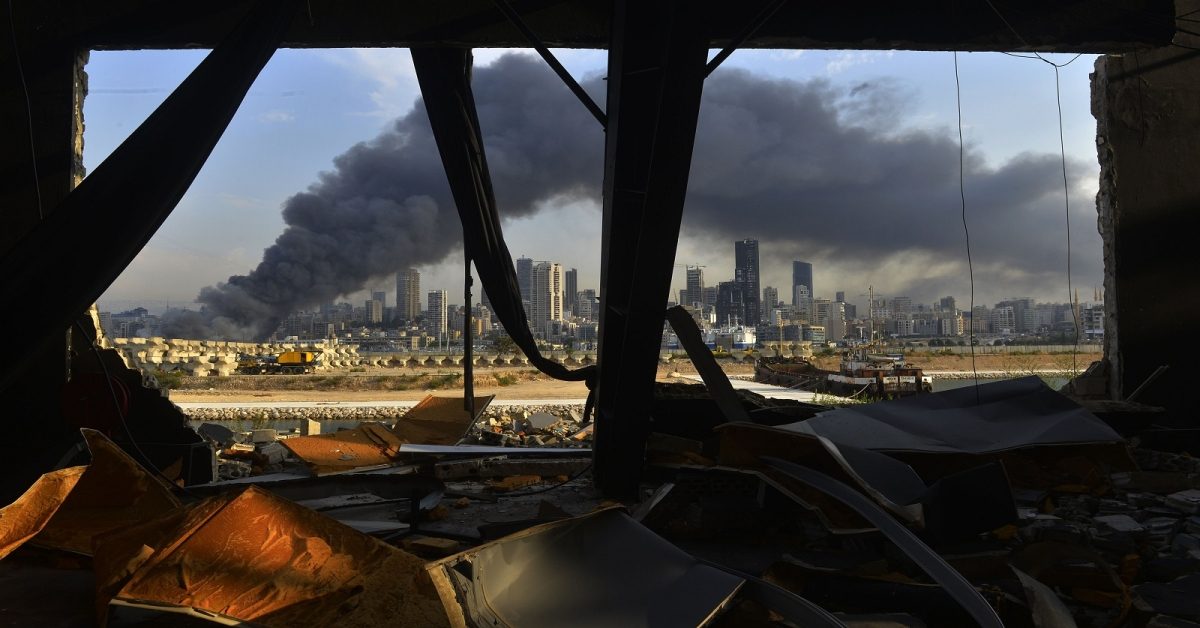
| | Port Blast Prosecutor Seeks Charges Against Michel Aoun — Six Years OnSix years after the August 4, 2020 explosion that killed more than 220 people and leveled swathes of Beirut, a Lebanese prosecutor has formally asked the investigating judge to charge former president Michel Aoun — the most senior figure yet named in the case.
- Discriminatory Public Prosecutor Judge Mohammad Saab submitted a 260-page opinion to Judge Tarek Bitar on Tuesday, specifying criminal responsibility for more than 70 defendants, including Aoun, former ministers Ghazi Zaiter, Youssef Fenianos, and Ali Hassan Khalil, and former PM Hassan Diab.
- The charge against Aoun: he had prior knowledge of the ammonium nitrate stored at the port and its danger, yet took no action and did not refer the matter to the Higher Defense Council, according to a judicial official who spoke to AFP.
- Bitar — who survived years of Hezbollah-led campaigns to remove him — could issue formal charges in the coming weeks; the case had been paralyzed since 2023 before resuming last year.
- A key jurisdictional knot remains: Bitar himself believes prosecuting a sitting or former president falls outside his powers, meaning a political and legal battle over the Supreme Council for the Trial of Presidents and Ministers may be next.
What to watch: Whether Bitar issues indictments before year-end — and whether the jurisdictional dispute over trying a former president triggers a new round of legal paralysis — will define whether this case finally delivers accountability or stalls again. Paris Military Summit: Macron, King Abdullah, and Aoun Open a New Phase for the Lebanese ArmyWhen Sobhiye last reported on the Paris military meeting, we knew the date and the broad goal. Now the guest list and agenda are locked in — and this is bigger than a donor conference.
- French President Macron, Jordanian King Abdullah II, and Lebanese President Joseph Aoun will jointly open Thursday's gathering at the Elysée, arranged at King Abdullah's request under the "Aqaba Process," with high-level military officials from France, Britain, Jordan, Lebanon, the United States, and Saudi Arabia attending.
- Paris is explicit that this is not a pledging conference: the goal is a "practical and operational" plan defining the army's deployment concept, capability gaps, and implementation mechanisms — a foundation for a broader international support conference later.
- The EU is separately working to establish a training mission for the Lebanese Armed Forces; France also links any international presence to Resolution 1701 and frames Hezbollah disarmament as a Lebanese — not international — responsibility.
Zooming out: The meeting's framing — capabilities first, funding second — signals that Paris wants concrete army deployment benchmarks on the table before donor countries write checks, a shift from the vague pledging rounds Lebanon has seen before. Lebanon's $70 Billion Financial Gap Law: Who Gets the Bill?Lebanon's parliament is debating a financial gap law that will determine whether the country's catastrophic banking collapse — estimated at roughly $70 billion in losses — is treated as a shared natural disaster or a crime with identifiable perpetrators. The answer shapes whether depositors or the powerful pay first.
- The bill, referred to parliament on December 29, 2025 and still under amendment, covers how losses are distributed across depositors, banks, the Banque du Liban, and the state — but critics argue it must first audit who created the gap before assigning who absorbs it.
- Approximately $32 billion was transferred abroad between mid-2018 and mid-2020; around $13 billion flowed through subsidy programs with documented leakage; and Sayrafa platform losses alone are estimated at $2.5 billion — all requiring investigation before losses are distributed.
- The IMF has stressed that shareholders and junior creditors must bear losses before depositors, and that any state contribution must align with debt sustainability — a sequencing the current draft risks bypassing.
Why it matters: The law that emerges from parliament will decide whether Lebanon's small depositors — who had no hand in the Ponzi-style financial engineering that collapsed the system — end up paying the bill for those who did. |
|
as of 2:20 AM GMT · Source: Polymarket |
| | - Russia's shadow, Lebanon's bill: Lebanese courts have now opened at least three investigations into a fuel scandal linking Lebanon's power plant supply chain to Russia's shadow fleet operator 2Rivers Group — with financial prosecutors filing charges in two separate cases involving Iplom and Sahara Energy Resource Limited for alleged fraud and illicit enrichment, according to The National.
- Kuwait's back in Beirut: Kuwaiti investors and business delegations are returning to Lebanon this summer, with families reopening homes in Bhamdoun, Falougha, and Brummana, and a Kuwaiti-Lebanese company, PAC, already opening a Beirut branch — a signal, analysts say, of renewed Gulf confidence in Lebanon's economic potential.
- School's in. Sort of: Education Minister Rima Karami announced a "gradual" return to the academic year, with diagnostic assessments to identify learning gaps — but some schools will begin with remote learning, and UNICEF had warned two months ago that at least 100,000 Lebanese students risked missing the term entirely if war-damaged schools weren't rehabilitated in time.
- Hezbollah's talking heads, abandoned: After years of cultivating a network of on-screen "analysts" to amplify its messaging, Hezbollah issued a statement after the fall of Ali al-Taher distancing itself from the figures it once briefed directly — a media crisis, argues Daraj, that exposes two decades of certainty-as-propaganda now crashing against reality.
- Lebanese detainees, UN-bound: Two southern Lebanese rights groups — the Khiam Rehabilitation Center and the Qana Observatory — presented a draft resolution to Lebanon's Foreign Ministry Tuesday, seeking UN Human Rights Council intervention to secure the release of 38 Lebanese still held in Israeli custody and guarantee access for the Red Cross.
|
|
| ─ | Parallel Rate | 89,550 LBP | 0.00% | | ─ | Official Rate | 89,500 LBP | 0.00% | | ▼ | Gold | $4,326.7 | -0.58% | | ▼ | Bitcoin | $75,454 | -3.17% | | ▼ | S&P 500 | 7,585.73 | -0.93% |
as of 2:03 AM GMT · Source: lbprate, BDL, Yahoo Finance, CoinGecko |
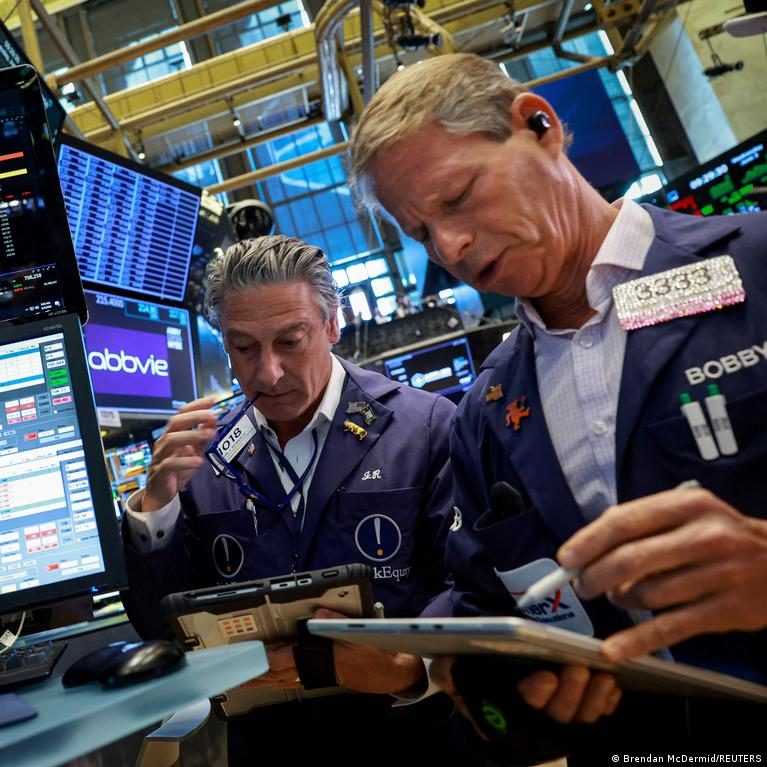
| | The Era of Cheap Government Debt Is Over — and the Numbers Are StaggeringThe yield on 30-year US Treasury bonds climbed to nearly 5.4% this week, the highest since 2007, as Norway's sovereign wealth fund announced plans to cut its US bond holdings by $80 billion. The age of governments borrowing cheaply and quietly is closing.
- The US now spends over $1 trillion annually on interest payments — more than $3 billion per day — surpassing its entire military budget, while national debt passed $40 trillion in August.
- The four major AI "hyperscalers" alone have raised over $800 billion in debt this year, creating direct competition for government bonds and drawing investors away from Treasuries.
- US budget deficit is on course to reach nearly 6% in 2026; Treasury Secretary Scott Bessent tripled bond buybacks from $2 billion to $6 billion — a move analysts call far too small to contain yields long-term.
- Most economists still see no near-term alternative to US capital markets, with European markets and emerging economies unable to absorb the shift.
The bigger picture: With AI infrastructure bonds, military spending, and tax shortfalls all pulling in the same direction, the structural pressure on sovereign debt markets is unlikely to ease regardless of short-term interventions. Argentina Escalates Falklands Oil Fight — with Trump's BlessingPresident Javier Milei's government announced new criminal complaints against oil companies exploring near the Falkland Islands, as US President Donald Trump signaled he may reconsider Washington's long-standing support for British sovereignty over the territory.
- Argentina has already filed complaints against Israel's Navitas Petroleum and Britain's Rockhopper Exploration over the Sea Lion oil project in the North Falkland basin, and launched action against Canada's Eco Atlantic, saying its licences were granted by an "illegitimate" UK government.
- A 2011 Argentine law sets penalties of up to 20 years' disqualification from operating in Argentina and up to 15 years in prison for unauthorized exploration on Argentina's continental shelf.
- Both targeted companies say their licences are valid and don't expect Milei's moves to derail development; Britain published guidance Tuesday reaffirming it backs all legitimate economic activity in the islands.
- Trump told British media he will "settle" the dispute, a comment that analysts say raises the prospect of wider UK-US tensions.
What to watch: Whether Trump follows words with formal policy action on Falklands sovereignty will determine if this is a diplomatic pressure play or a genuine realignment of a four-decade US position. Pistachios, Sinking Ground, and a Water Crisis Splitting Two Rival NationsIran and the United States are the world's two largest pistachio producers — and they share the same slow-motion crisis: both are watching their farmland sink as over-pumped aquifers collapse beneath orchards that have fed families for generations.
- Parts of Rafsanjan, Iran's pistachio heartland, are sinking by up to 37 centimeters annually; farmers who once reached water at 20 meters now drill down to 300 meters.
- California's Central Valley, now the world's largest pistachio-producing region, is sinking by up to 20 centimeters a year in some areas — the same aquifer-collapse dynamic, different regulatory response.
- California's 2014 Sustainable Groundwater Management Act requires basins to balance pumping by 2040; Iran has draft subsidence regulations still awaiting government approval.
- Iranian farmers say international sanctions have stripped them of premium markets — once known for quality, Rafsanjan is now known for low prices.
Zooming out: The pistachio crisis is a preview of how climate stress and water mismanagement will hit agricultural economies differently depending on governance capacity — regardless of which side of a geopolitical divide a farm sits on. |
|
| | - Rima's song of small things: Lebanese singer Rima Khcheich has released "Awwal Mbareh," a new song born from the details of a home — a bed, a closet, books, and notebooks — collaborating once again with artist Rabih Mroué, who recorded the video using his own drawings, with each musician recording their part from a different country.
- Messi's farewell, booked: Argentina has officially invited Lionel Messi to a farewell match on October 6 at Buenos Aires' Monumental Stadium against Benin, after the football icon announced his retirement from international football last month — one last night under the blue and white for the greatest player on earth.
- Emmy history, Welsh-made: Actor Matthew Rhys became the first person in 78 years of Emmy Awards to win two lead acting prizes in a single night — taking both lead comedy and lead limited actor — and is now the first man ever to hold all three top lead acting Emmys across drama, comedy, and limited series.
- Qadisha unites Lebanon: Christian and Muslim religious figures gathered in the Patriarchs' Garden for a national conference on the heritage of the Sacred Valley, with Sunni scholars and Maronite clergy standing side by side as Sheikh Al-Shaar and Patriarch Al-Raï jointly unveiled commemorative plaques — one of those quiet, beautiful Lebanese moments that rarely makes the headlines it deserves.
|
|
That's your Wednesday — take the good parts with you and we'll see you tomorrow. |
Rachana has outdoor sculptures. |
Lebanon news, every weekday morning. Free, sharp, ~5 minutes. |
|
|
|
|