|   | Your electricity bill just quadrupled, your gas can costs $30, and the president is pitching a security deal with Israel in Paris — all before your morning coffee. Shou el akhbar, it's a full one today. Buckle up. |
|
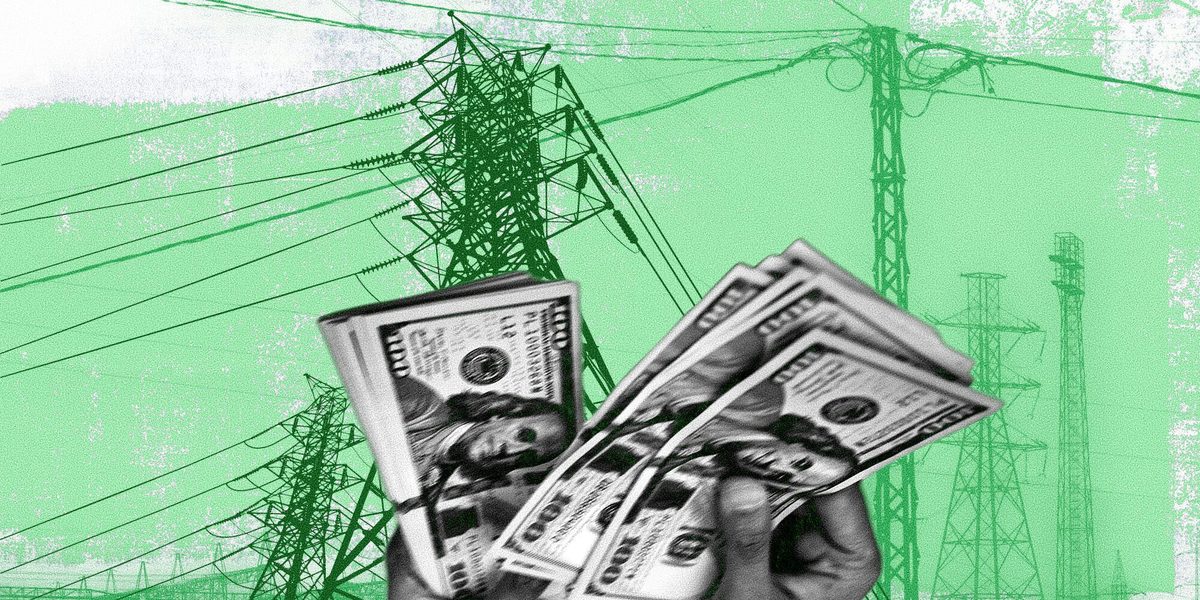
| | Lebanon's Generator Owners Set Their Own Rules — and PricesLebanon has no reliable public electricity — EDL delivers at most four hours a day for most subscribers — so 3,432 private generators across 652 towns fill the gap. A new Daraj investigation shows those generators operate as unregulated neighborhood monopolies, charging whatever they like, with no real way for subscribers to switch or complain.
- The Ministry of Energy's August 2026 indicative tariff is 0.54 cents per kilowatt-hour (about 48,241 LBP at the 89,000 LBP/dollar rate), but Daraj's data from 31 subscribers found rates running from $0.40 to $0.90 per kilowatt-hour — with monthly bills ranging from $30 in Akkar to $938 in Dahieh, according to Daraj.
- Generator owners have carved neighborhoods into exclusive zones: switching providers can require a deal between two owners or a mediator, and owners can simply refuse new subscribers or cut off existing ones without consequence.
- Tensions around the Strait of Hormuz handed owners a fresh excuse — one subscriber's bill doubled from $100 to $200 with a one-word justification: "Hormuz."
- Energy expert Jessica Obeid says the World Bank valued the private generator market at $2 billion in 2018, yet "few generator owners actually adhere to the Ministry of Energy's tariff."
Why it matters: With existing power plants capable of covering only about 60 percent of demand and the last plant built in 1999, Lebanon's electricity dysfunction has calcified into a shadow economy that extracts billions from households with zero accountability. Gasoline Just Crossed $30 a Can — and Lebanese Salaries Haven't MovedThis is a follow-up to our September 12 coverage of rising fuel prices. The latest numbers are sharper than we reported: a can of 95-octane gasoline hit 2,718,000 LBP (about $30.3 at 89,700 LBP/dollar) in early September — and the math for minimum-wage earners is brutal.
- A 40-kilometer daily commute that cost roughly $180 per month a few months ago now costs about $330 — a $150 monthly jump on a minimum wage frozen at $350.
- Transportation prices rose 29.36 percent year-on-year through June 2026, nearly double the general inflation rate of 17.25 percent; diesel's rise also pushed generator tariffs up 18.4 percent between July and August.
- After fuel and the minimum food basket for a family of four ($174/month), a minimum-wage household is left with roughly $117 — before rent, medicine, school fees, or the generator bill.
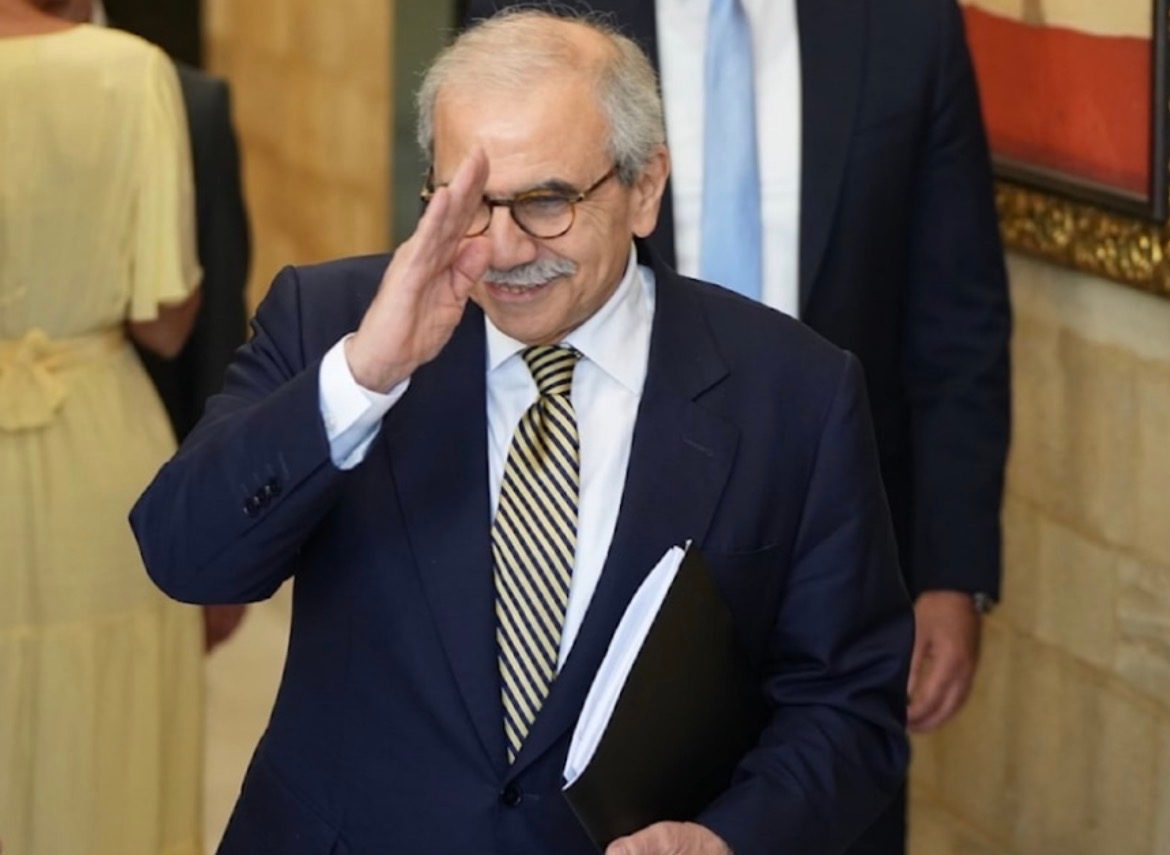
The bigger picture: Brent crude approaching $110 per barrel amid Gulf supply disruptions on September 11 means the squeeze on Lebanese household budgets is tied directly to geopolitics no Lebanese government can control. Aoun Lands in Paris, Pitches Security Pact With IsraelSobhiye readers know President Aoun has been pushing negotiations with Israel since August. What's new: he's in Paris for a high-level conference on Lebanese army support, and he's now named the specific goal — a security agreement to formally end the state of hostility with Israel, as a step before any peace deal.
- Aoun flew to Paris at French President Macron's invitation; he'll join Macron and Jordan's King Abdullah II for the opening of a preparatory meeting on international support for the Lebanese Army and Internal Security Forces, held at Les Invalides.
- In an AFP interview, Aoun said Lebanon seeks "a security agreement primarily to end the state of hostility and the deployment of the army on the border" — explicitly framing it as a prelude to a later peace deal, "step by step."
- On weapons, Aoun was direct: "The decision has been made" to confine arms to state hands, "and will be implemented" — but through dialogue, not conflict.
- Lebanon also wants an alternative force to replace UNIFIL to avoid a security vacuum, Aoun said, with any replacement required to operate under a framework respecting state sovereignty.
What to watch: Whether the Paris conference produces concrete army funding commitments will determine how much leverage Aoun actually carries into the parallel negotiations with Israel. |
|
as of 2:27 AM GMT · Source: Polymarket |
| | - 68 to 12, khalas: Parliament granted PM Nawaf Salam's government a third confidence vote, with 68 MPs in favor and only 12 against (the Free Patriotic Movement); Hezbollah's bloc quietly withdrew before the vote rather than go on record either way.
- Salam's numbers game: At the close of the parliamentary discussion session, the PM revealed that more than 200,000 families received cash assistance worth $52 million during the war, and that about 700,000 Syrians have returned to their country under the government's facilitated return plan.
- Salameh wants out: The lawyer for jailed former BDL governor Riad Salameh — detained since August 12 — has submitted a release request to Beirut Investigating Judge Rola Othman, arguing the Central Bank itself confirmed that both disputed loans were fully repaid with interest, undermining the embezzlement charge, and citing Salameh's critical health condition.
- University president, legally cornered: A new legal analysis finds that Lebanese University President Bassam Badran's bid for a second term is null and void: the Constitutional Council already annulled the specific provision preserving his right to nominate, and existing law bars renewal before a successor completes a full term.
- South's invisible wound: MSF counsellors have held 1,326 individual mental health sessions in southern Lebanon since the war started in March, with villages like Ghandouriyeh — where 228 families live without running water or electricity — reporting surging acute stress disorders as Israeli drones circle overhead daily.
|
|
| ─ | Parallel Rate | 89,550 LBP | 0.00% | | ─ | Official Rate | 89,500 LBP | 0.00% | | ▲ | Gold | $4,339.4 | +0.15% | | ▲ | Bitcoin | $76,323 | +1.01% | | ▼ | S&P 500 | 7,551.81 | -0.89% |
as of 2:06 AM GMT · Source: lbprate, BDL, Yahoo Finance, CoinGecko |
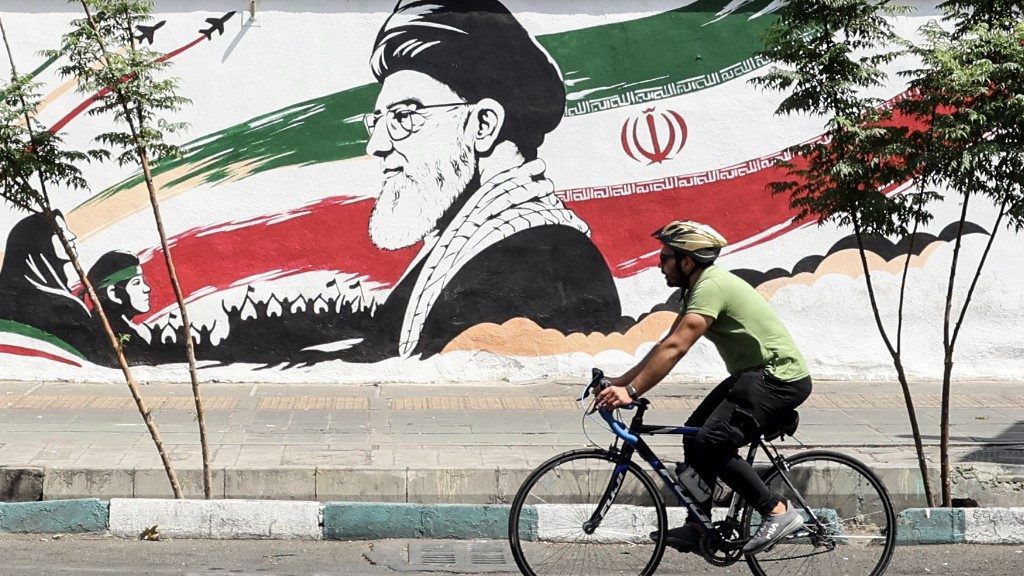
| | Iran's Two-Chokepoint Strategy Is Working — and the Math Is SimpleIran doesn't need to win the war militarily. It just needs to make the war expensive enough, long enough, to outlast Washington's political calendar. A new analysis lays out how Tehran is executing precisely that strategy across two maritime chokepoints simultaneously.
- Pro-Iran Houthi forces seized Perim Island and the Hanish archipelago, giving them effective control of the Bab el-Mandab Strait — the route carrying roughly 10 percent of global trade and about a third of container traffic — while Hormuz has remained a source of chronic disruption since March, according to Middle East Eye.
- Oil transiting Bab el-Mandab had already fallen from roughly 8.7 million barrels per day in 2023 to around 4 million in 2024 as tankers rerouted around the Cape of Good Hope, adding 10 to 14 days of transit time.
- Drones struck Saudi Arabia's East-West pipeline — the very route Riyadh built to bypass Hormuz — forcing a temporary shutdown; the pipeline had been pushed to a record 7 million barrels per day to compensate for the Hormuz closure.
- Oil recently hit $108 a barrel.
Zooming out: With US midterm elections weeks away and an administration publicly downplaying an active naval blockade, Tehran's proxies appear to be timing their moves to keep pressure on Washington's domestic political calculus. Former Kosovo President Thaci Convicted of War Crimes, Sentenced to 25 YearsHashim Thaçi led Kosovo's liberation movement in the late 1990s, became the country's first prime minister after independence, and served as president until 2020 — when he resigned to face charges at a special war crimes tribunal in The Hague. On Wednesday, that tribunal delivered its verdict.
- The Kosovo Specialist Chambers convicted Thaci and three other former Kosovo Liberation Army leaders — Kadri Veseli, Jakup Krasniqi, and Rexhep Selimi — of war crimes against civilians and political opponents during the 1998-99 Kosovo War; charges of crimes against humanity were dismissed.
- Thaci and Krasniqi each received 25-year sentences; Veseli got 18 years; Selimi 13 years.
- Thousands gathered in Pristina's main square to watch the verdict live; when it was announced, the crowd fell silent, then began chanting support — and groups attempted to demolish sections of the EULEX compound perimeter wall.
- Kosovo's Prime Minister called it an "unacceptable injustice"; defense lawyers said they will appeal.
What to watch: The appeals process at the Kosovo Specialist Chambers will determine whether sentences stand, and how Kosovo's political leadership — many of them former KLA figures — navigates the verdict's domestic fallout. Al-Qaeda-Linked Violence in Africa's Sahel Set for Record High in 2026Twenty-five years after 9/11, al-Qaeda is weakest in the Middle East and strongest in Africa. A new conflict monitor report shows that jihadist violence in Mali, Burkina Faso, and Niger is on track to shatter all previous records this year.
- Incidents of violence involving jihadist groups in those three Sahel countries soared from 63 in 2016 to 2,845 in 2025; by mid-2026, 2,145 events have already been logged, putting the annual total on track to exceed 3,000, per conflict monitor Acled.
- The UN recorded more than 9,000 deaths from security incidents across Burkina Faso, Mali, and Niger in 2025 alone.
- In April, a joint JNIM-Tuareg offensive killed Mali's defense minister, struck the international airport, and seized the strategic city of Kidal after Russian mercenaries surrendered.
- AQAP in Yemen, however, saw its activity fall roughly 70 percent — from 63 events in the first seven months of 2025 to 19 in the same period of 2026.
The bigger picture: While al-Qaeda's global leadership remains "marginalised" according to the UN, its African affiliates have built mass movements numbering in the tens of thousands — a geographic and organizational shift that analysts say was barely imaginable on September 11, 2001. |
|
| | - Beirut goes pixel-horror: A Lebanese developer has built Happily Never After, a PS1-style horror adventure game set in a "corrupted" version of Lebanon — you play as someone trying to make a difference while surreal events unravel around you; it's already wishlistable on Steam and we're very much here for it.
- Lebanon's torch runs nationwide: Minister of Youth and Sports Nora Bayrakdarian launched Sports Week 2026 with torches lit simultaneously at universities across all Lebanese regions — north, south, Bekaa, Mount Lebanon, and Beirut — before converging into a single national flame at the ministry, with the Lebanese army's musical band playing to mark the occasion.
- 37 pharaohs come home: Lebanon returned 37 pharaonic artefacts to Egypt in a ceremony at the National Museum of Beirut — including two decorated wooden sarcophagi, masks, amulets, and Coptic textiles seized at Beirut Port in 2020 — after years of coordination with INTERPOL and Egyptian authorities to verify their authenticity.
- Macklemore's million-dollar move: After being dropped from Ed Sheeran's Loop Tour, rapper Macklemore pledged his entire $1 million in tour earnings to six organizations supporting Palestinian people, then challenged Patriots owner Robert Kraft to match it — Kraft and Sheeran each announced $2 million donations in response.
|
|
Read something good, share something good — see you back here tomorrow. |
Nassim Taleb is an expert in finance and probability theory, and the author of many books includign The Black Swan. |
Lebanon news, every weekday morning. Free, sharp, ~5 minutes. |
|
|
|
|